
5 Min Read
A Good Brand Has a Good Structure
It is hard to find a company today that does not talk about sustainability. Promises to cut carbon emissions, use eco-friendly materials and coexist with nature have become a common language spoken by almost every business. When everyone is saying much the same thing, what matters is not who crafts the better message, but who can actually keep the promise. Declaring sustainability as a corporate philosophy is not difficult. Getting thousands of people to act on that philosophy every day is an entirely different matter. This is precisely what caught my attention when I recently took a closer look at the global dairy company Arla Foods. Arla does not stop at declaring sustainability as a value it pursues. It is turning it into a system that actually works.
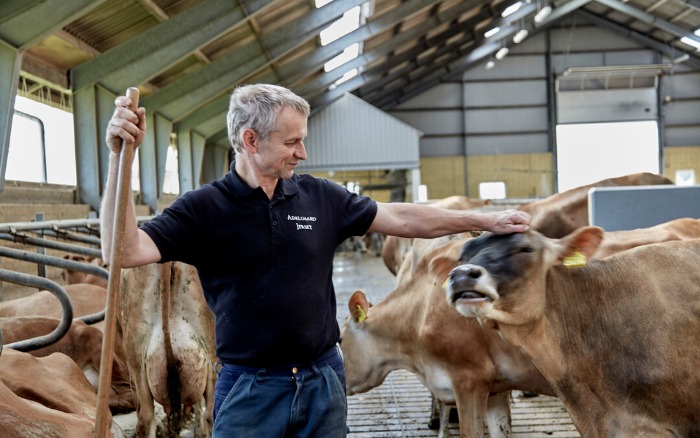
< An Arla Dairy Farmer Tending His Cows | Image source: Arla Foods >
Arla, a Global Dairy Company Owned by Its Farmers
Arla is a global dairy company with its roots in the dairy cooperatives of Denmark and Sweden, and it sells its products in more than 100 countries. The corporate name may be less familiar to some readers, but the world-famous butter brand Lurpak, the premium cheese brand Castello and Puck, a household name across the Middle East, all belong to Arla. Under the Arla name itself, the company also offers a wide range of dairy products, including milk, cheese and cream cheese.
Arla’s most distinctive feature lies in its ownership structure. Unlike a typical food company, Arla is a cooperative jointly owned by thousands of dairy farmers. The farmer is not merely a producer who supplies milk, but also an owner of the company. The milk they produce becomes a product, and the value that product creates in the market returns to them. This structure has an important influence on how Arla approaches sustainability. For Arla, sustainability is not a compliance standard that headquarters imposes on its suppliers. It is a shared task that the farmers, as owners of the company, must carry out themselves.
Turning Good Intentions into an Economic Choice
Through a framework called FarmAhead™, Arla measures carbon emissions and environmental data for each farm and identifies actions that can improve them. It manages, in concrete terms, the things a farmer can actually change, such as feed use, manure handling and energy use. What is interesting is that it does not end with measurement. Arla converts farmers’ sustainability activities into points and links them to the price paid for their milk. The system is designed so that the more sustainably a farm is run, the greater the financial reward.
This approach makes an important difference to how sustainability is put into practice. When a company asks for better behaviour for the sake of the environment, it usually means accepting extra cost or inconvenience. Arla, however, has made acting in the direction the company wants an economically advantageous choice for the individual farmer as well. Instead of demanding sacrifice for sustainability, it has given people a reason to act sustainably. Arla has turned sustainability from a moral demand into an economic choice.
This principle does not operate on farms alone. Arla also builds sustainability targets into the KPIs that determine employees’ performance reviews and bonuses. For farmers through the milk price, and for employees through appraisal and reward, the values the company pursues are connected to real behaviour. As a result, sustainability is no longer a separate task owned by one department. It becomes a goal that people in every country and every part of the organisation pursue together within their own work.
Making Sustainability the Company’s Operating System
The most impressive thing about Arla’s case is that it is making sustainability not a campaign or an ESG programme, but the company’s operating system. On the farm, data is measured and improvement is rewarded. Inside the company, sustainability is tied to KPIs to change how people act. And all of this connects with the cooperative identity of dairy farmers who own the company together and grow together. Viewed separately, these are a farm management programme, a performance review scheme and a corporate culture. Viewed as a whole, they form a single system that connects the values the company cares about to the everyday actions of its people.
We often assume that a company’s philosophy and values guide the behaviour of its people. In reality, what people consider important and how they act may be determined more by what they are evaluated on and what they are rewarded for. However strongly a company emphasises sustainability, behaviour is unlikely to change if its evaluation and reward systems point in another direction. Conversely, when the values a company pursues are reflected in the criteria for evaluation and reward, people naturally put those values into practice in the course of doing their jobs. This is how Arla is making sustainability not a special activity, but the very way the company works.
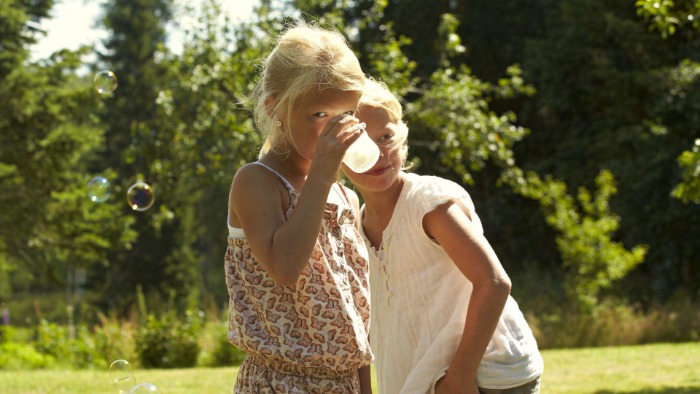
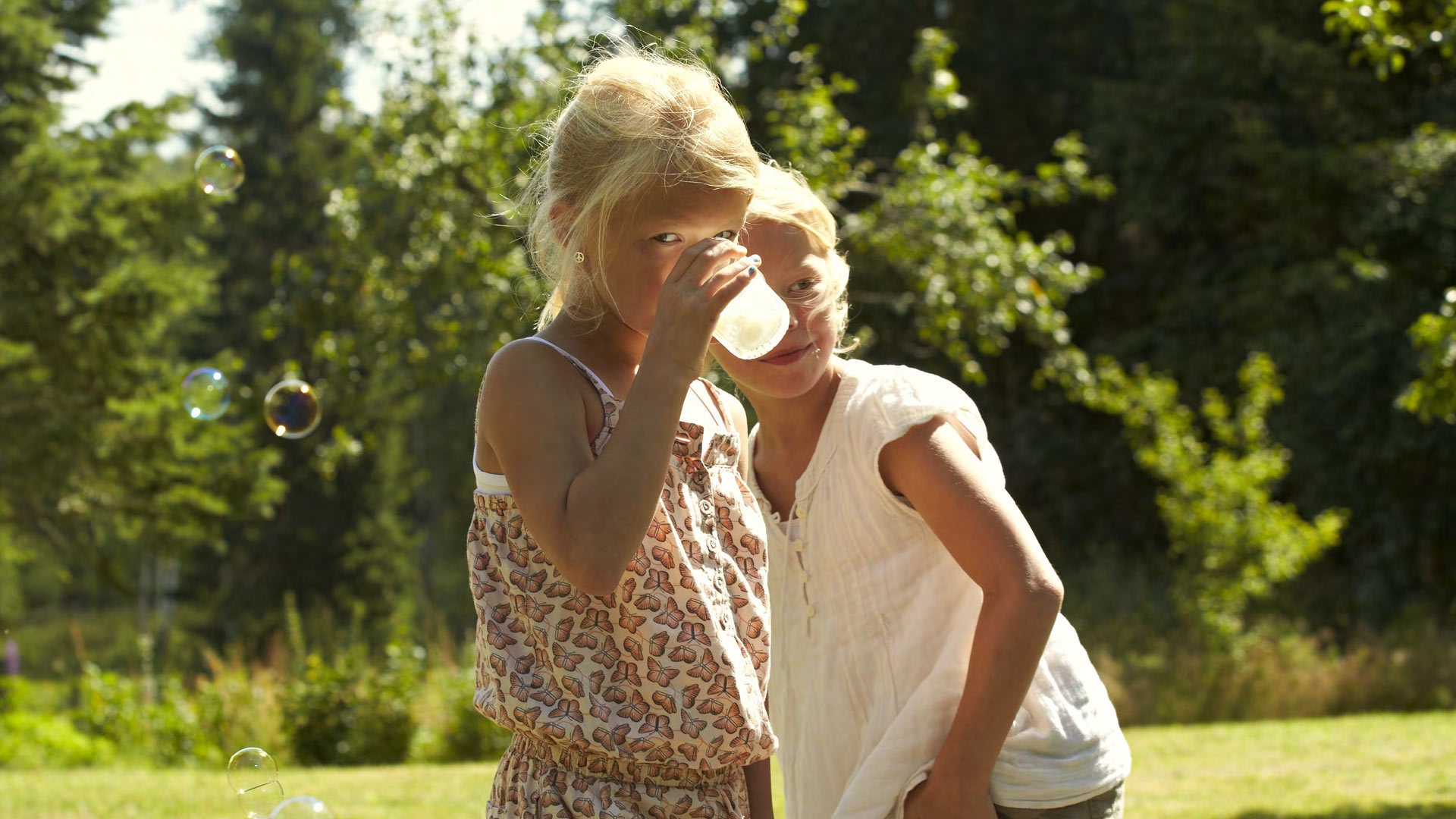
< Children Drinking Milk | Image source: Arla Foods >
A Good Brand Has a Good Structure
After many years of building brands, you learn that there is something harder than creating a good message. It is moving the company so that the message does not become a lie. Phrases such as “Sustainable”, “Responsible” and “Better for the Planet” can be written endlessly, and advertisements showing beautiful nature can be produced endlessly. But changing what happens on thousands of farms, and going as far as changing how employees are evaluated and rewarded, is a task of a completely different order. It means changing the structure of the business to match the values the brand speaks of.
When we talk about branding, we tend to think first of what consumers can see: the name, the logo, the packaging and the advertising. All of these matter, of course. But the value a consumer experiences through a brand is also the result of countless decisions made long before. What a company considers important, what it measures, and which behaviours it encourages and rewards ultimately determine the quality of its products and services, and as those experiences accumulate, they form the trust consumers place in the brand. In that sense, branding is not simply deciding what story a company will tell. It is also the work of aligning the company’s direction and structure so that the story can actually come true.
Arla’s sustainability is interesting not because the company talks about it well, but because it is making sustainability a system that actually works. It turns good intentions into measurable data, connects that data to concrete actions and attaches financial rewards to those actions. And it applies this principle not only to farmers but extends it to employees and the whole organisation. As these countless choices are repeated and accumulated, the company changes, and that change in turn underpins trust in the brand.
In the end, a good brand is not one that says many good things. It is one that turns what it believes into real action, and has a structure that allows that action to be repeated. Arla’s case shows companies grappling with sustainability what they need to change first, before trying to craft a better message.
A good brand has a good structure.














#14057, 905 49, Beolmal-ro 102beon-gil,
Dongan-gu, Anyang-si, Gyeonggi-do, Korea
Business Registration Number: 454-86-01044
Online Sales License No.: 2021-Anyang Dongan-1081
Copyright © DESIGNSORI Co., Ltd.