
A few mornings ago, I heard something interesting during a personal training session. My trainer introduced me to a new piece of equipment and said, “This is PANATTA. Think of it as the Ferrari of fitness equipment.” I had heard names like Technogym and Hammer Strength before, but to be honest, I had never really thought about fitness equipment from a branding perspective. I had always assumed that exercise was ultimately about the person doing it, while the equipment was simply a tool to support the process. But the moment I heard the phrase “the Ferrari of fitness equipment,” I became curious. Did that simply mean PANATTA was expensive, or was the comparison rooted in the fact that it is an Italian brand?
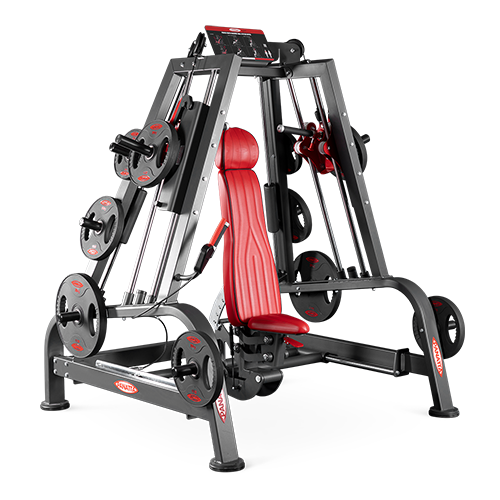
When I asked why, the answer was unexpected. It was not primarily about price or appearance, but about the movement path. What PANATTA emphasizes is biomechanical product design and innovation in technical detail. In other words, the goal is not simply to create fitness equipment that looks impressive, but to understand how the human body actually moves and translate that movement into the structure and trajectory of the machine. As my trainer put it, even though you are using a machine, it feels almost like training with a barbell or dumbbells. After trying a few sets myself, I began to understand what he meant. Rather than forcing my joints to follow a predetermined mechanical path, the machine seemed to follow the natural direction of my body while delivering remarkably precise stimulation to the target muscles.
When you think about it, the essence of fitness equipment is ultimately to move the human body. What we see is a frame made of steel, cables, and weight plates, but what the machine is actually designed around is human movement. It determines in advance how the body should move, where resistance should be felt, and which muscles should be engaged. If so, perhaps the true measure of good fitness equipment is not how impressive it looks, but how deeply it understands the human body. That may be why the word “trajectory” my trainer used that day stayed with me long after the workout was over.
As I was leaving the gym, I noticed something else that caught my attention: “10 PANATTA machines installed. Premium full setup worth KRW 200 million.” At first, I simply thought the fitness center had invested a remarkable amount of money in its equipment. But looking at it again, I realized there was something more to it. They were not merely announcing that they had installed expensive machines. They seemed genuinely proud that they had chosen PANATTA.
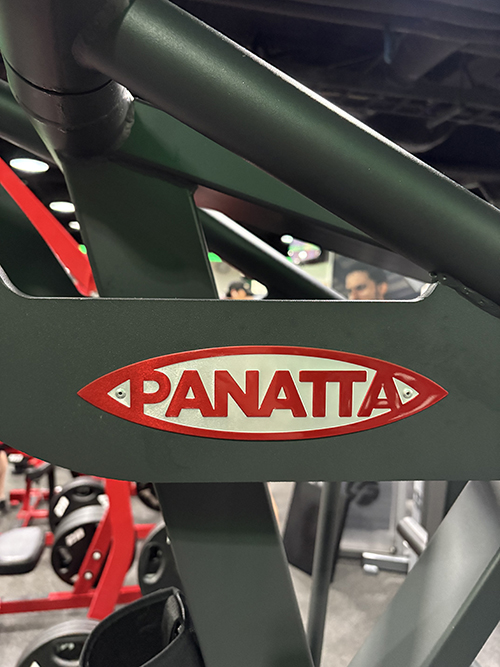
In the past, fitness centers competed on the size of their facilities, the number of machines they offered, and the price of their memberships. Today, however, they increasingly talk about which brands of fitness equipment they have. Fitness machines are still fundamentally B2B products, yet even members who never purchase the equipment themselves are beginning to recognize the brands and use them as a benchmark for judging the quality of a gym. Curious, I went home and started looking more closely into the PANATTA brand.
Building It Because What He Wanted Did Not Exist
As I read the story of PANATTA, I was reminded of Porsche, a brand for which I once worked on strategy and creative direction for about three years. One of my favorite stories about Porsche’s origins is that Ferry Porsche could not find the car he dreamed of, so he decided to build it himself. It was not a car created simply to fill a gap in the market. It was created because the car he wanted did not exist.
PANATTA’s beginnings felt strangely similar. Founder Rudi Panatta was passionate about training long before the fitness industry grew into the enormous market it is today, and he began building his own equipment so that he could train the way he wanted. Although the two industries could hardly be more different, the two stories share something important. The founder had a clear standard of his own before there was any market research.
The longer I observe brands, the more important this kind of starting point seems. When creating a new brand, we analyze markets, identify consumer needs, and search for gaps left by competitors. All of this is necessary. Yet behind many brands that endure for decades is not simply an unoccupied market opportunity, but a question the founder could never let go of. For PANATTA, that question may ultimately have been: How should the human body move? One person’s question became the trajectory of a machine, and as that question was repeated and refined over decades, it became the identity of the brand.
Made in Italy Is Not a Place of Origin, but an Attitude
One of the expressions PANATTA uses to describe itself is “the benchmark for high-end machines, 100% Made in Italy.” What interested me most as I explored the brand was its approach to production. While many manufacturers today divide design, component production, and assembly across multiple countries in pursuit of efficiency, PANATTA maintains direct control in Italy over the major stages of production, from design and prototyping to machining, welding, painting, assembly, and final testing.
At first, I assumed this was simply another way of emphasizing the familiar prestige of Made in Italy. After all, Italy has already built a powerful global image of craftsmanship through automobiles, fashion, furniture, and industrial design. But the meaning changes when you consider that PANATTA’s central concern is human movement and trajectory. A seemingly minor difference in the angle of a frame, the position of a pivot point, or the length of a lever can fundamentally change how the user’s body moves.
From that perspective, controlling production directly means more than simply manufacturing in Italy. It becomes a decision not to compromise the standards the company considers essential. We often think of branding as a matter of logos, visual identity, and advertising, but perhaps the strongest brands are built through decisions that remain largely invisible: where something is made, what the company insists on doing itself, what it is willing to sacrifice for efficiency, and what it refuses to compromise under any circumstances. Consumers may never know every detail of that process, but the moment they experience the product, they feel the consequences of those decisions firsthand. In that sense, PANATTA’s 100% Made in Italy feels less like a statement of origin and more like a declaration: “We take responsibility for the experience we design, all the way to the end.”
Bringing in a Standard, Not Just Fitness Equipment
Once I understood PANATTA, the banner hanging in the fitness center looked different to me. At first, the phrase “worth KRW 200 million” caught my attention. But perhaps what the gym really wanted to communicate was not how much money it had spent, but the fact that it had chosen PANATTA.
A similar phenomenon can be found in other industries. Just as the name GORE TEX increases trust in an outdoor product, and Intel Inside once signaled the performance of the computer carrying it, some B2B brands eventually begin to define the quality of the products or spaces in which they are used. PANATTA works in much the same way. Members do not purchase PANATTA machines themselves, but by using them, they can sense how seriously a fitness center has invested in the quality of the training experience. At some point, the simple phrase “a gym with PANATTA” communicates the level of the space more quickly than saying, “a gym with lots of good equipment.” Perhaps that was the source of the subtle sense of pride I noticed at the fitness center that day. They had not simply installed a few new machines. They had brought into the space a new benchmark for what they believed a great training experience should be.
When Trajectory Becomes a Brand
When I first heard the name PANATTA, I assumed it was simply an expensive Italian fitness equipment brand. I also thought the phrase “the Ferrari of fitness equipment” was probably just a nickname inspired by its price and design. But the more I learned about the brand, the more I found myself returning to what my trainer had said at the very beginning.
“PANATTA has a different trajectory.”
One person began building his own equipment because the machines he wanted did not exist. He questioned how the human body should move, and in order to reproduce that movement properly, he maintained control over the production process itself. Those repeated decisions shaped the products, the products accumulated into a brand, and today the name of that brand has begun to define the standard of the fitness spaces that choose it. A great brand is never created overnight. Meaning accumulates around a name when a company discovers a small difference it truly believes matters, repeats that difference over many years, and refuses to compromise that standard even in the face of growth and efficiency.
Just as fitness equipment guides the human body along a particular trajectory, a brand creates its own trajectory in people’s minds through choices repeated over time. And when that trajectory becomes deep enough, people stop comparing the brand with other products. Instead, they begin comparing other products against the brand. Perhaps that is the moment when a product truly becomes a brand.













#14057, 905 49, Beolmal-ro 102beon-gil,
Dongan-gu, Anyang-si, Gyeonggi-do, Korea
Business Registration Number: 454-86-01044
Online Sales License No.: 2021-Anyang Dongan-1081
Copyright © DESIGNSORI Co., Ltd.