
"Good design does more than simply add new features. To be recognized as a truly good product, technology must be translated into a tangible form that changes how users behave and experience the world. This is especially true in the rapidly evolving field of cameras, where understanding new shooting environments and real user needs often matters more than technical specifications alone."
For this review, we selected three award winning projects from the K Design Award 2026 that reinterpret the role of the camera: AI Instant Virtual Imaging Camera, EC600Pro Body Worn Camera, and Visio. Designed respectively for creators, public safety professionals, and independent content creators, the three projects address very different environments. Yet they share one important quality. Each transforms technology into a meaningful and practical user experience.
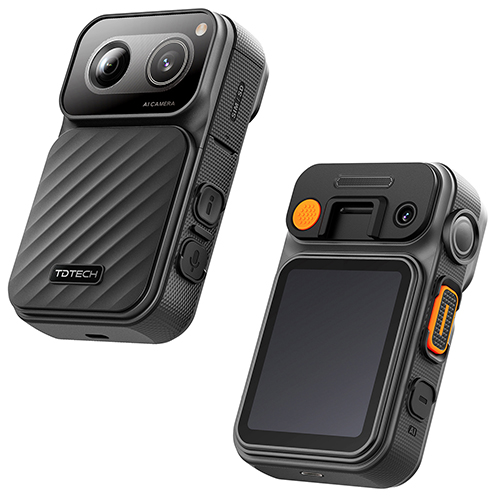
< K-Design Award 2026 Winner – EC600Pro Body Worn Camera >
Designing Trust for Extreme Environments
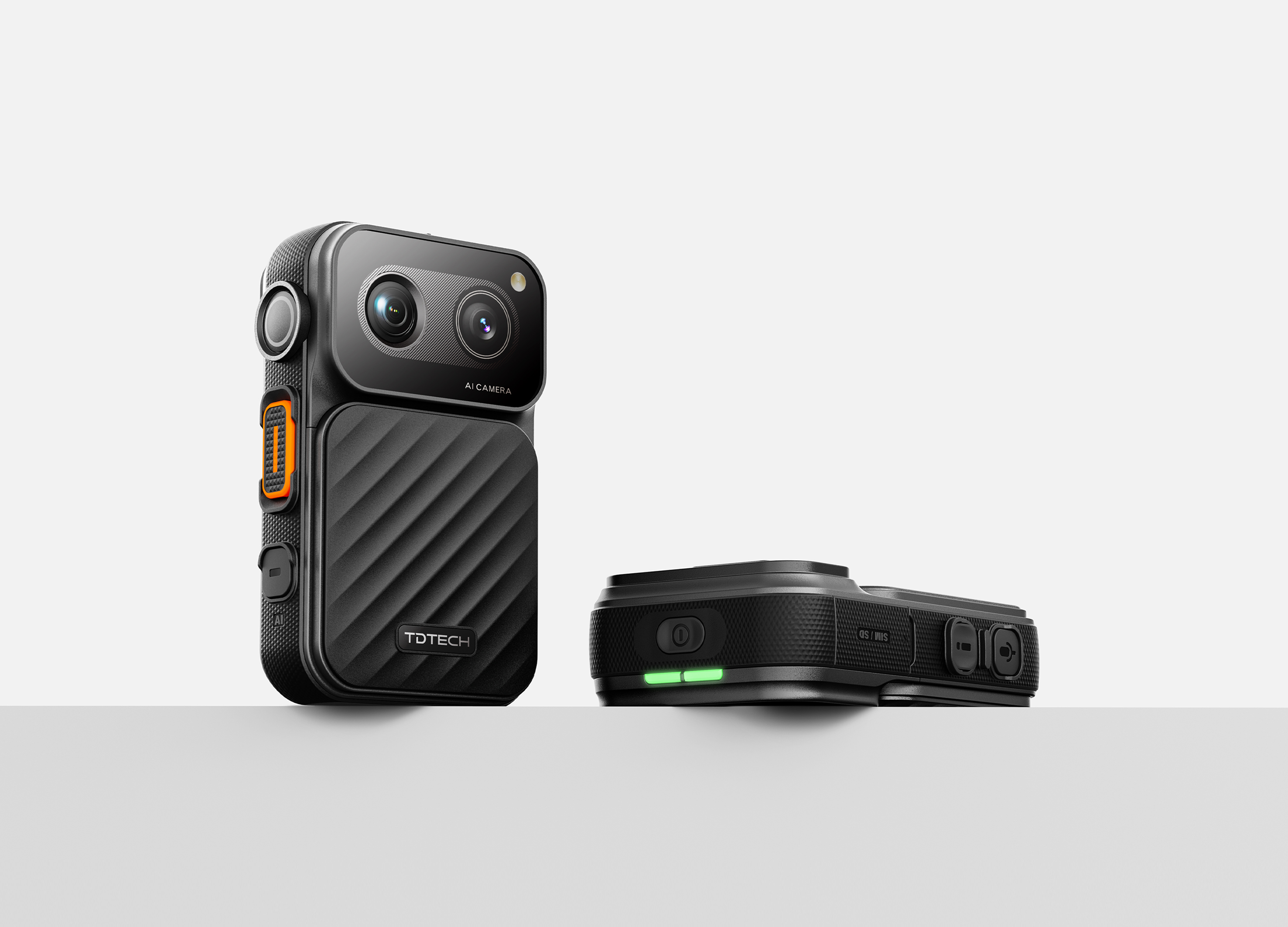
The EC600Pro by China’s TD Tech is an AI powered recording device designed for public safety environments. It features a dual camera system combining a 160 degree ultra wide angle camera with long range imaging capabilities, while AI detects abnormal behavior and key subjects to help capture and classify critical footage. By integrating PTT communication and video recording into a single device, it also reduces both the amount of equipment users need to carry and the number of steps required in the field.
In this product, design plays a role that extends far beyond appearance. It becomes a means of building trust. Its robust outer structure is designed to withstand impact, textured surfaces help prevent slipping, and clearly identifiable side buttons reflect the demanding conditions in which the device is used. Key controls highlighted in orange allow users to distinguish essential functions intuitively, even in urgent situations. Despite achieving an IP68 rating for water and dust resistance, the device weighs just 160 grams. An adjustable 8.8 degree clip also helps compensate for variations in camera angle depending on how the device is worn. Rather than simply creating a rugged appearance, the EC600Pro integrates wearability, operability, and recording accuracy into a single system. It is a highly refined example of how good professional equipment design can align visual character with real world performance.
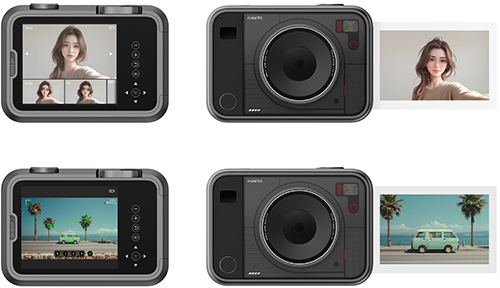
< K-Design Award 2026 Gold Winner – AI instant virtual imaging camera >
Bringing New Technology into a Familiar Experience
The AI instant virtual imaging camera by Chinese designer Liqian Fan transforms real-world images into virtual imagery in real time while analyzing the frame to suggest composition and aesthetic direction. What makes the concept particularly compelling is that AI is no longer limited to post-production or image correction. Instead, it participates in the creative process alongside the user from the very moment an image is captured. The design value of this project lies in its decision not to showcase advanced technology through an unfamiliar form. Its large circular lens, shutter-inspired controls, and rectangular body designed for a secure grip all follow the visual language of cameras that users have known for decades. Users can simply point the camera at a subject and begin shooting without first having to understand the complex generative technology behind it.
The newer the technology, the more important it becomes for design to carefully manage the distance between the user and the technology. By placing AI as a new creative tool within the familiar experience of using a camera, this project effectively bridges that gap. It achieves a thoughtful balance between technological innovation and a familiar user experience.
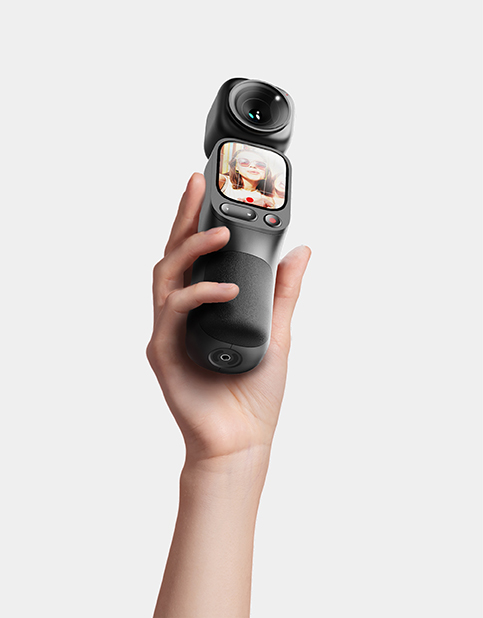
< K-Design Award 2026 Winner – Visio >
Turning a Solo Shooting Experience into a Complete System
Visio, proposed by Junwoo Lim, a student at Kookmin University in Korea, is a 360 degree content director designed for creators who work without a production crew. While 360 degree cameras can capture every direction, creators standing in front of the camera often struggle to monitor both themselves and the overall shooting environment at the same time. Visio precisely identifies this user problem hidden behind the technological advantage of an ultra wide field of view.
At the heart of the design is a detachable viewer unit. Users can monitor footage in real time even when positioned away from the camera. After shooting, the viewer can be connected to a PC, allowing users to review content during editing without requiring a separate VR device. Connectors at the top and bottom support camera separation as well as additional modules such as tripods, providing flexibility across different shooting environments.
Visio’s strength lies not in a single new feature, but in redesigning the entire shooting workflow. By separating the camera from the monitor, it allows users to bring the screen to where they need it rather than adapting themselves to the position of the equipment. Tasks that would normally be divided among several people, including filming, performing, and monitoring, can now be managed by a single creator. It is a compelling example of a structural design solution that begins with a clearly defined user problem.
Good Design Turns Technology into Experience
The technologies and objectives behind these three projects are very different. The AI instant virtual imaging camera lowers the barriers to creative expression, the EC600Pro supports recording and response in public safety environments, and Visio reimagines the shooting workflow for independent creators. What makes these projects valuable design references is not simply the sophistication of their technology. Each begins by examining when, where, and how different users encounter difficulties, then addresses those problems through form, interface, and product structure. Rather than listing what technology makes possible, they demonstrate what that technology should mean for the user.
Good design is not simply about giving technology a form. It is about making technology work meaningfully within human experience. Each of these three projects fulfills that role in a different way, revealing three distinct possibilities for what camera design can become today.














#14057, 905 49, Beolmal-ro 102beon-gil,
Dongan-gu, Anyang-si, Gyeonggi-do, Korea
Business Registration Number: 454-86-01044
Online Sales License No.: 2021-Anyang Dongan-1081
Copyright © DESIGNSORI Co., Ltd.