
This year, I was invited by the Mongolian Marketing Association to participate in the 2026 SMART Festival of Creativity in Ulaanbaatar. As I had never visited Mongolia before, preparing for the event naturally led me to learn more about the country. I became curious about what kind of market it is, what its people value, and how Mongolia presents itself to the world. That was when I encountered its nation branding campaign, “Go Mongolia.”
What first captured my attention was neither a spectacular video nor a grand slogan. It was one remarkably simple discovery. In branding, there is always pressure to create something new. We feel compelled to develop a new name, slogan, design, or story. The need to differentiate a brand from its competitors often leads us to search for answers outside the brand itself. Sometimes this process is necessary. But after years of thinking through the challenges faced by many different brands, I have come to believe that good branding is less about importing an appealing idea from the outside and more about discovering something that has always existed within the brand but has become too familiar to notice.
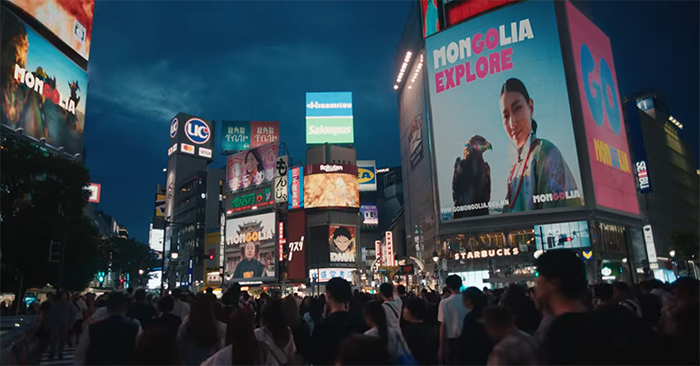
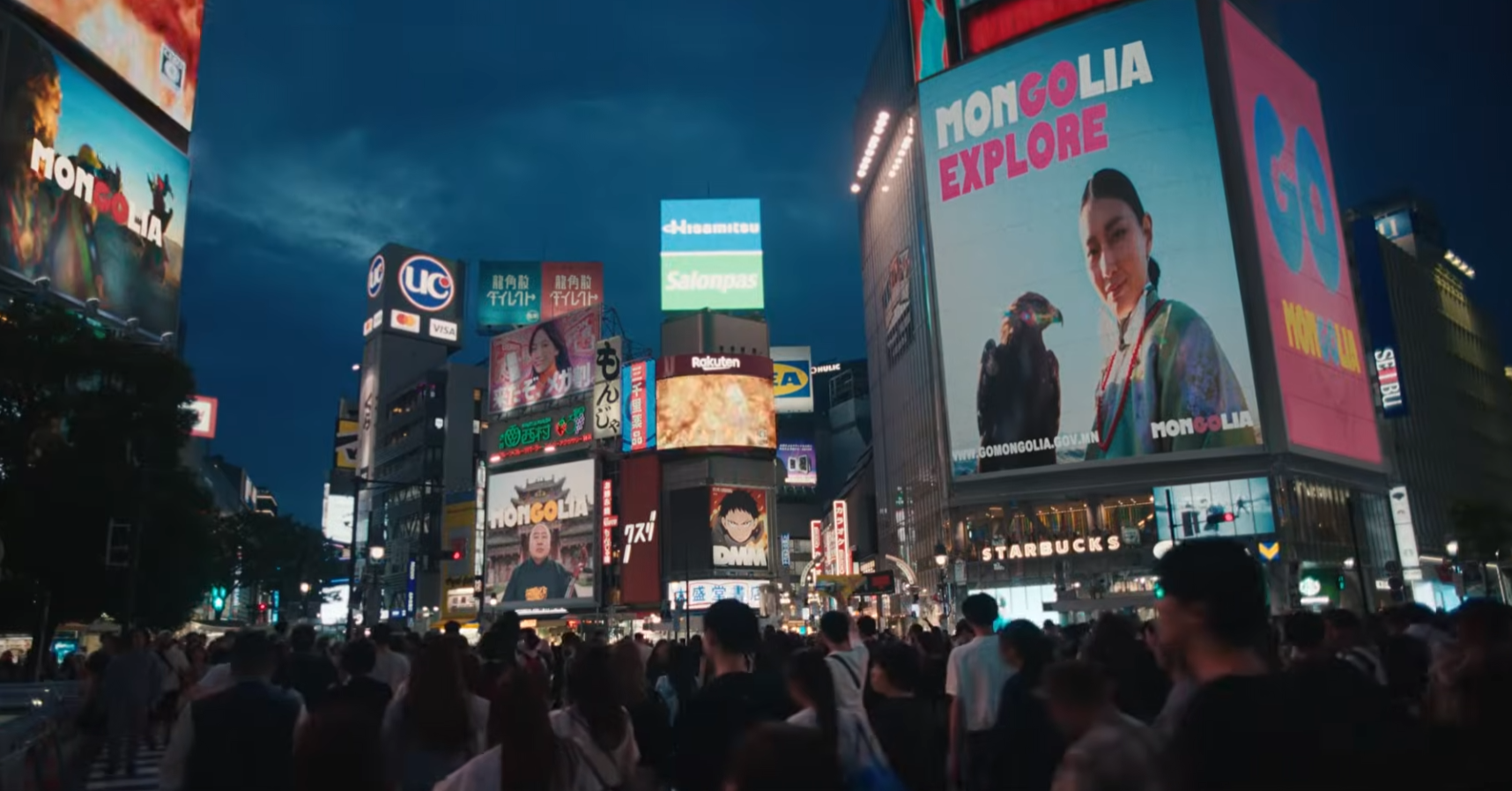
I think of this as “Discovery from Within.” If Mongolia were considered a single brand, it would have no shortage of assets. Its vast grasslands, the Gobi Desert, horses, gers, nomadic culture, and the history represented by Genghis Khan are already powerful symbols of the country. Nation branding often reinterprets such assets for a contemporary audience or brings them together under a new slogan to define a country’s image. Go Mongolia took a different approach. Instead of adding something new, the campaign looked again at what was closest to the country: its own name.
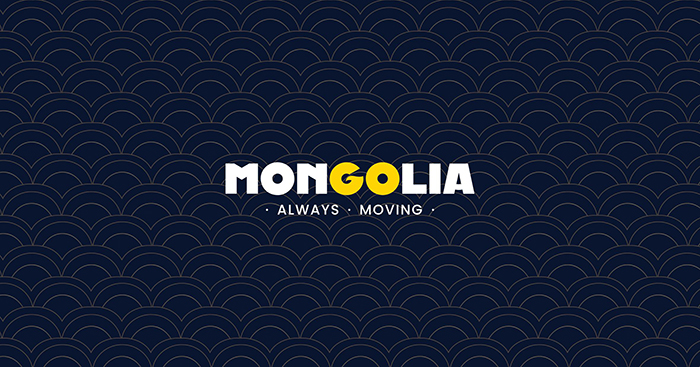
MONGOLIA. The two letters “GO” were already there. The campaign expanded this simple discovery into a powerful brand idea. What makes it particularly interesting is that “GO” is not limited to a tourism campaign call to action telling people to “go to Mongolia.” The brand film repeatedly uses the word “Go” to encourage people to open their eyes and minds to the world, share their art and ideas, move toward the future while embracing the past, and share more with the world. As Mongolia moves toward the world, the world, in turn, begins to move toward Mongolia.
This is why GO MONGOLIA can be read in two directions. It is both a message of encouragement, “Go, Mongolia,” to a country moving out into the world, and an invitation to the world to come and experience Mongolia. All of these meanings ultimately converge in the phrase “ALWAYS · MOVING.” Rather than importing a new meaning from outside and attaching it to Mongolia, the campaign discovered two letters that had been there from the beginning, hidden within the name “MONGOLIA,” and expanded them into an attitude that defines how a nation engages with the world. This is precisely where I believe the campaign moves beyond a clever linguistic idea and touches on the essence of good branding.
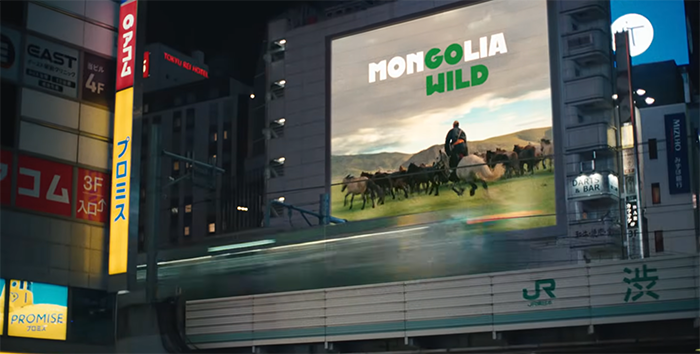
When we talk about differentiation in branding, we often assume that we need to create something new that others do not have. But the strongest points of differentiation often come not from something newly invented, but from something that has always belonged uniquely to the brand itself. A newly created slogan can be echoed by competitors, but stories discovered in a brand’s name and history, the founder’s beliefs, the way its products are made, and the choices it has repeated over time are far more difficult to replicate. The “GO” within MONGOLIA works in the same way. Other countries may create similar tourism campaigns, but the moment “GO” is discovered within the name “MONGOLIA,” it becomes a brand asset that Mongolia alone can truly own.
That is why, when I work on brand consulting, I believe it is important to look deeply within a brand before trying to create something new. Why was the company founded? What did the founder value? What choices have been repeated within the organization over time? Why have customers continued to choose the brand? And what has become so natural to the people within the organization that they no longer recognize it as something special? Good answers are often already there. The problem is that they are too close to be seen. A way of working that feels ordinary to insiders, or a small principle that has been upheld for years, can become a point of differentiation that no one outside the organization can easily possess.
Perhaps the role of a brand consultant or designer is also less like that of a creator who makes something from nothing and more like that of a discoverer who identifies what is essential among the countless clues scattered throughout a brand and brings it into a form that people can see. Of course, discovery alone does not complete the branding process. What has been discovered must then be organized into a strategy, defined through language, visualized through design, and transformed into something people can actually experience. Go Mongolia did not stop at discovering “GO.” It became a powerful nation branding campaign because that discovery was expanded into a clear message and a distinctive visual language.
This is why I believe good branding is closer to discovery than creation. A brand that has clearly identified its essence does not need many words to explain itself. Conversely, the less certain a brand is about what it represents, the more adjectives it tends to use: innovative, differentiated, customer focused, future oriented. When the essence remains undiscovered, the expression becomes more complicated. When the discovery is precise, the expression becomes simpler. It is not simple because the work was easy. It becomes simple because the brand has reached its essence.
Discovering “GO” within “MONGOLIA” therefore means more to me than finding a clever piece of copy. Those two letters were not newly created. They had been there from the beginning. Someone simply viewed them from a different perspective, recognized their potential, and brought their meaning forward for others to see. When creating a new brand or redefining an established one, we instinctively look outward. We search for emerging trends, analyze competitors, and explore new forms of expression. Before doing so, however, perhaps we should first turn inward and ask a more fundamental question:
What do we already possess that we have not yet discovered?
The fewer adjectives we need, the clearer the essence becomes. The clearer the essence becomes, the stronger the brand becomes. Ultimately, the most powerful branding does not begin by introducing something from the outside. It begins by discovering what has always existed within.
Discovery from Within.
It is the principle of branding I believe in, and one that Go Mongolia has demonstrated once again.

















#14057, 905 49, Beolmal-ro 102beon-gil,
Dongan-gu, Anyang-si, Gyeonggi-do, Korea
Business Registration Number: 454-86-01044
Online Sales License No.: 2021-Anyang Dongan-1081
Copyright © DESIGNSORI Co., Ltd.