
Co-Founder of lllayer
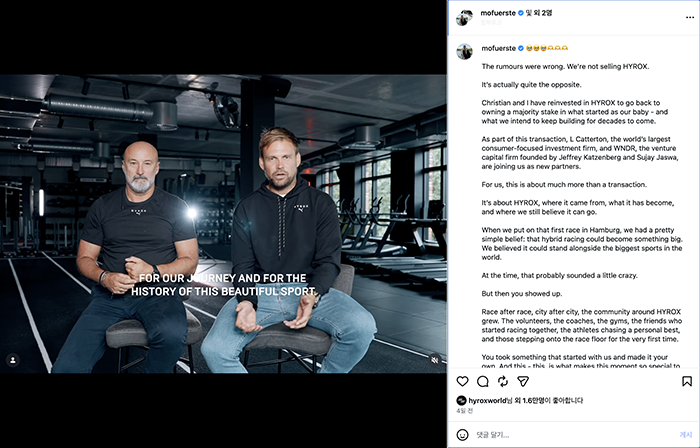
A major transaction has reshaped the global fitness sector. A consortium led by L Catterton, a global consumer-focused investment firm backed by Louis Vuitton Moët Hennessy (LVMH), recently acquired Infront’s majority stake in HYROX. What is particularly notable is the structure of the deal. This was not simply a case of a major private equity firm taking over the brand. Co-founders Christian Toetzke and Moritz Fürste participated in the acquiring consortium and emerged from the transaction holding a majority stake, thereby restoring founder control. WndrCo also joined the consortium. Although the financial terms were not officially disclosed, media reports valued HYROX at approximately €600 million, or around $700 million, close to KRW 1 trillion.
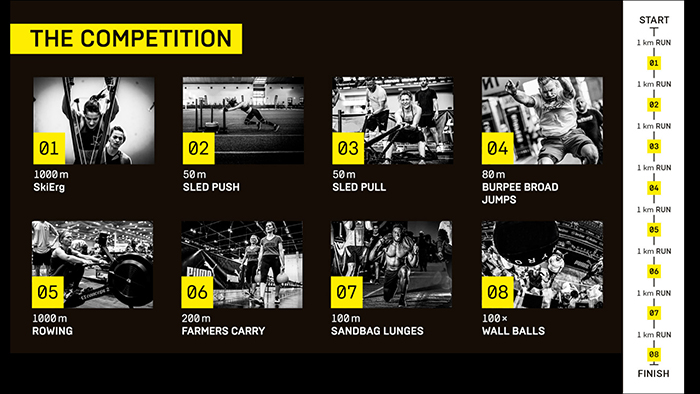
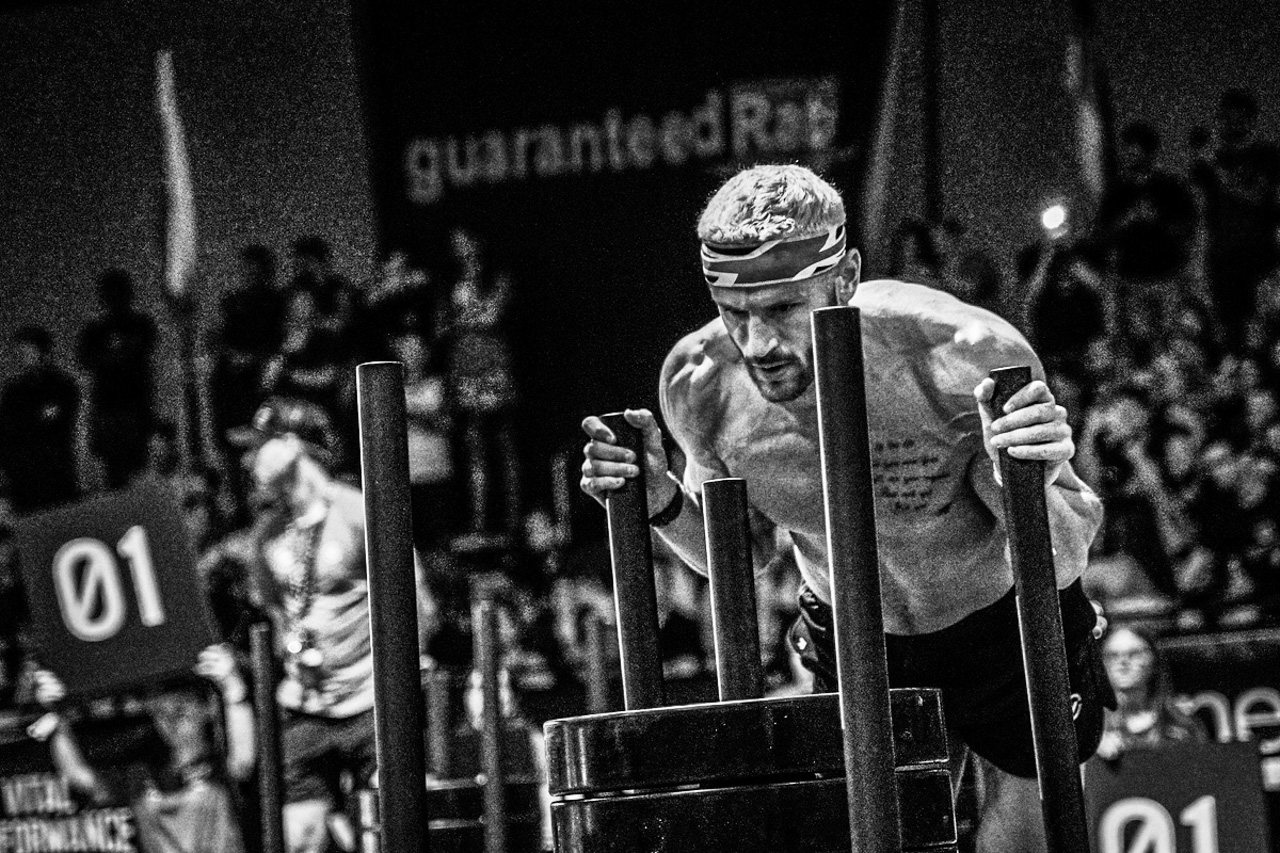
HYROX held its first commercial race in 2018 at an exhibition venue in Hamburg, Germany, with just 650 participants. In only eight years, it has grown into a major global IP with more than 1.4 million participants expected during the 2025/26 season and over 100 events worldwide. Some media reports also suggest that its annual revenue is approaching €200 million, although the company has not officially disclosed this figure. What has driven this explosive growth, almost unprecedented in the fitness industry? HYROX is a global fitness race held in large indoor convention centers. Its format is straightforward. Participants alternate between a 1 km run and one functional fitness station, repeating the sequence eight times. Across the full 8 km, competitors must complete eight high-intensity workout stations: SkiErg, sled push, sled pull, burpee broad jumps, rowing, farmer’s carry, sandbag lunges, and wall balls. Compared with existing fitness competitions, the ingenuity of HYROX becomes immediately apparent.
The difference from a marathon: While running primarily tests extreme cardiovascular endurance and lower-body stamina, HYROX places a functional challenge every 1 km that demands upper- and lower-body muscular endurance as well as explosive power, testing what is known as “Hybrid Fitness.” The difference from CrossFit: CrossFit requires technically demanding Olympic weightlifting movements such as the snatch and clean and jerk, as well as gymnastic movements such as ring muscle-ups, creating relatively high technical barriers to entry and risk of injury.
There is also the unpredictability of the Workout of the Day (WOD), which changes constantly. HYROX, by contrast, eliminates complex weightlifting and gymnastic movements and builds its events around fundamental human movements such as pushing, pulling, and throwing. Most importantly, HYROX uses exactly the same race sequence, equipment, and weight standards in every city around the world. There is no overall time limit, allowing approximately 98% of participants to cross the finish line, while every result is measured to the second through electronic timing chips and permanently recorded on a single global leaderboard.
How Did This Brand Begin?
The seeds of HYROX were planted in Hamburg, Germany, in 2017. Three people came together to create the concept: Christian Toetzke, a veteran organizer of large-scale sporting events; Moritz Fürste, a two-time Olympic gold medalist in field hockey; and marketing strategist Michael Trautmann. The gap they identified in the fitness market was clear. Tens of millions of people around the world go to the gym every day, sweating through squats, running, and other workouts, yet there was no standardized competitive platform where they could officially prove the results of their training, comparable to a marathon for runners or an Ironman for triathletes.
Toetzke described it as if millions of people were practicing their swings diligently at golf driving ranges, but there were no golf courses or official tournaments where they could actually compete. The founders decided to create the “Marathon of Fitness,” an event that anyone from beginners to elite athletes could attempt while objectively measuring their own limits. HYROX launched with 650 participants at its 2018 event in Leipzig, Germany. After securing investment from Infront during the pandemic and building the foundation for expansion, it entered a period of explosive growth as the world emerged from the pandemic. Behind that trajectory was a carefully calculated business strategy.
First was an asset-light model that did not turn gyms into competitors. While CrossFit built its ecosystem around dedicated affiliated gyms known as Boxes, HYROX embraced existing gyms, F45 studios, and even CrossFit boxes. Through its affiliation program, gyms can become official HYROX Training Clubs, offer HYROX training programs, and attract new members without making major investments in facilities. As a result, thousands of gyms worldwide have become local access points for the HYROX ecosystem.
Second was the standardization of official equipment and the attraction of major global brands. By designating Concept2 ergometers and Centr sleds as official competition equipment, HYROX created a global equipment lock-in effect. At the same time, its long-term partnership with PUMA, together with sponsors such as Red Bull, Amazfit, and BYD, has transformed the race series into an attractive marketing platform for major global brands.
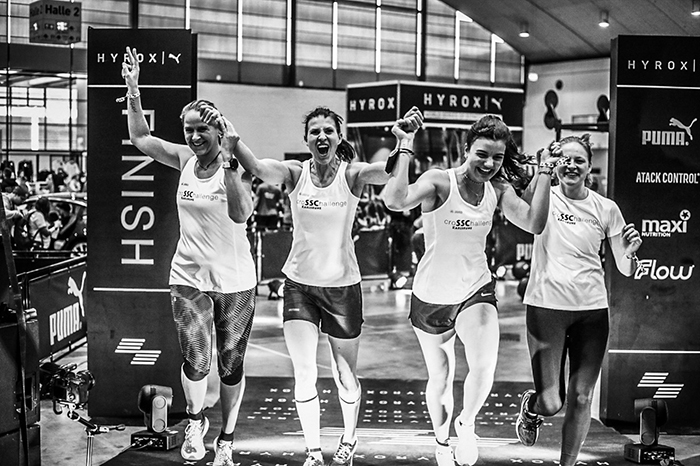
Third was the transformation of the community experience into a festival and a form of “social currency.” With dramatic lighting, heart-pounding DJ music, and the roar of thousands of spectators, indoor arenas transform a grueling fitness race into a massive urban festival. The hard-earned finisher results shared across Instagram and TikTok have become one of the trendiest forms of social currency, signaling discipline, achievement, and wellness among today’s urban consumers.
HYROX is now working to establish hybrid fitness racing as a globally recognized sport in its own right. Its standardized rules, international competition calendar, athlete rankings, and world championship structure provide the foundations of a formal sporting ecosystem. However, behind this rapid quantitative expansion are several structural challenges that could threaten trust in the brand.
Physical Variations in Course Surfaces: Although HYROX promotes standardized courses worldwide, sled friction can vary significantly depending on the material of the carpet used at each convention center, the characteristics of the concrete underneath, and indoor humidity. Among elite athletes, where rankings and world records can be decided by a single second, these differences have repeatedly raised questions about the fairness and comparability of results. Inconsistent Judging: As the number of events has surged, differences in experience among locally recruited temporary judges and volunteers have become increasingly apparent. Competitors have repeatedly complained about inconsistent no-rep standards, including whether the chest properly touches the ground during burpees and whether sufficient squat depth is reached during wall balls.
Rising Costs and Commercialization Fatigue: Individual entry fees alone now approach KRW 150,000 to 200,000, while spectators are also required to purchase tickets. This has led to self-deprecating comments that participants are “paying to put themselves through hard labor.” If community fatigue continues to build during an economic slowdown, a decline in repeat participation is a clear potential risk. From the perspective of someone who works in branding and observes brands closely, HYROX’s success is not simply a passing trend in the fitness industry. It is the result of precisely tapping into a fundamental psychological need felt by modern urban consumers.
First, it offers a sense of “complete control and objectivity.” In an era shaped by algorithms and economic uncertainty, where the relationship between effort and reward has become increasingly blurred, HYROX offers a simple and compelling proposition: every unit of effort produces an honest result measured to the second. In a world dominated by ambiguity, perfectly standardized rules and a global leaderboard provide one of the clearest forms of self-efficacy.
Second, its branding is built not on “exclusion,” but on “inclusion and solidarity.” While CrossFit competition often rewards the mastery of highly technical weightlifting and gymnastic movements, HYROX lowers the technical barrier to entry. With a completion rate of around 98%, it gives ordinary gym-goers a realistic opportunity to become the protagonists who cross the same finish line as elite athletes. What it sells is not simply competition to defeat others, but the primal sense of solidarity that comes from enduring a tunnel of pain alongside others.
Ultimately, HYROX is far more than a fitness competition platform. To individuals who once lifted dumbbells alone in the corner of a gym while looking at their smartphones, it offers a new identity that allows them to redefine themselves as “athletes in training,” along with a stage on which to participate in a massive shared festival. This is the fundamental reason why an L Catterton-led consortium has chosen to invest in a global fitness empire built on measurable effort, shared experience, and sweat.















#14057, 905 49, Beolmal-ro 102beon-gil,
Dongan-gu, Anyang-si, Gyeonggi-do, Korea
Business Registration Number: 454-86-01044
Online Sales License No.: 2021-Anyang Dongan-1081
Copyright © DESIGNSORI Co., Ltd.