When we say “design,” many people picture an artist with keen sensibilities sketching a clever idea and shaping it into a pleasing form. In industrial design, however, design is a systematic process for discovering problems and finding solutions. The clearest visualization of this complex journey is the Double Diamond design process shared by the UK’s Design Council in 2004. The model consists of two phases in the shape of diamonds.
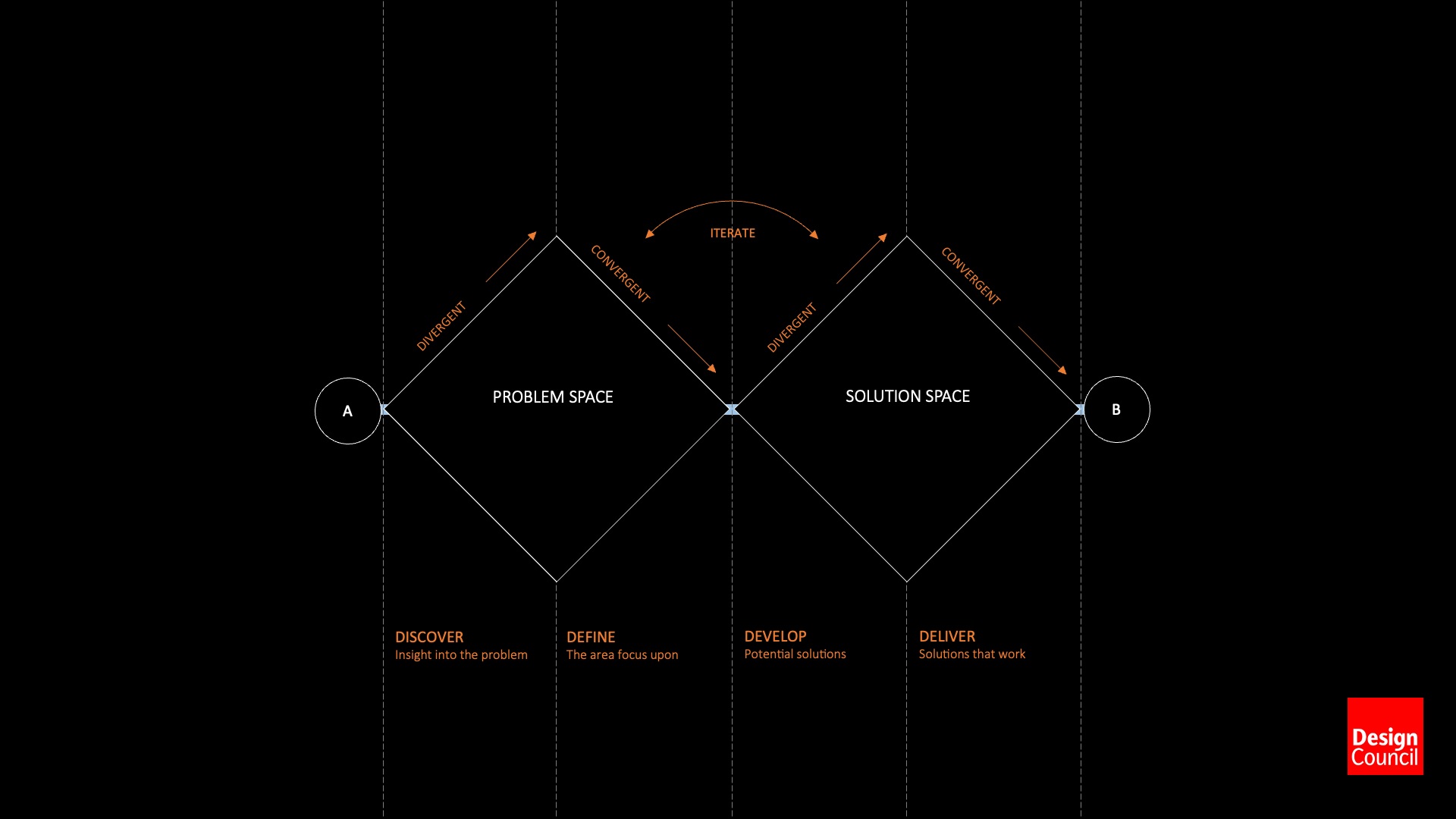
< Design Council (2004): The Double Diamond design process >
The first diamond deals with exploring and defining the problem space. Like gathering light, we widen the field and run desk research to collect every clue, including user frustrations, latent needs, and market trends. This is the Discover phase. We then analyze those clues and distill the real problem into a single core statement in the Define phase. That definition becomes a compass that clarifies exactly what the designer must solve. The second diamond addresses the solution space. To resolve the problem defined in the first diamond, we expand again in the Develop phase. Rather than getting trapped in one or two avenues, we deliberately generate a wide range of ideas, bold and even implausible. Finally, we select and concretize the most effective and feasible directions, then Deliver. From many possibilities to a final outcome, this funnel is the very heart of design.
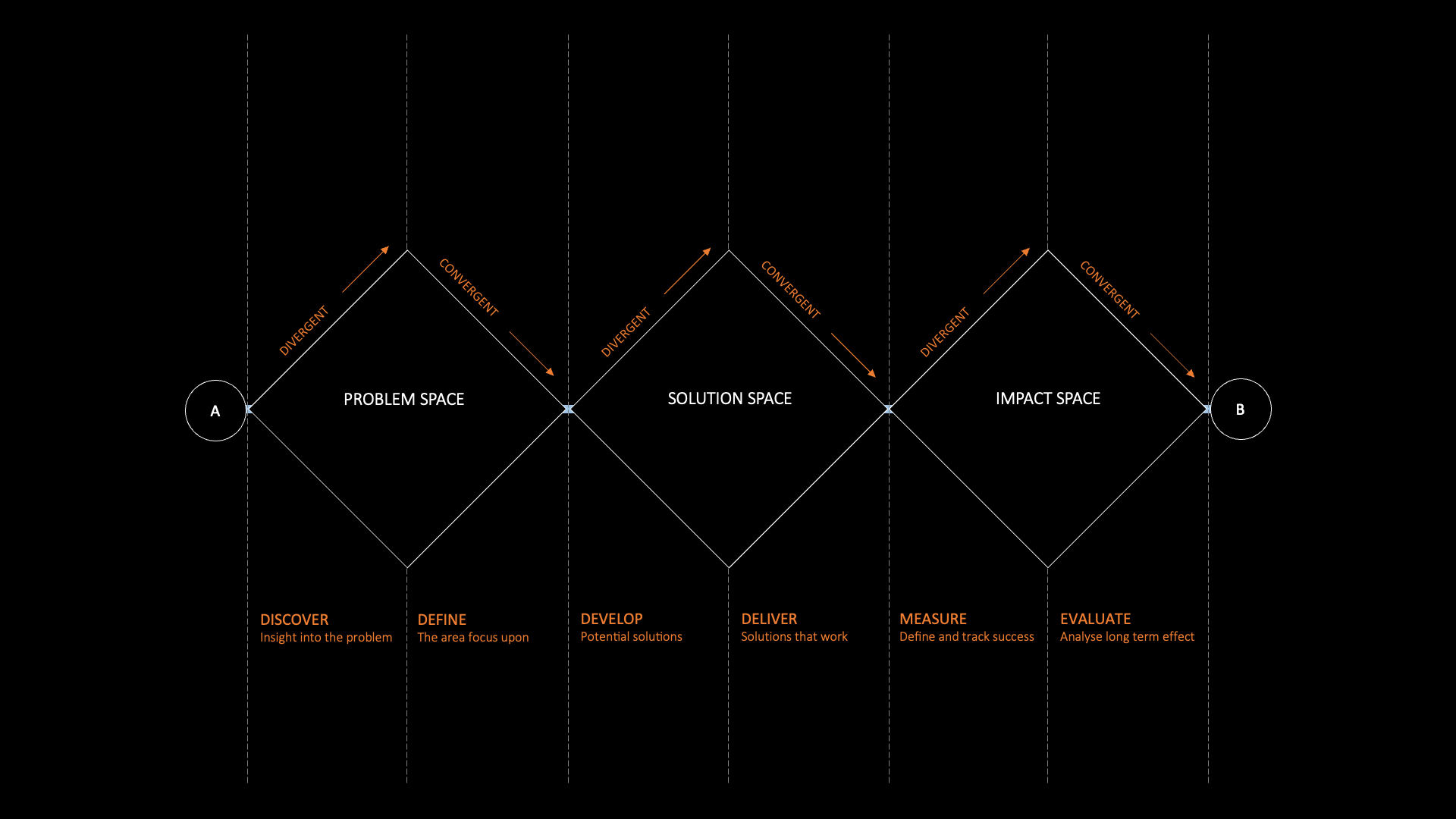
Today, however, a designer’s role goes beyond producing outcomes. With the spread of design thinking and the evolution of the Double Diamond, design now extends to considering the impact after launch. Here a third diamond enters the picture, called Impact. It has two parts. First, Measure, which defines what success means and tracks performance. Second, Evaluate, which assesses long term social and cultural effects.
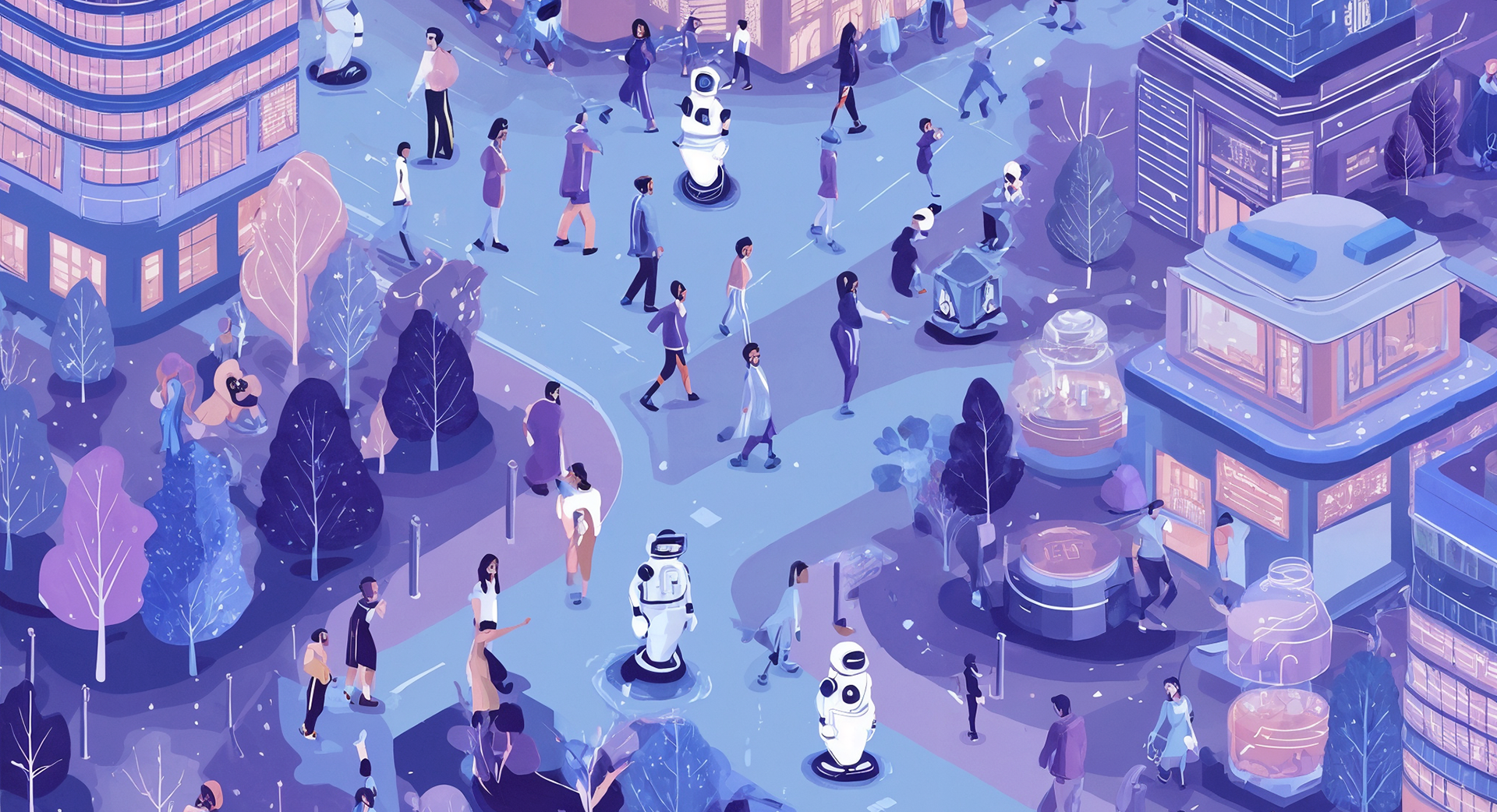
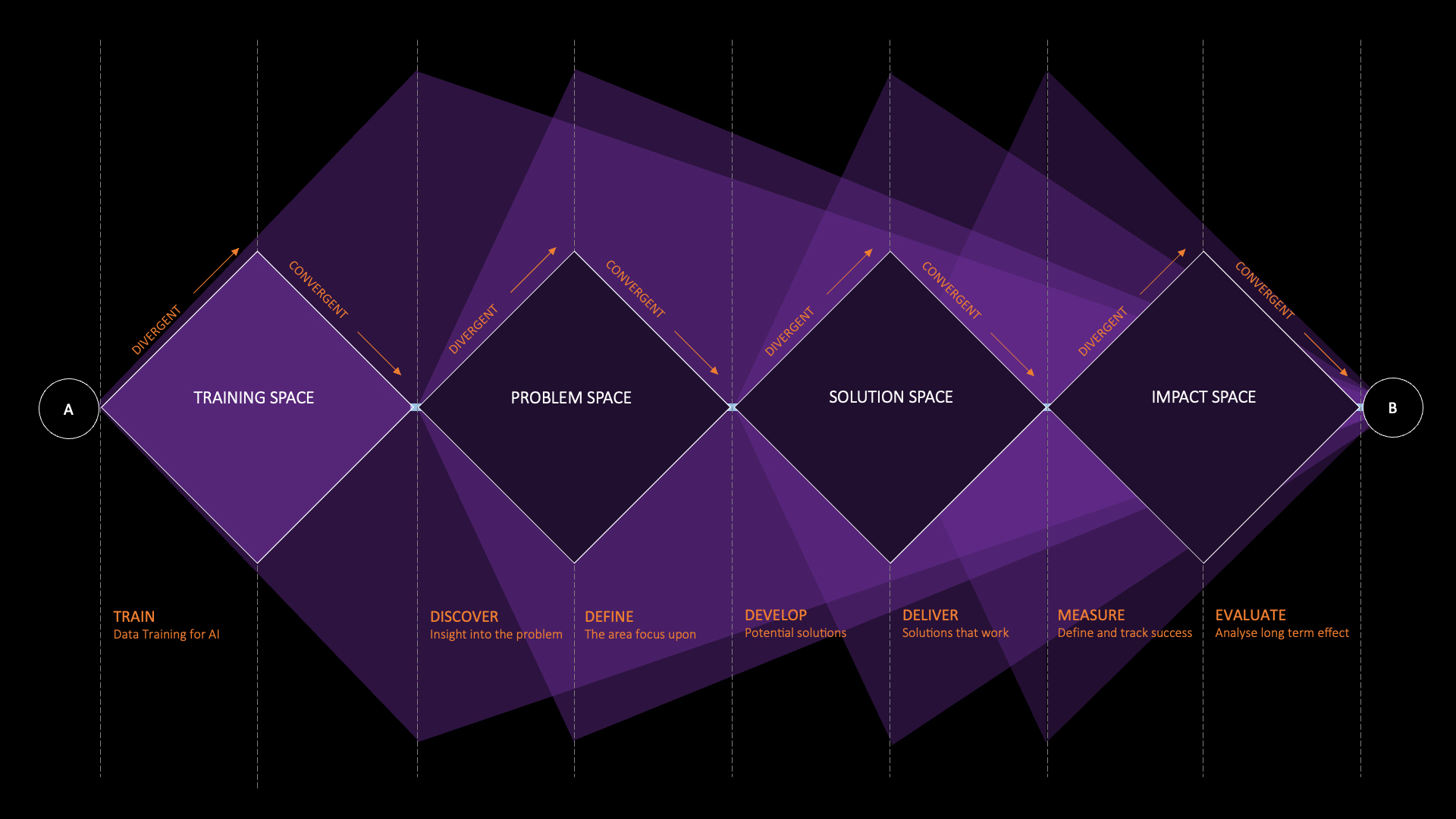
Consider, for example, the design of a humanoid robot. We cannot stop at implementation and launch. We must examine how it will coexist with human society and what sustainable effects it may have. This shows how designers are evolving from makers into strategists who weigh social responsibility and business ripple effects at the same time. The world is changing at breathtaking speed with the technologies of the Fourth Industrial Revolution. Consumer needs are becoming more segmented, and the volume of information flooding the market is staggering. A single designer’s intuition and experience are no longer enough. Traditional methods, such as analyzing vast datasets by hand, sketching countless ideas, and iterating through dozens of trials, consume enormous time and cost. Enter a new partner for a new era: generative AI. Many see AI as a threat to the designer’s seat; I see it as a catalyst that accelerates and expands the process. Even the Double Diamond can evolve by adding a stage before problem exploration, a Train phase in which we prepare and tune AI for the tasks ahead. From data analysis to idea generation to selection, AI can now collaborate with designers across the entire journey, opening up virtually limitless possibilities.
How, then, does AI operate within the design process? Let us look at automotive design, a field we all recognize. Take the first diamond, the problem definition phase. In the past, designers had to analyze market research reports and survey results on their own, but now AI can process vast amounts of data in an instant. By synthesizing real time conversations on social media, countless posts in online communities, and a wide range of car reviews, it can uncover latent needs that designers might otherwise miss. For example, as autonomous driving advances, AI may detect a trend in which drivers begin to perceive the driver’s seat not as a work space but as a personal relaxation space.
In the second diamond, where we develop solutions, AI’s strengths become even more pronounced. If a designer inputs a brief such as “a body design that is environmentally friendly and highly aerodynamic,” AI can instantly generate tens of thousands of forms. It can even propose complex organic structures, like honeycomb or spider web morphologies that are hard to imagine unaided, offering optimal solutions that balance lightness and rigidity. For a personalized interior, AI can simulate dozens of layouts, materials, and lighting combinations in real time based on lifestyle data. In short, AI multiplies both the quantity and quality of ideas in the Double Diamond, then helps the designer converge on a single answer faster and with greater confidence.
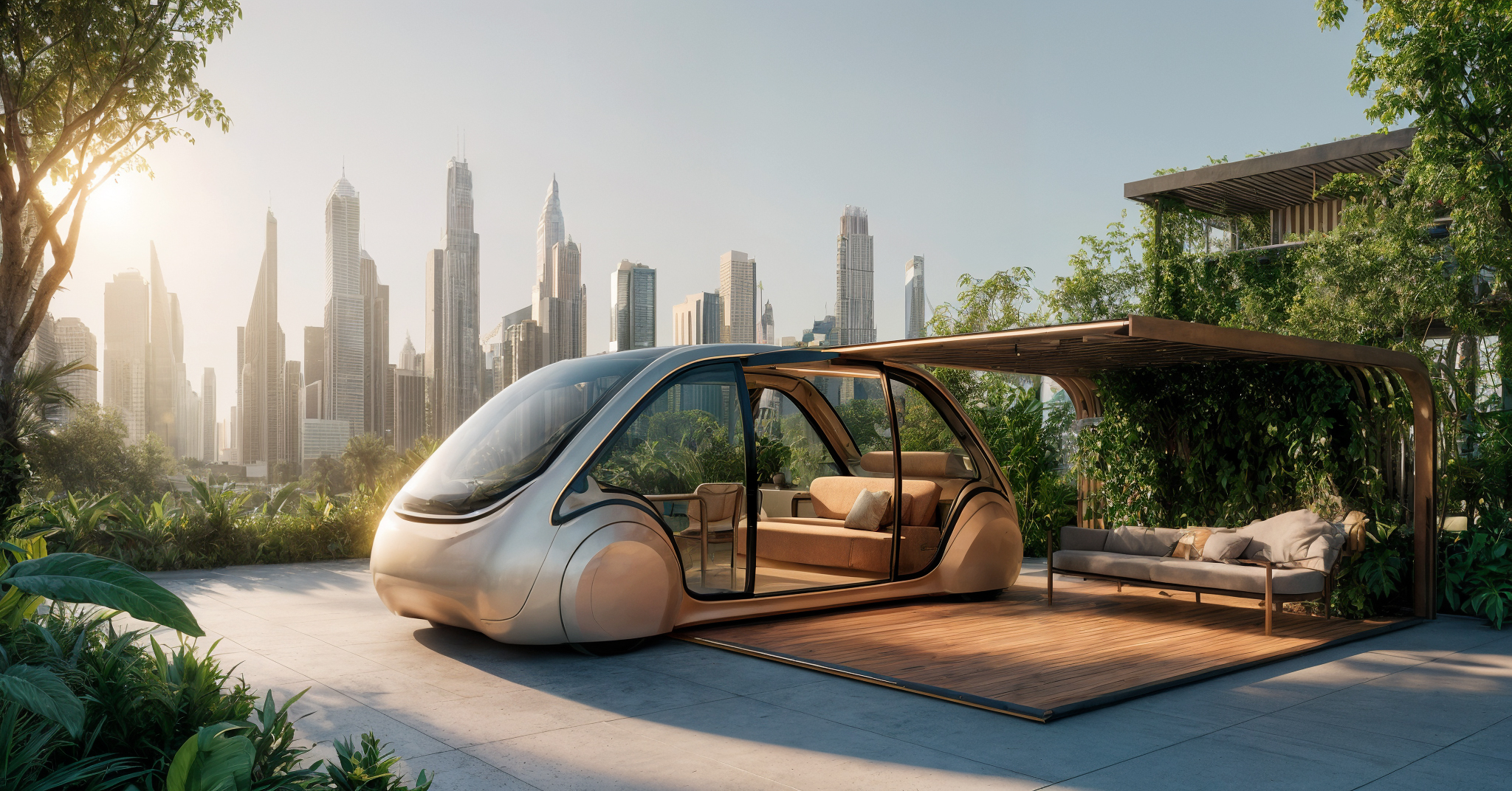
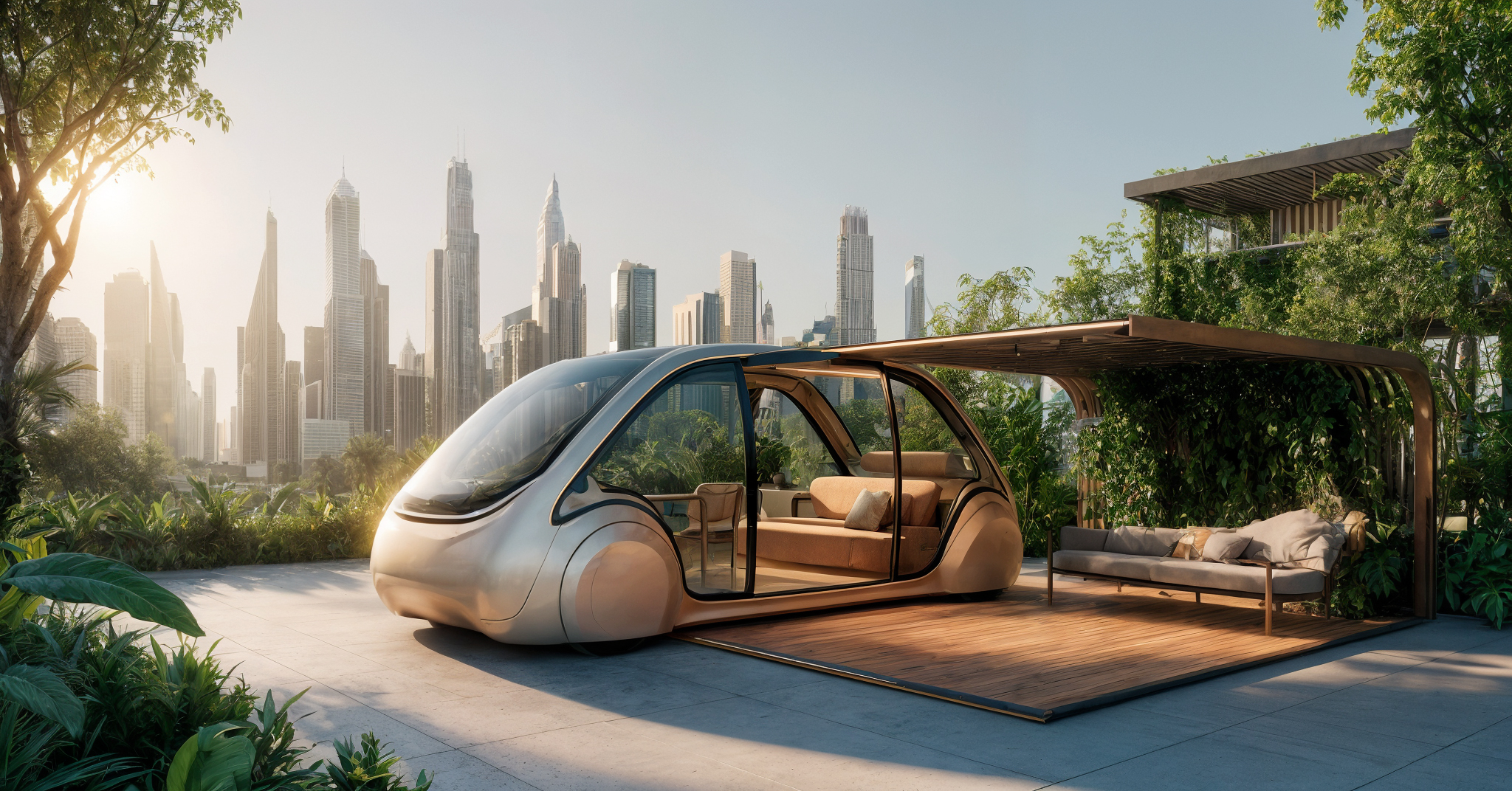
< Example outputs created using Midjourney and Krea AI tools >
If the designer of the past was a solitary artist who created everything alone, the designer of today is evolving into a conductor or curator who uses powerful tools to select the best among many ideas and infuse that choice with human sensibility and aesthetic value. The Double Diamond remains a valid framework, but the content within it and the speed at which we move have changed completely. Generative AI is no longer a mere tool; it has become a partner that amplifies a designer’s creativity. When I was at Logitech, as AI first appeared in the public eye, the common view among designers was, “Interesting, but it will not replace our work.” That was only three years ago. Today, AI is advancing so fast and across so many fields that it can feel less like amazement and more like fatigue. Even so, designers should not reject this change; we should accept AI as a collaborator. Only then can design evolve in directions we have not yet explored.
Design processes must evolve with the times, and AI is already at the center. The key is not to surrender the initiative to AI, but to wield it as managers and orchestrators. If we do, we can go beyond the UX or service roles that the era has emphasized and pioneer a new role: the system designer, someone who designs the entire system end to end.


















#14057, 905 49, Beolmal-ro 102beon-gil,
Dongan-gu, Anyang-si, Gyeonggi-do, Korea
Business Registration Number: 454-86-01044
Online Sales License No.: 2021-Anyang Dongan-1081
Copyright © DESIGNSORI Co., Ltd.