
Professor at Hanyang University
We now live in an era where artificial intelligence produces flawless efficiency and impeccable forms. Yet paradoxically, we find ourselves drawn to imperfection—the kind left by the human hand. The language of design no longer speaks through smooth surfaces and precise calculations alone, but through subtle tremors and traces that convey authenticity. Emotion that transcends perfection is at the core of why analog values are being rediscovered in today’s digital age. In previous columns, we explored how AI transforms the speed and efficiency of the design process, and the ethical and sensory challenges it introduces. Now, the designer is faced with a new question: how can we create new value from the unquantifiable realm of human imperfection? Preserving this analog value is not merely about defending creative authorship. It is a strategic choice that provides the emotional connection consumers long for in a digitized world.
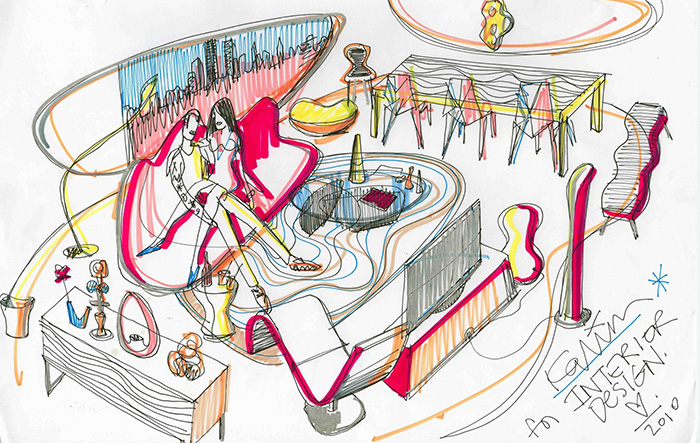
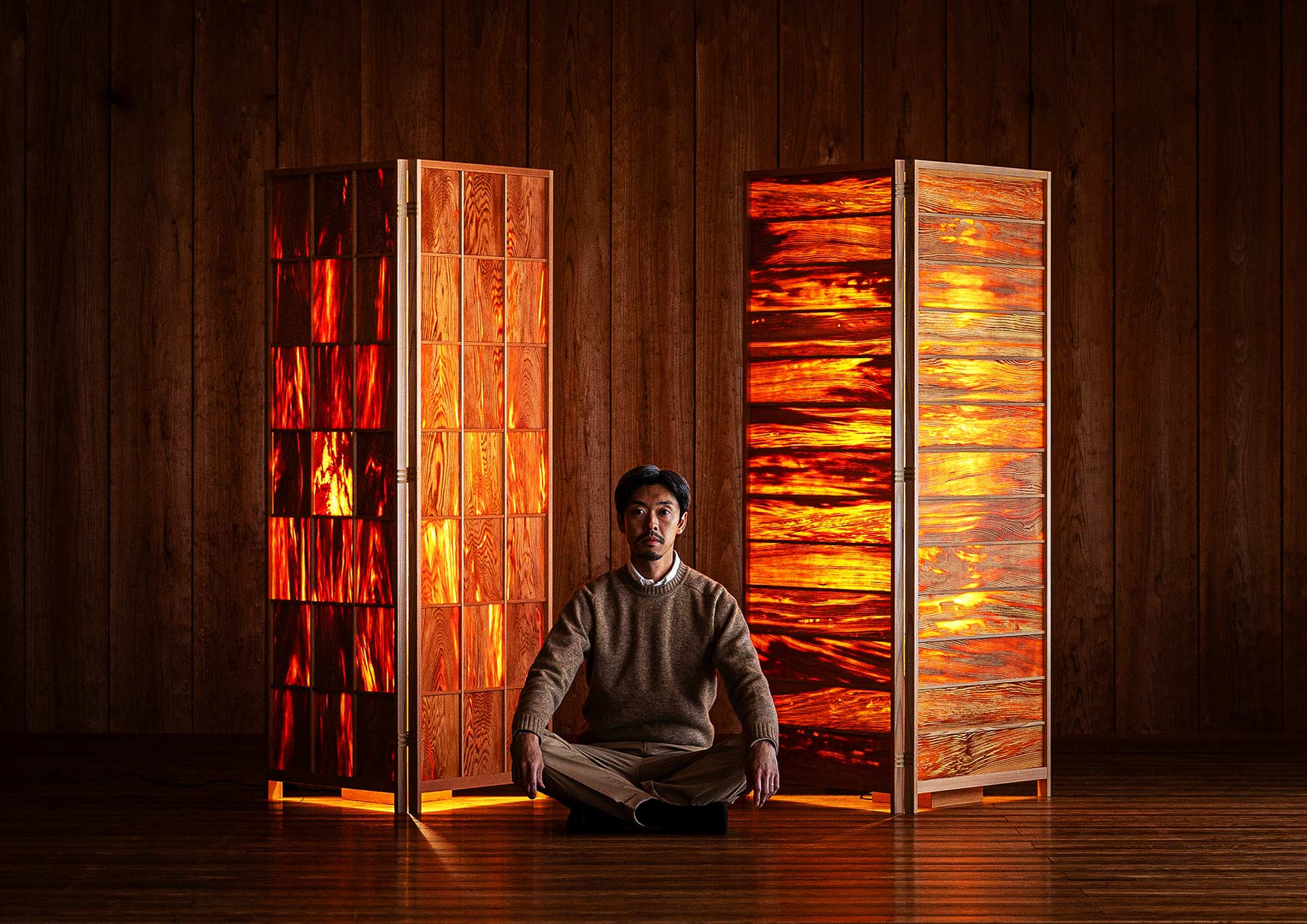
< Karim Rashid : Sketch of my living room for interior design magazine 2010 >
The Beauty and Rarity of Imperfection
AI relentlessly pursues logical perfection, generating seamless shapes without error. But human beings instinctively tire of uniform reproductions. Today’s design trends reflect this sentiment—favoring hand-crafted textures and expressive asymmetry over the polished look of mass production. This movement is a response to standardized aesthetics and a yearning for individual character that cannot be replicated. When AI achieves perfect symmetry, the tiny imbalances and vibrations in a craftsman’s hand become emotional evidence. Those marks become bridges of empathy.
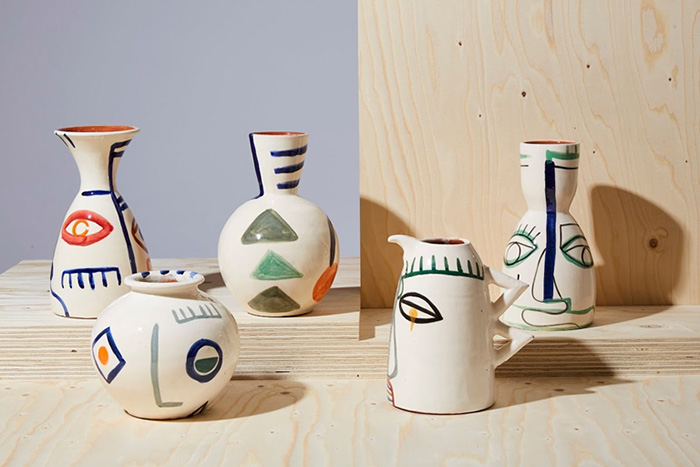
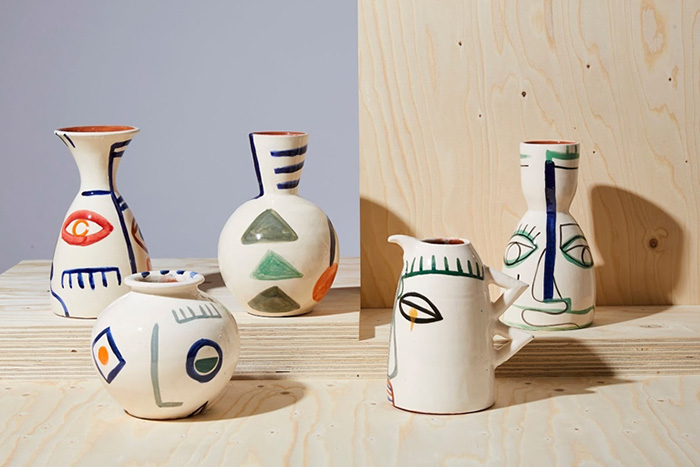
< Ceramic Collection, LRNCE, The Conran Shop >
Consider why a handmade ceramic piece often costs more than its machine-made counterpart. It is not about function, but about the visible traces of human touch embedded within. Imperfection becomes rarity. And that rarity creates a unique charm that mass production cannot replicate. When a designer intentionally uses imperfection as a design element, the product becomes more than a thing—it becomes a living object that speaks to the user. In this sense, designers must revive the artisan mindset, creating emotionally singular works that counterbalance AI’s optimized output.
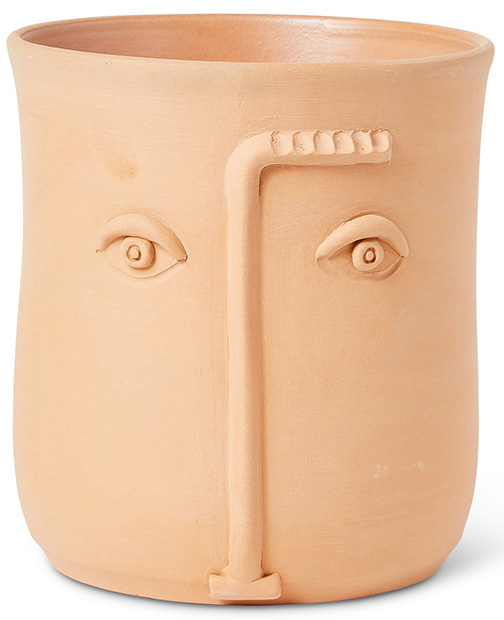
< The Conran Shop Face Vase Terracotta >
Stories of Authenticity and the Passage of Time
Efficiency alone does not complete design. In a time when speed and productivity are maximized, time itself becomes a new emotional medium. As we grow accustomed to instant results in a digital environment shaped by AI, the aesthetics of slowness and the accumulation of time gain rare value. Analog value is not only found in outcomes, but in the time spent shaping, carving, and waiting. This narrative of process builds emotional depth that cannot be replaced by money or efficiency.
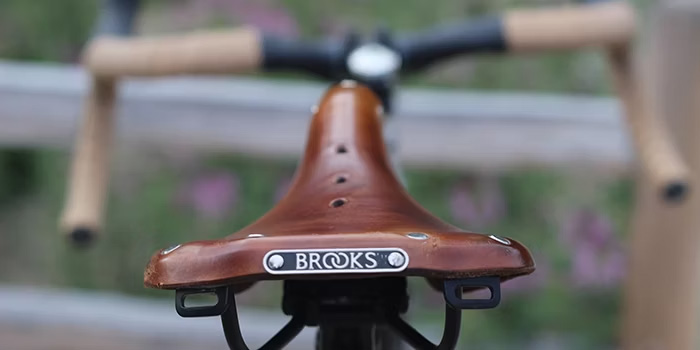
< Brooks England Saddle: Photo Credit Nathan Pipenberg (via REI.com) >
That is why natural materials like leather and wood, which darken and grow more valuable with age and touch, are once again receiving attention. Today, design is not about static perfection but about embracing change and aging as aesthetic processes. This signals a rejection of fast design and reflects a consumer desire for things that stay with them for a long time. We find it difficult to throw away an old leather wallet not because of its function, but because it holds the emotional weight of time and experience. AI may generate an image in one second, but it cannot embody the passage of years. Designers must learn how to design aging itself—how to express the traces of time as visual language. This is the philosophy of slow design, and also one of the paths toward sustainable design.
A New Creative Responsibility for Designers
Analog sensitivity offers a new form of training for designers in the AI era. When design students spend nights building mockups and repeating sketches, it is not merely an exercise. It is a process of physically learning how material differences affect the senses. Cold plastic and warm wood teach different things when held. This “knowledge of the body” is something AI can never acquire, no matter how much data it processes. Even when AI presents endless rational evidence, the final decision—such as “this material will feel warmer to the user”—comes from the designer’s experience and intuition. AI is a brilliant tool, but we must not lose our essential human senses in pursuit of its efficiency. Designers are no longer just creators but conductors—balancing technological precision with human authenticity. The more possibilities AI unlocks, the more designers must determine what to embrace and what to refuse. The center of that judgment lies in human emotion and the trace of the hand. The designer of tomorrow must interpret the times through sensibility, not technology. From the imperfect beauty of the human touch, new value is born. Design is not merely the act of forming efficient shapes—it is the promise to preserve human dignity and emotion in an ever-changing world. Rediscovering analog value is ultimately the reason human-centered design must continue to exist, and the direction in which future design must evolve.

















#14057, 905 49, Beolmal-ro 102beon-gil,
Dongan-gu, Anyang-si, Gyeonggi-do, Korea
Business Registration Number: 454-86-01044
Online Sales License No.: 2021-Anyang Dongan-1081
Copyright © DESIGNSORI Co., Ltd.