
Yungil Choi, Senior Manager at HYUNDAI E&C
Jury Member of the K-Design Award
When a prominent apartment complex in Seoul is completed, it often becomes a major topic of discussion in online real estate communities. Beyond the usual interest in location, initial sale prices, and current market values, a notable trend has emerged in recent years: growing attention to the landscaping of residential complexes. While apartment owners naturally take pride in showcasing the landscaped spaces of their homes, even the general public has begun engaging in serious discussions about landscape design and quality. This is much like the way consumers compare and evaluate luxury brands whenever a new product is launched. As one of the first spaces revealed upon a complex’s completion, apartment landscaping has become an important benchmark for assessing the value and quality of residential living, not only among residents but also among the broader public.
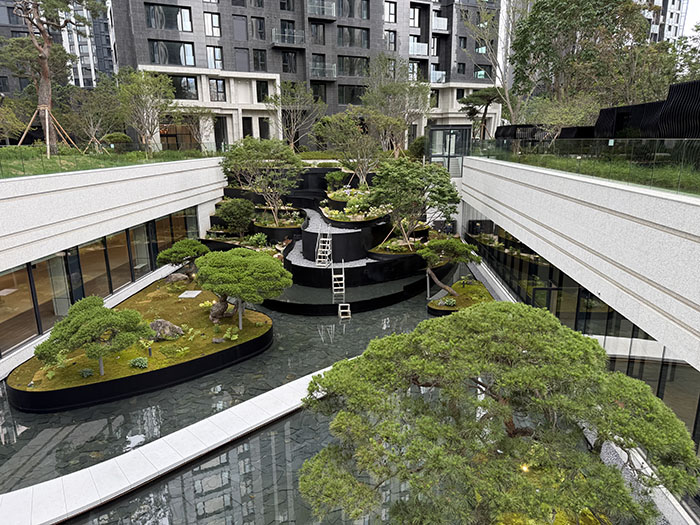
< Raemian Trini One – Gained attention for its distinctive sunken landscape design >
This phenomenon is equally fascinating for landscape architects. It offers not only an opportunity to present the results of their carefully designed and constructed work to clients for the first time, but also a rare chance to receive diverse and immediate feedback on spaces that are inherently private residential environments yet temporarily open to wider public observation. Considering that access to apartment complexes gradually becomes restricted to outsiders once residents begin moving in, the period around completion is perhaps the only time when apartment landscape design is openly exposed to public discussion and evaluation.
Landscape architects are primarily interested in whether users actually experience spaces as intended, whether particular scenes become memorable landscapes that people widely share, or whether visitors discover thoughtfully concealed design elements that enhance the appeal and comfort of the environment. What is particularly interesting, however, is that user feedback extends beyond evaluating the landscape architect's spatial design. Ultimately, these assessments go beyond the value of landscaping itself and become judgments about the apartment brand as a whole.
This growing interest in apartment landscaping began to take shape in the early 2000s, when parking facilities were increasingly moved underground, allowing most ground-level areas to be transformed into landscaped spaces. Previously, landscape design had largely been limited to meeting legally required green space standards. With the availability of more extensive ground-level areas, landscaping began to evolve into an integral part of everyday residential life. This transformation coincided with the rise of apartment branding in Korea, positioning landscape design as an important means of establishing brand identity and communicating distinctive residential value.
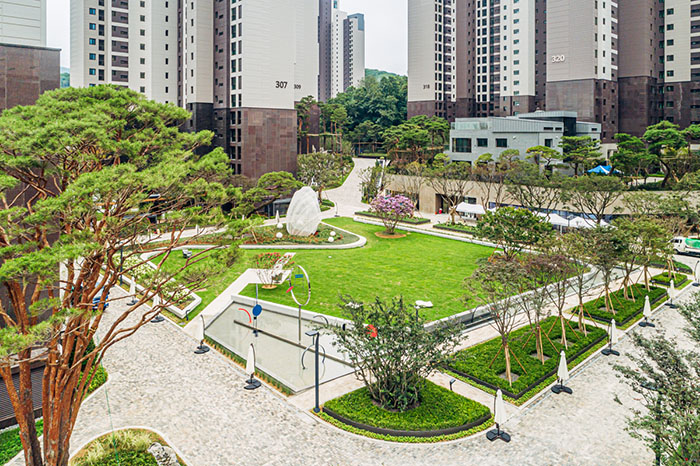
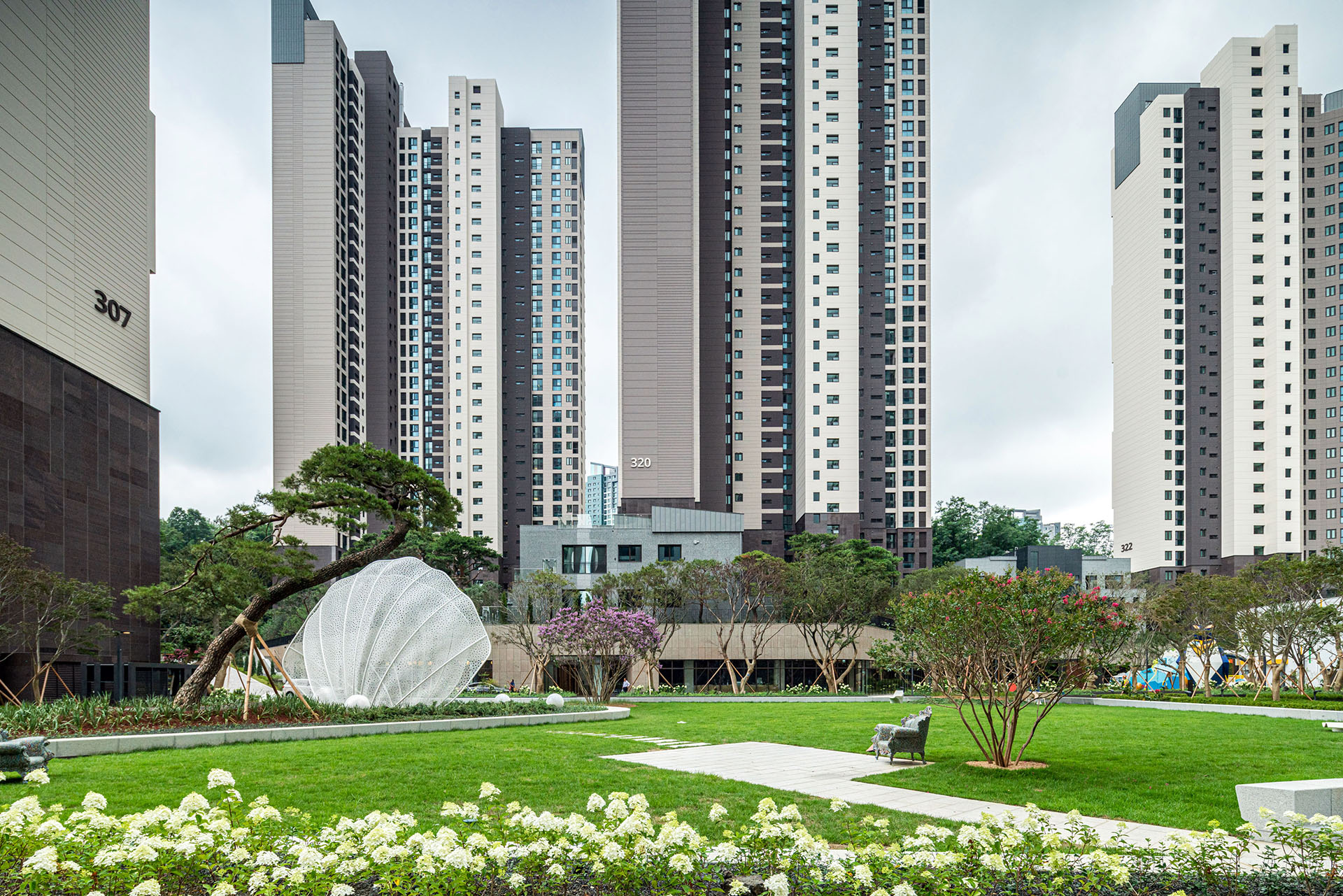
< The H Honor Hills – Most of the outdoor areas of the apartment complex were designed as landscaped spaces >
The branding of landscape design is also evident in my 2021 research, “Analysis of Changes in Apartment Complex Landscaping Using Big Data,” which examined newspaper articles published between 2000 and 2020. The findings revealed a significant increase in public interest and media coverage of apartment landscaping, particularly highlighting its growing recognition as a factor that differentiates apartment brands and enhances their premium value. Landscaping has evolved beyond simply providing green spaces within residential complexes to become an essential element of housing competitiveness. The research also suggested that, despite growing public interest, landscaping still has considerable potential to strengthen its position as a defining feature of residential developments.
This transformation has become even more apparent in recent years, as high-end residential brands seek to establish distinctive market positions. Construction companies introducing luxury residential brands must offer not only exceptional architecture and interior spaces but also landscape environments that reflect the same level of quality and sophistication. Customers, in turn, expect more than expansive green spaces. They seek environments that accommodate walking, relaxation, recreation, and social interaction while offering opportunities to experience nature and art. Landscaping has become both a means for developers to translate brand values into physical spaces and a touchpoint through which residents experience those values in everyday life.
Hyundai Engineering & Construction's The H Honor Hills is a representative example of how landscape design can reinforce brand identity. The landscape concept for The H, Hyundai's luxury residential brand, was developed around the idea of a "Contemporary Art Museum," creating an environment where trees, landscape features, and spatial elements interact organically to form a cohesive work of art. Through active collaboration between art and landscape design, the project introduced distinctive spaces such as artists' gardens, artistic playgrounds, and designer furniture installations. These achievements earned The H Honor Hills recognition at several domestic and international design awards. Notably, it was featured as the first apartment landscaping project in the 2022 selection of "50 Representative Landscape Architecture Projects of Korea."
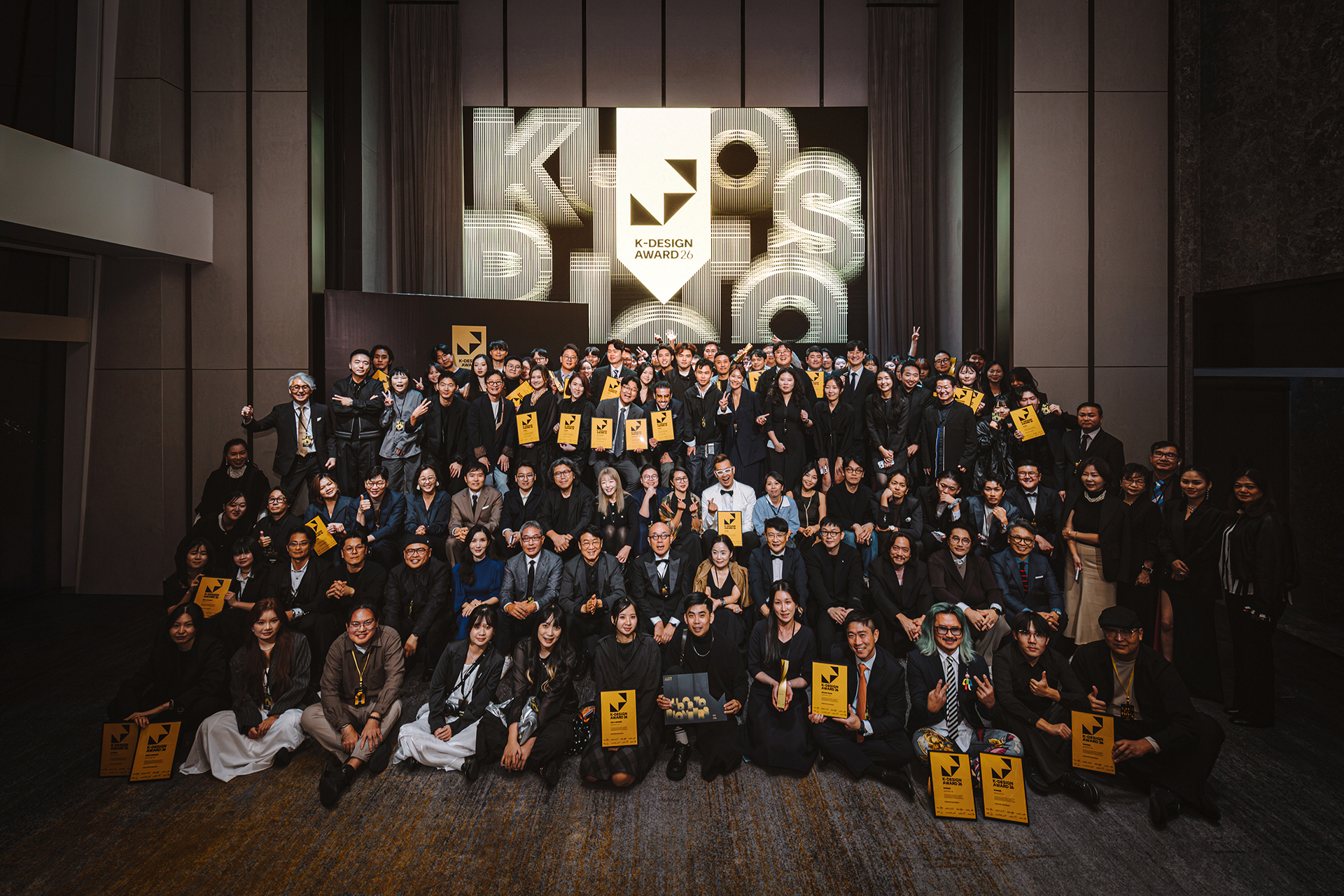
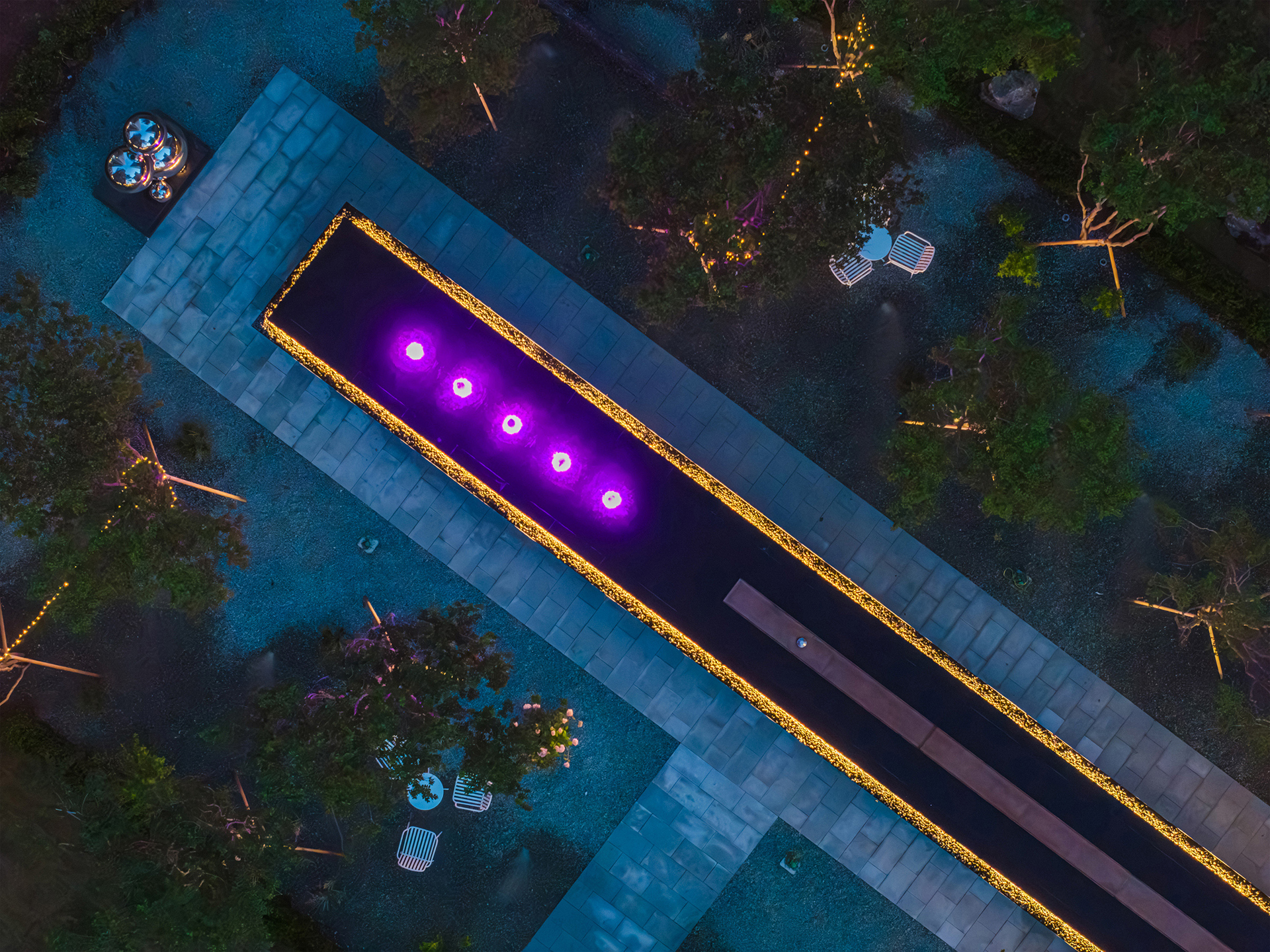
Following the successful establishment of The H Honor Hills, the "Contemporary Art Museum" concept became a defining element of The H's landscape branding. This philosophy continues in "Blossom Garden" at The H Bangbae, which received the Grand Prize at the 2026 K-Design Award. Created in collaboration with French sculptor Marc Fornes, the garden expresses a sculptural language that expands outward in concentric forms, resembling a flower coming into bloom. Through this distinctive approach, the project brings landscape architecture and contemporary art into a unified spatial experience.
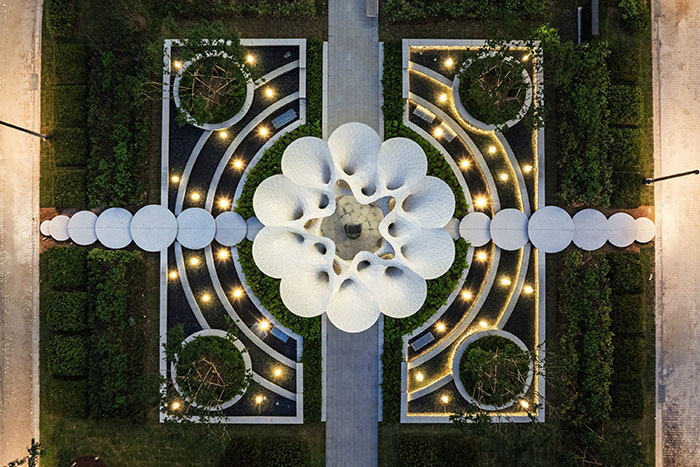
< The H Bangbae – Blossom Garden >
Year-end and New Year publications such as residential living trend reports and real estate trend reports frequently identify landscape design within apartment complexes as one of the top specialized design features considered when purchasing a home. Research also continues to demonstrate that landscaped spaces within residential complexes positively influence residential satisfaction and perceptions of apartment brands. With apartments having long been established as the predominant form of housing in Korea, it is now widely recognized that landscape design plays a significant role in shaping both the quality of residential environments and the language of brand identity. For landscape architects, whose contributions have historically received relatively little attention, this is undoubtedly a welcome development. At the same time, however, it raises new questions worthy of careful consideration.
Excessive attention to landscaping as a means of enhancing apartment value can easily lead to a superficial emphasis on visual spectacle, prioritizing elaborate exterior decoration over spatial functionality and the lived experiences of residents. Rather than engaging in the demanding process of understanding human psychology, patterns of use, and the essential qualities of landscaped spaces, designers may be tempted to take the easier path of repeatedly introducing visually provocative, kitschy elements that capture attention only momentarily. The concept of a "Contemporary Art Museum" cannot be realized simply by installing famous artworks throughout a residential complex. Its true purpose begins with bringing art, once experienced primarily in specialized cultural venues, into residential environments so that people can encounter and appreciate it as a natural part of everyday life.
Ultimately, an apartment brand may become known through its name, but its true value is demonstrated through everyday living. The paths residents walk each day, the gardens where they spend time, and the landscapes that change with the seasons collectively shape their perception of the brand. Good branded landscaping must go beyond creating spaces that inspire admiration at first sight. It should provide environments that residents continue to enjoy over many years, with qualities that gain depth and meaning over time. Establishing a distinctive design identity for an apartment brand while creating residential environments that enrich people's lives over time is precisely the role and responsibility of landscape architects.














#14057, 905 49, Beolmal-ro 102beon-gil,
Dongan-gu, Anyang-si, Gyeonggi-do, Korea
Business Registration Number: 454-86-01044
Online Sales License No.: 2021-Anyang Dongan-1081
Copyright © DESIGNSORI Co., Ltd.