
Co-Founder of lllayer
The recently unveiled Genesis GV90 Neolun. When the front and rear doors swing wide open in opposite directions, the interior is revealed in its full spaciousness, without a fixed pillar separating the two openings. The experience feels less like stepping into a car and more like entering a beautifully appointed lounge. The concept first introduced with the Neolun in 2024 has now evolved into a production model unveiled in August 2026.
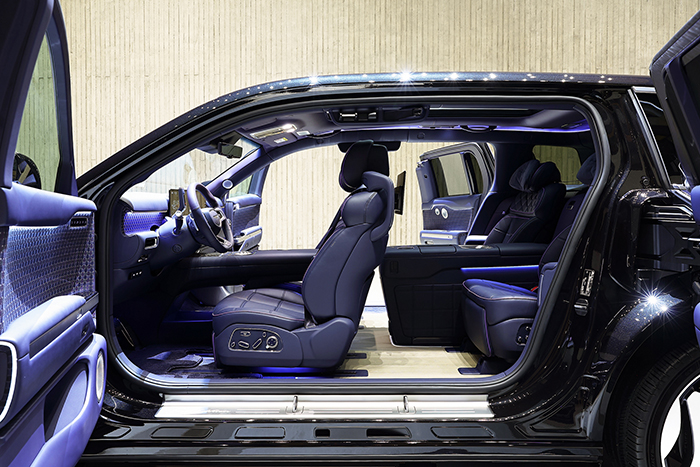
< The GV90 Neolun’s Opposing Doors Reveal a Spacious Interior | Image source: Genesis >
The story behind the vehicle’s design is equally fascinating. Genesis connects the design of the GV90 to the traditional Korean moon jar. Rather than adding eye-catching decorations, the design removes unnecessary elements and finds beauty in restrained forms. It is particularly striking that the sense of luxury expressed by an advanced electric vehicle draws inspiration from Korea’s longstanding aesthetic traditions.
Beyond these innovative approaches, Genesis has also demonstrated strong performance in international markets. Global retail sales reached 221,482 vehicles in 2025, while sales in the United States increased by approximately 10% year over year to 82,331 units, setting a new annual record. In 2026, Genesis ranked second among all brands in the Initial Quality Study conducted by U.S. market research firm J.D. Power, which evaluates vehicle owners’ quality experiences during the first 90 days of ownership.
Genesis has also expanded into the high-performance segment. In January 2026, the brand launched the GV60 Magma in South Korea, while Genesis Magma Racing entered the FIA World Endurance Championship (WEC) that same year, beginning to establish the brand’s presence on the racetrack as well as on public roads. According to reports published on October 18, its two competing vehicles secured first and third places in qualifying for the WEC 6 Hours of Barcelona, held the previous day. In its debut season, the team had already claimed pole position, the coveted first starting spot on the grid. Although this is not the same as winning the race itself, it is noteworthy that Genesis has begun demonstrating its high-performance potential through actual racing results on a stage shared with established competitors such as Ferrari and Toyota.
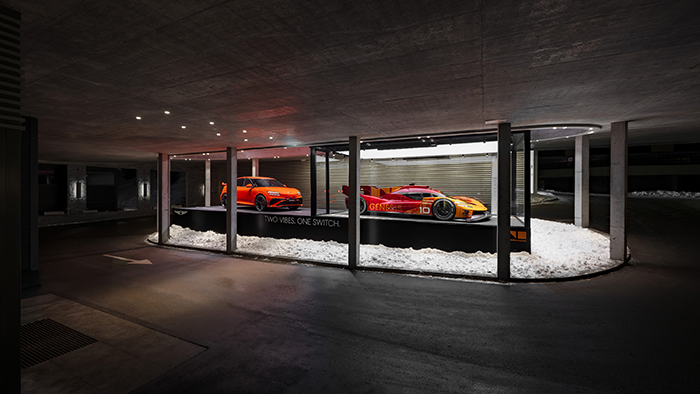
< GV60 Magma and GMR-001 Hypercar Displayed at the 2026 Davos Forum | Image source: Genesis >
In overseas test-drive videos, it is not uncommon to see Genesis vehicles compared directly with German luxury cars. Although these assessments reflect the opinions of individual reviewers, it is interesting to see Genesis increasingly treated as a brand worthy of comparison and consideration alongside established luxury marques. Yet Genesis did not begin as an independent automotive brand. It was originally the name of a luxury sedan produced by Hyundai Motor. How did that name come to encompass multiple vehicles, showrooms, cultural spaces, and now even racing cars?
How Did This Brand Begin?
Tracing its history back to 2008 brings us to the Genesis sedan introduced by Hyundai Motor. At the time, Genesis was a model developed as Hyundai’s entry into the luxury car market. According to Yonhap News Agency, which covered the brand’s launch, Hyundai had considered establishing Genesis as an independent brand during its development, but the plan was postponed due to factors including the global financial crisis. The independent brand was officially launched seven years later, in November 2015. Hyundai Motor announced that Genesis would operate as a separate luxury brand. This did not mean that Genesis had become a different company from Hyundai Motor. Rather, the company decided to establish a distinct brand identity and set of customer expectations while continuing to draw on the same technological capabilities and corporate resources.
The model lineup was also reorganized at this point. The Hyundai Genesis sedan evolved into the G80, while the flagship model descended from the Equus was named EQ900 in South Korea and G90 in overseas markets. The subsequent introduction of the G70 further expanded the sedan lineup. This explains why the Genesis brand of today is sometimes confused with the original Genesis model. A name initially associated with a single vehicle had been transformed into a brand shared by multiple models. However, establishing a separate name did not immediately change how customers perceived its value. When Genesis launched in 2015, international news agency Reuters highlighted Hyundai’s ambition to move upmarket from its reputation as a manufacturer of affordable vehicles. The company had reasons to pursue greater profitability, but customers already had established alternatives such as Mercedes-Benz, BMW, and Lexus. To command higher prices, the new brand needed to offer more than the promise of a good car. It had to give customers a compelling reason to choose the Genesis name itself.
Achieving independence at the retail level was equally challenging. In the United States, efforts were underway to establish a dedicated Genesis sales network, but according to a 2019 report by Cars.com, 320 showrooms were still operating within existing Hyundai dealership facilities. Although the vehicles carried a new brand name, the spaces customers visited and the people they encountered could not be transformed overnight. This illustrates just how far the process of building a brand extends. A company can directly design a vehicle’s appearance and performance, but ensuring that the purchasing experience, customer service, and maintenance process all meet the same expectations requires considerably more time and investment. Genesis could not achieve true independence simply by unveiling a new logo at a launch event.
Looking at the experiences Genesis has layered onto its brand since then, the first thing that stands out is the development of a distinctive visual identity. Designers with extensive experience in the global automotive industry, including Luc Donckerwolke and SangYup Lee, joined the company, and Genesis began establishing a consistent design language across its models. The description accompanying the G80 unveiled in 2020 emphasized the Crest Grille, Two-Line lighting signature, and generous use of open space in the interior. The intention was to make every vehicle immediately recognizable as a Genesis, regardless of its model or body style.
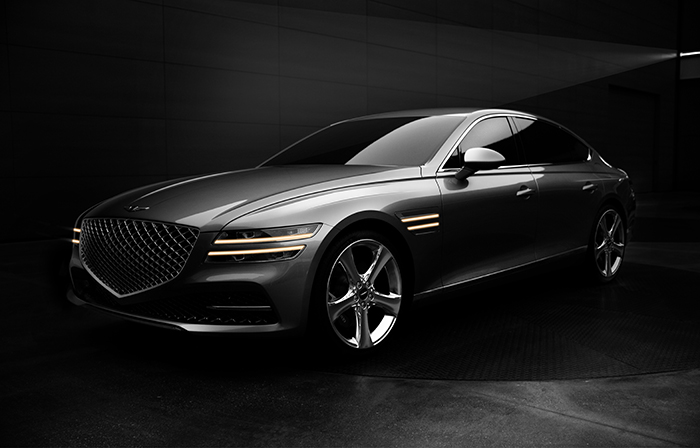
< The Crest Grille and Two-Line Headlights of the G80 Unveiled in 2020 | Image source: Genesis >
From the perspective of someone who studies brands, the simplicity of the Two-Line design is particularly interesting. Not every customer remembers model names or differences in engine specifications. Yet if people can recognize a brand simply by the lights of a vehicle approaching from a distance, that recurring visual signature becomes a powerful means of reinforcing brand recognition. Genesis has consistently layered a recognizable visual identity alongside the messages that communicate what the brand stands for. This is precisely the process I discuss in my book, Layering. Experiences encountered by customers at different moments come together to create a consistent impression, eventually forming a lasting memory of a single brand.
What allowed this distinctive identity to reach more customers was the expansion of the product lineup. SUVs such as the GV80 and GV70 were added to a brand that had initially focused on sedans. Customers looking for an SUV could now find a vehicle suited to their lifestyles within the Genesis lineup. According to sales figures compiled from company data, global annual sales increased from 132,450 vehicles in 2020 to 201,415 in 2021, reaching 229,532 in 2024. These figures demonstrate how the brand expanded alongside its growing SUV lineup. However, it would be difficult to attribute this growth entirely to a particular design feature or the introduction of a single new model.
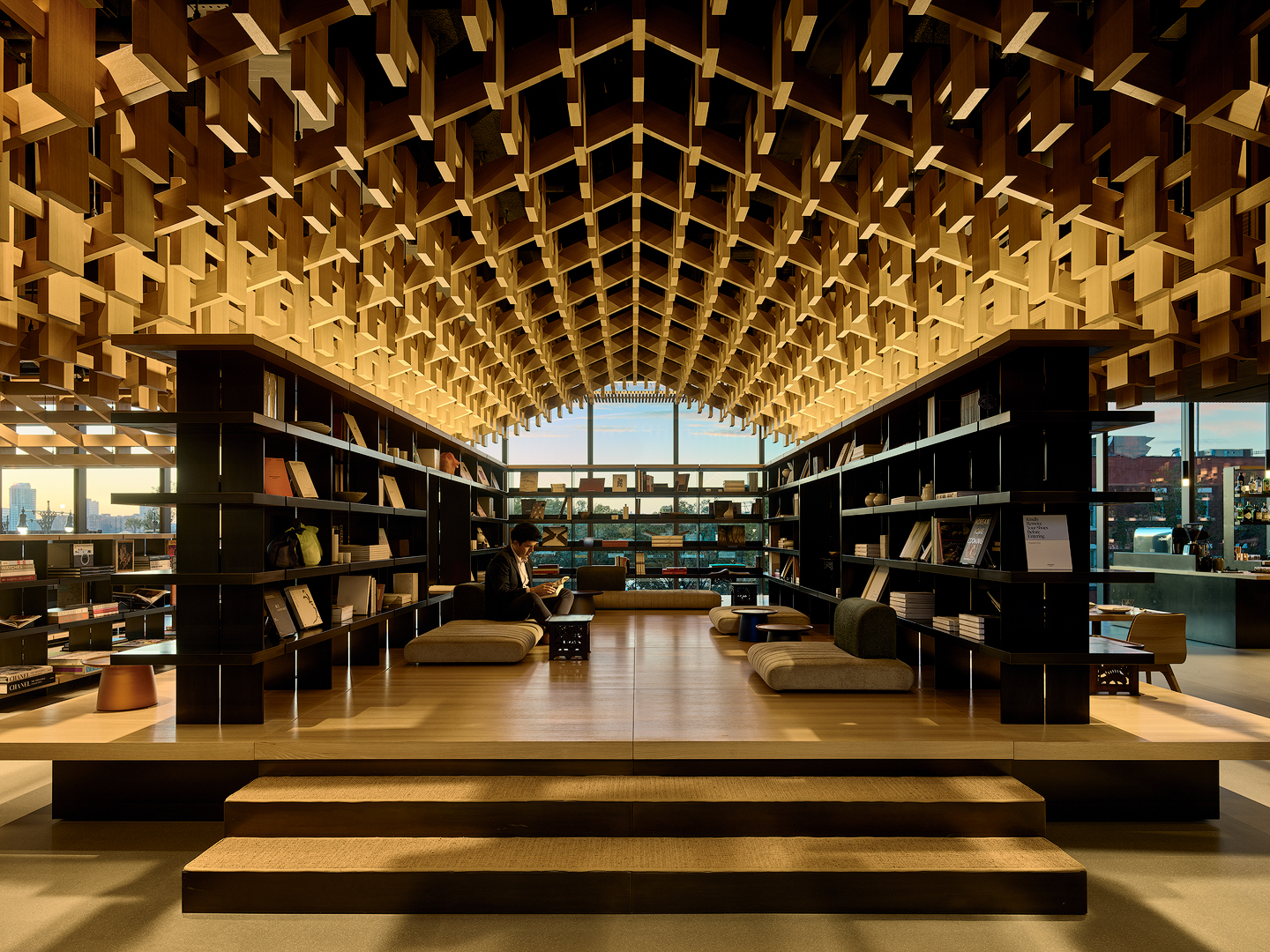
Genesis also began creating spaces where people could experience the brand beyond its vehicles. A notable example is Genesis House New York, which opened in 2021. Alongside its vehicle exhibition spaces, it introduced areas where visitors could experience Korean tea, cuisine, books, and culture. This created a point of connection where even those with no immediate intention of purchasing a car could discover the lifestyle and sensibilities that Genesis sought to express.
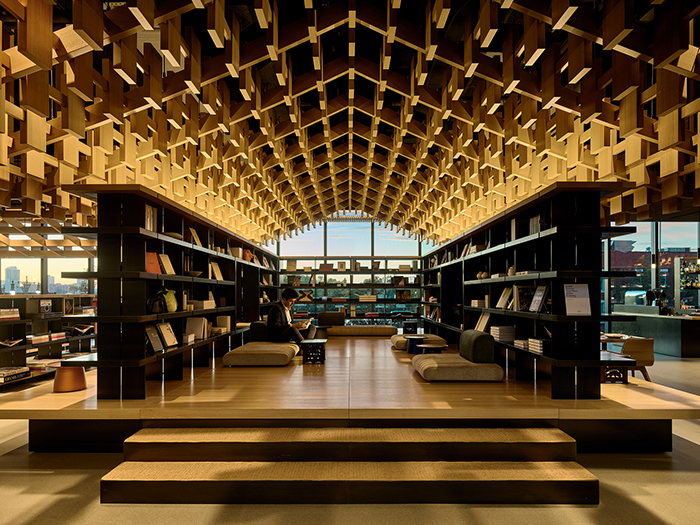
When we consider these choices together, the story of the moon jar takes on a slightly different meaning. Korean luxury cannot be fully expressed simply by applying traditional patterns to automobiles. It must also be reflected in how spaces are left open, how people are welcomed, and what kinds of experiences they have within those spaces. Genesis is attempting to layer the same sensibility into both the design of its vehicles and its brand environments. Does this mean Genesis has now become a luxury brand recognized around the world? The sales figures suggest a more complicated answer. Unlike the growth seen in the United States, as discussed earlier, Genesis sold approximately 2,500 vehicles in Europe in 2025, according to local reports. Even considering its later entry into the European market, success in one region has not necessarily translated into comparable results elsewhere.
Growth in South Korea has not been uninterrupted either. Domestic sales in 2025 fell 9.4% year over year to 118,395 vehicles. Korean media reports pointed to challenges such as aging core models and the lack of hybrid options. This suggests that even after becoming a familiar brand, Genesis must continue offering products that reflect what customers want today. The introduction of Magma and the brand’s entry into motorsports should not be interpreted as evidence that Genesis already possesses a long-established racing heritage. What matters is that the brand has now begun building that history. People remember more than product descriptions. They also develop relationships with brands through the passage of time, observing how they perform in competition and what they change after experiencing failure. Motorsports can therefore be seen as a new stage on which Genesis can layer stories of challenge and performance onto the driving experiences it already offers.
I also visited Genesis Suji to see the GV90 in person. Having encountered so many automotive designs that emphasize futuristic and mechanical aesthetics, I found Genesis’s effort to seek its next direction in Korean history and traditional aesthetics particularly compelling. Looking back to the moon jar while envisioning the form of an advanced electric vehicle presents an intriguing paradox. It feels like an attempt to discover, within an ancient cultural tradition, an identity that can remain distinctly its own in the future. I hope Genesis continues in this direction for many years to come. To achieve that, however, the moon jar must become more than a beautiful story told when introducing a new vehicle. Its restrained aesthetic should evolve into a recognizable design identity that endures across generations, while its interiors should express the same philosophy through comfortable materials and intuitive controls. The Korean spirit of hospitality that the brand emphasizes must also translate into experiences that respect customers’ time, from the way they are welcomed at showrooms to service appointments and clear communication throughout the repair process.
Ultimately, I believe what matters most is consistently fulfilling the same promise across the many moments when customers encounter a brand. When the beauty experienced through photographs translates into genuine comfort behind the wheel, and the expectations formed during purchase develop into lasting trust throughout ownership, the Genesis name will leave a clearer and more enduring impression. Quality and service must repeatedly reaffirm the first impression created by design. I hope Genesis, a brand envisioning the future of automobiles through Korea’s timeless beauty, will establish itself among the world’s finest luxury automobiles. It would be especially rewarding if the reasons for choosing Genesis extended beyond our own national pride and became qualities that customers around the world could experience firsthand and willingly choose again.














#14057, 905 49, Beolmal-ro 102beon-gil,
Dongan-gu, Anyang-si, Gyeonggi-do, Korea
Business Registration Number: 454-86-01044
Online Sales License No.: 2021-Anyang Dongan-1081
Copyright © DESIGNSORI Co., Ltd.