
Give Midjourney a prompt such as “an object combining the silhouette of a Porsche with the cool precision of Leica’s metal craftsmanship,” and within seconds, it will generate a stream of highly polished images. By 2026, everything from a product’s sense of mass and the precisely calibrated markings on its dial to the substantial material quality of a vintage lens can be rendered with remarkable accuracy. Although the image has only just appeared on a computer screen, it can look like an archival object refined over decades in a historic Swiss workshop. Judging by appearance alone, it could easily be mistaken for an object produced by a brand with a century of history. Today’s generative tools can instantly replicate even the subtle CMF details that designers once spent days and nights perfecting. Yet no matter how convincing these virtual objects may look, we still hesitate to pay a premium for them.
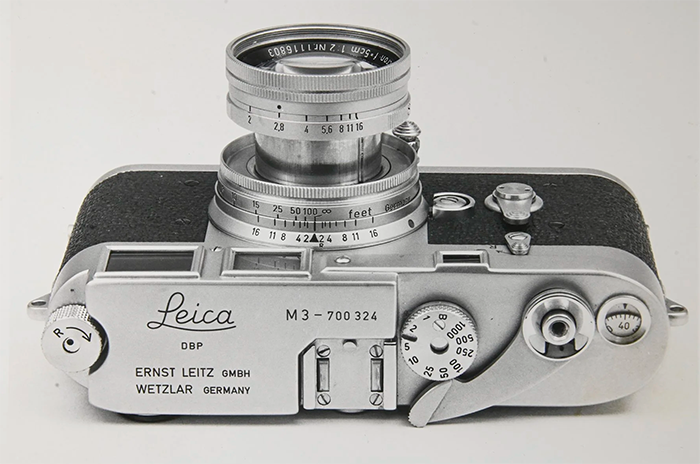
Leica M3. We pay not for the technical specifications, but for the human history accumulated behind them.
When we pick up a Leica M, what we are paying for is not its technical specifications. In terms of lens and sensor performance alone, the latest Japanese mirrorless cameras can easily outperform it. They can focus in near darkness as if it were daylight, use AI to track a subject’s eyes in real time, and shoot dozens of frames per second. By contrast, using a Leica requires you to turn the focus ring manually and align the rangefinder images before pressing the shutter. There is no image stabilization, and continuous shooting is slow. By today’s standards, it is thoroughly inefficient and inconvenient. To someone who values practicality above all else, it may seem like nothing more than an incomprehensibly expensive toy.
And yet, people still respond to Leica’s red logo. The product carries the weight of time. It recalls the prototype Oskar Barnack created in 1914 while searching for a compact camera that could fit comfortably in the hand, as well as the way Henri Cartier Bresson quietly framed moments on the streets of Paris. The deliberate act of looking through a Leica viewfinder allows us to experience how photographers have observed the world for more than a century. It creates a human connection that is difficult to find in the latest digital cameras, where almost everything can be corrected at the touch of a button.
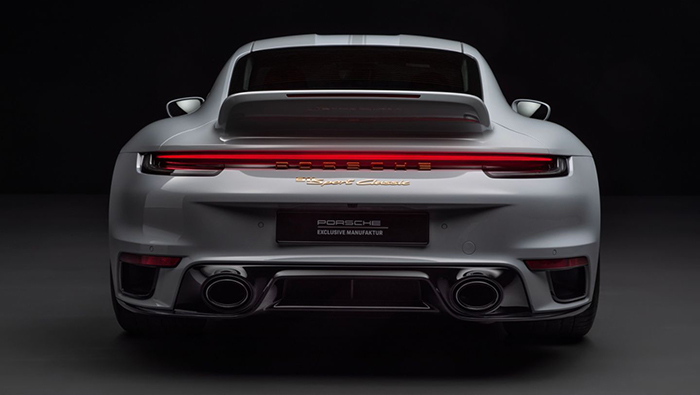
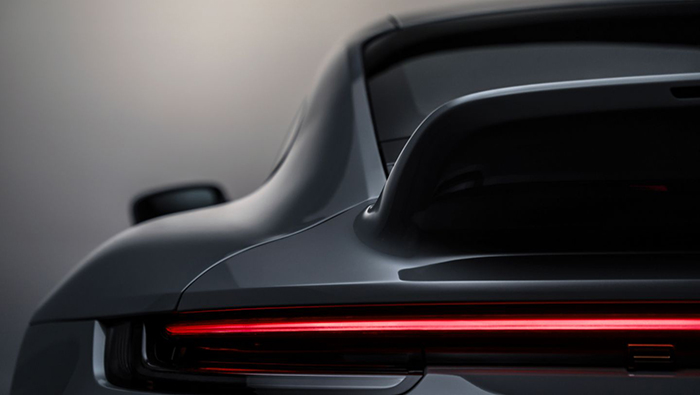
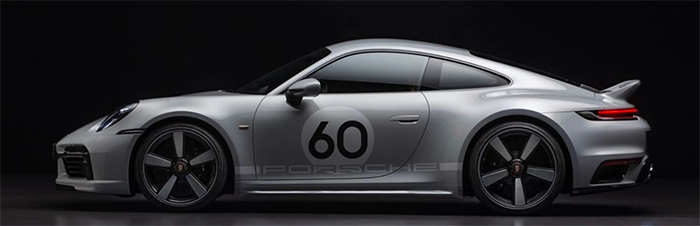
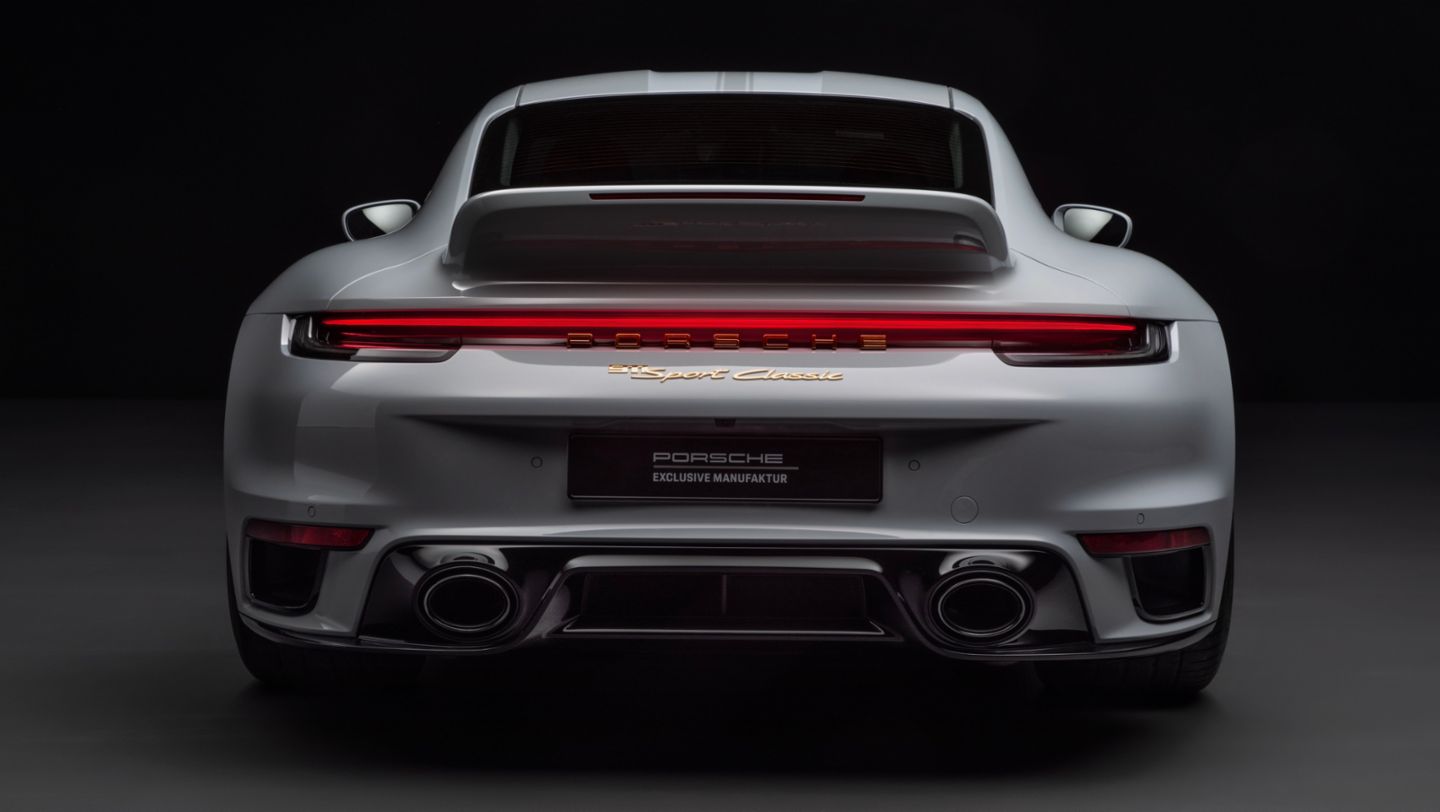
The fixed ducktail spoiler of the 911 Sport Classic, a modern reinterpretation of the legacy of the 1973 Carrera RS 2.7
The Porsche 911 is no different. By conventional automotive engineering standards, its rear engine, rear wheel drive layout, with a heavy engine positioned behind the rear axle, appears to defy the basic principles of stable vehicle design. The rear can lose traction during cornering, making the car difficult and potentially dangerous to control. If the design had been entrusted to modern algorithms optimized for aerodynamics, stability, and measurable performance, the engine would have been moved to the center or the body would have been completely redesigned decades ago. From a purely computational perspective, the 911’s architecture would have been treated as a flaw to be corrected.
Porsche did not eliminate that flaw. It retained the cramped rear seats, the rounded roofline reminiscent of a frog, and the rear engine layout that could easily become unstable. To manage these inherent weaknesses, Porsche spent decades adjusting the suspension, refining the chassis, widening the tires, and working against the limitations of physics. That refusal to abandon the original concept, tested and refined through decades of racing, ultimately shaped the 911 we know today. The solidity we feel when gripping the steering wheel of a 911 is more than the sensation of driving a well engineered vehicle. It embodies the attitude of the people who spent more than 60 years confronting its flaws and refusing to give up.
The same is true of Hermès leather goods and the Rolex Submariner. They are not products created by conducting market research and arriving at an average designed to appeal to the largest possible audience. They emerge from relentless conviction, repeated trial and error, and a philosophy preserved through crises that might otherwise have ended the brand. Ultimately, what people recognize as true premium value is not simply the polished surface of a beautifully resolved form. It is the weight of accumulated time and the human choices behind it, including the failures endured and the persistence required to preserve that form.
This leaves one question. Can AI ever fill this territory as well?
The logic behind the algorithm is clear. It gathers countless references from across the web and identifies patterns designed to minimize the risk of failure. AI can learn the narratives of Leica, Porsche, and Rolex and generate fictional brand histories and narratives of craftsmanship in a matter of seconds. It can even convincingly synthesize videos of imaginary artisans hand stitching leather. But however plausible these stories may seem, they are ultimately fabrications assembled from past data.
A brand’s real history is created when people stand by a choice even when they know it may come at a cost. The decision to resist trends, risk rejection by the market, and still insist that a design or production method must not change is what eventually creates a story capable of persuading people. AI, by contrast, can filter out failure and combine patterns that have already proven successful. Its results carry none of the real scars that come from testing ideas, making mistakes, and confronting reality.

The touch of a craftsman that no optimized machine can imitate. Heritage is born not from a calculated average, but from the persistence to endure inefficiency.
< Image source: Roberto Giovannini >
No matter how sophisticated AI generated images and narratives become, people will not place genuine trust in a fabricated history. Brand heritage becomes credible only when the traces of repeated challenges accumulate over time and become part of the product itself. This is why “timeless design,” which remains relevant even as the times change, still belongs to the human realm.
Timeless design is not the most efficient answer according to the numbers. It is the result of standards and principles that someone chose to protect until the end, even when the market demanded quick compromises in the name of optimization. A machine can find the fastest shortcut and the most statistically favorable combination, but it cannot decide for itself why a costly and inefficient choice is worth preserving. Decisions such as “This feature may be popular this season, but we will not include it,” or “Even if it doubles the cost, we will maintain this finishing method,” do not come from data. Only the people who take responsibility for a brand can accept that risk and invest the time required to uphold such decisions.
We now live in an age when machines can convincingly reproduce the atmosphere of a century old brand within seconds. The ability to create aesthetically refined forms alone is no longer enough to move people. As the value of design shifts from its visible surface to the principles and accumulated time behind it, can a story assembled by an algorithm ever inspire genuine enthusiasm? Or will we continue to value the histories created by people who have actually endured failure, struggle, and the passage of time?



















#14057, 905 49, Beolmal-ro 102beon-gil,
Dongan-gu, Anyang-si, Gyeonggi-do, Korea
Business Registration Number: 454-86-01044
Online Sales License No.: 2021-Anyang Dongan-1081
Copyright © DESIGNSORI Co., Ltd.