
The role of contemporary design is no longer limited to inventing entirely new forms or functions. Increasingly, its value lies in carefully reinterpreting familiar forms and established styles to capture attention and influence purchase intent and behavior. In other words, the competitive power of design today comes not only from creating objects the world has never seen, but also from making familiar objects appear entirely new. Most of us already know what a knife and cutlery organizer is. We know what a food waste disposer does, and we understand the basic purpose of cosmetic packaging. None of these products is a new invention. Yet some products make us want them the moment we see them, even before we understand their functions. Before considering whether we need them, we imagine where they would sit in our homes and how our daily lives might change once we begin using them. What, then, makes consumers say, “I want this”? Three Asia Design Prize winners answer that question in different ways. Their shared strength lies not in the novelty of their functions, but in how they translate existing functions into distinctive forms, sensations, and scenes of everyday life.
Turning Kitchen Tools into Furniture
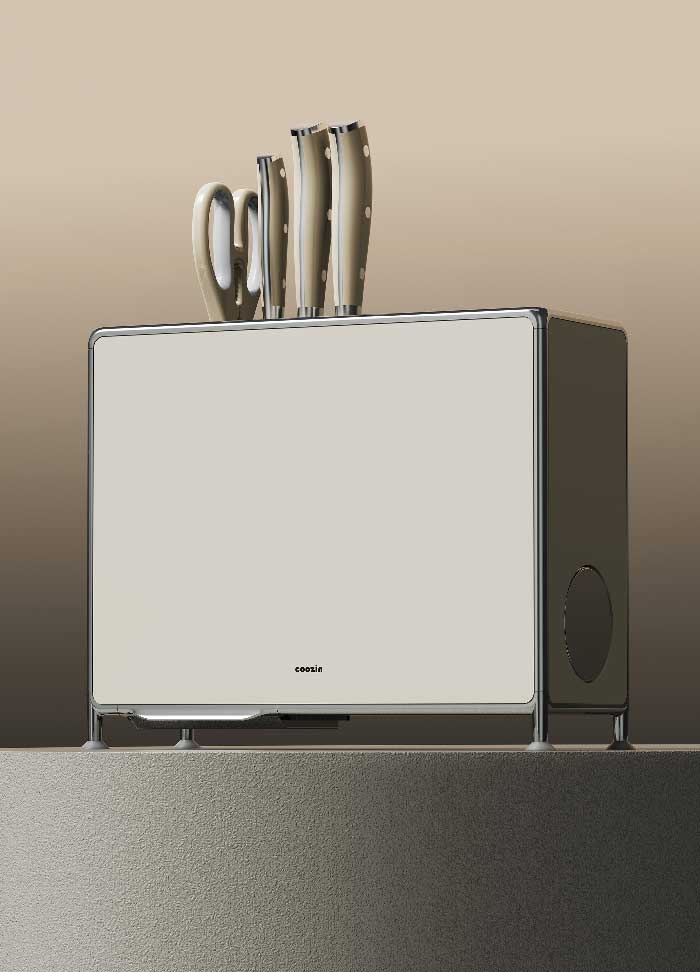
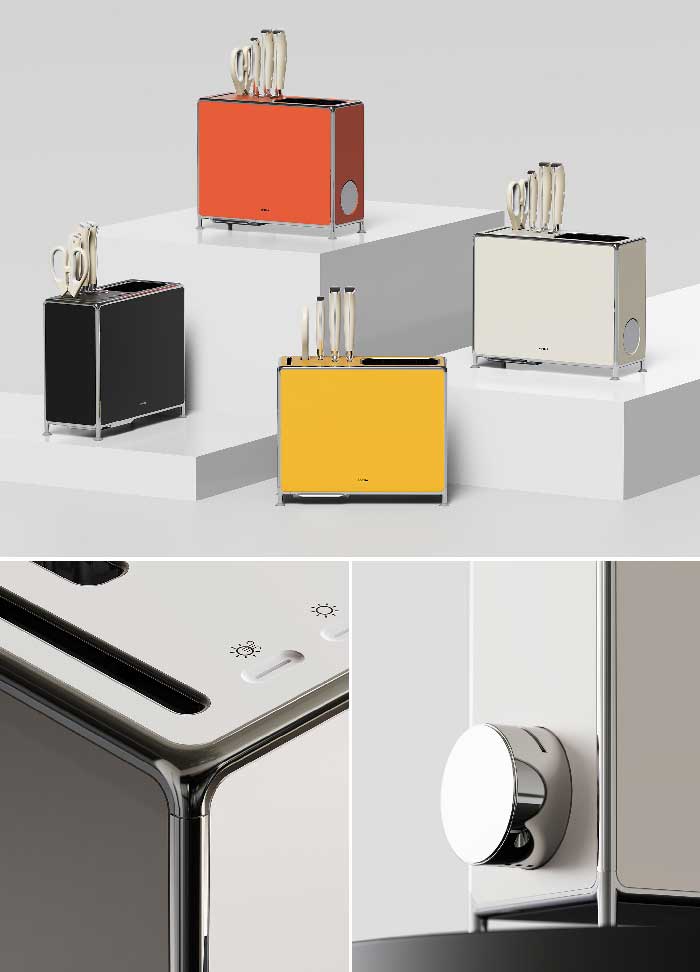
< Knife Care, ASIA DESIGN PRIZE 2026 Winner >
Knife Care is a multifunctional care box that sterilizes, dries, and stores knives, scissors, spoons, and other cutlery. It combines UV LED sterilization, hot air drying, an electric knife sharpener, and a drainage structure to provide a hygienic way to manage kitchen tools. Its strength, however, does not lie simply in placing several functions inside one box. More importantly, it transforms a kitchen hygiene appliance from something that should be stored out of sight into an object designed to remain on display. The product begins with a simple box structure. Chrome trim connects its edges and corners, while the lower section features forms reminiscent of furniture legs. The LED display on the front disappears completely when it is not in use. When the appliance is inactive, its mechanical character recedes, allowing it to sit in the kitchen like a refined piece of furniture.
This styling is highly strategic. Sterilization and drying are inherently invisible functions. What consumers see every day is not the sterilization process itself, but the impression the product creates on the kitchen counter. Knife Care translates the unseen value of hygiene into a visible language through precise chrome detailing, furniture like proportions, and a concealed interface. Ultimately, consumers are not buying a sterilization function alone. They are also buying an image of themselves maintaining a cleaner, more organized kitchen and a lifestyle defined by professional care. Knife Care creates a reason to purchase by translating confidence in its performance into visual refinement.
Turning a Waste Appliance into Something You Want Nearby
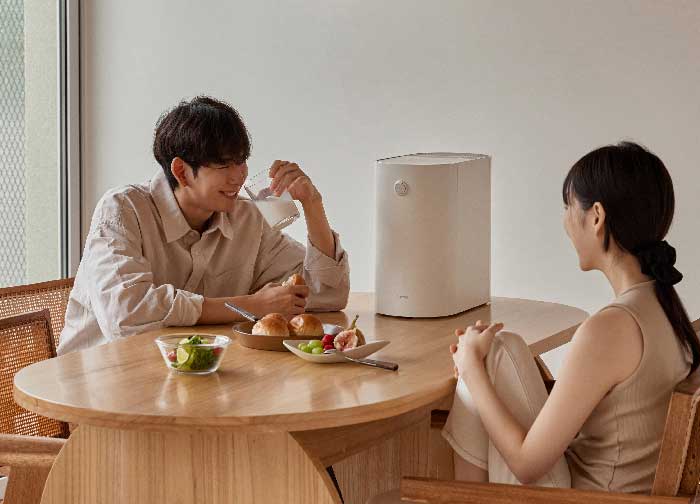
< MINIX The Flender Food Waste Disposer, ASIA DESIGN PRIZE 2024 Grand Prize >
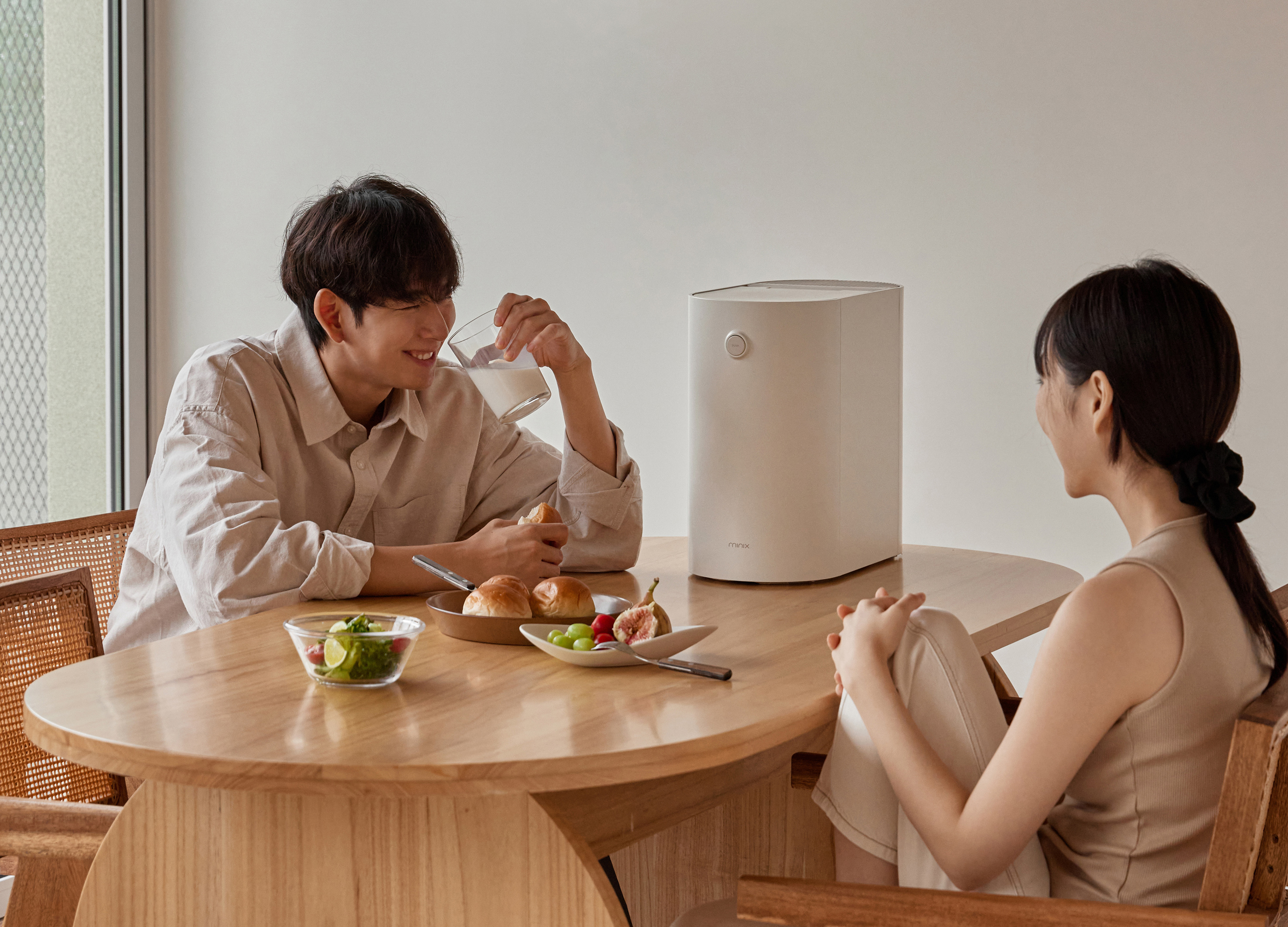
A food waste disposer is the kind of product whose practical value consumers recognize but whose presence they do not necessarily want to see. It evokes food scraps, odors, noise, and bulk. The most difficult challenge in designing such a product is therefore not explaining its function, but removing the negative associations surrounding it. MINIX The Flender Food Waste Disposer addresses this challenge through a compact footprint and approachable styling. Designed primarily for small homes occupied by one or two people, it is smaller than comparable products and can be installed easily in narrow, crowded kitchens. Its grinding and drying system improves ease of maintenance, while a frequently used door button placed on the front supports intuitive operation.
What makes the product desirable, however, goes beyond the physical fact that it is small. Its rounded front and rear make it appear even more compact and approachable than its actual volume suggests. Matte beige and greige colors reduce its mechanical presence and help it blend naturally into a range of kitchen interiors. The top door, controls, and filter cover are arranged according to the order of use, creating a further sense of functional clarity and stability. The rounded form and neutral colors are not simply applications of current trends. They are emotional design devices that transform a machine associated with unpleasant waste into a small and friendly home appliance. Through its form, consumers anticipate that the inconvenience and discomfort of using the product will also be reduced. Design lowers the psychological barrier before they experience the actual function.
The “freedom of space” proposed by MINIX The Flender means more than reducing the area occupied by the appliance. It also offers freedom from the need to hide an unattractive machine, the difficulty of finding space for it in a crowded kitchen, and the concern that it might disrupt the atmosphere of the home.
Along with processing food waste, the product sells an image of a more organized and spacious way of living. Consumers may be purchasing a single appliance, but that choice allows them to feel that they are also acquiring a simpler and more considered kitchen lifestyle.
Turning Disposable Packaging into a Lasting Object
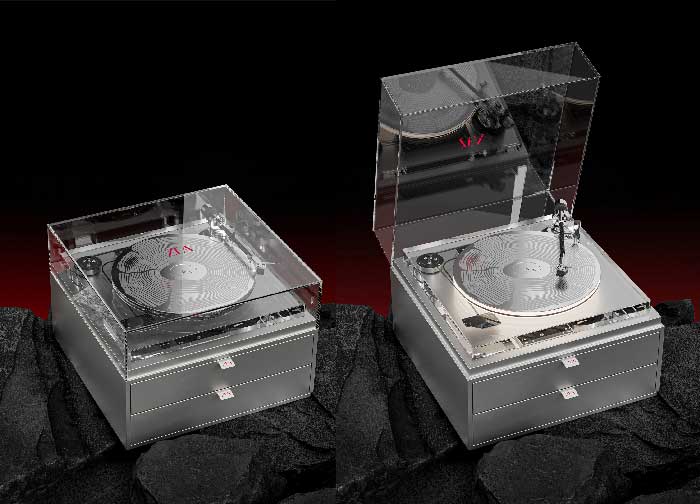
< ZFA Growth Ring Cosmetic Packaging, ASIA DESIGN PRIZE 2024 Winner >
ZFA Growth Ring Cosmetic Packaging combines cosmetic storage and display with the form of a gramophone. It is a cosmetic case, a music player that connects to a mobile phone through Bluetooth, and a device for recording emotions. Cosmetic collections are organized in tiered drawers, making the daily makeup routine more convenient. What makes this project compelling is that the role of its packaging does not end with delivering and protecting the product. Conventional packaging loses most of its purpose once the contents are removed. ZFA Growth Ring Cosmetic Packaging, by contrast, treats packaging not as a disposable outer shell, but as an object that remains part of everyday life after its original use.
The gramophone symbolizes the preservation of time and memory. By incorporating this familiar form into cosmetic packaging, the designer connects applying makeup, listening to music, and recording emotions within a single narrative. The transparent upper section and layered drawers display the contents while turning the acts of owning and selecting cosmetics into a small daily ritual. Consumers are not purchasing cosmetics alone. They also acquire a way to display their taste, moments accompanied by music, and an experience of recording their daily emotions. The package moves beyond its supporting role and becomes an independent part of everyday life. Sustainability further strengthens the product’s appeal. A transparent cover made from recycled plastic, drawers produced from recycled wood and discarded furniture, and biodegradable plant based interior materials demonstrate consideration for the product’s entire life cycle. The ability to reuse the packaging as storage furniture after its initial purpose has ended gives consumers a reason to keep it.
Earlier forms of environmentally responsible packaging often asked consumers to practice restraint and dispose of materials correctly. This project shows that the desire to keep an object for a long time can itself encourage sustainable behavior. Rather than imposing a duty not to discard the package, the design creates an attachment that makes people unwilling to throw it away.
Consumers Buy the Scene Before the Function
The three projects belong to different product categories, yet they share a clear approach to shaping consumer desire. Knife Care makes a hygiene appliance look like furniture. MINIX The Flender transforms a machine that handles unpleasant waste into an approachable compact appliance. ZFA Growth Ring Cosmetic Packaging turns disposable packaging into an object that holds memories and expresses personal taste. Rather than inventing entirely new functions, these projects reshape how consumers perceive familiar ones. Invisible hygiene becomes the image of an organized kitchen. Food waste disposal becomes a lifestyle that creates greater freedom in limited space. Cosmetic packaging becomes a personal object for preserving time and emotion.
Consumer behavior researchers Morris B. Holbrook and Elizabeth C. Hirschman argued that consumption should not be understood solely as the result of information processing and rational choice. They explained that consumer experience is closely connected to a product’s symbolic meaning, aesthetic qualities, and the pursuit of “fantasies, feelings, and fun” (Holbrook and Hirschman, 1982). Consumers evaluate more than what a product does. They also imagine how using it will feel and the kind of life in which they would like to see themselves.
This is where an important role of contemporary design becomes clear. Consumers today do not choose products by comparing functions alone. They also consider who they might become through using a product, how their space might change, and what kind of scene it might create in daily life. Specifications may rationalize a purchase, but emotion and imagination usually initiate it. Design is therefore not the final stage of wrapping a function in an attractive form. It is the first act of persuasion, helping consumers recognize a product’s relevance within their own lives. Form, color, material, and interface all work together to answer one question: “What will change when this product enters my life?”
The Desire to Own Can Be Designed
Does the power to make consumers want a product come simply from an attractive appearance? Not necessarily. Beauty can capture attention, but the desire for ownership emerges when consumers connect a product to their own lives. The furniture like appearance of Knife Care invites people to imagine a clean and organized kitchen. The compact size and soft form of MINIX The Flender suggest a more spacious life, even in a small home. The gramophone form of ZFA Growth Ring Cosmetic Packaging evokes personal moments in which makeup, music, and memory come together. All three projects go beyond presenting the product itself. They show the life that could follow its purchase.
Designers now need more than the inventiveness required to create new functions. They must be able to reinterpret existing functions in the language of consumers and organize the space a product will occupy, the moment it will be used, and the emotions it will evoke into a coherent scene. Good design does not begin by telling consumers, “This is an excellent product.” It first makes them feel, “I want this to be part of my life.” By narrowing the distance between need and desire, design transforms the act of looking into the imagination of ownership. This is where design becomes a practical force that shapes purchasing behavior.
In conclusion, the most powerful invention in contemporary design may not always be an unprecedented form. It may be the ability to make people see a familiar object differently and discover new possibilities for living within an ordinary function. Design can invent a scene that did not previously exist in the consumer’s mind. That is the form of novelty contemporary design must create, and the force that makes consumers say, “I want this.”



















#14057, 905 49, Beolmal-ro 102beon-gil,
Dongan-gu, Anyang-si, Gyeonggi-do, Korea
Business Registration Number: 454-86-01044
Online Sales License No.: 2021-Anyang Dongan-1081
Copyright © DESIGNSORI Co., Ltd.