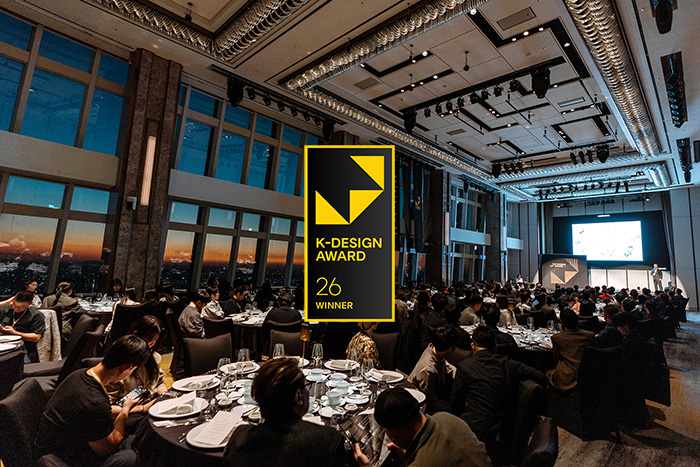
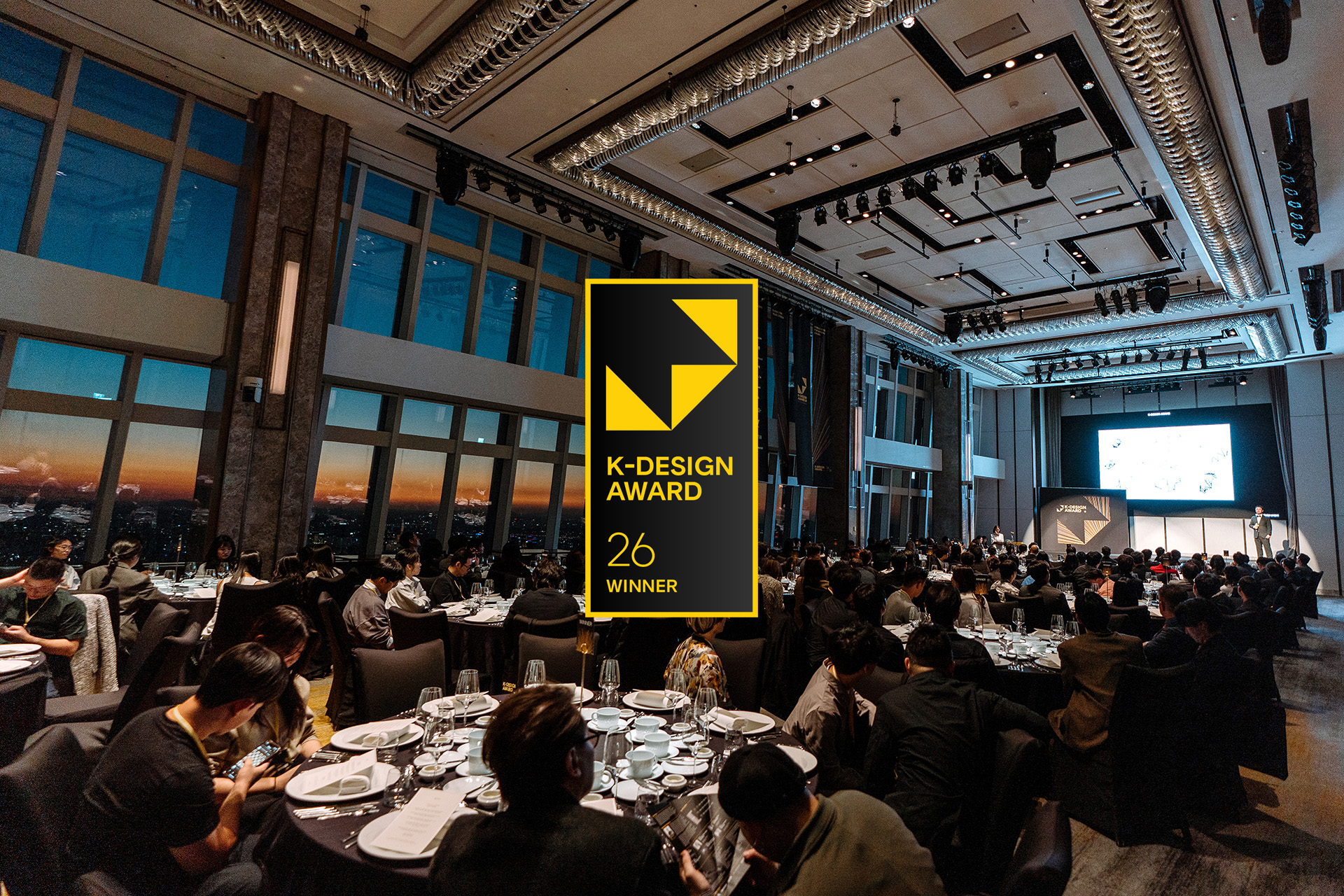
The K-Design Award 2026 Awards Ceremony and Forum will take place on October 16 at the Grand Ballroom of SIGNIEL SEOUL. The forum will feature four experts who have led the fields of brand strategy, product design, global retail, and media design. Chad Song, Founder & CVO of CRACK THE NUTS, Sehun Na, CDO of at’home, Seongho Park, Head of the Design Center at MINISO, and Yoonsang Choi, CEO of Channel A B&C, will draw on their experience to explore how design creates lasting brand memories, transforms everyday problems into products, moves massive markets, and reshapes media in the age of AI. Going beyond design as a finished outcome, the forum will offer an opportunity to consider the role design should play across business, markets, technology, and society.
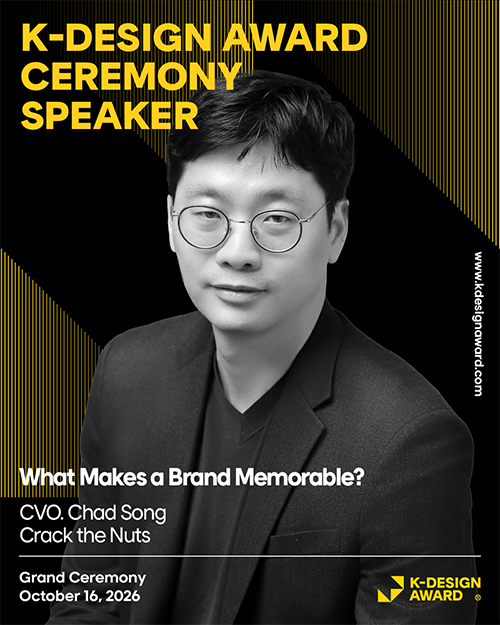
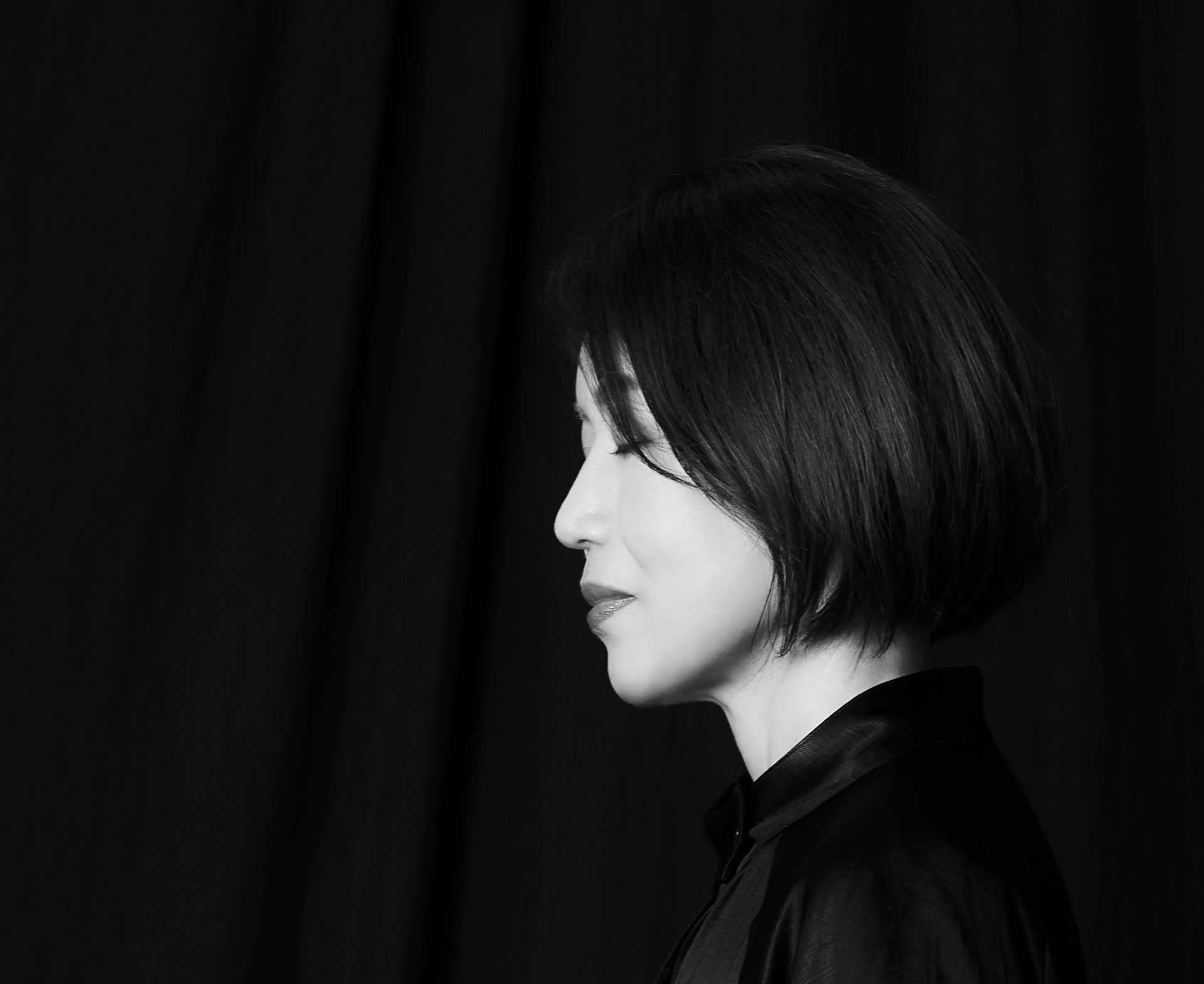
< Chad Song, Founder & CVO of CRACK THE NUTS >
What Makes a Brand Memorable?
The first speaker is Chad Song, Founder & CVO of brand strategy consultancy CRACK THE NUTS. With more than 20 years of experience in advertising, branding, marketing, and PR, he advises companies on brand strategy based on CRACKtivity™, a methodology that identifies cracks within brands and businesses and transforms them into opportunities for growth. Song served as a PR Shortlisting Juror for the 2026 Cannes Lions and as a Jury Member for the 2026 Effie Awards Hong Kong. In 2024 and 2025, he served on the Executive Committee of the Korea Advertising Awards and as Jury Chair for the PR & Public category. In 2026, he is also serving as a final-round juror for the PR, Public Service Advertising, and Social Impact categories of the Korea Advertising Awards. He has also served as a juror for major domestic and international awards including the New York Festivals, Effie Awards Korea, and Asia Design Prize, and is the author of AI and the Expansion of Storytelling.
As AI enables anyone to create highly polished work more quickly, more fundamental questions are becoming increasingly important for brands. In an era when differences in “How to make” are rapidly disappearing, what ultimately distinguishes one brand from another is “What to make”: a clear idea of what to create and what story to tell. What, then, makes some brands memorable while others are forgotten? Drawing on globally recognized creative cases from around the world, Song will explore the forces behind memorable brands through four perspectives: Craft, Creative Reflex, Clarity, and Action. He will discuss the importance of detail and execution, which becomes even more critical in the age of AI; the creative reflex to turn unexpected realities into opportunities for a brand; the clarity of an idea that can be understood instantly; and the power to prove a brand’s purpose through action rather than words.
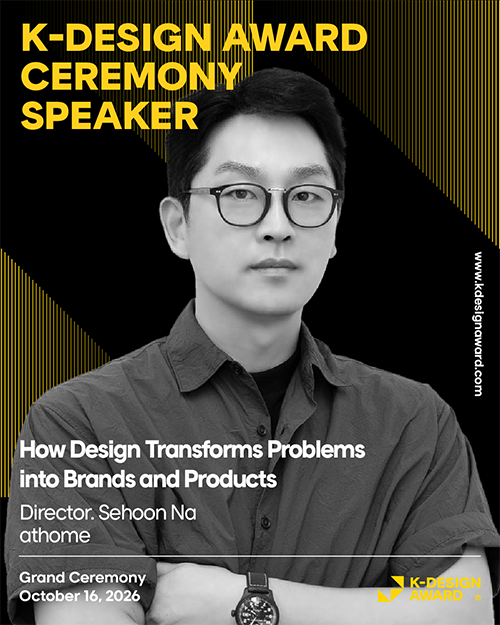
< Sehun Na, CDO of athome >
How Do Everyday Problems Become Products and Brands?
The second speaker is Sehun Na, CDO of the home lifestyle solutions company at’home, where he leads the company’s design and creative initiatives. Na began his design career at Ahn Graphics before gaining experience in brand design at NAVER and LINE. He later worked at Makeus Dingo and Blank Corporation, and went on to lead design organizations at KakaoPage and Kakao Entertainment. Through his experience across digital services, content, commerce, products, and brands, he has expanded the role of design into the realms of business and organization.
At at’home, he currently designs the overall customer experience, from brand strategy and product design to brand design, content, and retail, with a focus on MINIX and THOME. In particular, he focuses on the role of design in identifying hidden problems in customers’ everyday lives and transforming them into opportunities for new products and brands. He believes that good design does not begin with creating beautiful outcomes. Rather, design encompasses the entire process of defining the real problem that needs to be solved, translating that problem into products and experiences customers want, and bringing everything together as a consistent brand.
What designers need, therefore, is not simply the ability to create better forms and images. They must discover opportunities hidden within customer frustrations, define the essence of complex problems, and develop solutions that enable products and brands to be chosen in the market. When this process leads to actual business growth, the role of design becomes even clearer. In his talk, Na will introduce MINIX as a real-world case study. He will reveal how a small everyday problem was transformed through design into a new product, and how previously fragmented brand assets were brought together into a unified brand and expanded into a consistent customer experience.
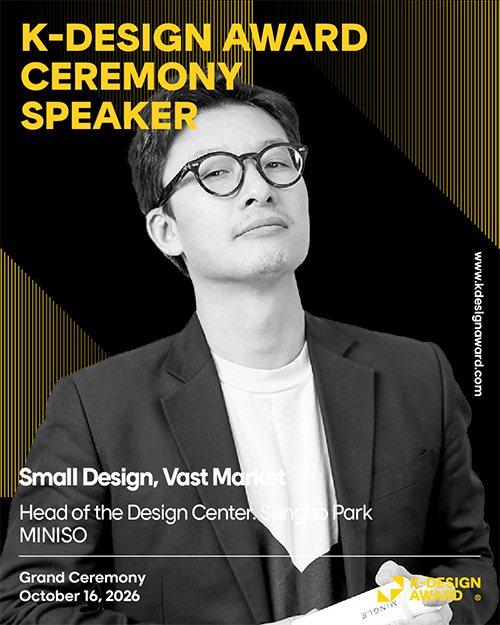
< Seongho Park, Head of the Design Center at MINISO >
How Can Small Design Move a Massive Market?
The third speaker is Seongho Park, Head of the Design Center at MINISO, a global IP-driven retail company. Park began his career at Samsung Opentide, where he participated in design projects for various global companies. He later co-founded the UX consultancy RightBrain, leading UX consulting projects for major Korean corporations, and went on to establish the design studio BOUD, where he worked across a wide range of projects spanning branding, products, and spaces. Since 2024, he has led research and development for IP and products at MINISO. From UX consulting to brand, product, and spatial design, as well as IP and product development for a global retail company, he has explored how design actually works within business and markets.
He believes that design gains true meaning only when it makes a tangible contribution to business and is chosen and loved by people. Adding more and making things more expressive do not always lead to better design. Sometimes, removing unnecessary elements makes the essence of a product clearer. There are even moments when designers must recognize that their intervention is unnecessary and have the confidence to recommend not designing at all. Beyond deciding what to design, the designer must determine what to keep, what to remove, and when to stop designing. Park believes this is the true role of a designer who understands both the market and the user.
Drawing on product cases from MINISO, which operates approximately 8,500 stores across more than 110 countries worldwide, he will explore how design can move a massive market. He will share an inside look at how products that have sold more than 100 million units were created, what it takes to design products chosen by millions of people, and the decisions designers must confront throughout the development process.
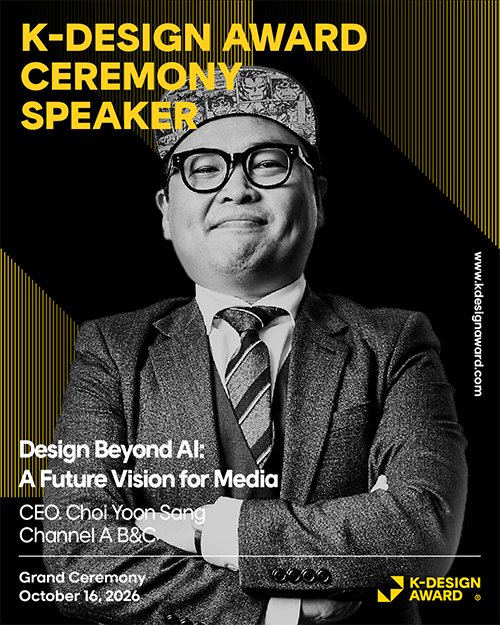
< Yoonsang Choi, CEO of Channel A B&C >
Imagining Media Design Beyond AI
The fourth speaker is Yoonsang Choi, CEO of Channel A B&C. Choi has long explored the intersection of brand, content, design, and post-production within the broadcast media industry. He began his career as a designer at SBS in 2004 and later served as Executive Producer of Brand Design at Channel A, where he visualized the identity of content and the emotional character of different genres. Since the establishment of Channel A B&C in 2016, he has led media design across a wide range of areas, including content branding, design, and post-production. When discussing design in the age of AI, he believes that we must look at the essence before the technology. Essence provides direction, while innovation moves the future forward. Technology enables innovation, but it is ultimately people who must preserve the reasons and values that determine where that technology should lead. Creativity always begins with the essence, and to preserve that essence, we must continuously innovate the methods and structures through which it is expressed.
Designers in the age of AI need the insight to understand purpose and context, the ability to ask creative questions and make sound judgments, and a distinctive sense of taste and perspective. At the same time, they must embrace change and difference, continuously building relationships with the people, technologies, content, and society around them to discover new possibilities. Choi will explore how design has evolved within the media content industry and how its role should be redefined in the age of AI. He will examine how AI is changing workflows and the role of designers in real-world media design, while sharing the direction and philosophy that design organizations should embrace in the future. The session will consider how media design can move beyond using AI merely to produce results faster and more efficiently, entering the realm of vision and asking what we should create and why.
Rethinking the Role of Design
Although the four speakers work across different industries, they are all addressing the same question: In an era when technology and execution are rapidly becoming standardized, what should design discover, what should it decide, and what kind of change should it create? From the clarity of thought that makes a brand memorable and the process of transforming everyday problems into products and brands, to the judgment required to move a massive market through small design decisions and a vision for media beyond AI, the K-Design Award 2026 Awards Ceremony Forum approaches design not as a finished outcome, but as a system of thought and practice that moves brands, businesses, markets, and the future. Through this forum, the four speakers will explore how design can move beyond recognition and achievement to create meaningful change in the world.















#14057, 905 49, Beolmal-ro 102beon-gil,
Dongan-gu, Anyang-si, Gyeonggi-do, Korea
Business Registration Number: 454-86-01044
Online Sales License No.: 2021-Anyang Dongan-1081
Copyright © DESIGNSORI Co., Ltd.