
An intriguing phenomenon has emerged in the global audio market. The newly released earbuds from Bang & Olufsen (B&O), a Danish well-known audio brand, and the product launched under ODDICT by Cresyn, a Korean audio technology company, share remarkably similar design language. A rounded body with a short protruding stem, an elliptical form that nestles into the ear, and minimalist surface treatment. The two products appear as if they emerged from the same design philosophy. What does this similarity mean? The key questions are: "Why did brands with different heritages arrive at similar forms?" and "What is each brand trying to communicate through this form?"
Design Materializes the Values of Its Era
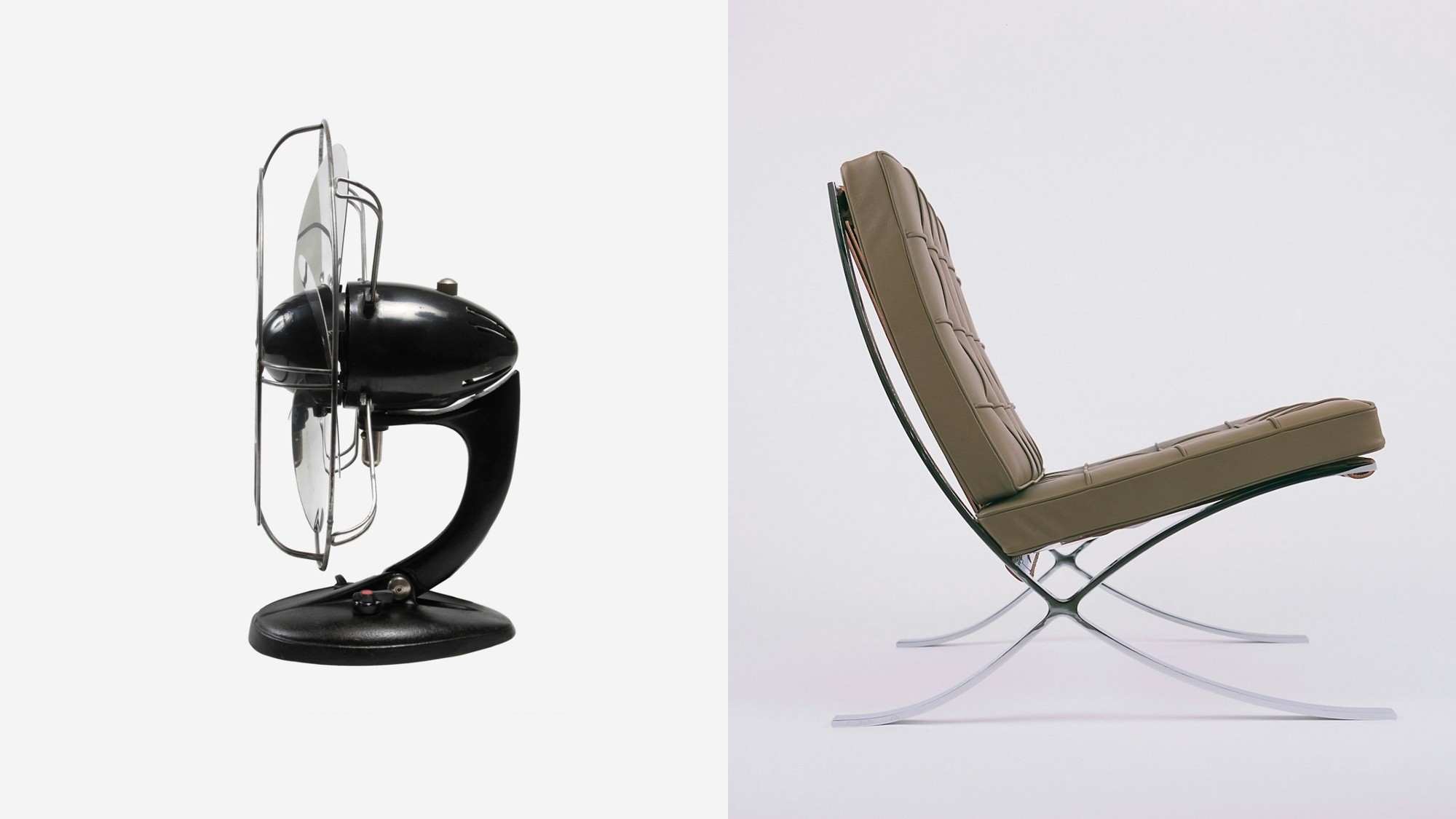
Looking back at design history, each era has embodied its pursued values in form. The late 19th-century craftsmanship of William Morris sought handmade uniqueness against the uniformity of the Industrial Revolution. The early 20th-century Bauhaus principle of "Form Follows Function" defined beauty as forms stripped of decoration, leaving only functional necessity. Post-1990s User-Centered Design emerged in response to user behavior, emotion, and experience.
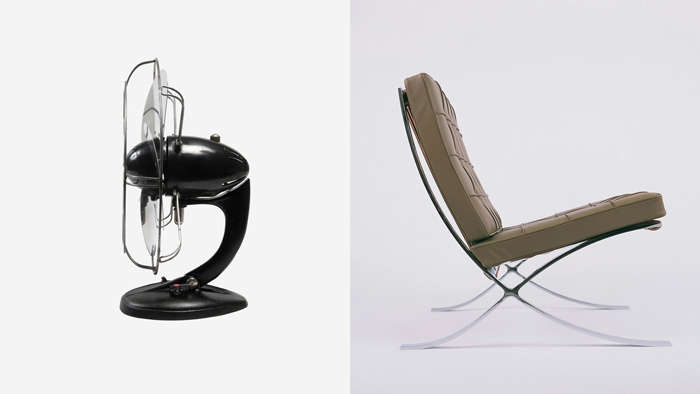
< Image Source: (Left) Robert Heller - Airflow Fan (Right) Ludwig Mies van der rohe - Barcelona chair >
The interesting point is that today's design is required to embody all three values simultaneously. It must be as precise as craftsmanship, functionally optimized, and considerate of user experience. This is why earbuds from different brands arrive in similar forms. Facing identical contemporary demands, each brand found the same answer based on its own heritage.
Two Types of Heritage: Brand Accumulation vs. Technical Accumulation
When we hear the word "Heritage," we typically think of long-standing brand history. B&O has consistently pursued the philosophy of "Transforming the act of listening to music into an Artistic experience" since its founding. From the Beogram 4000 turntable designed by Jacob Jensen in the 1960s to the recent Beoplay H95 headphones, a consistent design DNA is evident across all products. Minimalist surfaces, organic curves, and material textures. This is "Brand heritage."
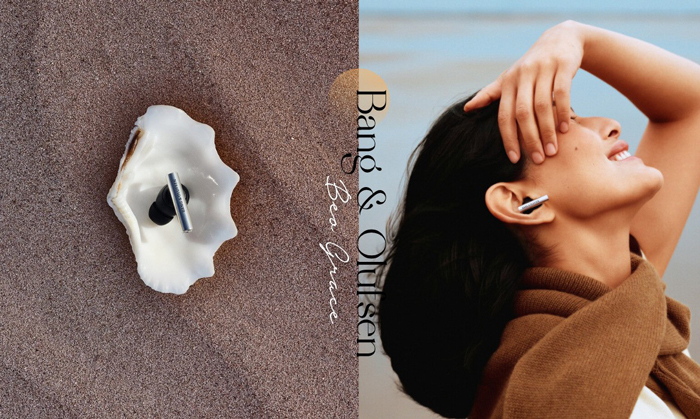
< Image Source: B&O, Beo Grace >
However, heritage exists in another form: "Technical heritage." Cresyn has served as a manufacturing partner for global audio brands for decades, designing and producing hundreds of products. Which forms are acoustically optimal, which materials maximize wearing comfort, which structures enhance battery efficiency—all of this is data accumulated through repeated experimentation and verification. It's a heritage built not on brand identity but on engineering know-how.

< Image Source: Cresyn, ODDICT (K-DESIGN AWARD 2022 TEAM OF THE YEAR) >
The design of ODDICT TWIG PRO is the result of precisely this technical heritage. The ergonomic angle that nestles into the ear, the optimal volume of the acoustic chamber, the placement of antennas and product Interface (UI)—each element is an optimal solution derived from decades of accumulated technical data. This is "Form Follows Function" in its purest form. Functional necessity determines form, and that form becomes beauty itself.
The Phenomenon of Convergence
There's one interesting observation about this case. ODDICT TWIG PRO was released before B&O's new product and holds domestic design registration. Yet the similarity between the two products doesn't necessarily indicate one influenced the other. Instead, it demonstrates something more fundamental about contemporary design. When different brands working within the same technological and ergonomic constraints arrive at similar solutions, it reveals the power of convergent evolution in design. The shape of the human ear is universal, Bluetooth chip sizes are standardized, and battery technology limitations are shared by all manufacturers. Add to this the aesthetics preferred by contemporary consumers—minimal, matte, organic curves—and brands with different starting points eventually arrive at similar destinations.

< Image Source: MSGM X ODDICT >
This convergence hints us something significant about Asian design capabilities. B&O has long been positioned as a 'Design icon'—not just as audio equipment but as an aesthetic and cultural value that fills a space with artistic presence. It demonstrates that Asian design has achieved a level where it can establish global standards. This is not about technical specifications or price points alone, but about design capabilities that can be realized on a global stage.
Design is a continuous process of intellectual property accumulation, and each registration marks a point in that journey. True competitive advantage comes not from the registration itself, but from the process of reaching that answer—experimental data, technical know-how, market understanding. This accumulation creates each brand's unique trajectory, which in turn becomes the starting point for the next innovation. Design is not a result but a process, where learning at each stage enables the next.
Beyond Convergence: The Conditions for Breakthrough
If design convergence is inevitable, how can a breakthrough be achieved? True innovation occurs not by accepting existing constraints, but by redefining the constraints themselves. Interestingly, technical heritage companies occupy a unique position for breakthrough. The data accumulated from manufacturing hundreds of products includes not just "What works" but also "What doesn't work." Ideas that never reached the market, prototypes that weren't adopted—all of this precisely maps the boundaries of constraints. And only those who know the boundaries can transcend them. If brand heritage companies create breakthroughs through "Our philosophy," technical heritage companies can open new possibilities through "Everything we know."
The Future of Design: Value Determines Form
The fact that different brands have arrived at similar designs indicates the current optimal solution. But when forms are similar, what criteria do consumers use to choose? Precisely the value each design carries. Consumers choosing B&O purchase brand philosophy accumulated over generations, the identity of "Experiencing music as Art." Consumers choosing ODDICT purchase technical trust accumulated through manufacturing excellence, the promise of "Actual performance over Brand premium." Same form, different heritage, different value. Consumers buy not the shape of earbuds, but the brand's promise contained in that shape.
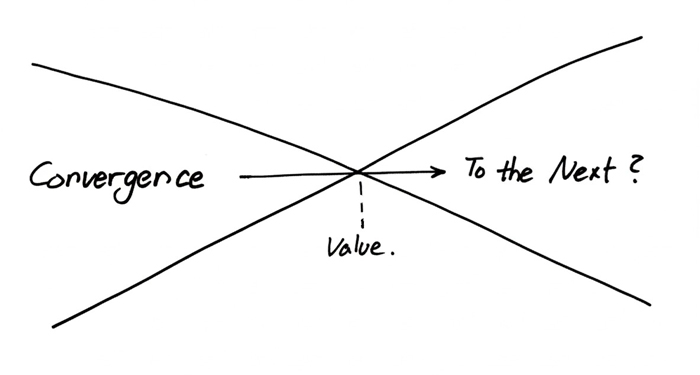
< Image Source: Kim Sung Hoon, Author 'Diagram for “Open-Ended” Value Design' >
An important point through design history is that "Form is the result of values pursued by the era." Heritage is defined not by the length of time, but by what was accumulated during that time. Breakthrough is determined by how boldly that accumulation is reinterpreted. The question Value Design asks now evolves. Beyond "What world does your design dream of?" to "What premise will your design overturn?" The future of design belongs to those with the courage to find their own questions among converged forms.




















#14057, 905 49, Beolmal-ro 102beon-gil,
Dongan-gu, Anyang-si, Gyeonggi-do, Korea
Business Registration Number: 454-86-01044
Online Sales License No.: 2021-Anyang Dongan-1081
Copyright © DESIGNSORI Co., Ltd.