
Recently, I had a conversation with fellow professors about design education in the age of AI. Our discussion turned to the work students submit and the criteria we use to evaluate it. With AI, students can now produce remarkably sophisticated images in a short amount of time. Yet the level of visual execution that would once have earned high marks now makes us hesitate. To what extent should we recognize such results as a reflection of a student’s own abilities? As the conversation continued, however, an even more thought-provoking question emerged. Have we ever truly been accurate in evaluating students’ abilities?
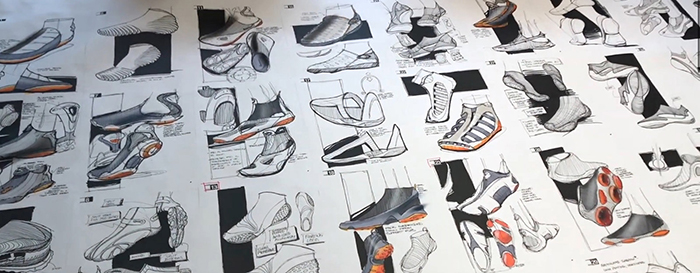
The quality of sketches and visual execution has long been an important indicator of a designer’s technical proficiency.
< Sketch: Michael DiTullo (Core77) >
In design education, the finished work has long served as an important basis for evaluation. We have assessed a designer’s capabilities by examining the sketches, models, and sophisticated renderings presented in their portfolio. Producing such images once required considerable time and technical skill. Although the quality of visual execution could not fully represent a designer’s overall abilities, it was at least a reasonable indicator of the training and practice they had undergone. Professors and recruiters alike have relied on these clues to infer the process and skills behind the work.
AI is now disrupting this familiar relationship. Achieving a high level of visual sophistication no longer necessarily requires an equivalent degree of technical proficiency. Yet we cannot deny that the quality of the results has improved. Users are likely to care less about which tools a designer used than whether the product meets their needs. Students, too, will naturally seek methods that help them achieve better results within the same amount of time. The real question is what individual capabilities we can actually identify from these improved outcomes.


Chair designs explored using Vizcom and a 3D-printed model. AI is transforming the design process by accelerating form visualization and iterative refinement.
Imagine two students submitting chair designs of similar visual quality. One student examines users’ sitting postures and manufacturing constraints before using AI to develop and visualize an original concept. The other generates numerous images and selects the one that looks most convincing. Looking at the final images alone, it may be difficult to distinguish between them. However, when asked to adjust the backrest angle or modify the production method, the extent of each student’s understanding would become apparent. This raises the question of whether our current evaluation methods are capable of revealing such differences.
Yet simply awarding higher marks to students who model everything themselves is not the solution. Spending more time on a project may demonstrate effort, but it does not necessarily prove that the problem has been solved appropriately. Conversely, undervaluing work simply because AI was involved risks overlooking the ability to select and combine tools effectively. It is becoming increasingly difficult to assess competence solely by how long a project took or how much of it was produced manually. Evaluators must also reflect on whether they are treating the technical skills with which they are most familiar as the only legitimate measure of ability.
Our generation is not exempt from these questions. We, too, have relied on 3D software, rendering engines, and CMF libraries, and have sometimes entrusted photography and mockup production to other specialists. The final results have always incorporated the capabilities of multiple people and tools. Within those collaborative processes, we have described our contributions to planning and coordination as part of our professional expertise. If so, people working with AI should also have the opportunity to explain not only which tasks they delegated, but which decisions remained their own. The standards used to determine individual contributions should not change simply because one generation uses different tools from another.
At this point, we need to examine more closely what we mean by ability. The capacity to identify problems, define constraints, develop alternatives, and make and validate decisions involves interconnected but distinct skills. Some people excel at generating compelling images, while others are skilled at reconsidering the fundamental direction of a poorly defined assignment. Still others can coordinate the demands of multiple departments and bring a design into actual production. Have we been reducing these different capabilities to a single measure: the visual quality of the final result?
Portfolios, in particular, make this question difficult to avoid. A single image may encapsulate the achievements of an entire project, but it may reveal little about the applicant’s actual contribution to those achievements. Even a well-organized explanation of the design process presents similar limitations. From documentation alone, it is not always easy to distinguish between a genuine record of decisions made during the project and a narrative constructed afterward to justify the finished result. Those evaluating portfolios now need more than the ability to appreciate good work. They also need ways of questioning that reveal an applicant’s actual role, understanding, and judgment.
For example, after asking an applicant to explain a completed design, an evaluator could introduce a change in one of its conditions. If the selling price had to be reduced, what would they modify first? If the user had smaller hands, which dimensions would need to be reconsidered? If the chosen material became unavailable, what alternatives would they investigate? Even then, verbal fluency alone should not determine the assessment. Evaluators should examine whether applicants can translate their explanations into simple design revisions, calculations, or practical verification. The ability to present oneself persuasively should not become a shortcut to a favorable evaluation.
In the classroom, it is equally important to clarify what each assignment is intended to assess. If a course aims to evaluate fundamental skills in creating and developing forms independently, restrictions on tool usage may be appropriate. On the other hand, a project focused on solving complex problems could allow students to use a wide range of resources, including AI, while evaluating the reasoning behind their choices and the results they achieve. The acceptable use of the same tool may differ depending on the learning objectives. Before imposing rules on students, educators must first be able to explain exactly which abilities the assignment is intended to assess.
Changing evaluation methods also comes at a cost. Examining decisions made throughout a project, introducing new constraints, asking questions, and reviewing subsequent revisions requires considerably more time than comparing a few finished images. Requiring students to document every step as though they were under constant surveillance could place an unnecessary burden on both students and professors. A more practical starting point may be to identify a few critical decision points and examine them closely. The evaluation process itself must also be designed so that students do not spend excessive time producing documentation merely to satisfy assessment requirements.
Students, too, need a clearer language for explaining their achievements. There is no reason to diminish every contribution simply because AI was involved, nor is there a need to claim mastery of every skill simply because the final work was submitted under their name. Instead, students should be able to explain specifically which problems they defined, what constraints they established, and what they revised and verified. The ability to distinguish between what one can genuinely accomplish and what remains untested is valuable information for anyone involved in collaboration. Being honest about one’s abilities is a much broader matter than simply disclosing which tools were used.
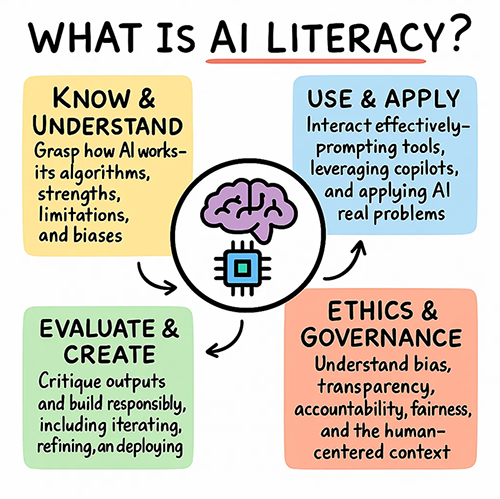
In the age of AI, professional competence extends beyond the ability to use tools. It also encompasses the ability to understand and evaluate results and take responsibility for one’s own decisions.
Is the quality of AI-generated work a reflection of my own ability? To answer this question, we need to look beyond the finished result and examine the role we actually played in creating it. Those responsible for evaluation must also reconsider the criteria they have traditionally used to recognize the abilities of others. In 2026, as AI becomes deeply integrated into the design process, both educational institutions and the design industry face the same fundamental question. How can we determine whether the person behind an impressive result is capable of making independent judgments and responding effectively when confronted with new challenges? We now need evaluation standards that recognize not only what designers produce, but also what they understand, decide, revise, and take responsibility for within a fundamentally changing design process.























#14057, 905 49, Beolmal-ro 102beon-gil,
Dongan-gu, Anyang-si, Gyeonggi-do, Korea
Business Registration Number: 454-86-01044
Online Sales License No.: 2021-Anyang Dongan-1081
Copyright © DESIGNSORI Co., Ltd.