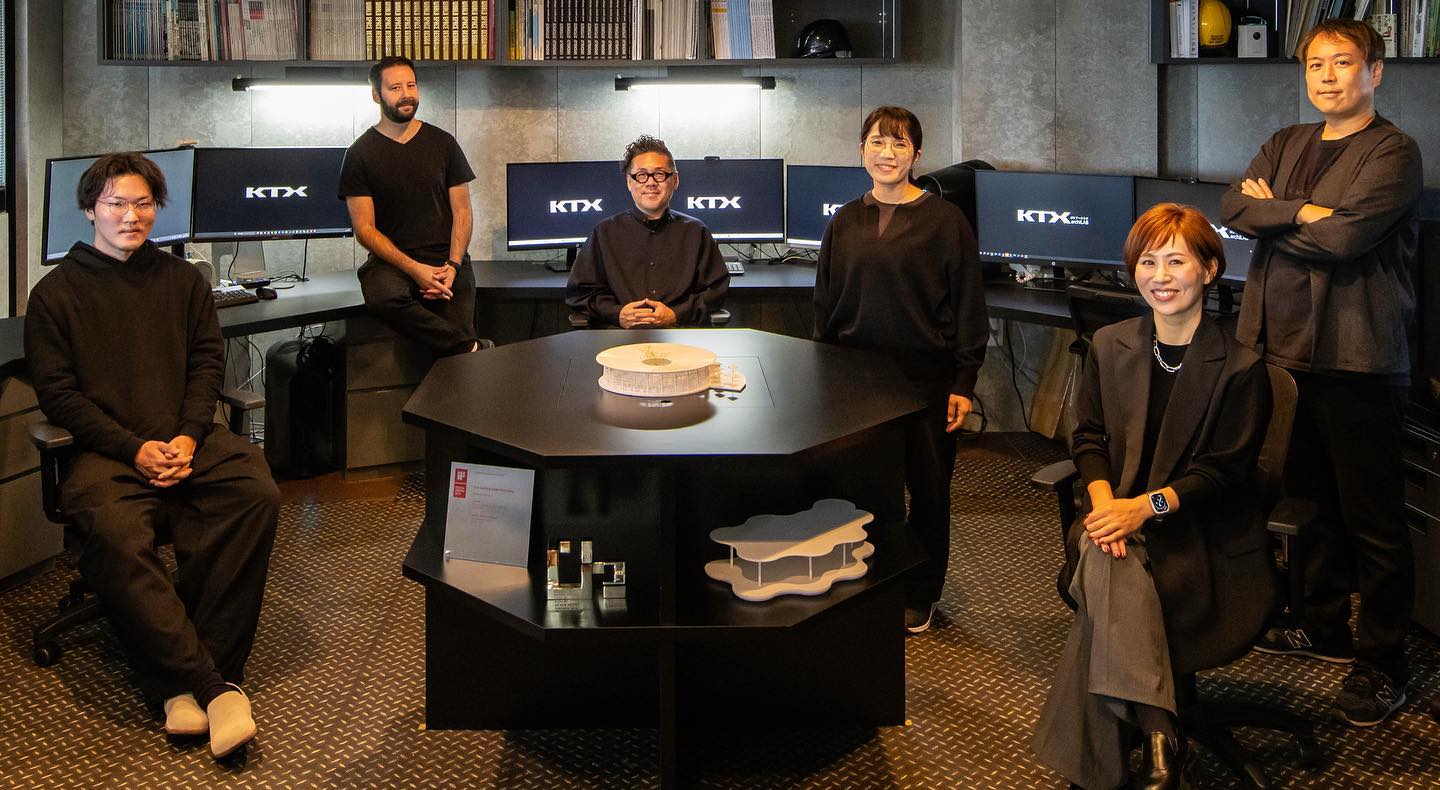
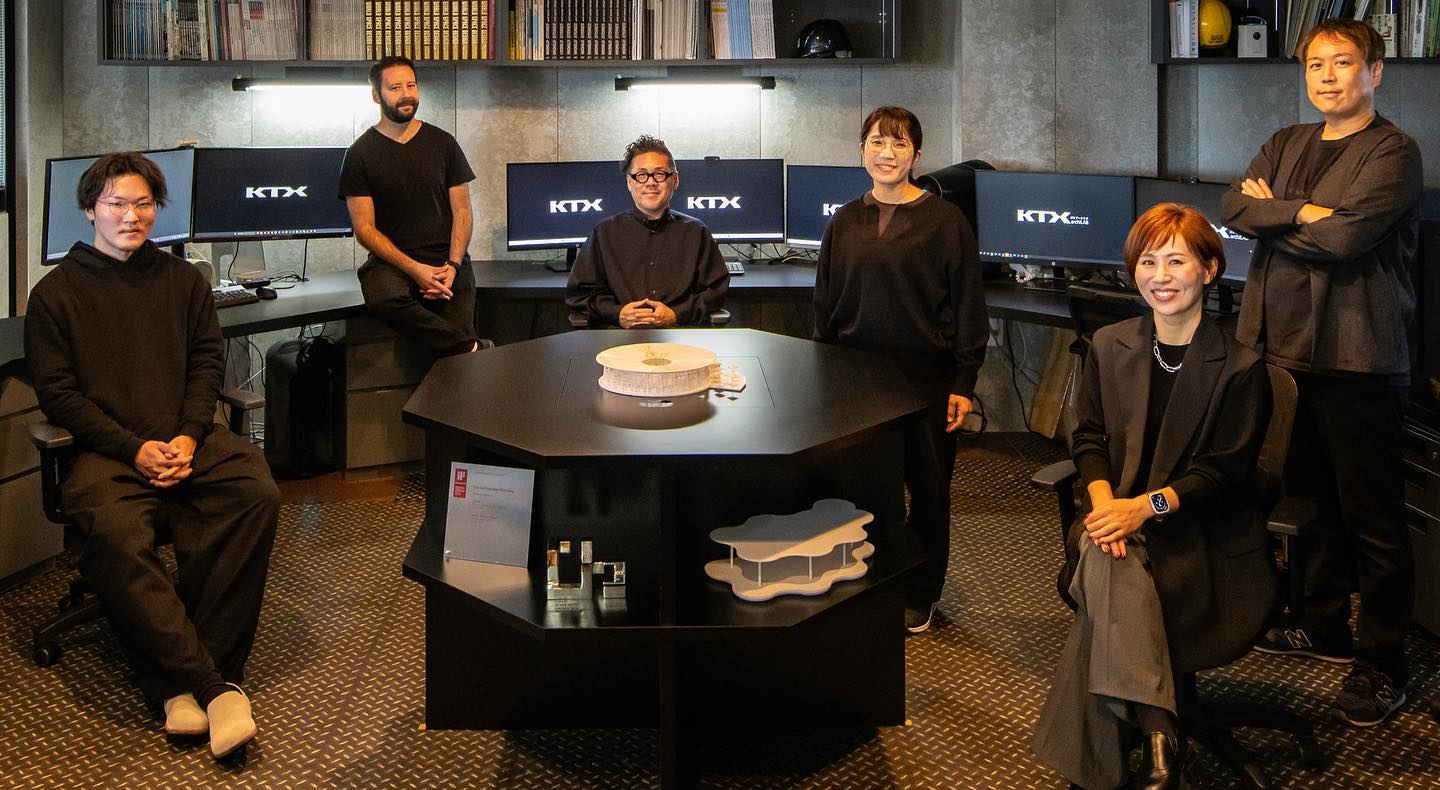
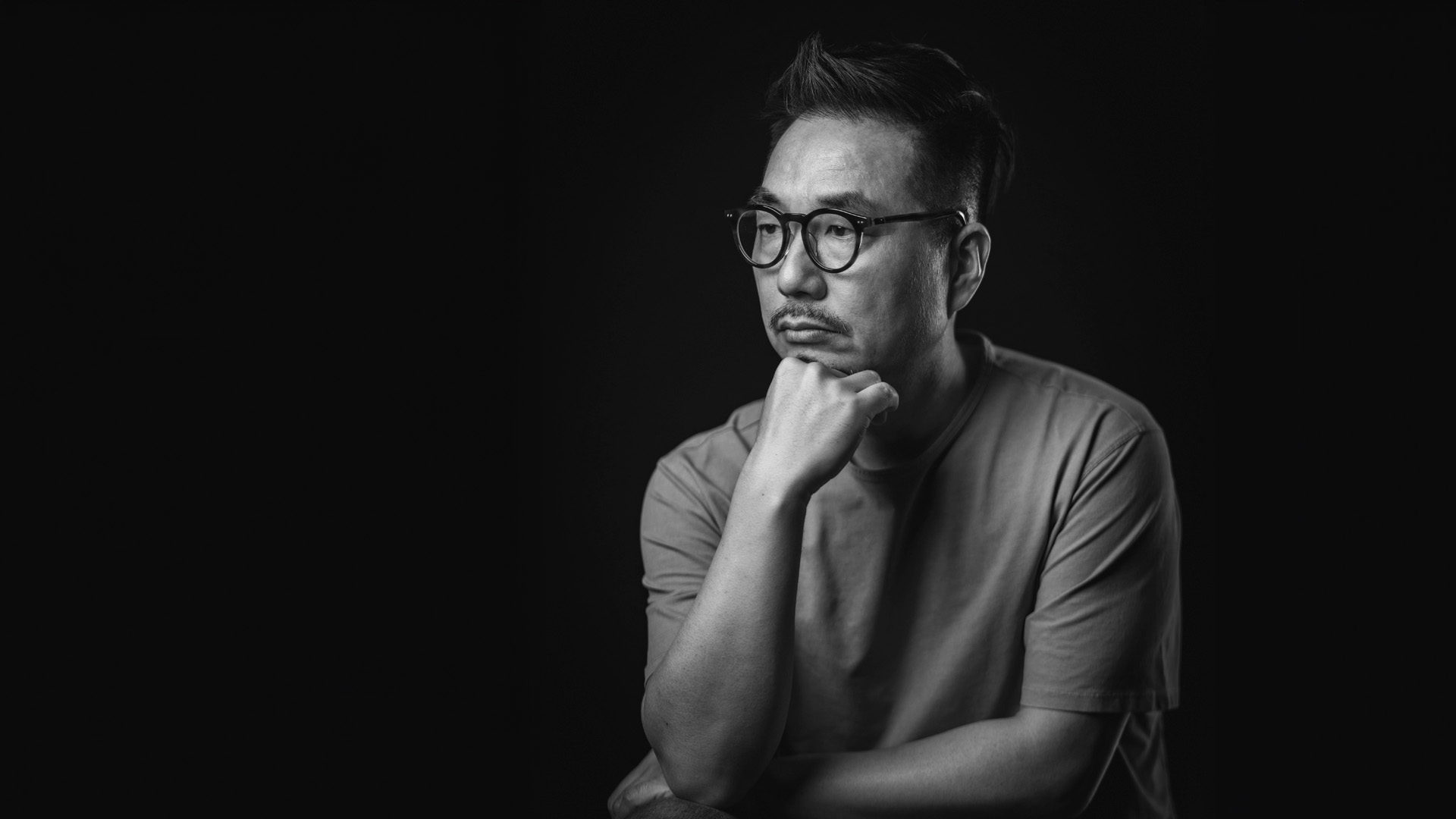
My name is Tetsuya Matsumoto, Head Architect at KTX ArchiLab. Our firm specializes in non-residential architecture and spatial design—primarily commercial facilities, medical institutions, and office spaces—and we also operate as a construction company responsible for the execution of the projects we design. In addition to my work at KTX, I am involved in design consulting, offering guidance to designers at other studios and advising design-build firms. I am also dedicated to educating the next generation of designers through my teaching role at Osaka University of Arts.
Could you tell us about your most memorable or representative project or experience?
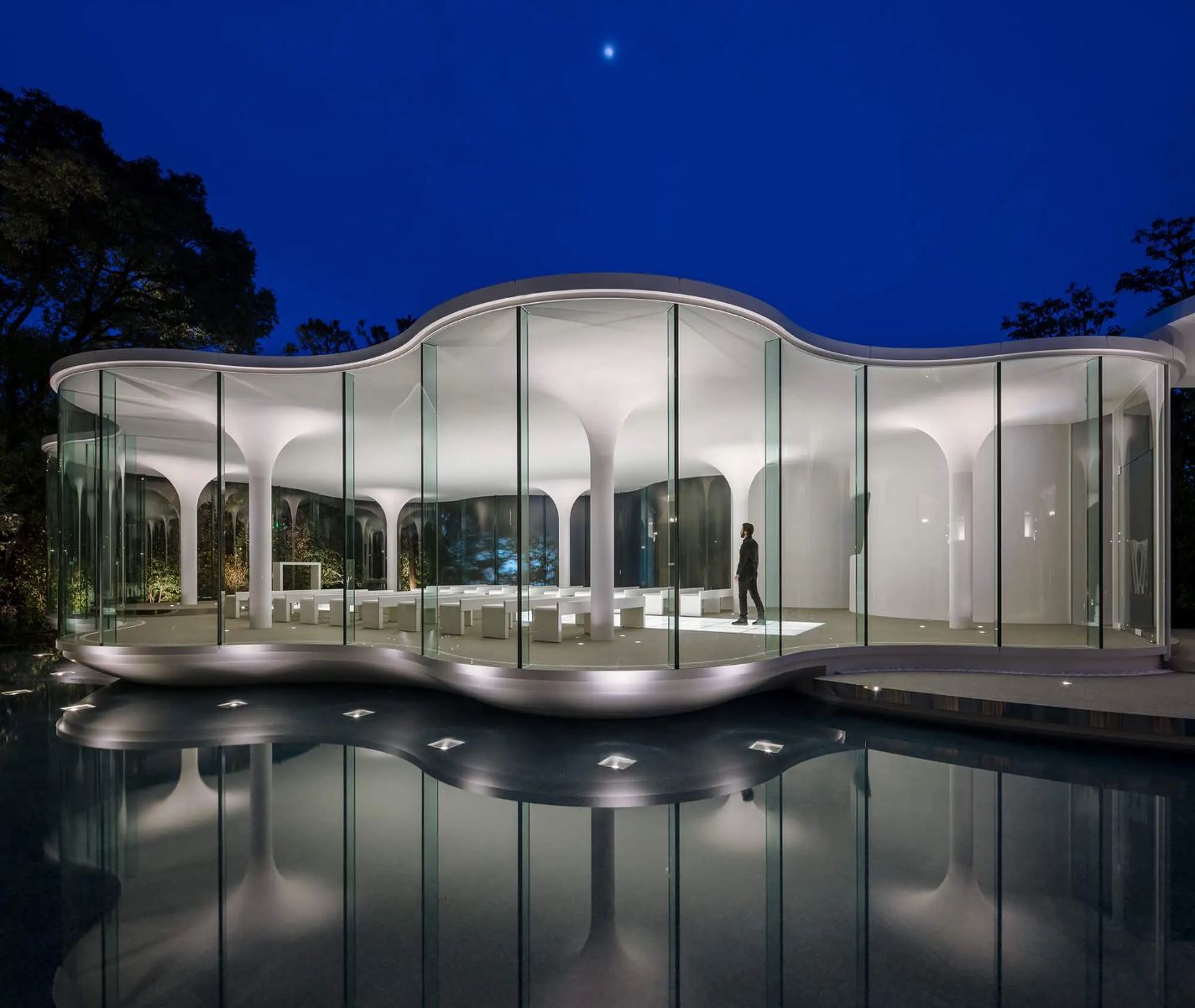
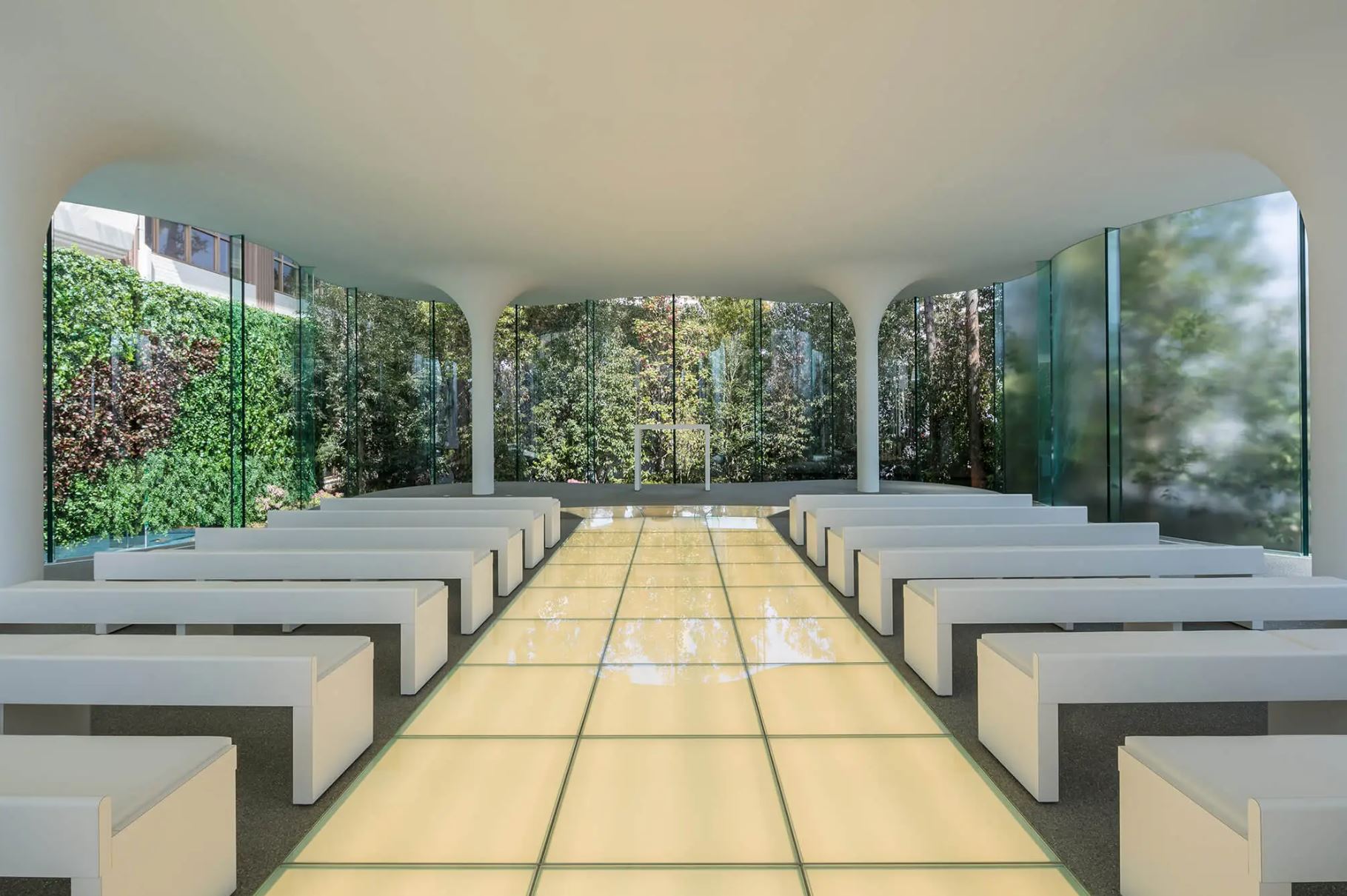
One of the most memorable projects was the reconstruction of a chapel located within the Laviena Himeji wedding venue. The goal was to create an extraordinary setting that would make a couple’s special day feel even more exceptional. Inspired by clouds floating over a reflecting pool, the chapel features a fully organic, curvilinear silhouette. Curved glass panels, following this continuous trajectory, softly enclose the space. To manage construction costs for the curved glass and framing, the entire radius of curvature was standardized to 2500 millimeters. The cloud-like roof connects seamlessly with its supporting columns through gentle curves, and all lighting and air-conditioning systems were installed below the floor to preserve the purity of the space above. The flooring, made from transparent glass beads embedded in resin, sparkles in sunlight like a body of water. Symbolizing a couple’s new beginning as they take flight from this place, the chapel was named L’Aile Blanche—“The White Wing.” The project received global media coverage, won numerous awards, and became a major milestone for us.
Can you share your design process? Do you have a personal approach that you follow?
Rather than starting with two-dimensional sketches, I begin by planning directly in three-dimensional space. I continuously simulate realistic spatial experiences while installing the program into a virtual environment from the outset. This approach allows me to create impactful, immersive spaces while ensuring functional and effective planning.
Who is the designer you respect the most, and how have they influenced you?
That would be architect Shuhei Endo. During my time as a graduate student, I had the opportunity to intern under him and accompany him to ArchiLab, an architectural exhibition and conference held in Orléans, France. Witnessing Professor Endo’s work and presence on the global stage left a profound impression on me and sparked an ambition to one day become someone who could also contribute internationally. In fact, the name of my own studio, KTX archiLAB, was inspired by that very experience at ArchiLab.
How do you think the design market will change over the next 10 years? And how are you personally preparing for it?
Today, anyone can access the latest design trends from around the world, and this will continue to raise the global design standard. At the same time, however, we may see increased homogenization and uniformity—a phenomenon evident in the widespread adoption of Scandinavian design, for example. While sustainability is undeniably a core responsibility for modern designers, applying it as a universal benchmark for all design decisions could risk hindering the industry's progress. If a singular notion of “justice” becomes dominant in design, it may suppress diversity and reduce opportunities for the emergence of original, identity-rich works. In the field of architecture specifically, the construction industry emits several times more greenhouse gases than automobiles or airplanes. While it is, of course, important to consider sustainable materials and logistics, I believe the most impactful solution is to create architecture so unique and meaningful that no one would want to tear it down—even if its owner or purpose changes in the future. That, to me, is the essence of true sustainability: creating spaces with enduring value and irreplaceable character.
I also dedicate myself to nurturing future spatial designers through my teaching at Osaka University of Arts, where I focus on helping each student cultivate their individual identity as a designer. Additionally, I serve as a design advisor for construction companies and commercial design firms, supporting them in raising the overall level of quality and originality in the Japanese spatial design industry. I believe that fostering a greater number of diverse, distinctive designers will not only revitalize the domestic market but also contribute to the global branding of Japanese designers—and in turn, support our collective expansion into international markets. As over 10% of Japan’s population is now concentrated in Tokyo, and nearly one-third in the greater Kanto region, I anticipate this centralization trend will continue. Although our studio is located outside the capital, we actively take on projects in the Tokyo area and are currently engaged in several. Internationally, we’re also pursuing projects across Europe and Asia, expanding our reach as a form of risk diversification while operating from a regional base.

Do you have a personal philosophy or belief as a designer? And what is your vision for the future?
As someone who specializes in the design of commercial architecture and spatial environments, I always keep in mind that the spaces I create are ultimately business tools for my clients. Have you seen the film Inception? It’s a story where the characters, played by Leonardo DiCaprio and Ken Watanabe, infiltrate another person’s subconscious (their dream) to implant an idea and influence their behavior. If simply conveying an idea were enough, one could just speak or write it—but the reason they go into the subconscious is because there is a fundamental difference in trust between information delivered externally and ideas that arise internally.
When we receive information through language from an external source, we tend to process it as “advertising”—we instinctively recognize it as promotional and possibly embellished. In contrast, when an idea surfaces from within ourselves, it feels self-derived, making it far more credible and persuasive. I believe that our role as designers is to deliver nonverbal cues through spatial impressions that reach the subconscious, and eventually surface into the conscious mind in the form of language—thus influencing perception and guiding business success for our clients.
To achieve this, the space itself must be powerfully impactful. That impact becomes the “key” that instantly opens the door to a person’s subconscious. And that key must be designed not only to open the door, but also to carry the right message through it. Determining what message to convey and what form the key should take—these are the questions we work through in close collaboration with each client. That is the essence of our solution-driven design.












#14057, 905 49, Beolmal-ro 102beon-gil,
Dongan-gu, Anyang-si, Gyeonggi-do, Korea
Business Registration Number: 454-86-01044
Online Sales License No.: 2021-Anyang Dongan-1081
Copyright © DESIGNSORI Co., Ltd.