The Psychology of Service Touchpoints: A Brand’s True Face Is Not the Product, but the People

We experience someone’s service multiple times a day, at restaurants, cafés, and stores. And there is probably a moment we all recognize, a single unpleasant experience that lingers and leaves the entire day feeling unsettled. Perhaps it happened yesterday, or even today. A few days ago, I had one of those moments. For a friend’s birthday, I visited a cake shop located in a department store in Apgujeong. It was a well known brand, praised for both its taste and beautiful decorations, and its pricing reflected that reputation. As I stepped into the clean, polished space typical of department stores, I approached a staff member to ask about their lettering service, feeling quite positive at the time.

The staff member replied curtly that same day lettering was not possible, all while continuing to type on their phone without even looking up. When I cautiously mentioned that it seemed to have been possible before, the only response I received, still without eye contact, was to check the notice written beside them. A response delivered while staring at a phone, a gaze that never met the customer. I can still vividly recall the atmosphere of that moment. It took less than a minute for what began as a pleasant gift buying experience to turn into an unpleasant and frustrating memory. From that day on, I made a decision. I would never buy a cake from that brand again. And I had a feeling I would tell this story to everyone I meet. In fact, I still do. Do I think that staff member behaved that way only toward me? Absolutely not.
The Peak-End Rule — We Remember Moments, Not the Whole Experience
Nobel Prize winning psychologist Daniel Kahneman explained how we remember experiences through the concept of the peak end rule. When we look back on an experience, we do not recall its overall average. Instead, we judge it based on the most intense moment, the peak, and the final moment, the end. The cake was probably delicious. The atmosphere of the store was likely fine. But what remains in my memory is only the attitude of the staff member answering while looking at their phone. That moment became both the peak and the end of the entire experience.
Even if a brand invests millions into its image, if the final touchpoint collapses, only that ending remains in the consumer’s mind. Add to this the negativity bias, and the situation becomes even more critical. Psychological studies show that negative experiences are remembered about three times more strongly than positive ones. Moreover, customers who have a bad service experience share it with an average of 9 to 15 people, while positive experiences are shared with only 4 to 6. A single staff member’s attitude can quietly erode the marketing investment a company has built over time.
The Secret of “Extra” — Why Buy-One-Get-One Doesn’t Stay With Us
In Korea, there is a cultural concept called dum, a small extra addition. When a market vendor adds an extra vegetable and says, “Take this, it’s on the house,” something about it feels unexpectedly touching. It is not a significant benefit, yet it creates a sense of gratitude that makes you want to return. The entire day somehow feels lighter. But what about picking up a product at a convenience store because of a buy one get one free sign? Rationally, it is clearly a good deal. Yet emotionally, it rarely evokes gratitude, nor does it make the brand linger in your mind. Why do these two experiences create such different emotional responses?
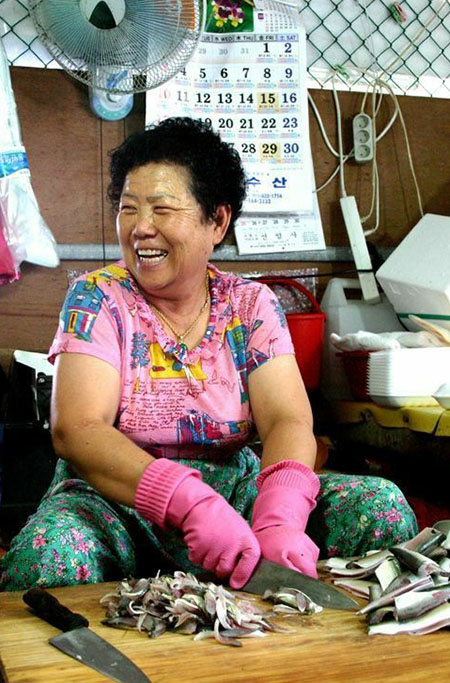
That is because a small extra is not a calculation, but a gesture. The principle of reciprocity, as explained by psychologist Robert Cialdini, is not simply about the instinct to repay what we receive. The key lies in unexpected goodwill. A buy one get one offer is already a calculated, conditional proposition, and our brain recognizes it as a transaction. In contrast, a small extra is an unanticipated act of goodwill, and the brain interprets it as a relationship. Whether a brand is remembered as a place of transaction or a place of relationship, that difference ultimately determines whether customers return.
Around the same time, I had another experience. I was having dinner with an acquaintance at a well known restaurant when more people from the industry decided to join. We asked the manager if we could move to a larger table at the back, but from the beginning, something felt off. Instead of a clear answer, we were given vague, evasive responses. Then, when our group actually arrived, we were suddenly told that the table was reserved. The time was 10:37 p.m., in a restaurant where last order was at 11 and closing time was midnight. To be honest, it was obvious from the start. A large group arriving near closing time creates inconvenience, extra setup, more service, delays in closing procedures. To avoid that hassle, the manager had tried to brush us off, and when the group actually showed up, they resorted to a reason that made little logical sense. There were plenty of good restaurants nearby, so we got up and left.
At the next restaurant, however, the experience was completely different. The staff was so warm and cheerful that the entire atmosphere shifted the moment we sat down. Everyone at the table felt better, and the conversation became more lively. The energy of that one staff member spread to all of us. The experience was so positive that we did not even need to wait until the end of the meal. Not long after sitting down, we naturally reached for our wallets. Fifty thousand won was placed in front of that staff member. The manager at the first restaurant, trying to avoid inconvenience, lost not only the revenue from a single table but also all future opportunities for return visits. The staff member at the second restaurant earned fifty thousand won through just a few minutes of genuine interaction.
In the Age of AI, Human Emotion Becomes More Valuable
Lately, there has been increasing talk that humanoid robots will soon replace many roles in the service industry. If that prediction becomes reality, paradoxically, the role of human staff will not diminish. It will become significantly more important. Robots can provide accurate guidance, serve without mistakes, and never complain. But they cannot make eye contact and offer a sincere smile. They cannot deliver an unexpected warm remark or create a moment that eases the fatigue of the day. What machines cannot do, that is what humans must do. In the age of AI, human emotion does not disappear. It becomes a premium.
Putting down the smartphone and looking at the customer. Making an effort to accommodate instead of giving vague excuses. These moments will become the strongest differentiators of a brand. A wise owner understands that at service touchpoints, people determine average spending, repeat visits, and word of mouth, and places this at the core of staff training. More than skills, attitude. More than manuals, sincerity. These ultimately become the most powerful form of marketing and branding.
The same applies to B for Brand. Although it operates in the field of intangible creative work, design is still a form of service. How clients are treated, and what emotional impression remains after a meeting, can open or close the door to the next project. No matter how excellent the outcome, the emotional residue of the process can overshadow everything. Conversely, even if the result is ordinary, a positive and trustworthy working experience will always lead clients to return. The value of a brand does not lie only in logos, packaging, or campaigns. It is ultimately completed through the people who deliver it.
What kind of “final moment” is your brand leaving with its customers today?





















#14057, 905 49, Beolmal-ro 102beon-gil,
Dongan-gu, Anyang-si, Gyeonggi-do, Korea
Business Registration Number: 454-86-01044
Online Sales License No.: 2021-Anyang Dongan-1081
Copyright © DESIGNSORI Co., Ltd.