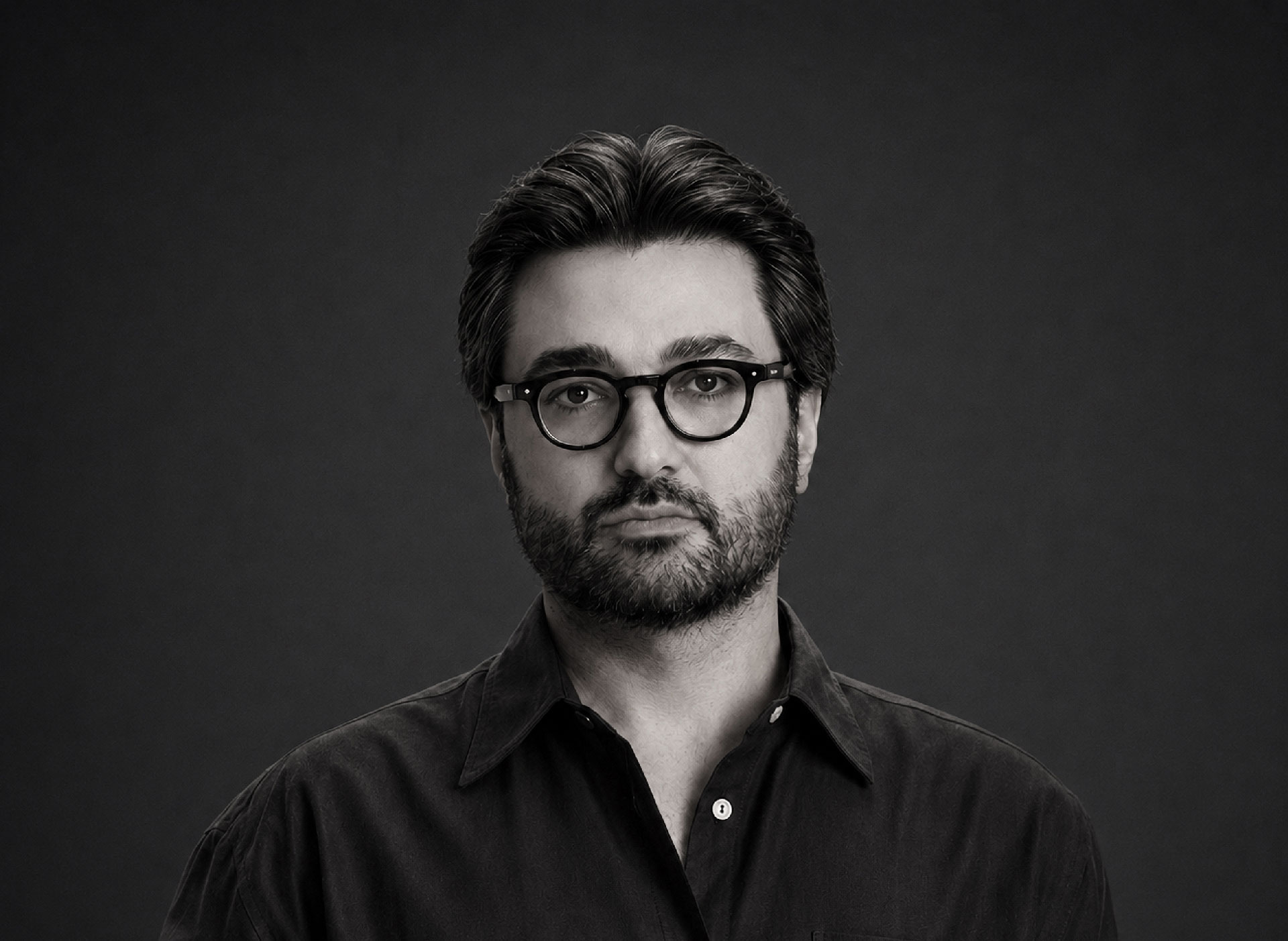
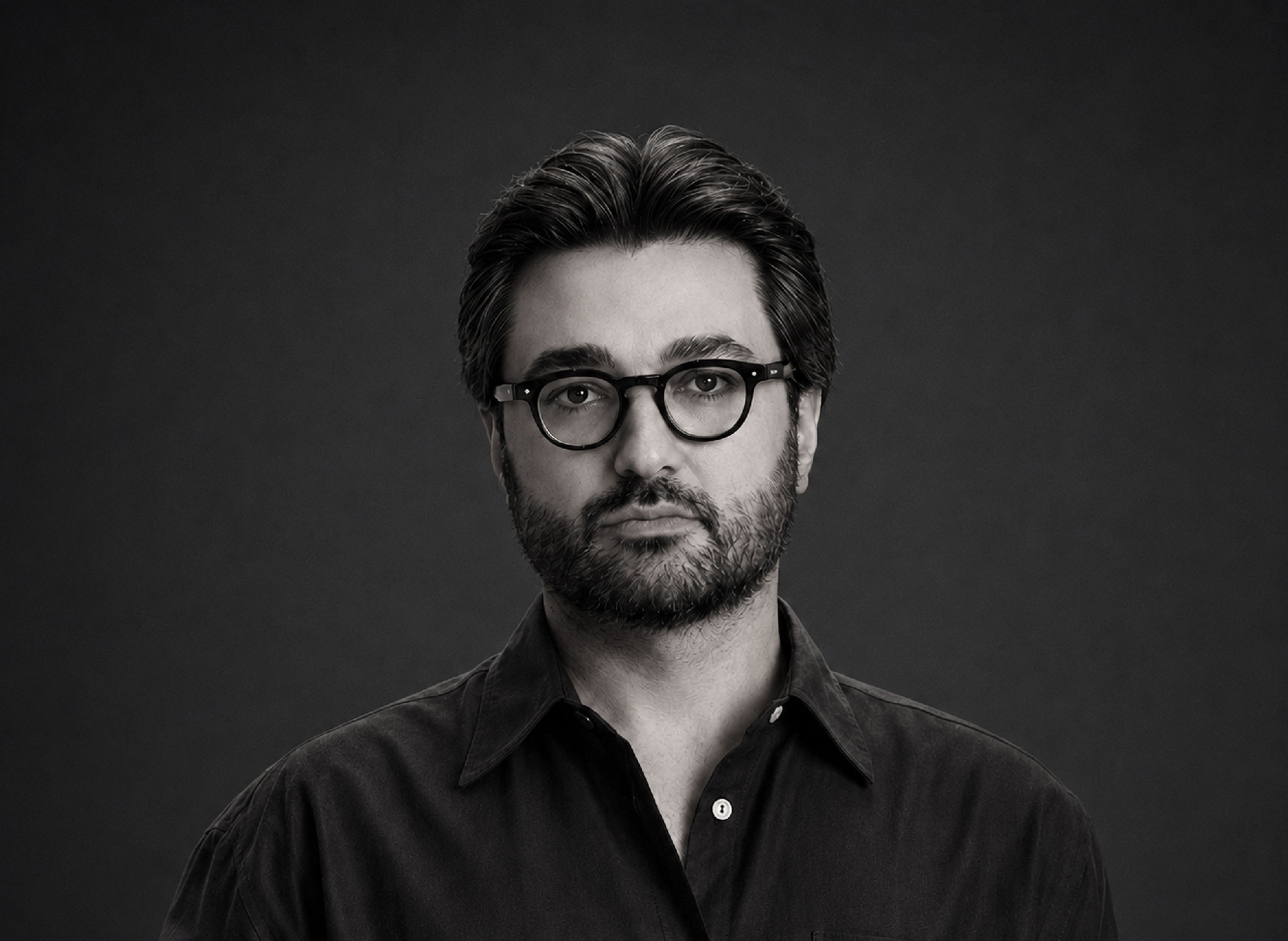
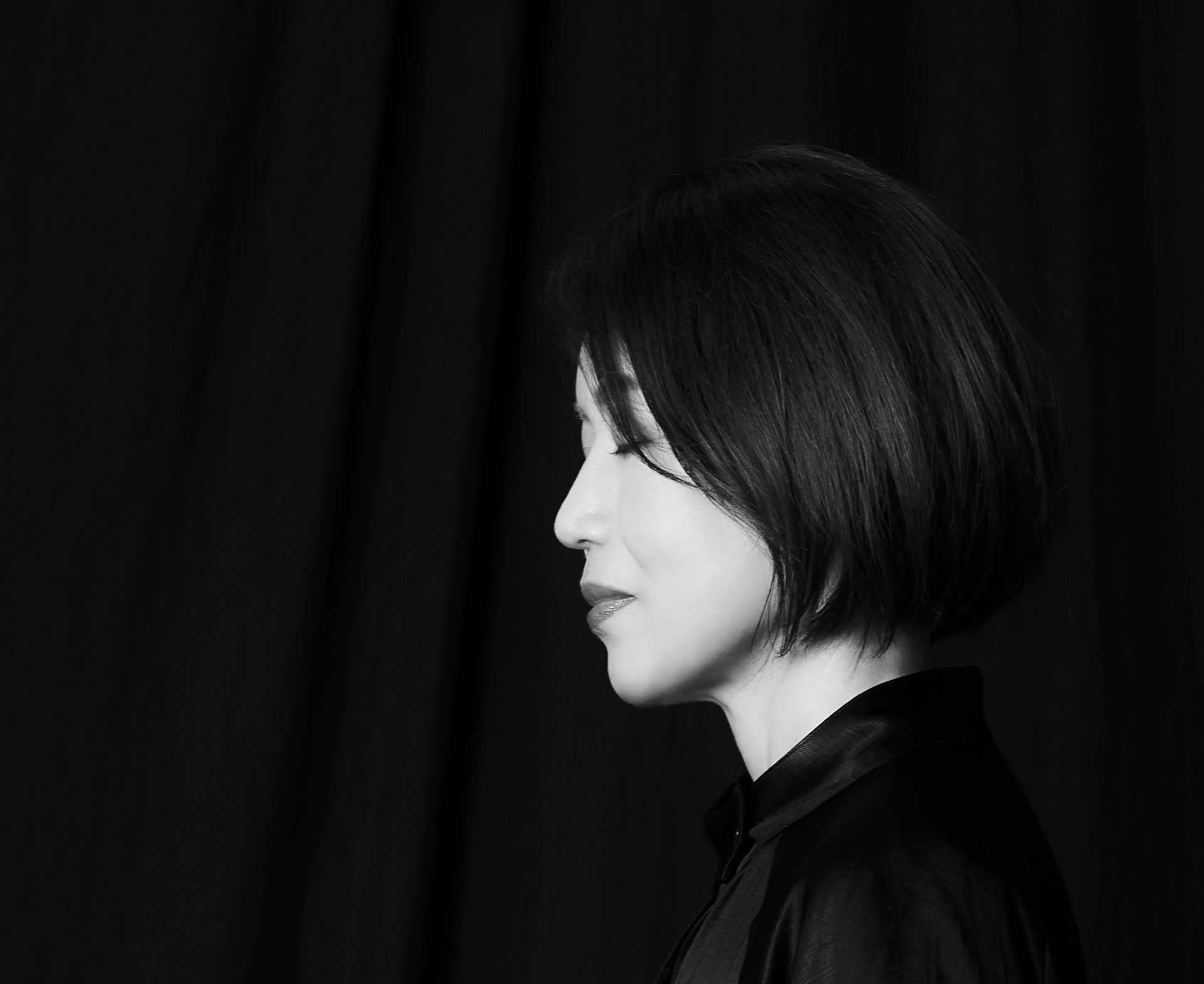
Sami Savatli Founder & Principal of SAVATLI Architects
“Founded in Istanbul in 2009, SAVATLI Architects is a multidisciplinary practice spanning interior architecture, furniture, and object design. With a strong focus on context, proportion, material, light, and craftsmanship, the studio creates contemporary environments that balance function, emotion, and artistic expression. Its work ranges from residential and hospitality projects to global brand adaptations and collectible design, while maintaining close ties to local making traditions. This philosophy is clearly expressed in the LOVE Collection, where cast aluminum becomes both functional furniture and sculptural form. Rather than reproducing tradition visually, SAVATLI Architects draws on the knowledge embedded in materials and craftsmanship to develop a contemporary design language. In this interview, Sami Savatli discusses material, emotion, craftsmanship, brand localization, and the evolving relationship between design, art, and technology.”
To begin, could you introduce yourself and SAVATLI Architects? We would also like to hear about the background behind the studio’s founding in 2009, how its practice came to encompass interior architecture, furniture, and object design, and the direction it pursues today.
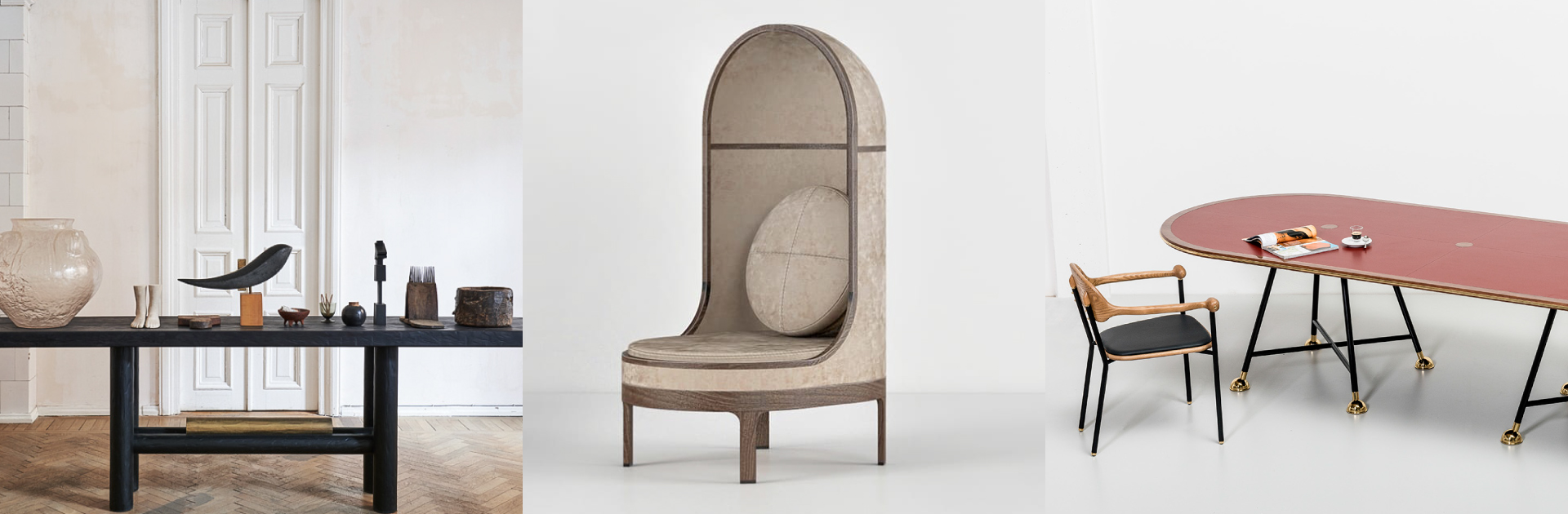
I trained in industrial product design, so my relationship with design began at the scale of the object. Proportion, ergonomics, material and making were part of my thinking from the very beginning. When I founded SAVATLI Architects in Istanbul in 2009, the scale of the work gradually expanded into interiors, but I never really saw furniture, lighting or objects as separate from the architecture of a space. For me, they are not elements added at the end of a project; they are part of how the space is conceived from the outset.
That is why the studio’s practice developed quite naturally across interior architecture, furniture and object design. Over time, I also became increasingly interested in the territory between design, craftsmanship and art. Collectible design did not feel like a new direction, but rather a natural convergence of ideas I had already been exploring for years. Today, I see SAVATLI Architects as a design practice working across different scales. The scale may change, but the concerns remain consistent: context, proportion, material, light and the quality of making.
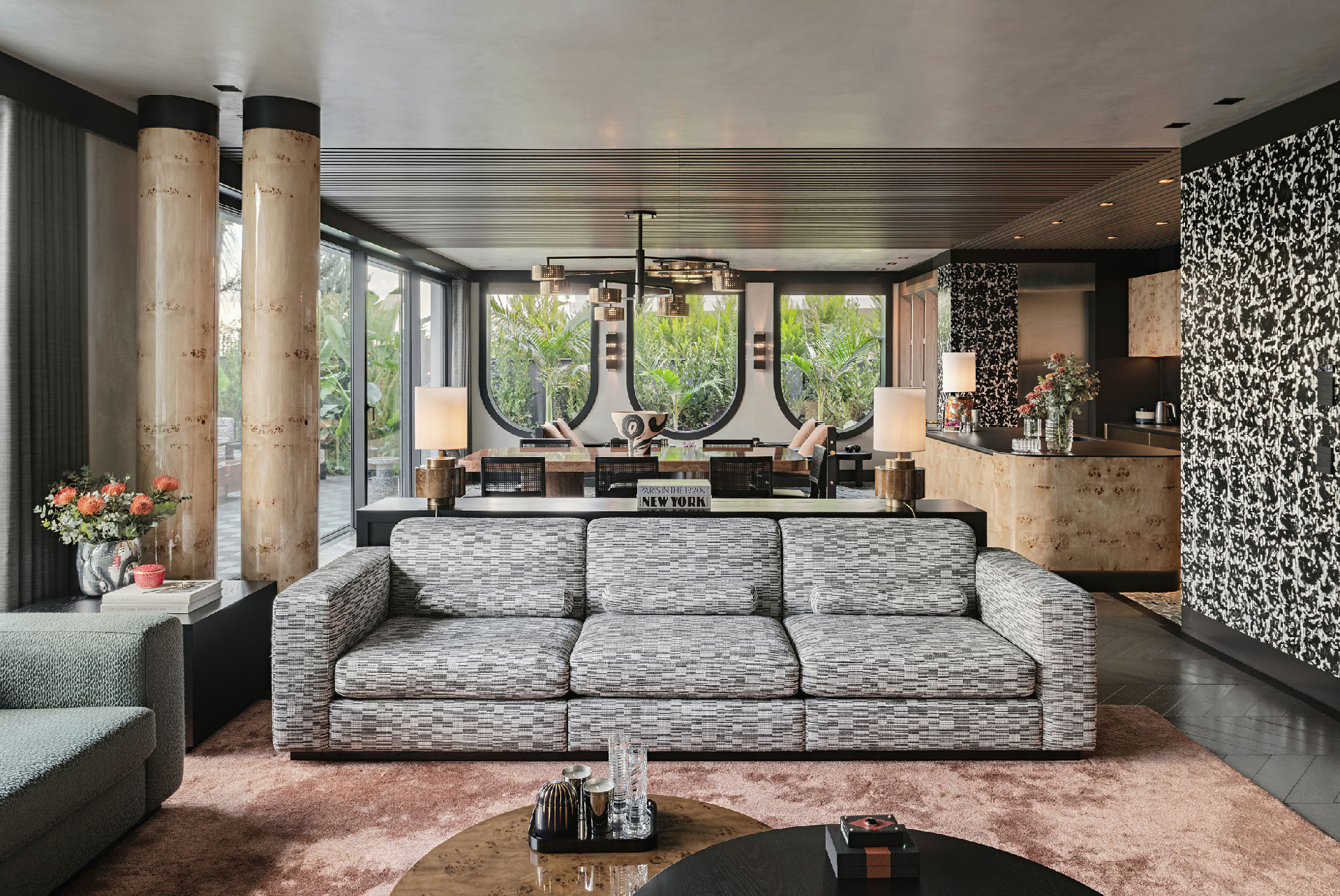
The work of SAVATLI Architects creates the impression that traditional materials and craftsmanship are naturally integrated into contemporary forms and spaces. What principles guide your approach to carrying the values and sensibilities of tradition into contemporary design without simply reproducing the past?
For me, tradition is much more about knowledge than image. I am less interested in reproducing historical forms or decorative references than in understanding the intelligence behind how things are made: how a material behaves, how stone is cut, metal is cast, or wood is worked and allowed to age. There is an enormous amount of accumulated knowledge in craftsmanship, and I think contemporary design becomes richer when it genuinely engages with that knowledge rather than simply quoting the past. The challenge is to preserve the depth of the making and the relationship with the material while allowing the form itself to belong to the present. That is why we work very closely with craftspeople and producers.
A detail may begin as a drawing, but it continues to evolve through prototypes, material tests and conversations in the workshop. I value that exchange because the final result carries both the precision of design and the intelligence of the hand. I do not believe tradition needs to look traditional. Its continuity can exist in the quality of the material, the way something is made, or the respect given to a particular technique. For me, that is a much more meaningful way of bringing the past into contemporary design.
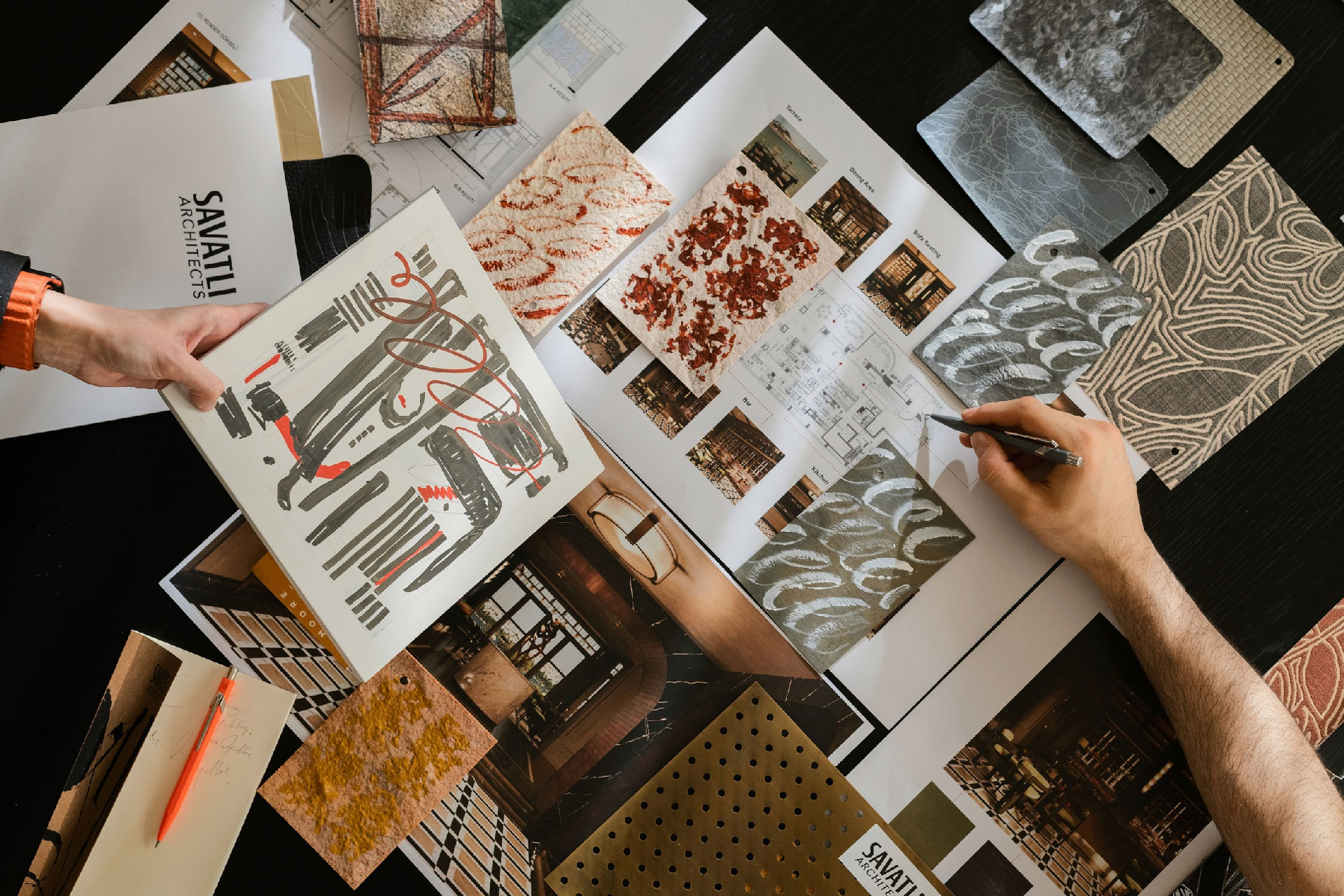
SAVATLI Architects describes design as a process that balances function, emotion, and artistry. When these three elements conflict within a project, how do you determine what to prioritize and ultimately achieve a coherent balance?
I never think of balance as giving equal weight to three separate elements. Every project has its own hierarchy, rhythm and context. In some cases function becomes the dominant concern; in others, atmosphere may be shaped more strongly through material, light or proportion. Function is always the foundation for me. A space has to work well and establish the right relationship with the people using it. But function alone is never enough. What makes a space memorable is often something less measurable: the proportion of a room, the quality of light, the texture of a material, a moment of restraint or an unexpected detail.
When there is a conflict, I try to return to the central idea of the project. Why does this space exist, who is it for, and what should it make someone feel? Once those questions are clear, many decisions become much easier. For me, coherence does not come from making every element equally visible. It comes from making sure they all serve the same idea. In a strong project, function, emotion and artistic expression should not compete with one another; they should reinforce each other.
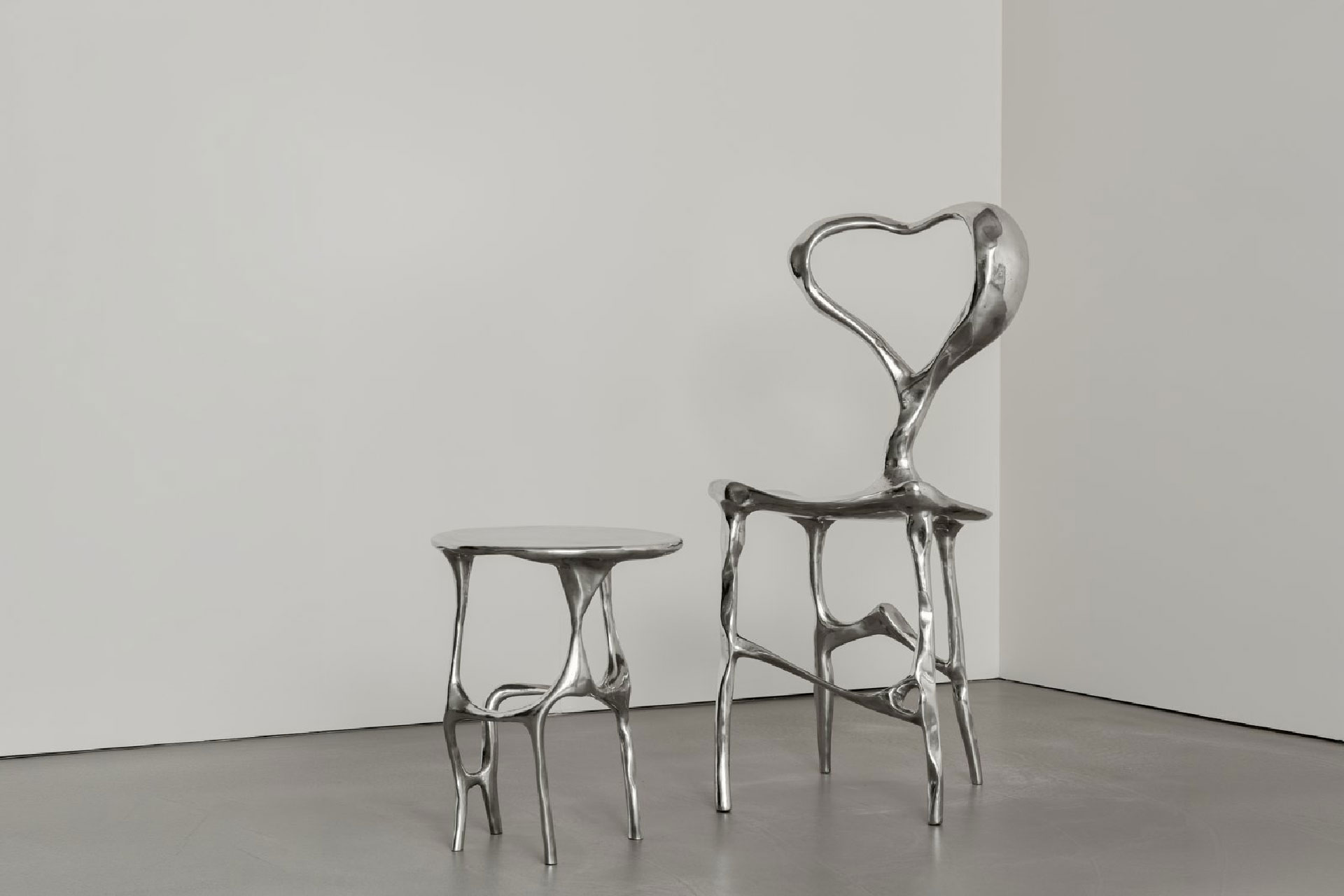
The LOVE Collection translates the universal emotion of love into everyday objects such as a chair and a side table. What led you to choose love as the central theme, and how did you develop an abstract emotion into a tangible form and structure?
Love is something very fundamental and deeply human, yet it can mean something different to each of us. I was interested in what might happen when such a universal emotion is given a physical presence through an object. The heart was naturally one of the starting points, as one of the most universally recognised symbols associated with love. But I never wanted to use it simply as a romantic or decorative image. I was more interested in how the emotion itself could inform the character of the object.
With LOVE, I wanted certain opposites to coexist: softness and strength, intimacy and distance, fluidity and weight. The forms are curved and almost bodily, yet the objects have a very strong physical presence. In a way, love itself contains similar contradictions; it is far too complex to be reduced to a single emotion or image. So I see LOVE not as a literal representation of love, but as an interpretation of that emotion through form, proportion, material and spatial presence.
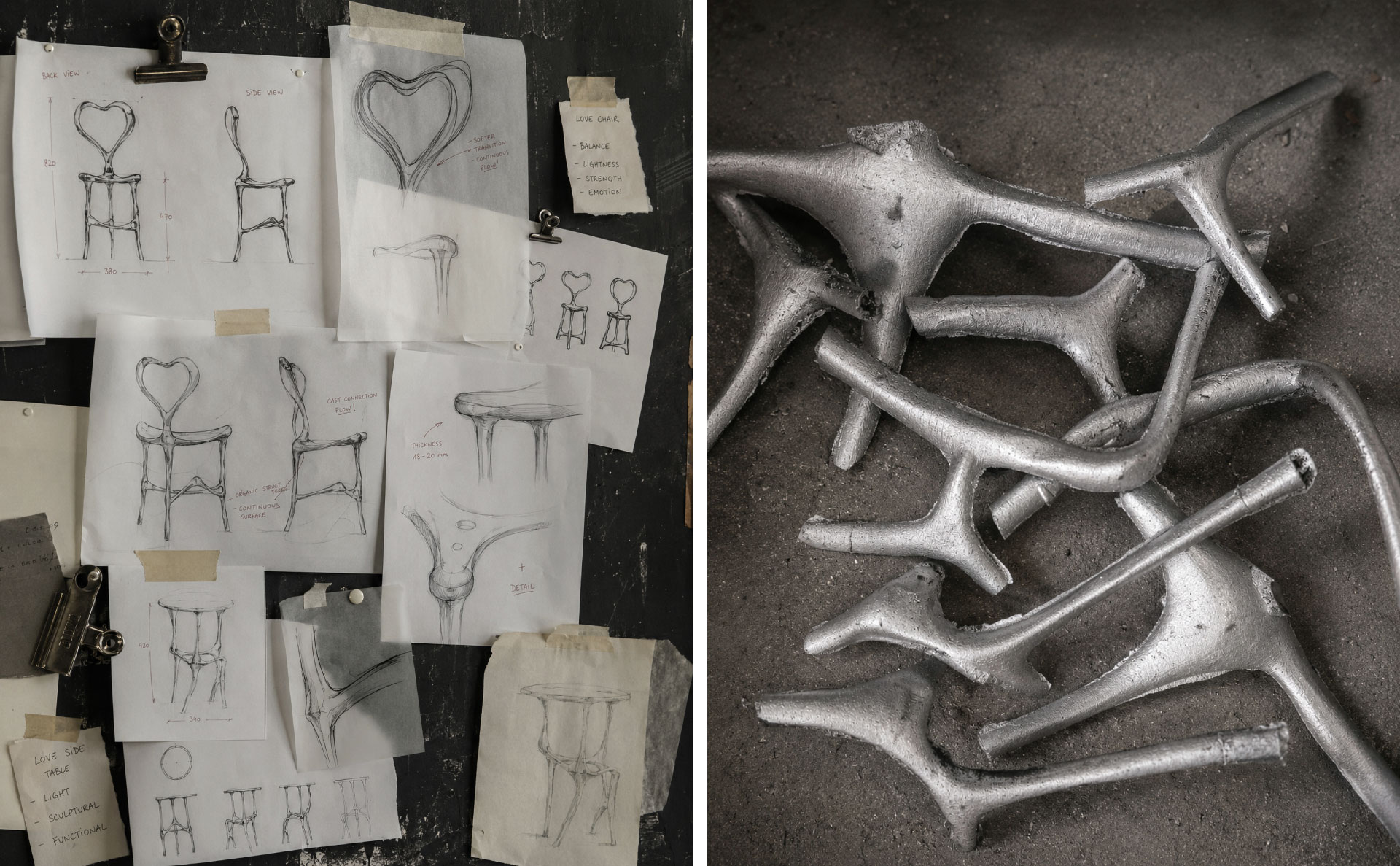
In the LOVE Chair, the heart shape is not an applied decorative element but an integral part of the backrest and structure. How did you refine its proportions, asymmetry, lines, and volumes to transform such a familiar and direct symbol into a distinctive design language?
The main challenge was to stop thinking of the heart as a symbol and start treating it as three-dimensional geometry. Because the form is so familiar, using it too literally can immediately become decorative. I wanted to retain a certain recognisability while making it more abstract and spatial. Proportion and asymmetry became very important. Rather than creating two perfectly mirrored halves, I allowed the lines to continue in different directions, the volumes to counterbalance one another, and the form to change as you move around it.
From the front, the heart is more immediately legible; from the side, it begins to dissolve into something more sculptural and abstract. The backrest therefore is not simply a graphic gesture. It carries weight, responds to the body and defines the structure of the chair itself. It was important to me that the symbol and the function could not really be separated. I like that the form feels familiar at first glance, but becomes less obvious the longer you look at it. That sense of discovery as you move around the object is a central part of the design language of LOVE.
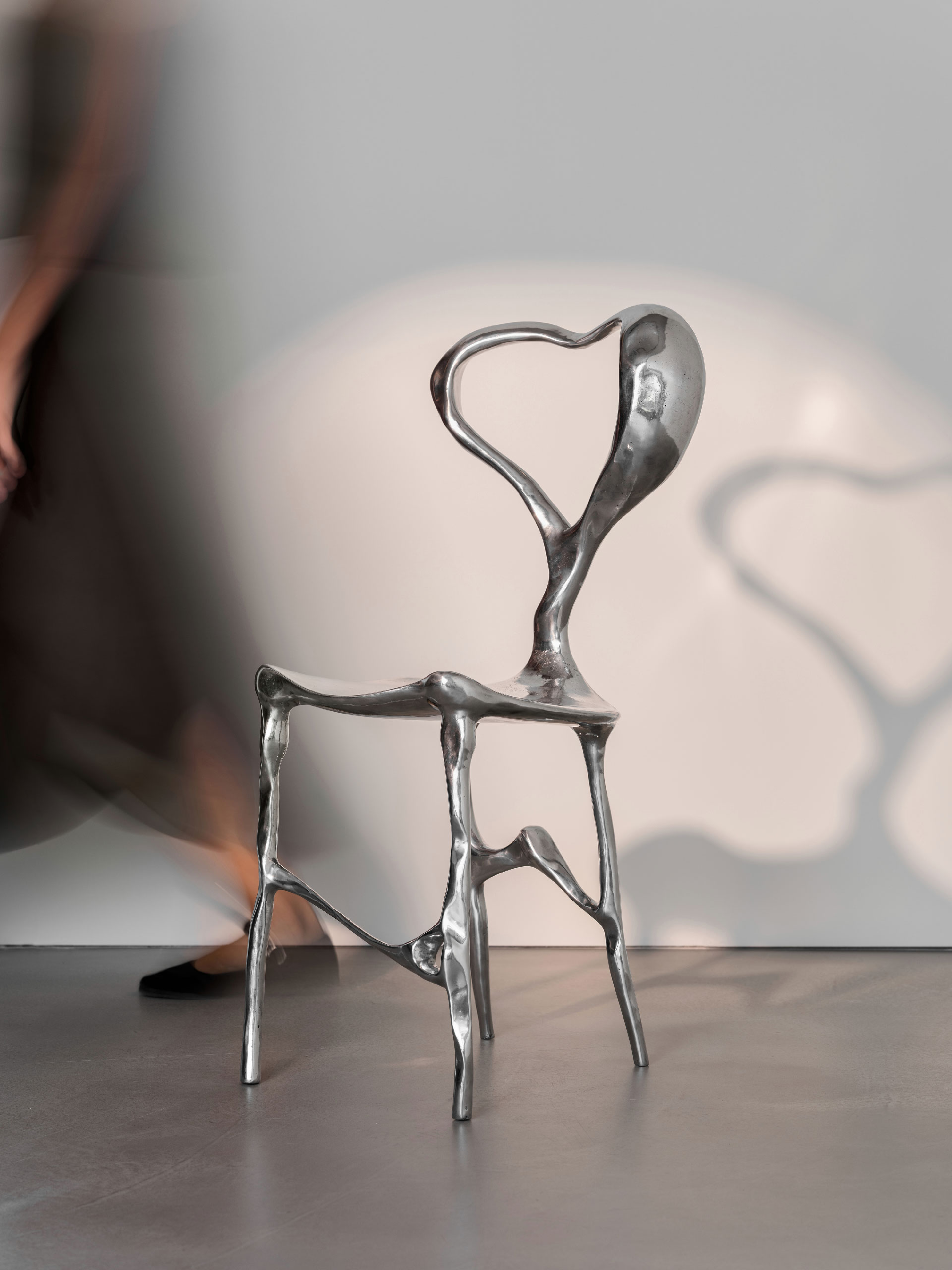
Both the LOVE Chair and LOVE Side Table are made from cast aluminum and individually finished by hand. How did you use the material’s texture, reflection, and physical presence to transform aluminum, which can often appear cold and industrial, into an emotional and organic object?
I chose aluminium partly because of that contradiction. It is usually perceived as technical, industrial and quite neutral, yet once it goes through the casting process it can acquire a much more physical, almost bodily quality. With LOVE, I did not want the surface to feel perfectly anonymous or overly refined. I wanted the small traces of casting, the slight irregularities and the hand-finished surface to remain part of the character of the object. Those marks make the pieces feel more human; rather than erasing the process of making, they allow it to remain visible. Light is also very important.
The aluminium surface changes constantly depending on the environment and the point of view. In some areas it catches and reflects light, while in others it becomes softer and more muted. That variation gives the form a sense of movement and makes the object feel responsive to the space around it. For me, that is where the emotional quality of the material begins. Something we normally associate with industry can become much warmer and more organic through texture, light and the evidence of the hand.
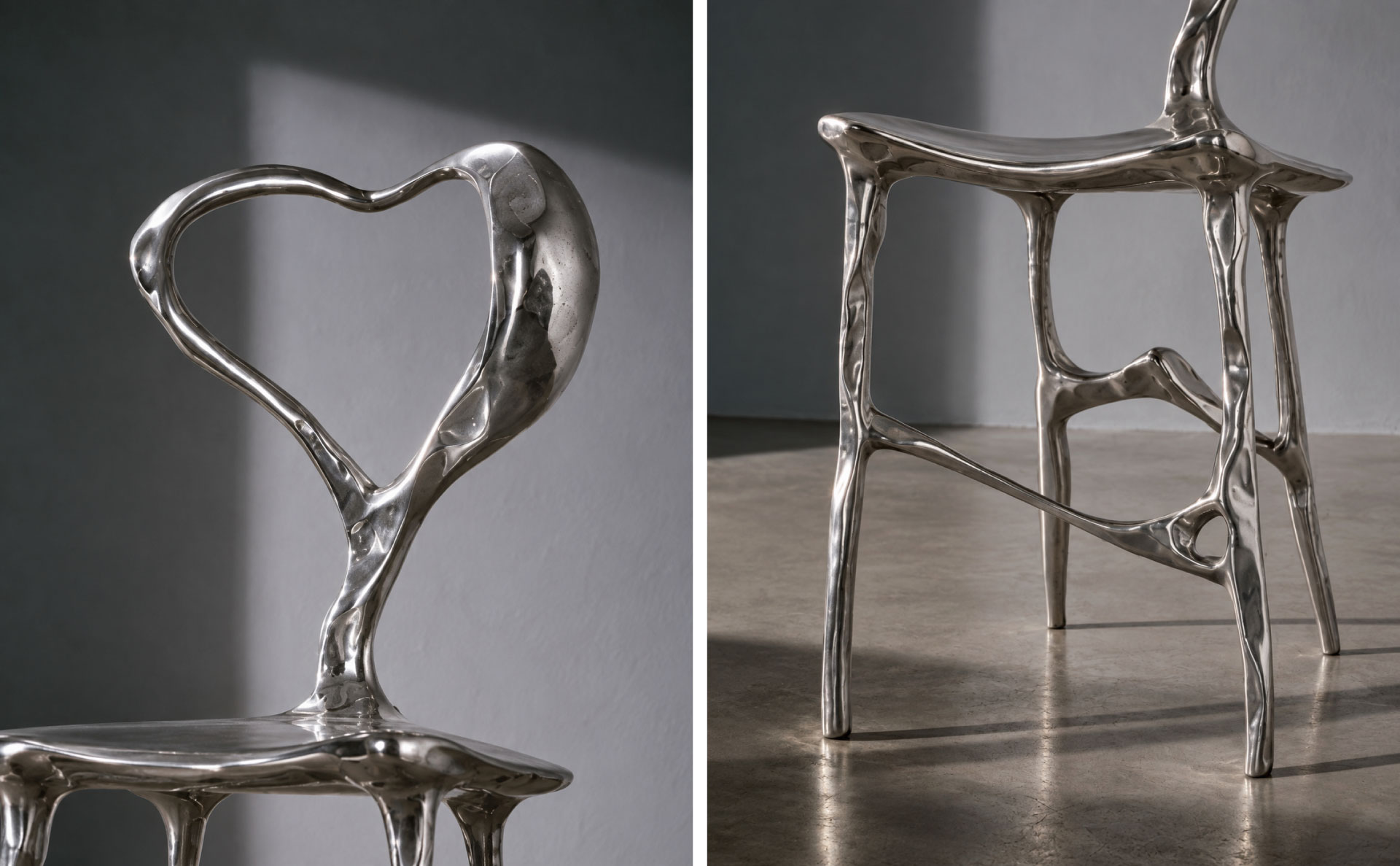
LOVE functions as furniture while also occupying space like an independent work of sculpture. How do you view the boundary between furniture intended for use and art intended for contemplation? What kind of relationship should these two values establish within a single object?
I do not think that boundary needs to be very rigid. Because of my background in industrial design, function remains fundamental to the way I think; a chair should understand the body, and a table should respond properly to use. But function does not have to be the entire story of an object. An object can perform its function and still alter the space around it. Through scale, silhouette, material or presence, it can hold your attention and make you want to move around it. For me, that is where the sculptural quality begins. With LOVE, I wanted the pieces to remain fully usable, but also to have a strong presence when they are not being used. Their value should not appear only when someone sits on the chair or places something on the table. The most interesting territory for me is where function and contemplation do not exclude one another. A strong object can belong to everyday life and, at the same time, change the way a space is perceived simply by being there.
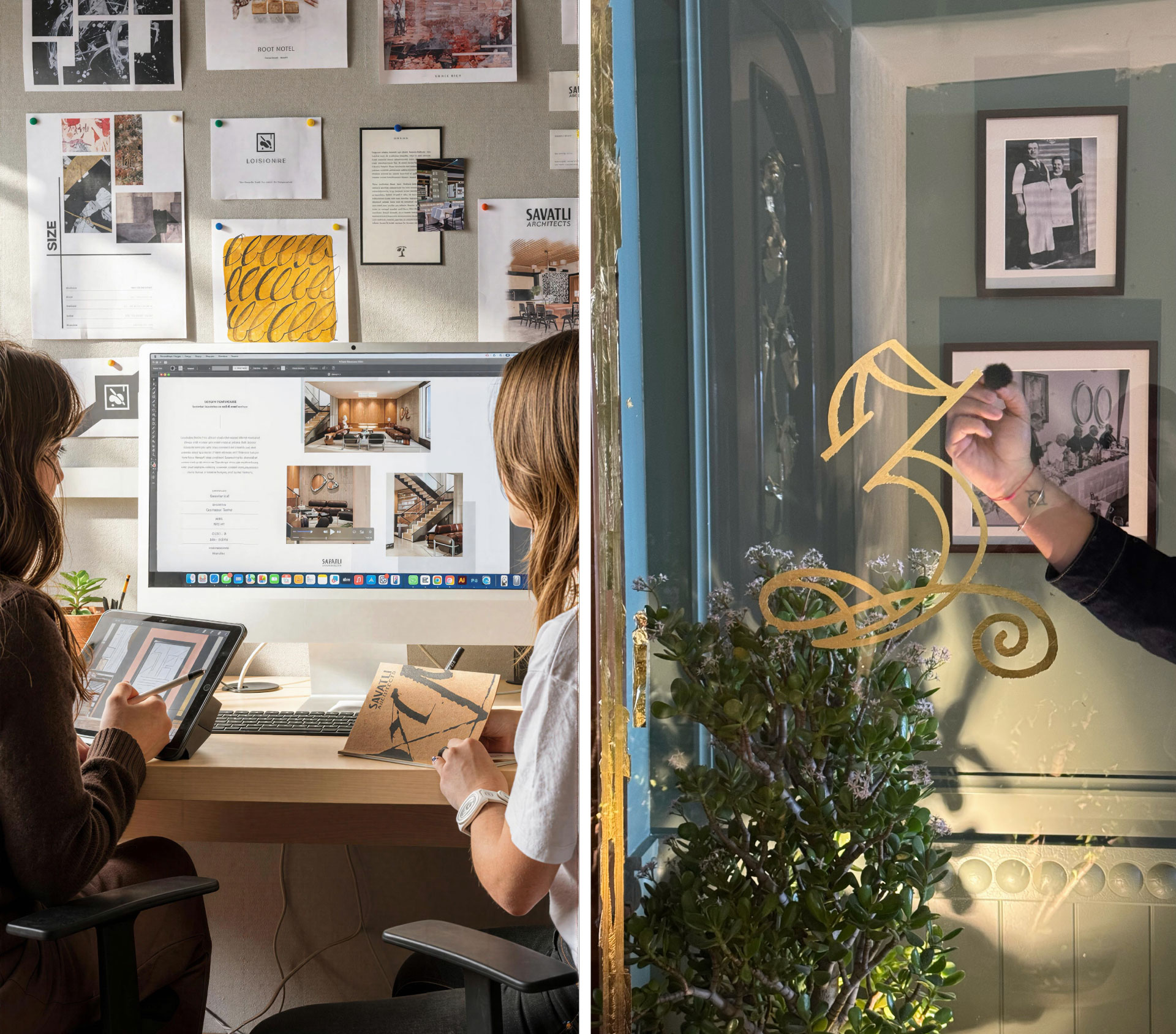
SAVATLI Architects has worked on adapting international brand identities to the cultural and spatial context of Türkiye while preserving their essential character. When balancing a global brand language with a distinct local sensibility, which elements must remain intact, and which can be reinterpreted?
I do not see a brand identity as a fixed visual formula. What should remain intact is the character that genuinely defines the brand: its atmosphere, sense of hospitality, relationship with the user and certain recognisable design codes. The physical expression of that identity, however, can change according to place. Materiality, proportion, light, detailing and spatial flow should respond to context. Repeating the same interior from one city to another may preserve consistency, but it can also make a space feel anonymous very quickly. I also do not believe in adding the local context as decoration.
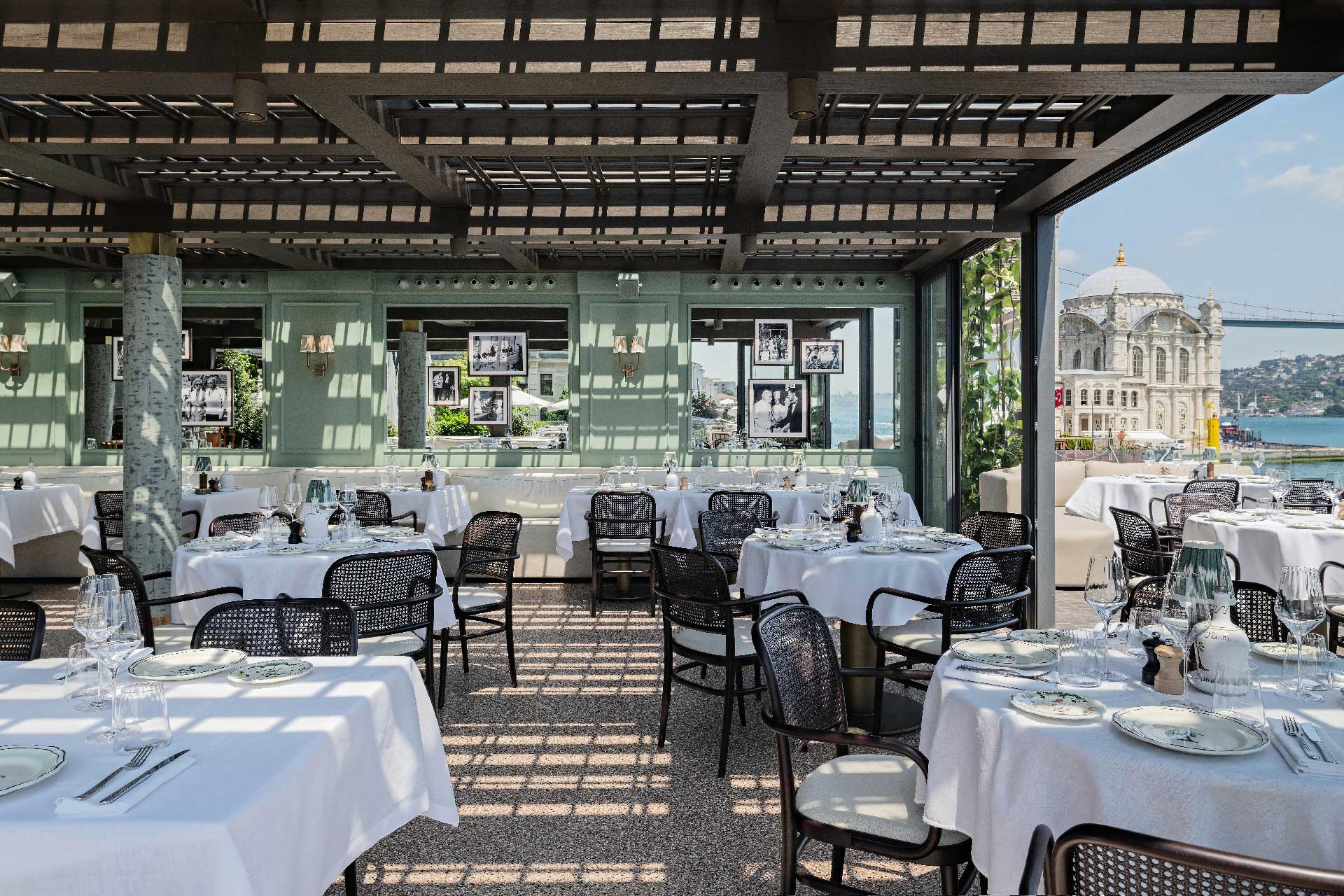
I prefer to establish that relationship more naturally through material, fabrication, craftsmanship and the rhythm of the space. Zeffirino Istanbul, for example, allowed us to preserve the Italian character and refinement of the brand while developing a more specific response to its location and architectural context in Istanbul. For me, a successful adaptation should still feel unmistakably like the brand, but it should also feel as though that particular space could not simply exist in the same way somewhere else.
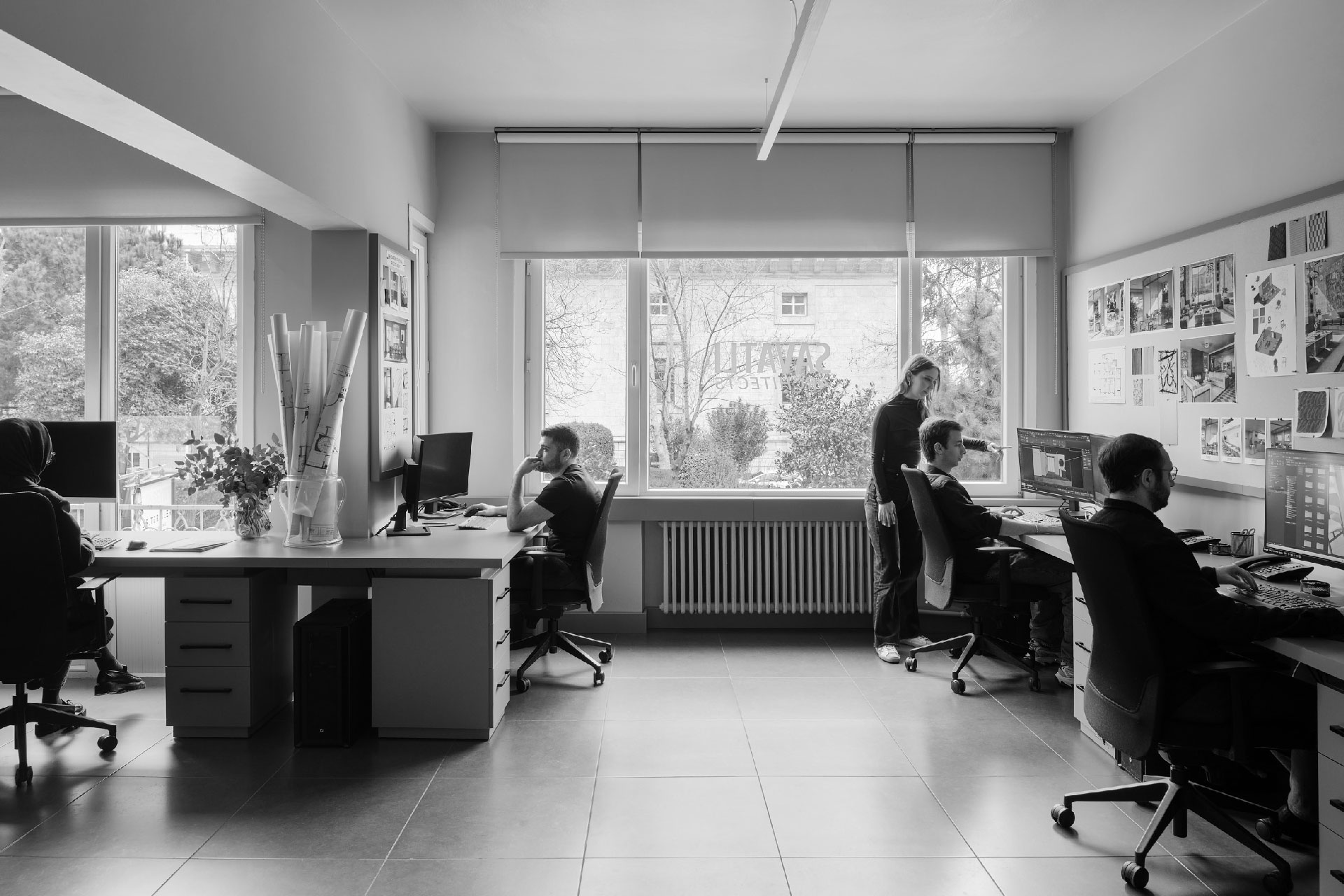
Your studio brings together architects, interior designers, product designers, and visual artists while also collaborating with craftspeople, engineers, and lighting designers. How do you coordinate these different areas of expertise and integrate them into a consistent design language? How are final decisions made within this collaborative process?
I do not really believe that a strong project is created within the boundaries of a single discipline. Today, space, objects, light, art and making increasingly overlap, so having different areas of expertise at the same table feels less like a complication and more like a natural part of the design process. What matters is allowing each person to bring their own knowledge while keeping everyone connected to a clear central idea. An engineer, a craftsperson, a product designer and a lighting designer will naturally look at the same problem from very different angles.
Quite often, the most interesting solution emerges precisely from that exchange. We usually establish a clear conceptual direction, material language and spatial character at the beginning of a project. As the work develops, each discipline adds another layer to that framework. The process is collaborative and open, but I also believe that a project needs a clear sense of authorship in order to remain coherent. My role is therefore quite curatorial in a way. It is not about producing every idea myself, but about recognising the right ones, creating relationships between different contributions and making sure that, in the end, everything still feels as though it belongs to the same project.
Contemporary design faces the challenge of preserving regional traditions and craftsmanship while embracing new materials, technologies, and international perspectives. What does the future of design look like to you, and what new possibilities would you like to explore through SAVATLI Architects and the LOVE Collection?
I think the future of design is less about choosing between tradition and innovation, and more about how intelligently we can bring the two together. Preserving craftsmanship, for me, does not mean freezing traditional methods in time. What matters is retaining the knowledge embedded in making while allowing new tools and materials to lead us somewhere else. Digital fabrication, new casting processes and material technologies are giving designers much greater freedom today. But technology alone does not produce meaningful design. I still believe deeply in understanding material, making prototypes and working directly with the people who produce things. What interests me most is the moment when advanced technology and the intelligence of the hand can coexist within the same object.
At SAVATLI Architects, I would like to continue blurring the boundaries between interior architecture, furniture and objects. I am increasingly interested in projects that can move fluidly from the architecture of a space to a piece designed specifically for it, or even to the development of a new way of making. I also do not see LOVE as a closed or finished collection. I am interested in where its language of form, material and emotion might lead at different scales and through different methods of production. For me, the future lies somewhere in that balance: continuing to search for what is new without losing the knowledge of how things are made, and finding new ways of looking at forms we think we already know.












#14057, 905 49, Beolmal-ro 102beon-gil,
Dongan-gu, Anyang-si, Gyeonggi-do, Korea
Business Registration Number: 454-86-01044
Online Sales License No.: 2021-Anyang Dongan-1081
Copyright © DESIGNSORI Co., Ltd.