
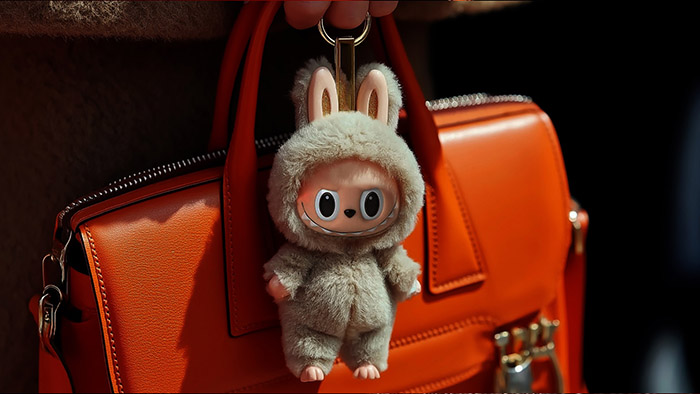
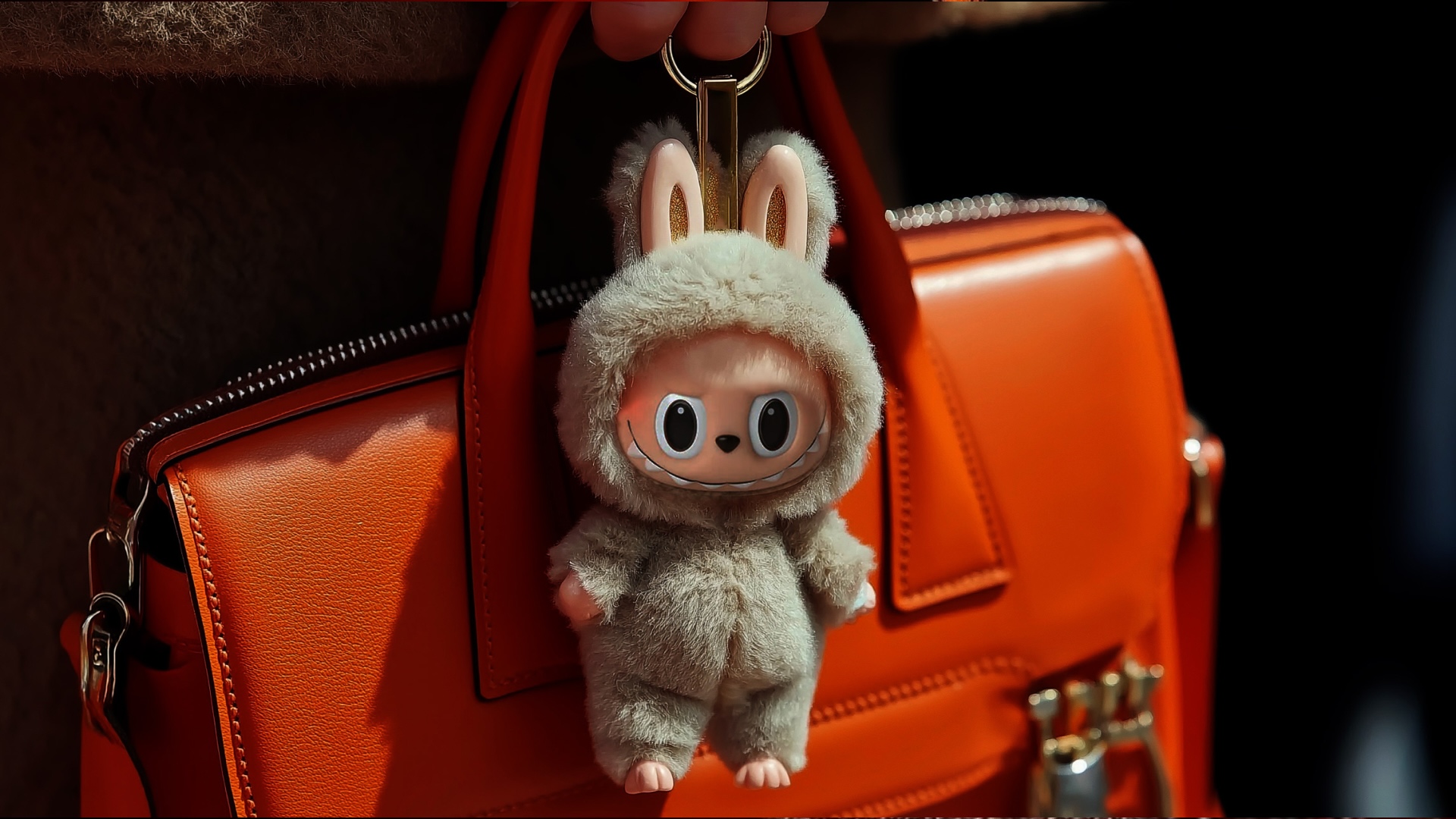
On June 11, 2025, at an auction house in Beijing, China, a palm sized rabbit doll was sold for 200 million KRW. The star of the moment was “Labubu,” the very doll that sparked global frenzy after BLACKPINK’s Lisa was seen attaching it to her luxury handbag. Just a month earlier, long lines had formed in front of Pop Mart stores across Korea from dawn, to the point that offline sales were suspended due to safety concerns. A keyring with a retail price of 20,000 KRW was being traded for as much as 1.09 million KRW on the resale market. People competed for it “before it sold out” and because “everyone else has one, so I should too.” I was no different. Even though it wasn’t a character that matched my personal taste, seeing it hanging from bags everywhere made it look undeniably trendy, and before I knew it, I found myself browsing reseller sites. However, by October 2025, Labubu looked very different from just a few months earlier. Search interest, which had peaked in July, dropped to nearly zero. The keyring that once fetched over one million KRW fell to 140,000 KRW. On local secondhand marketplaces, there were no buyers even when it was listed below retail price.
< Image source: Adformatie >
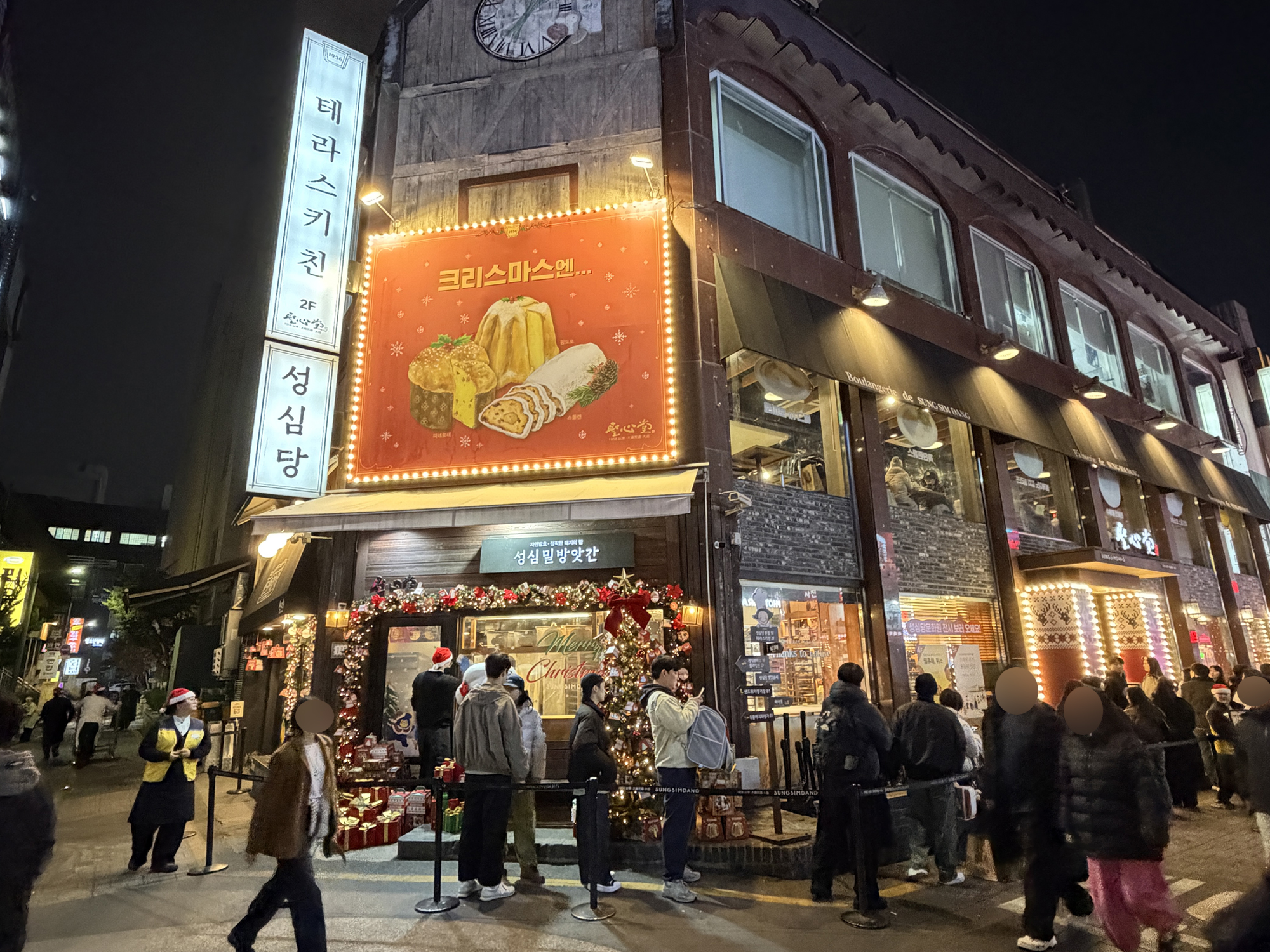
It took only four months. But what’s truly interesting lies elsewhere. A similar phenomenon is unfolding right in front of your company. Two cafés sit side by side across a small back street. Their prices are similar, and the coffee does not differ much in quality. Yet one is always packed, while the other remains quiet. After watching for a few days, curiosity gets the better of you, and you step into the empty café. The coffee is good, perhaps even better than the crowded one. And yet, the very next day, you find yourself heading back to the café with the line. Why. This is how herd mentality works. Labubu’s lines were planned scarcity, while the café’s line is naturally occurring social proof. In both cases, our brains reach the same conclusion. If that many people chose it, it cannot be wrong.
In 2020, Korea witnessed one of the hottest unintended experiments in herd behavior. As international travel came to a halt due to the pandemic, the country’s MZ generation discovered a new playground, golf. Within two years, the number of MZ golfers surged to 1.15 million. The golf apparel market grew 37 percent, from 4.6 trillion KRW to 6.3 trillion KRW. On Instagram, there were 700,000 posts tagged #골린이 (golf newbie) and one million tagged #골프웨어 (golfwear). What’s interesting is why they started golfing in the first place. Because all my friends do it. Because everyone posts golf photos on Instagram. Golf brands followed the same pattern. New brands launched almost daily, and in large numbers. But by 2023, quiet warning signals began to emerge. Even once thriving brands are seeing their sales growth slow. Something feels off. Weekend green fees of 350,000 KRW, club sets costing 4 to 5 million KRW. Those who started because everyone else was doing it began to ask, do I really have a reason to keep doing this. Crowds gather quickly, but they disperse just as fast. This is why Labubu collapsed in four months, and why the golf boom began to cool. Choices driven not by genuine desire, but by borrowed desire, do not last.
Just how powerful is because everyone else is doing it. The bandwagon effect is a cognitive bias that leads people to follow what the majority has chosen. It becomes stronger the greater the uncertainty. When starting a new hobby or buying an unfamiliar product, we use others’ choices as a safe indicator. The golf craze was a textbook example of this mechanism. It began with a rational reason, a safe outdoor activity during the pandemic, but quickly shifted to all my friends are doing it and everyone on Instagram is posting golf photos. In Influence, Robert Cialdini identifies social proof as one of the most powerful principles of persuasion. Its effect is maximized when uncertainty is high, when similar people make the choice, and when many people do so. Why do people behave this way. Because of FOMO, the fear of missing out. Everyone has it except me. Scarcity creates desire, but the moment scarcity breaks, desire evaporates.
Let’s return to the café line. The reason one of the two cafés in front of your office is crowded is complex. Perhaps the coffee really is better. Or perhaps a few people happened to choose it first, triggering a snowball effect. What matters is this. The length of the line does not equal quality. Crowds are sometimes right, and sometimes wrong. But the moment we follow blindly, we stop being consumers and become nothing more than part of the crowd. If you are standing in line right now, ask yourself. Is this my choice, or am I simply following someone else’s.



















#14057, 905 49, Beolmal-ro 102beon-gil,
Dongan-gu, Anyang-si, Gyeonggi-do, Korea
Business Registration Number: 454-86-01044
Online Sales License No.: 2021-Anyang Dongan-1081
Copyright © DESIGNSORI Co., Ltd.