
Co-Founder of lllayer
The landscape of South Korea’s bakery industry is undergoing a seismic shift. In a market long dominated by corporate franchise Goliaths, the performance achieved by a single local bakery from a provincial city is nothing short of astonishing. According to the Financial Supervisory Service’s electronic disclosure system, Rosso Co., Ltd., the operator of Sung Sim Dang, posted an operating profit of 47.8 billion KRW in 2023, a 51.7 percent surge from the previous year. This figure more than doubles the standalone operating profits of the nation’s two largest bakery franchise groups, Paris Croissant (Paris Baguette, approx. 19.9 billion KRW) and CJ Foodville (Tous Les Jours, approx. 21.4 billion KRW). Its revenue reached 193.7 billion KRW, setting an unprecedented milestone for a single bakery brand in Korea.
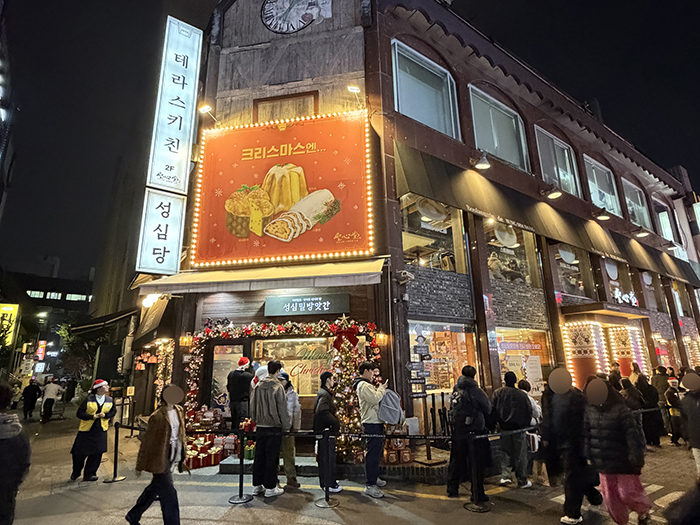
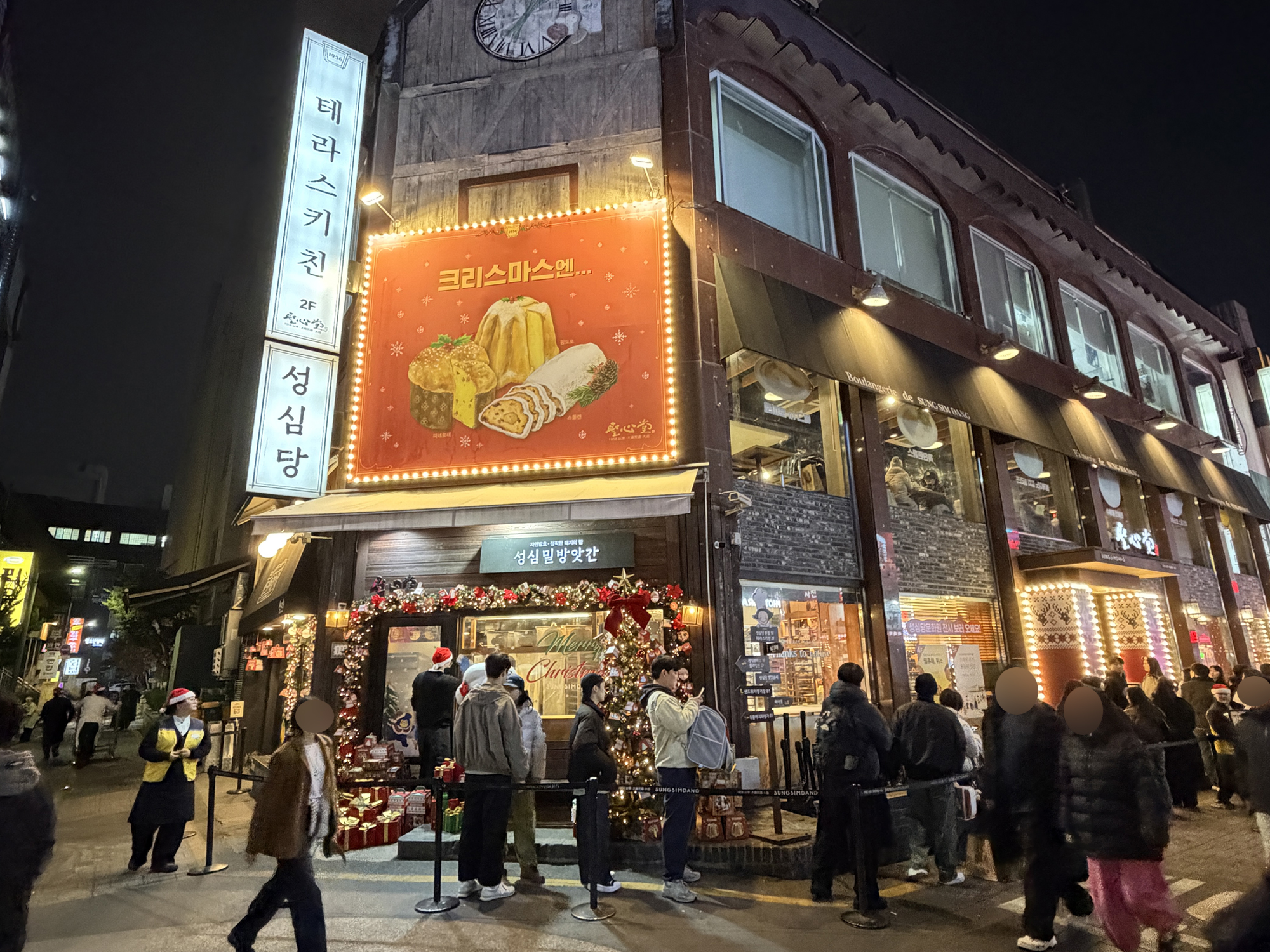
Crowds now flood the areas around Daejeon Station and the brand’s main store in Eunhaeng dong, with visitors from across the country lining up just to buy their bread. Queues begin forming at dawn, well before the store opens, as visitors try to secure the brand’s beloved Strawberry Siru and Mango Siru, cakes overflowing with fruit and priced at less than half the cost of hotel cakes. What was once a newsworthy phenomenon has now become a daily routine. For consumers, Sung Sim Dang is not merely a bakery. People ride the KTX solely to buy its products, share the experience on social media, and in doing so, consume the city of Daejeon itself. Sung Sim Dang has built a powerful fandom and brand loyalty that even large corporations with more than 3,400 nationwide locations cannot replicate.
“How did this brand first begin?”
The origins of Sung Sim Dang are intertwined with one of the greatest tragedies of modern Korean history. Its founder, the late Im Gil soon, was an ordinary family man who operated an orchard in Hamju, South Hamgyong Province. In December 1950, as the tides of war reversed, he led his family toward Heungnam Port. Amid the chaos, they miraculously boarded the final evacuation ship, the SS Meredith Victory. On the cold deck of the vessel, he offered an earnest prayer: “If my family survives, I will devote the rest of my life to serving my impoverished neighbors.”
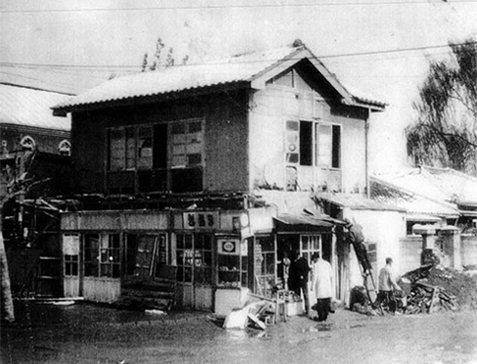
After passing through Geoje Island and Jinhae on their way to Seoul, his family encountered a fateful event in 1956 when the train they were riding broke down at Daejeon Station. Stranded with nowhere to go, they sought help at Daeheung-dong Cathedral, where Father Oh Ki-sun handed them two sacks of flour. This became the seed capital for Sung Sim Dang. The founder pitched a tent in front of Daejeon Station and began selling steamed buns, and to fulfill the promise he made at Heungnam Port, he donated all unsold bread each day to his impoverished neighbors. “Baked today, sold today, any leftovers donated.” The root of Sung Sim Dang’s management philosophy did not originate from a business textbook but from a vow of “sharing” born in the ruins of war.
Sung Sim Dang was not a success story from the beginning. In the early 1990s, the bakery joined the franchise boom and opened branches across Seoul and various provincial cities, only to face devastating failure. Overexpansion led to declining quality, and the company was pushed to the brink of bankruptcy. In 2005, a massive fire broke out at the main store, leaving everything in ashes. Yet employees voluntarily rallied, declaring, “Let’s rebuild the company,” and joined the restoration efforts. Through this crisis, Sung Sim Dang learned a painful lesson: “Bread is alive. It must be made in front of my eyes and sold immediately.” From then on, the brand took an independent path known as the “Defend Daejeon” strategy. Sung Sim Dang has achieved its current success through the following distinct strategies.
First, an uncompromising strategy of scarcity and its position as a local anchor tenant.
Sung Sim Dang rejected all aggressive offers from major department stores in Seoul. Their slogan, “Sung Sim Dang is the culture of Daejeon,” is a highly calculated branding strategy. If people could buy it in Seoul, they would have no reason to travel to Daejeon. The recent controversy over the Daejeon Station store’s rent illustrates the brand’s status. According to regulations, KORAIL Retail demanded rent equivalent to 17 percent of monthly sales, which amounted to 440 million KRW, but Sung Sim Dang refused, saying it was unsustainable. Public sentiment sided with the bakery, and after multiple failed bidding rounds, the contract was finalized at about 133 million KRW per month. This symbolic moment showed that Sung Sim Dang is not a mere tenant but an irreplaceable anchor that drives foot traffic at Daejeon Station, something even a public institution ultimately acknowledged.
Second, innovative product development and overwhelming value for money.
Sung Sim Dang does not rest on tradition. Its “Fried Soboro,” developed in 1980 and patented as the first of its kind, has sold over 100 million units, becoming a cornerstone of the brand. More recently, its Siru series captivated the MZ generation. While hotel bakery cakes were priced around 100,000 KRW, Sung Sim Dang offered strawberry, mango, and fig cakes in the 40,000 KRW range, so generously filled with fruit they seemed to overflow. By minimizing marketing expenses and instead investing boldly in ingredients, the brand created the strongest viral engine: consumers voluntarily posting their purchases across social media.
Third, the authentic practice of an Economy of Communion (EoC).
Sung Sim Dang’s spirit of giving is not performative. Each year, the company distributes 15% of its operating profit as bonuses to employees and donates more than 30 million KRW worth of bread every month to over 40 welfare institutions. It has even received a presidential citation for transparent tax payments. Such “good influence” becomes powerful social capital in times of crisis. During the 2005 fire and the recent rental dispute, citizens of Daejeon rallied behind the brand, saying, “Sung Sim Dang must be protected.” A management philosophy that treats employees like family and shares profits with the community becomes a core competitive strength that ensures long-term sustainability.
Fourth, building a local ecosystem for the future.
Sung Sim Dang is now expanding beyond selling bread, reaching into agriculture and culture. Recently, the company established a 7,000-pyeong (approximately 23,000 m²) wheat field in the Gyocheon-dong area of Yuseong-gu, Daejeon, entering domestic wheat production. This initiative aims to reduce reliance on imported wheat, raise the self-sufficiency rate of domestic wheat as part of ESG management, and create a new tourism landmark by connecting wheat field experiences with production facilities. Rather than simply purchasing ingredients, the company envisions transforming into a “true local enterprise” that grows raw materials in local soil, processes them, and sells them directly.
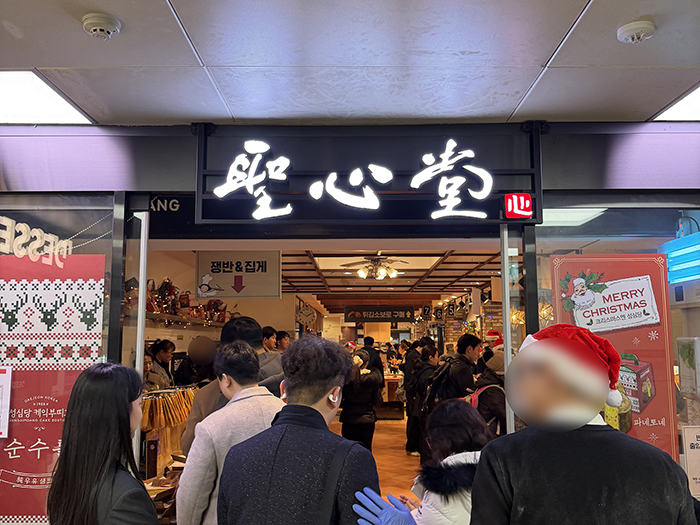
Sung Sim Dang’s success story shatters one of Korea’s most entrenched assumptions, that to succeed, a business must move to Seoul and relentlessly scale up. The brand proved instead that the most local identity can become the most globally competitive, and that companies create far greater value when they pursue coexistence with their communities rather than profit alone. To anyone dreaming of building their own brand, Sung Sim Dang delivers a clear message: what matters more than flashy marketing or reckless expansion is an unwavering focus on essence. A bakery must make excellent bread, and a company must treat people with dignity. From a small steamed bun stall in front of Daejeon Station to a source of pride for an entire city, Sung Sim Dang embodies its company motto: “Do what everyone can wholeheartedly approve of.” The warm rebellion of a local brand built on true sincerity, a True Heart, is certain to continue.












#14057, 905 49, Beolmal-ro 102beon-gil,
Dongan-gu, Anyang-si, Gyeonggi-do, Korea
Business Registration Number: 454-86-01044
Online Sales License No.: 2021-Anyang Dongan-1081
Copyright © DESIGNSORI Co., Ltd.