
Slowly untangling a pair of white wired earphones from a pocket, they place them in their ears. Instead of the latest smartphone, they hold a palm-sized compact digital camera from the early 2000s and flick its clicking power switch with a fingertip. This is a scene commonly seen among teenagers and people in their twenties today, one that older generations often find puzzling and describe as the “Y2K trend” or “retro nostalgia.” But there is a contradiction here. Today’s teenagers never lived through the 2000s. They have never dropped off a roll of film at a photo lab and waited days for it to be developed, nor do they know what it was like to choose just twenty songs because an MP3 player had limited storage. It makes little sense to say they are nostalgic for an era they never experienced. To them, these old devices are not fragments of a bygone past, but entirely unfamiliar interfaces that they are encountering for the first time.
As the rectangular device we call the smartphone came to dominate everyday life, the physical design language that industrial design had built over decades disappeared almost overnight. Physical structures and contours once shaped around specific functions were hidden behind a simple touchscreen. There is no longer a need to turn a wheel to adjust the volume or click a metal dial into place to switch modes.
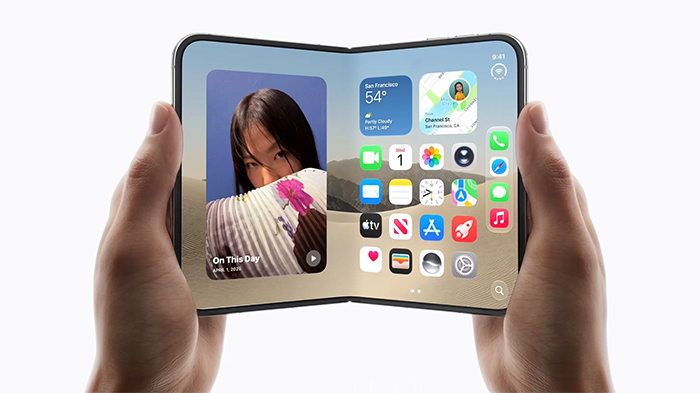
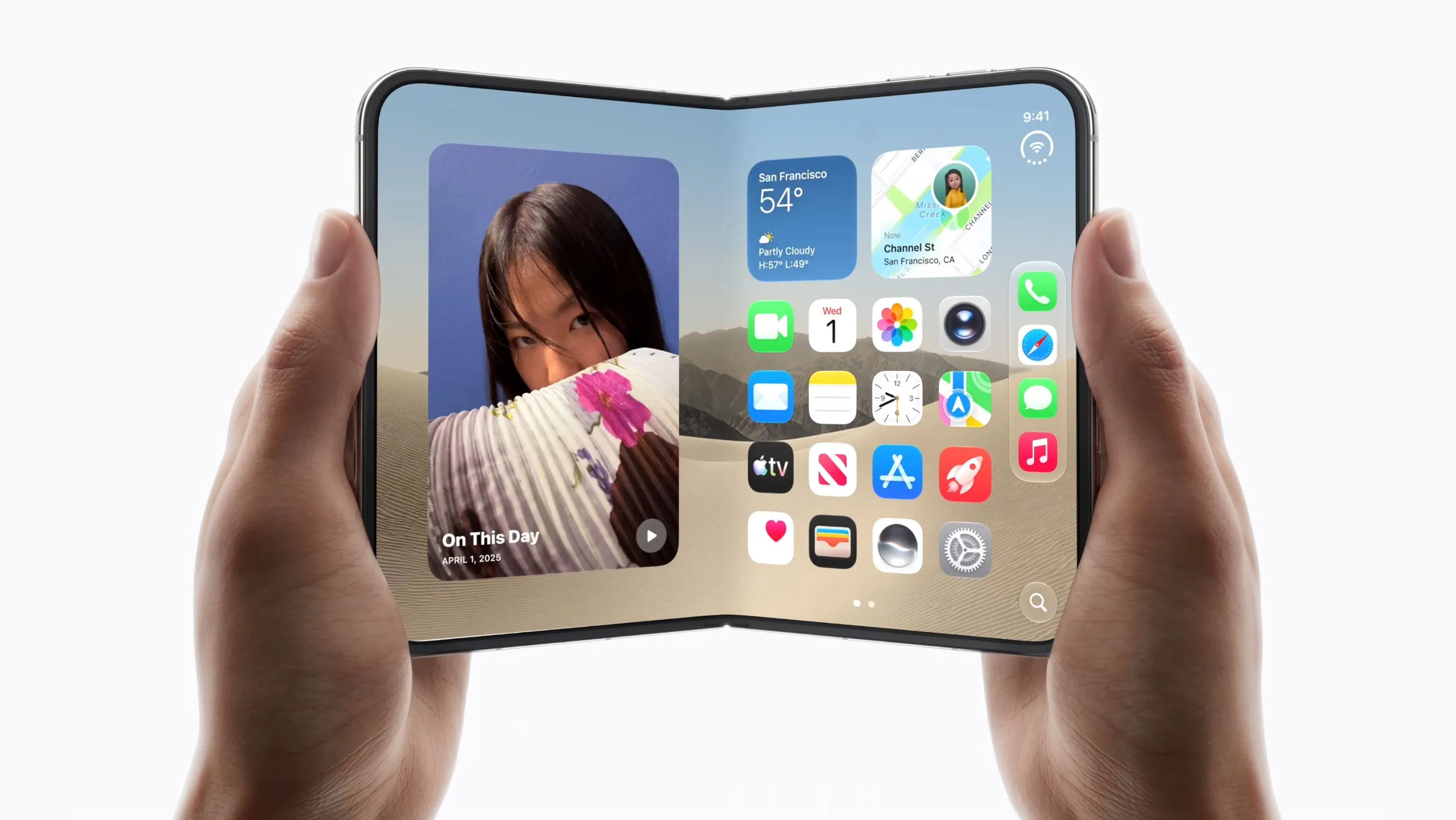
iPhone Duo. The culmination of the modern smartphone: buttons and contours disappear as every function converges into a single, seamless sheet of glass.
Every interaction has been reduced to the same gesture: lightly tapping pixels that glide across a smooth glass surface without offering any tactile feedback. In exchange for frictionless convenience, we have lost the material sensation that once came from the contact between objects and our fingertips. The hand is inherently a sensory organ that explores the weight, texture, solidity, and resistance of objects. Yet modern hardware has erased many of those sensations, reducing everything to a simple swipe across a sheet of glass. For a generation that has grown up with this smoothness as the default, the touchscreen is no longer an innovative technology. It is simply a dull, unstimulating surface.
Throughout the history of design, no style has ever remained the definitive answer. Whenever form moves too far toward one extreme, the tastes of a new generation tend to explore what is missing at the opposite end. Just as the radical expression of postmodernism emerged after modernism stripped away ornament, teenagers today are searching for friction they can feel beneath their fingertips after extreme minimalism hid every button behind a screen.
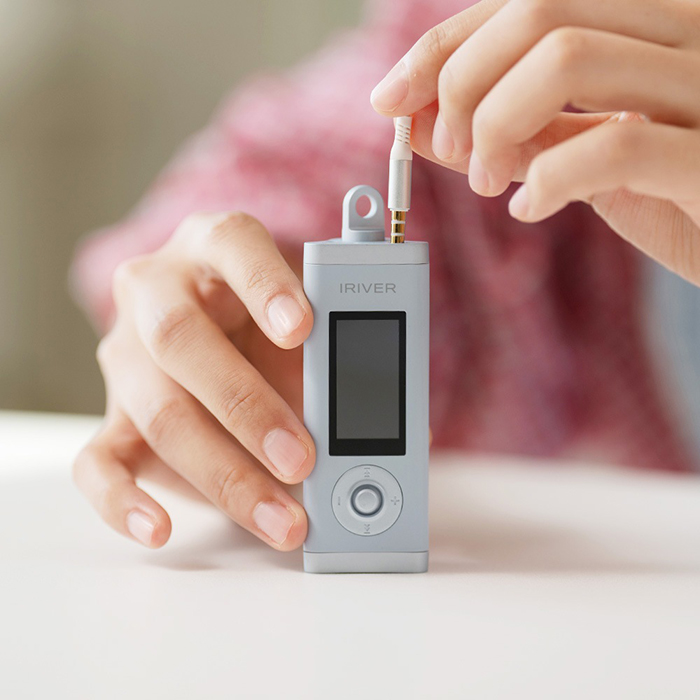
iRiver iFP-10. An MP3 player that revives the iconic prism form factor and physical wheel interface of the past.
Elements that older generations discarded as inconvenient are now experienced by a new generation as tangible and engaging forms of interaction. The Bluetooth connection of AirPods is convenient, but there is nothing physical to grasp. By contrast, aligning a 3.5 mm earphone plug with the jack and pushing it into place delivers a tactile sense of connection through the fingertips, providing physical feedback that the device is directly connected. Unlike wireless earbuds and their easily misplaced charging cases, a wired cable becomes a visible link between the body and the device, while also serving as a way to express individual taste.
The sense of weight and volume that comes from holding a thick compact digital camera, the dull resistance felt when turning a wheel, and the recoil against the fingertip when pressing the shutter all create the pleasure of physical interaction. The same is true of opening the device, removing the SD card, and inserting it into a reader to transfer photos. In a world of intangible clouds and subscription services, these hands-on steps come together to create the tangible feeling that “I am handling and owning this object myself.” This tactile appeal is reinforced by a growing fatigue with the flawless image quality produced by smartphone cameras. The moment the shutter is pressed, the latest phones use AI to smooth skin, lift shadows, and produce an optimized image. Images refined to eliminate failure are convenient, but monotonous. By contrast, the grainy noise of a 20-year-old CCD sensor, motion blur caused by a shaky hand, and washed-out colors under harsh flashlight offer a raw quality rarely seen on today’s carefully calibrated digital screens. This is why the rough results created by the limitations of the device itself can feel more compelling than technically flawless images.

Artifacts from an era we never experienced become not nostalgia, but entirely new interfaces.
As technology advances, is the only path forward for hardware design to make devices thinner and hide everything behind the screen? The essence of industrial design that software can never replace ultimately lies in designing the physical points of contact where our fingers meet objects. Just as fashion trends come and go, there has never been an eternal answer or a fixed definition of “good design” in the history of design. In the past, minimalism that eliminated cumbersome buttons and refined objects into smooth forms represented the height of innovation. But now that everything has become flat, the substantial friction and resistance felt beneath the fingertips are becoming valuable once again. The criteria for good design continue to shift depending on what each era considers excessive and what it feels is missing.
The spring of a button beneath the fingertip, the firm resistance of a turning wheel, and even the finish of a surface that gradually develops traces of use over time restore a physical connection between people and objects. The real reason a generation tired of smooth glass is picking up old hardware again is its desire to recover the tactile pleasure and physical presence of objects that were erased in the pursuit of convenience. No matter how smooth and perfect a form may be, design that loses the friction of engaging with human senses will ultimately be the first to slip from our fingertips and be forgotten as time moves forward.

















#14057, 905 49, Beolmal-ro 102beon-gil,
Dongan-gu, Anyang-si, Gyeonggi-do, Korea
Business Registration Number: 454-86-01044
Online Sales License No.: 2021-Anyang Dongan-1081
Copyright © DESIGNSORI Co., Ltd.