As technology advances, products gain more features. More sensors are added, operating modes become increasingly specialized, and connectivity with other devices continues to expand. Yet recent product design is moving in the opposite direction visually. Buttons are disappearing, screens appear only when needed, and machines are beginning to resemble furniture and everyday objects. This change cannot be explained by minimalism alone. Products are not becoming less functional. More technology is operating behind the scenes. What has changed is the way that technology is presented. In the past, the number of features and a mechanical appearance demonstrated a product’s performance. Today, the quality of a product increasingly depends on how naturally people can use its complex technology.
Consumers do not want to fill their homes with more machines. They want products that complete necessary tasks without disrupting their daily lives. The space a product occupies, the way it fits with surrounding furniture, and even its appearance when not in use have become important purchasing criteria. The Asia Design Prize 2026 winners STARY SERIES, minix clothes dryer, CUCHEN 123, and Flip Mirror demonstrate this shift in different ways. All four avoid displaying their functions too aggressively. They organize complex technologies and structures internally, allowing users to experience each function only when it is needed.
As Functionality Increases, Products Become Simpler
Products with numerous functions generally take on more complex forms. They need buttons and screens to control each feature, while structures intended to emphasize performance often remain visible on the exterior. Because manufacturers must explain newly added functions to consumers, they tend to make every element of the product noticeable. When all these functions remain exposed, however, users must process a large amount of information every time they look at the product. Even unused buttons and displays remain within view. When several such products occupy the same room, the space quickly begins to feel complicated. Additional functionality may improve convenience, but it can also create visual fatigue and increase the burden of use.
Recent design addresses this problem by establishing a hierarchy of information rather than eliminating functions. Features used every day are made easily accessible, while less frequently used functions move out of sight. Status information does not remain permanently illuminated. It appears only when users need to check it. A good interface does not show every function at once. It helps users understand only the action required at that moment. The exterior of a product can follow the same principle. Instead of exposing all its technology, it retains only the form necessary for everyday life.
Organizing Multiple Appliances into One Environment
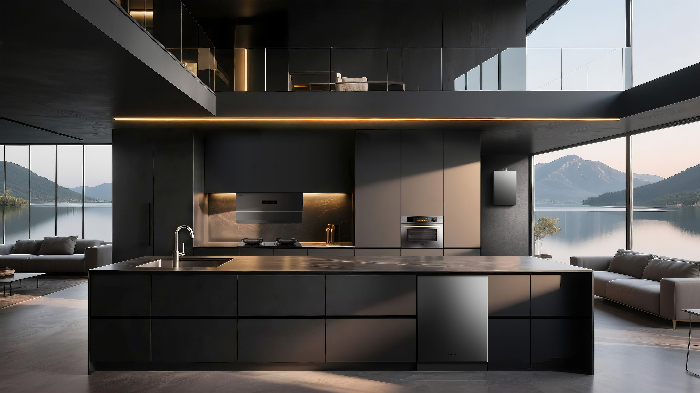
< STARY SERIES, ASIA DESIGN PRIZE 2026 GOLD WINNER >
STARY SERIES integrates several kitchen appliances, including a dishwasher, combination oven, cooktop, range hood, and water heater, into a single system. Each product performs a different function and requires a different method of operation. However, consistent grey glass panels and a unified formal language organize them into one visual system. Kitchens already contain numerous products and tools. When each product has a different form, color, and interface, users perceive them as separate machines. As the number of functions increases, the space also appears more complicated.
Instead of emphasizing the presence of each appliance, STARY SERIES designs the relationships between them. The ultra-slim range hood recedes into the surrounding space, while the controls are integrated into the surface. Status indicators do not constantly demand attention. They communicate necessary information through light. The overall order of the kitchen becomes visible before the individual functions of the products. The important point is not simply the use of a consistent style. The range hood and cooktop are connected, while cooking, cleaning, and temperature management become part of a continuous user experience. The perspective has shifted from selling several individual products to proposing one complete living environment. Consumers no longer need to learn how to operate five separate machines. They only need to understand one system. The technological complexity remains inside the products, while users encounter an organized experience.
Product Size Becomes a Cost of Everyday Living
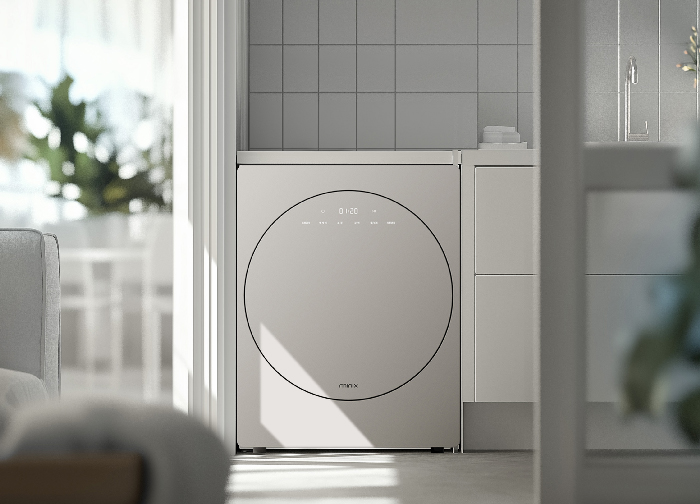
< minix body dryer, ASIA DESIGN PRIZE 2026 GOLD WINNER >
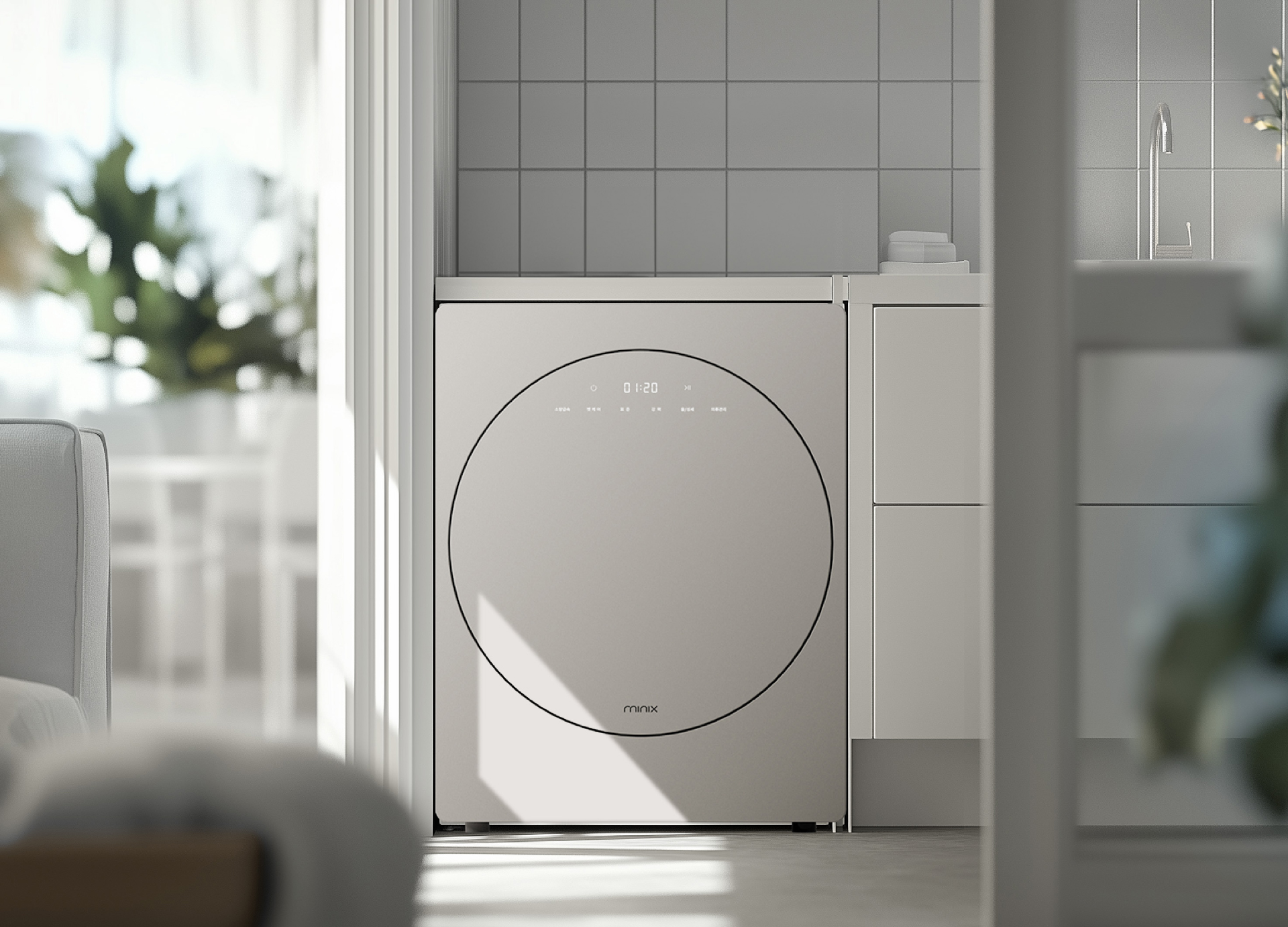
The minix body dryer began with the problem of how much space conventional body dryers occupy. A body dryer performs a clear function, but its size can make it difficult to place in an ordinary residential bathroom. It may be used only briefly, yet it occupies the same amount of space throughout the entire day. In a compact home, product volume is more than a matter of dimensions. If users must move other objects or create a new circulation path to accommodate a product, they continue to pay a cost for owning it. That cost appears not as money but as lost space and inconvenience. The minix body dryer offers both wall-mounted and freestanding configurations, allowing users to select an installation method that suits their space. Although it uses two high-speed BLDC motors, its exterior remains simple and restrained. It does not display its mechanical structure to emphasize rapid drying performance. Instead, the extent to which it avoids disrupting the bathroom becomes part of its product value.
The change represented by this product is clear. A well-designed compact appliance is not simply a small product. It must also reduce the physical area it occupies, its visual presence, and the burden of maintenance. For technology to become part of the background of everyday life, designers must consider the time during which a product is not performing its function. A product spends far more time waiting to be used than it does in operation.
Showing Information Only When It Is Needed
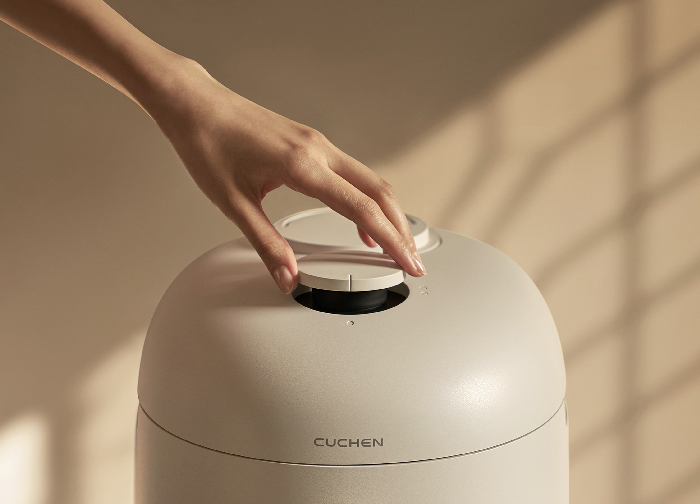
< CUCHEN 123, ASIA DESIGN PRIZE 2026 GOLD WINNER >
CUCHEN 123 expands the rice cooker from a cooking appliance into an object that contributes to the surrounding space. It includes 2.2-atmosphere pressure and 123°C cooking technology, 13 multigrain programs, and IoT connectivity. Yet its appearance does not directly emphasize these technologies. Low-saturation colors and a simple dome-shaped silhouette allow it to sit naturally within the kitchen. The most notable detail is the concealed lighting at the base. While the product is operating, the light communicates cooking and safety information. When the appliance is not in use, it becomes subtle ambient lighting. A single element performs two roles: communicating operational information and contributing to the atmosphere of the space.
The display of a conventional appliance occupies its front surface whether the product is operating or not. Even when the screen is turned off, a black rectangle or an arrangement of buttons remains visible, reinforcing the appearance of a machine. CUCHEN 123 separates information from the product’s permanent appearance. Information emerges when needed and returns to the background once it has served its purpose. This approach is connected to the design of human attention. Users require clear feedback while operating the appliance, but the product has no reason to continue demanding their attention after cooking is complete. Technology moves to the center when necessary and returns to the background when its role has ended. Through the concept of “calm technology,” Mark Weiser and John Seely Brown explained that good technology should move naturally between the center and the periphery of a user’s attention (Weiser & Brown, 1996). The lighting in CUCHEN 123 gives this principle a physical form. It does not eliminate information. It controls when and where that information appears.
Concealment Can Also Be a Function
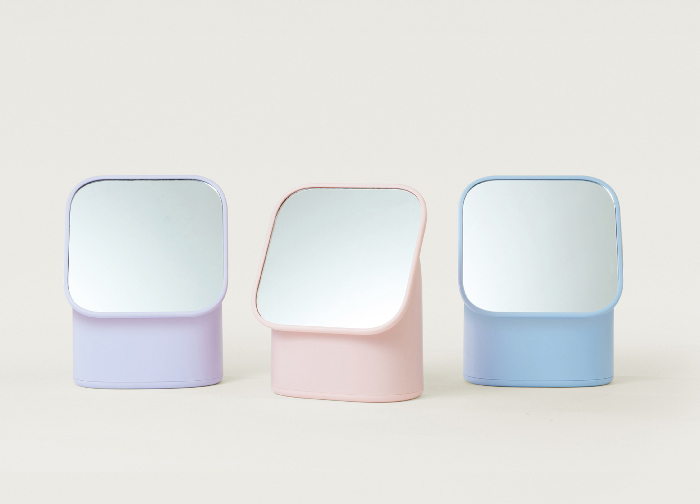
< Flip Mirror, ASIA DESIGN PRIZE 2026 GOLD WINNER >
Flip Mirror combines a mirror with a storage space. Small objects that are used frequently need to remain within reach, but leaving them exposed creates visual clutter. Conventional organizers can separate objects into designated places, but they do not necessarily remove those objects from view. Flip Mirror stores small objects behind the mirror. A simple flipping action reveals the storage space, and the objects disappear again when their use is complete. Organization is no longer limited to arranging objects neatly. It also includes removing unused information from view.
This product does not incorporate advanced electronic technology. Nevertheless, it applies the same principle that allows technology to become part of the background of everyday life. Necessary functions remain close at hand and disappear when they are not in use. Users do not need to learn a complicated storage system to find their belongings. Flipping the mirror becomes the interface. Flip Mirror demonstrates that concealment is not a passive design choice. Deciding what should remain invisible is as important as deciding what should be shown. Visual space is not an area in which nothing happens. It protects the user’s attention and preserves order in everyday life.
The Standard of Premium Design Is Changing
In the past, premium products often displayed more features and more decoration. The number of buttons, the size of the display, and the complexity of the surface treatment served as evidence of performance and price. A different form of premium design has recently emerged. The product provides sufficient functionality without requiring lengthy explanations. It does not conflict with its surroundings, and users do not have to remain conscious of complicated operating procedures. The quality of the technology is evaluated through the smoothness of the experience rather than the complexity of its appearance.
STARY SERIES integrates multiple products into one kitchen environment. The minix body dryer reduces the space occupied by an appliance. CUCHEN 123 reveals status information only when it is needed. Flip Mirror removes unused objects from view. All four projects make something less visible without reducing functionality. Their purpose is not simply to create a minimalist appearance. They reduce the amount of information users must process and the spatial burden they must accept. In these products, design is not the final stage that decorates a function. It organizes complexity between technology and the user. Numerous functions operate inside the product, but users experience only what they need.
Good Technology Does Not Demand Attention
As the number of products in everyday life increases, user attention has become an important resource. When every product emphasizes its presence through notifications, screens, and lights, the technology introduced for convenience begins to create fatigue. Products demand constant checking and control, while living spaces become filled with interfaces. Future design must do more than explain what technology can accomplish. It must also determine when technology should reveal itself and when it should quietly step aside.
Three principles are necessary. First, complex functions should be organized outside the user’s immediate field of attention. Second, relevant information should be communicated clearly at the precise moment it is needed. Third, when the product is not in use, it should fit naturally into the surrounding space. Technology becoming part of the background of everyday life does not mean that it loses its presence entirely. It means that technology does not place itself ahead of the user’s purpose. It operates precisely when needed and then withdraws into daily life once its role is complete.
A good product does not force users to remain constantly aware of its technology. It manages technological complexity so that users can concentrate on their own lives. As technology advances, products do not need to look more complicated. Good contemporary design adds functionality while removing that complexity from the user’s view. Technology has not disappeared. It has moved to a more appropriate position: from a machine that occupies the center of everyday life to a quiet background that supports it.











#14057, 905 49, Beolmal-ro 102beon-gil,
Dongan-gu, Anyang-si, Gyeonggi-do, Korea
Business Registration Number: 454-86-01044
Online Sales License No.: 2021-Anyang Dongan-1081
Copyright © DESIGNSORI Co., Ltd.