
Can a small brand beat a large corporation? It has less capital, fewer staff and an advertising budget that does not even bear comparison. Competing head-on in the same market, it is naturally at a disadvantage. Yet winning does not necessarily mean selling more products or posting higher revenue. Sometimes a single small brand changes the way consumers think and shakes up market practices that have held for years. I believe this is where the essence of a small brand’s influence lies.

< Image source: The Ordinary >
When we buy cosmetics, what do we base our choice on? A brand’s reputation, glamorous advertising and luxurious packaging have long shaped consumers’ purchasing decisions. But The Ordinary, a skincare brand launched in 2016, took a slightly different approach. Instead of fancy names and complicated descriptions, it put key ingredients such as niacinamide and hyaluronic acid into its product names and offered relatively reasonable prices. It encouraged consumers to look at what was inside a product rather than at the reputation of the brand behind it. What makes The Ordinary interesting is that it did more than sell new cosmetics. It changed the very question consumers ask about skincare, shifting attention from which brand made a product to what ingredients it contains and whether its price is fair. Of course, no single brand can be credited with creating ingredient-led consumption. Even so, by putting the transparency of its ingredients and pricing front and centre, The Ordinary set a new standard of competition for the beauty industry.
Here we can see how a brand’s influence expands. At first, a small number of customers choose a new product. If they are satisfied, they recommend it to the people around them and begin comparing other products by the same standard. Once consumer expectations shift, competitors find it hard to ignore the change. Eventually, an approach introduced by a single brand can grow beyond one company’s point of difference into a standard valued across the entire market. This is how a small brand begins to influence a market: with the choices of its customers.
< Image source: D&DEPARTMENT >
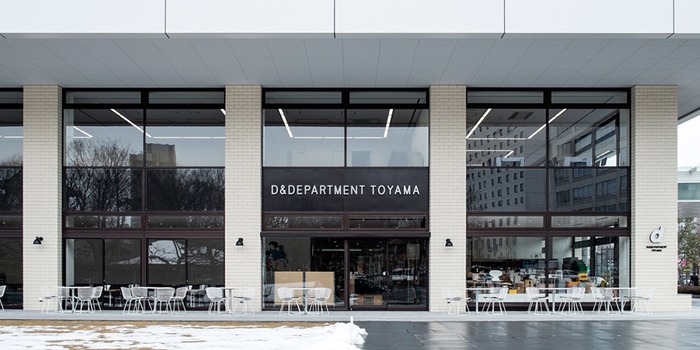
Similar examples can be found in design. D&DEPARTMENT, founded in 2000 by the Japanese designer Kenmei Nagaoka, placed its philosophy of ‘Long-Life Design’ at its core. Rather than constantly showcasing trendy new products, it sought out the value of objects built to last and of designs that have endured in their regions for generations. It revisited products that had been passed over simply for being old, and shared the stories of the places and people that made them. D&DEPARTMENT did not confine this perspective to retail. It expanded into publishing, exhibitions and travel, reintroducing regional culture and industry through the lens of design. In doing so, it consistently conveyed the message that the ability to discover the value of what already exists matters as much as the ability to create something new. This example is compelling because it shows that a small brand’s influence does not have to start with a new product or technology. Giving new meaning to things we have grown used to seeing can also change how a market thinks.
The two brands started in different fields, but they have one thing in common: neither simply joined a game whose rules had been set by others. The Ordinary questioned the way people look at the price and ingredients of cosmetics, while D&DEPARTMENT focused on lasting value in a design market driven by novelty and trends. Each built the standards it believed in into its products and services, and found customers who shared those standards. The power of a small brand lies not in its ability to please everyone, but in giving at least some customers a clear reason to choose it.
The same principle applies to super microbrands. The moment a small brand tries to win every customer, it is easily dragged into a contest of capital and scale. But the story changes when it identifies a problem in a particular field that existing approaches have failed to solve, and offers an answer based on its own standards. It does not need enough customers to transform the entire market from the outset. Change can begin simply with customers who understand and support that standard. When I think about the influence of a small brand, I focus less on how many people know it and more on what the people who have experienced it now think differently about. Some brands end with a purchase and a satisfied customer. Others lead customers to apply a new standard even when they choose other products afterwards. In the latter case, the value the brand provided stays in the customer’s judgement long after the transaction is over. The ideas a brand puts forward can travel further than its name.
That said, not every small brand needs to set the grand goal of changing the market. What matters is knowing clearly what you want to improve in your own field. Simplifying an unnecessarily complicated buying process, openly sharing information that customers once struggled to find, or fixing unreasonable practices the industry has long taken for granted can all be enough of a starting point. But good ideas do not become influence simply by being declared. They must be realised in products and services that customers can actually experience, and maintained consistently over time. Influence, of course, does not automatically make a business profitable. Presenting a new standard to the market and building a sustainable business on that standard are challenges that must be tackled together. Even if a brand brings meaningful change to its customers, its influence will not last if the business itself cannot survive. Ultimately, what founders need is the ability to stay true to their philosophy while creating value that customers are willing to pay for. A brand’s influence grows stronger where good intentions meet good business.
When we talk about a brand growing, we usually start with how much its revenue has increased, how many people it employs or which countries it has entered. That is growth, of course. But even if a brand stays the same size, if the standards it has introduced shape customers’ choices and drive change in other companies, that too is an important form of growth. The size of a business is measured within the boundaries of the organisation, but influence shows itself beyond them. A small brand does not need to be known by everyone, nor does it need to dominate every market. If, in the field it has chosen, it can question what people have taken for granted and offer a better standard for making choices, that alone makes it a meaningful presence. And if that standard lives on in other people’s choices and keeps working, a brand’s influence can reach far beyond anything its founder first imagined.
“The size of a brand is determined by how much it owns. But the influence of a brand is proven by how much it has changed.”




















#14057, 905 49, Beolmal-ro 102beon-gil,
Dongan-gu, Anyang-si, Gyeonggi-do, Korea
Business Registration Number: 454-86-01044
Online Sales License No.: 2021-Anyang Dongan-1081
Copyright © DESIGNSORI Co., Ltd.