
Today, music streaming services host more than 250 million songs. In 2025 alone, over 100,000 new tracks were uploaded every day on average. Yet nearly half of them were played fewer than ten times throughout the entire year, disappearing somewhere within an ever-expanding catalog. As the cost of creating and distributing music has effectively approached zero, the fundamental question has shifted. It is no longer “How can we create more?” but “What is worth listening to amid an infinite sea of content?” More recently, AI-generated music has begun flooding these platforms alongside music created by humans. One major streaming service even reported that more than one-third of its daily uploads consist entirely of AI-generated tracks. Supply continues to expand without limit, while the human day remains stubbornly fixed at twenty-four hours.
This is where a common misconception arises. When technology makes it possible to generate unlimited amounts of content, people often assume that the ability to generate is itself the source of competitive advantage. That assumption made sense in the past. But the moment everyone gains the ability to create infinitely, the value of generation itself rapidly approaches zero. What becomes truly scarce is something else entirely: the ability to judge what matters. It is the capacity to distinguish meaning from abundance, to choose one option from countless alternatives, and to explain why that choice deserves attention. As generation becomes commonplace, the real object of design shifts. The challenge is no longer to design generation, but to design judgment.

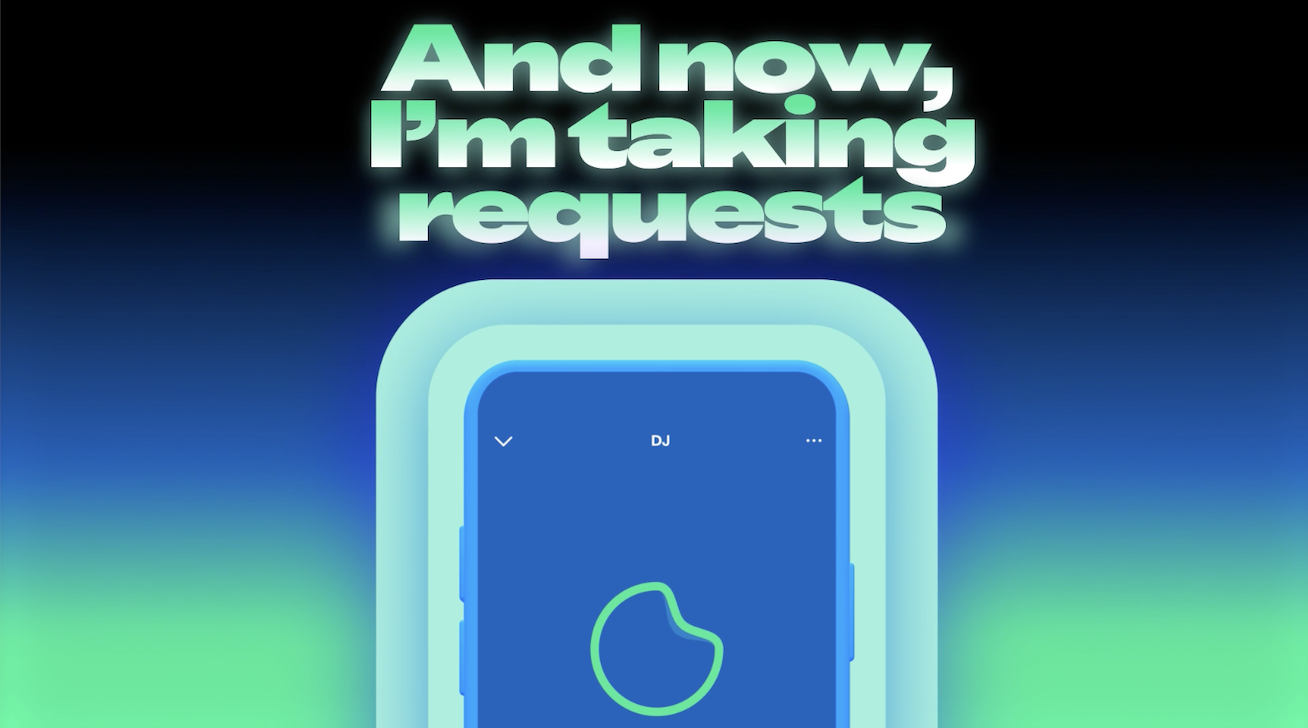
This is precisely what Spotify has been doing for more than a decade. The company did not compete by simply accumulating more songs. Instead, it designed a layer of judgment between an infinite catalog of music and the listener. On one side sits the machine. Personalized recommendation engines analyze each listener’s preferences and context, generating weekly discovery playlists and adapting recommendations to different times of day and moods, while the AI DJ, powered by OpenAI technology, creates real-time listening sessions and uses a synthetic voice to introduce tracks along the way. The enormous task of sorting, organizing, and generating recommendations at a scale no human could possibly manage is handled by machines.
Yet Spotify itself does not describe this engine as its greatest strength. Instead, the company points to its global network of hundreds of music editors, people with deep knowledge of genres, cultures, and musical communities. What makes this especially interesting is the timing. In 2025, precisely when AI-generated content became cheaper and more abundant than ever, Spotify announced that it would expand the role of its human editors, not reduce it. Their reasoning was both simple and profound. Algorithms may be able to decide what to play, but they cannot explain why this matters right now. Even the commentary delivered by Spotify’s AI DJ is not produced by the model alone. Behind it is an editorial process in which music experts, cultural specialists, and writers work together to verify facts, provide context, and shape the narrative. The machine handles scale. Humans remain responsible for meaning.
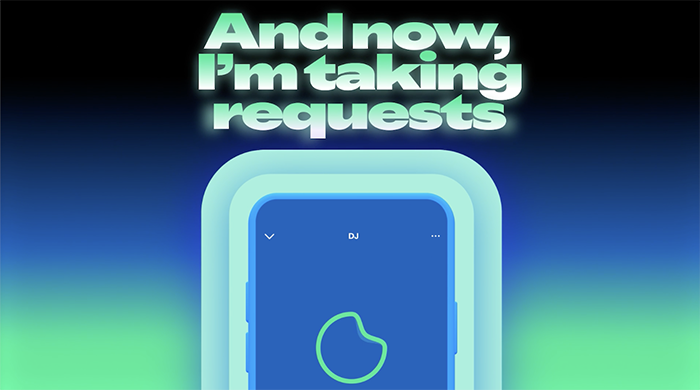
< Image source: Spotify, AI DJ >
The real design here is not the shape of the interface or the position of the play button. It lies in deciding where to draw the line between what should be entrusted to machines and what should remain in human hands. Repetitive, surface level tasks such as generation and classification can be delegated to technology. But the judgment of what is worth listening to, and the perspective that explains why, must remain a human responsibility. Where that boundary is drawn is the essence of Spotify’s design. It is largely invisible, yet it determines the character of the entire service.
In a world where generation has become virtually infinite and almost free, the scarcest resource is no longer content itself. It is the framework for filtering that abundance. It is the ability to say, “This, not that, and here is why.” Those who work at the surface refine outputs that already exist. Those who design the underlying structure determine what deserves to exist in the first place and what earns the right to be presented to people. As technology increasingly takes over execution, this is where human value ultimately remains.
I currently work on building AI engines and solutions. My journey began with studying language and cognition, expanded into business, and continued through designing products and the platforms that connect those products to people across diverse contexts. That path has ultimately led me to where I am today. Along the way, one conviction has become increasingly clear. The more technology accelerates the execution of surface-level tasks, the more essential human intelligence becomes in determining what is truly meaningful. I describe this philosophy as Human Intelligence Design. As generation and execution increasingly become the domain of machines, people must focus on designing judgment—deciding what should be chosen and why. The more answers our tools can produce, the more valuable the human role becomes in discerning which of those answers are actually worth keeping.
Over the years, I have witnessed the same pattern repeatedly as organizations adopt new technologies. Teams race to add features that produce more outputs in less time, often assuming that a greater volume of results automatically creates greater value. In reality, the truly difficult, and therefore valuable, work lies elsewhere. It lies in designing the judgment that gives meaning to those outputs. That is precisely what Spotify accomplished by placing human editorial judgment on top of an infinite catalog of music. Where, then, do you draw the line in the service you are building today between the execution that can be entrusted to machines and the judgment that must remain in human hands?





















#14057, 905 49, Beolmal-ro 102beon-gil,
Dongan-gu, Anyang-si, Gyeonggi-do, Korea
Business Registration Number: 454-86-01044
Online Sales License No.: 2021-Anyang Dongan-1081
Copyright © DESIGNSORI Co., Ltd.