
Co-Founder of lllayer
Today, nearly every artificial intelligence and information technology brand seems wrapped in glowing blue lights and the cold sheen of metal. While companies fiercely compete to proclaim themselves the fastest, smartest, and most advanced technology of the future, one remarkably unconventional brand quietly takes a different path. Instead of looking like the future, it feels like turning the pages of an old book in a historic library. That brand is Claude, the AI service created by Anthropic.
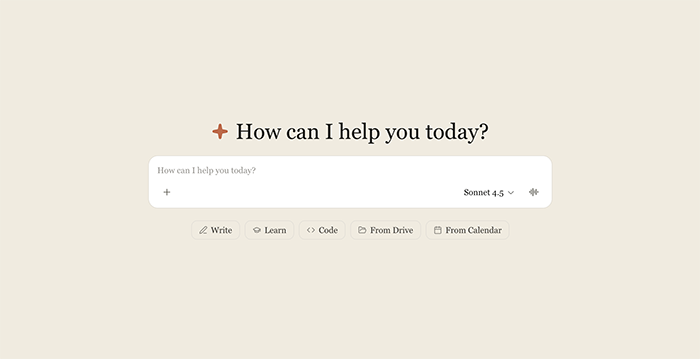
The moment you open Claude, your eyes immediately feel at ease. The interface is built around a soft cream-colored background that resembles the pages of an old book, elegant serif typography that quietly settles across the screen, and hand-drawn pencil illustrations that feel slightly imperfect yet unmistakably warm. At a time when every AI company seems eager to dazzle users with futuristic aesthetics and high tech spectacle, why does Claude alone evoke the scent of paper, wood, and earth? Is it merely another form of "emotional branding" wrapped in beautiful design?
The numbers suggest something far more substantial. Anthropic recently surpassed $30 billion in annualized revenue, more than tripling from roughly $9 billion at the end of last year in just a matter of months. Its valuation is now approaching $900 billion, bringing it strikingly close to OpenAI, a company once regarded as virtually untouchable.
The shift is equally evident in enterprise adoption. According to the May 2026 AI Index published by Ramp, one of the most trusted corporate spending platforms in the United States, 34.4% of businesses paying for AI services were actively using Claude, allowing it to overtake ChatGPT (32.3%) for the first time. The reversal is remarkable. Just one year earlier, OpenAI held approximately 32% of the enterprise market, while Claude accounted for less than 8%. What seemed like an unshakable leader suddenly found itself challenged by a brand that had quietly begun as an underdog.
How did this brand begin?
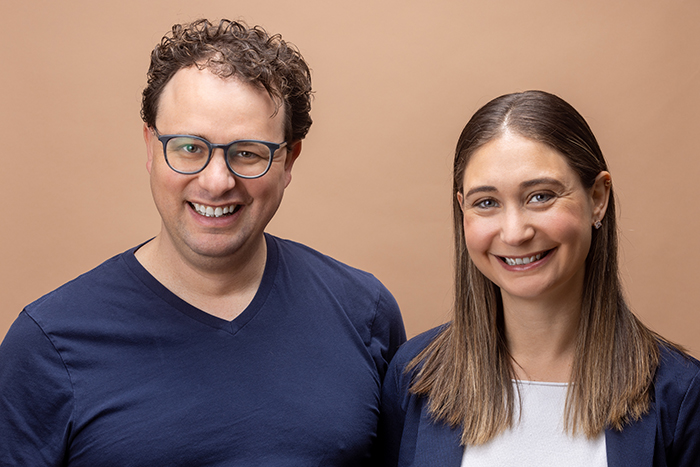
Claude's origins can be traced to the principled departure of a group of AI researchers who chose philosophy over scale. In late 2020, Dario Amodei, then OpenAI's Vice President of Research, and his sister Daniela Amodei, the company's Vice President of Safety and Policy, resigned alongside roughly a dozen colleagues. As OpenAI accelerated its commercialization following Microsoft's massive investment, the group became increasingly concerned about the existential risks posed by AI developing faster than humanity's ability to govern it. Their departure was not simply the result of an operational disagreement. It reflected a fundamental philosophical divide over the nature of artificial intelligence itself. While OpenAI increasingly viewed AI as a powerful tool for reaching ambitious technological goals, the Amodei siblings believed AI should evolve as a system capable of understanding and reasoning within human ethical principles.
To protect that vision from short-term shareholder pressure, they established Anthropic as a Public Benefit Corporation (PBC), an unusually mission-driven corporate structure. Their philosophy soon evolved into what became known as Constitutional AI. Rather than relying primarily on thousands of human reviewers to continually adjust model behavior, Anthropic developed a system in which the model evaluates and refines its own responses according to an explicit "constitution" derived from widely accepted human rights principles and ethical guidelines. By 2026, Claude's constitutional document had expanded to approximately 23,000 words across 84 pages, reflecting the company's commitment to making safety and alignment part of the model's core architecture.
Ironically, this uncompromising philosophy became Anthropic's greatest competitive advantage in the enterprise market. Businesses increasingly preferred AI systems that remained predictable, minimized hallucinations, respected organizational boundaries, and safeguarded confidential information over models designed primarily to be entertaining or highly expressive. In highly regulated industries such as finance, healthcare, and legal services, compliance has become a decisive purchasing criterion. For many Chief Information Officers (CIOs), regulatory reliability now outweighs novelty. Claude's relentless emphasis on safety effectively became a passport through even the most demanding corporate procurement processes.
Built upon this foundation of clear principles, Anthropic's extraordinary growth was driven not by flashy advertising or aggressive consumer marketing. While much of the AI industry competed for public attention, app downloads, and consumer mindshare, Anthropic quietly concentrated its efforts on what many considered the less glamorous frontier: the enterprise market. That disciplined focus ultimately became one of the defining reasons behind its remarkable success.
While OpenAI attracted hundreds of millions of users through ChatGPT, its consumer focused subscription service, Anthropic quietly pursued a very different strategy. Rather than competing for public attention, it targeted enterprise technology budgets and software developers. Nearly half of ChatGPT's revenue comes from individual users paying a $20 monthly subscription. By contrast, approximately 80 to 85% of Claude's revenue comes from enterprise customers and developers purchasing API access through major enterprise contracts.
Anthropic's co-founder, Dario Amodei, held a remarkably clear conviction. Public attention is fleeting. Consumer trends rise and disappear almost overnight. Enterprise infrastructure, however, becomes deeply embedded. Once AI is integrated into the daily workflows of thousands of employees, replacing it becomes costly, disruptive, and unlikely. Consumers may abandon one service the moment a cheaper or more entertaining alternative appears. Businesses rarely do.
Anthropic recognized the power of this lock-in effect early. Rather than chasing consumer market share, it quietly embedded Claude into the technology stacks of global companies including Salesforce, Zoom, and Notion. The results speak for themselves. Within just a few months, the number of enterprise customers spending more than $1 million annually on Claude doubled, surpassing 1,000 organizations.
One of the biggest drivers behind this enterprise ecosystem was Claude Code, Anthropic's developer-focused coding assistant. Operating directly inside the terminal, Claude Code became one of the fastest-growing AI developer products on the market. Less than six months after its launch, it surpassed $1 billion in annualized revenue. More recently, that figure has grown beyond $2.5 billion, making it a remarkable business in its own right.
This emphasis on thoughtful reasoning and intellectual depth is reflected not only in Anthropic's technology, but also in its visual identity. The company's brand system was developed through more than two and a half years of intensive collaboration with the design studio Geist. Unlike many technology startups that revisit branding only after achieving product-market fit, Anthropic treated visual identity as core infrastructure from the very beginning, investing in it even before publicly launching its first product. At the heart of the identity lies a simple philosophy:
"You can only look soft when you know you're hard."
Anthropic's confidence did not come from appearance. It came from the technical rigor of Constitutional AI and the commercial strength of its enterprise business. Because its foundation was already solid, Claude had no need to borrow the visual language commonly associated with advanced technology, such as cold navy blues, metallic surfaces, or futuristic digital aesthetics, to signal competence.
Instead, the brand embraced what might best be described as a bookish visual language, inspired by books, paper, libraries, and natural materials. Claude's interface begins with an unusually warm foundation. Rather than the bright, sterile white typical of most software interfaces, its primary background color is Soft Paper (#FAF9F5), a muted cream tone reminiscent of the pages of an aged leather-bound book. This quiet visual atmosphere reduces the sense of confronting a machine and instead encourages calm reflection and sustained thinking.
Against this gentle backdrop appears the brand's signature accent color: Terracotta (#CC785C), a warm burnt orange derived from fired clay, one of humanity's oldest crafted materials. The earthy tone subtly suggests the meeting point between computational intelligence and human craftsmanship, quietly reminding users that sophisticated technology does not have to feel cold.
What completes this identity is its quietly intellectual typography. While most technology brands adopt geometric sans-serif typefaces in the name of efficiency and minimalism, Claude confidently embraces classic serif fonts such as Galaxie Copernicus and Tiempos Text for its display typography. Their finely tapered strokes, reminiscent of ink spreading across printed pages, evoke centuries of accumulated human knowledge, scholarly tradition, and patient reflection. Claude's signature message, "Keep Thinking," is communicated not through flashy copywriting, but through the academic weight and quiet authority embedded in the type itself.
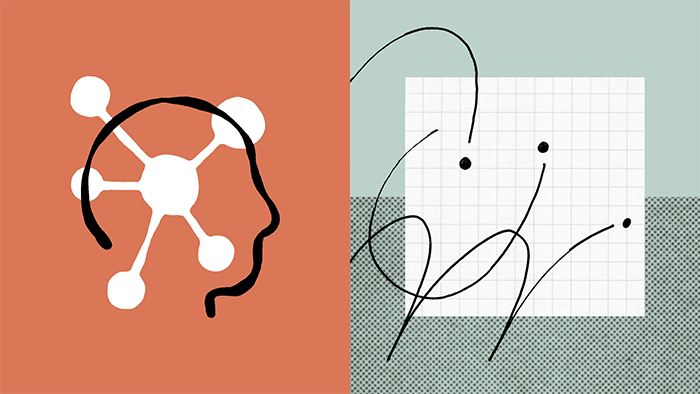
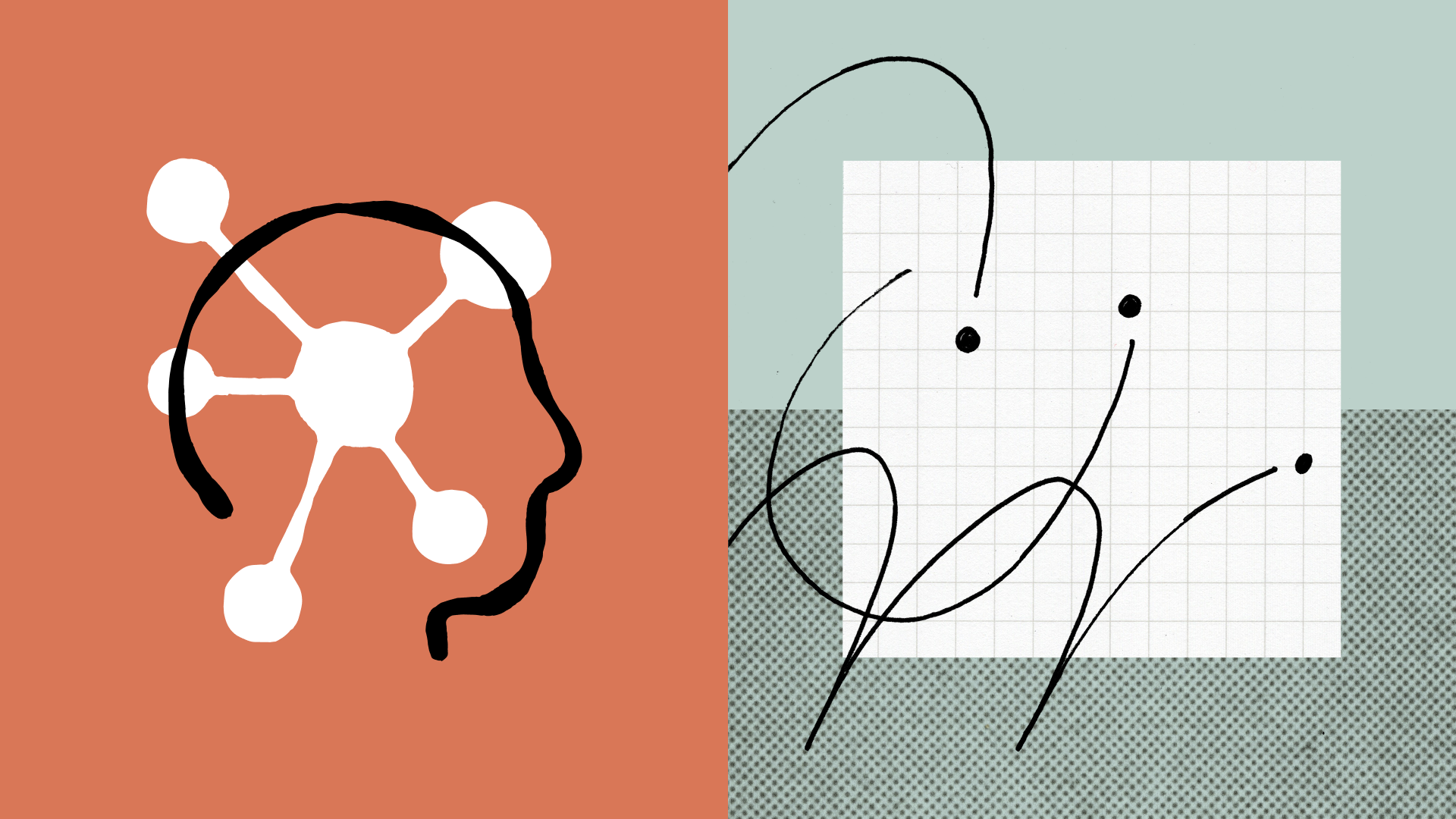
This philosophy extends even to the brand's illustrations. Rather than relying on hyper realistic 3D renderings or sleek digital graphics, Claude consistently uses hand drawn illustrations with the texture of pencil sketches on paper. In an era when artificial intelligence can generate almost anything with perfect precision, Anthropic has paradoxically elevated the value of human touch and crafted imperfection. It is a deliberate reminder that intelligence alone is not enough, humanity still matters. Ultimately, Claude's success offers a profound lesson for every business builder. As technology relentlessly removes friction and pursues ever greater efficiency, people increasingly find themselves longing for something that technology alone cannot provide. What fills that void is often the opposite of digital perfection: craftsmanship, history, materiality, and the warmth of things made by human hands.
Claude also demonstrates another important truth. Lasting competitive advantage is not built through visible hype or short lived trends, but through quietly embedding a product into the daily infrastructure of enterprise work while maintaining unwavering philosophical consistency. When a company's core beliefs become seamlessly integrated into its products, visual identity, and customer experience, the result is more than a successful business, it becomes a distinctive universe that is difficult to imitate. Perhaps that is the question Claude ultimately poses to all of us. What philosophy lies at the heart of your business? And what visual language have you chosen to express it? Claude's calm cream colored interface asks these questions without raising its voice, and perhaps that is precisely why they are so difficult to ignore.


















#14057, 905 49, Beolmal-ro 102beon-gil,
Dongan-gu, Anyang-si, Gyeonggi-do, Korea
Business Registration Number: 454-86-01044
Online Sales License No.: 2021-Anyang Dongan-1081
Copyright © DESIGNSORI Co., Ltd.