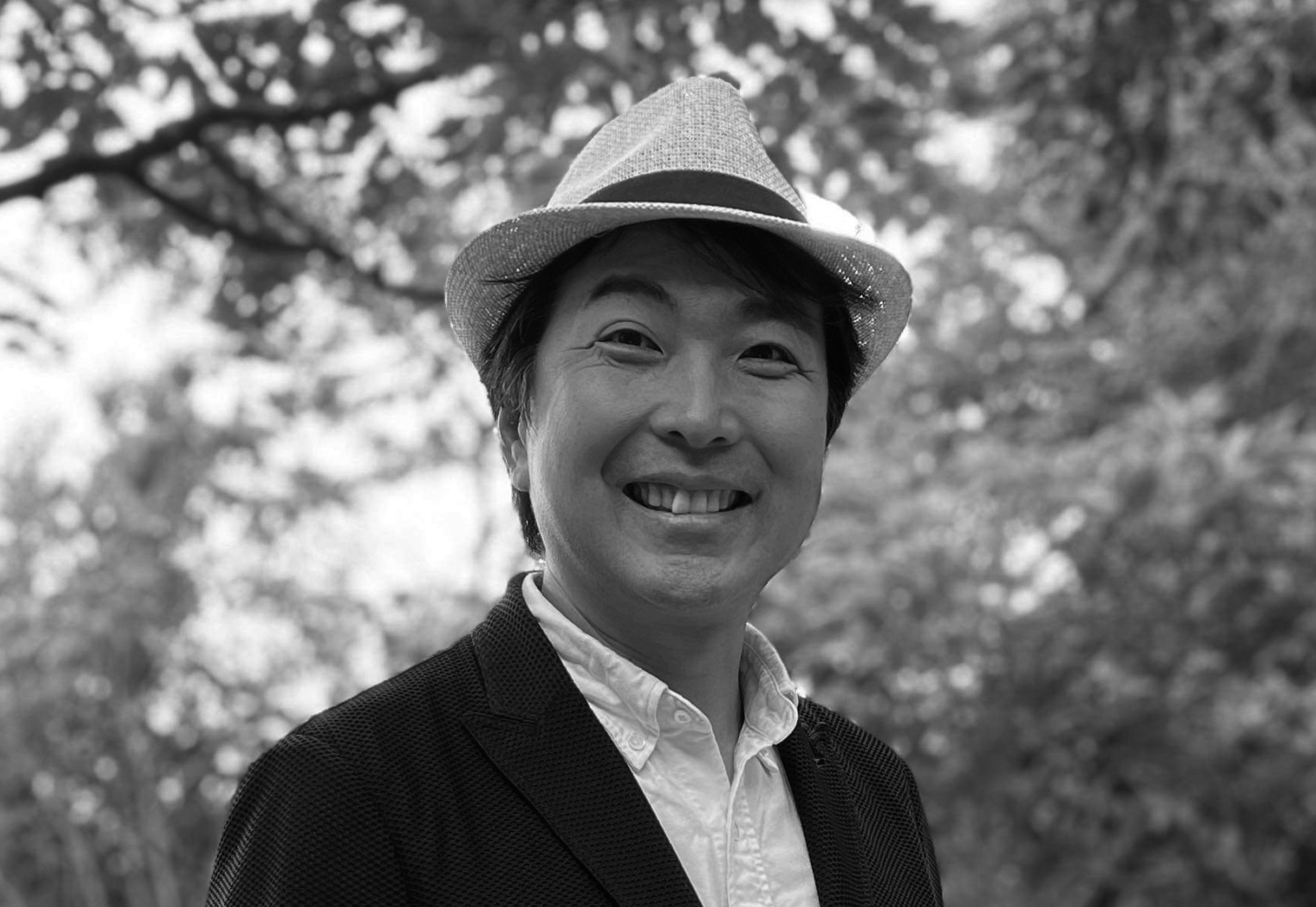
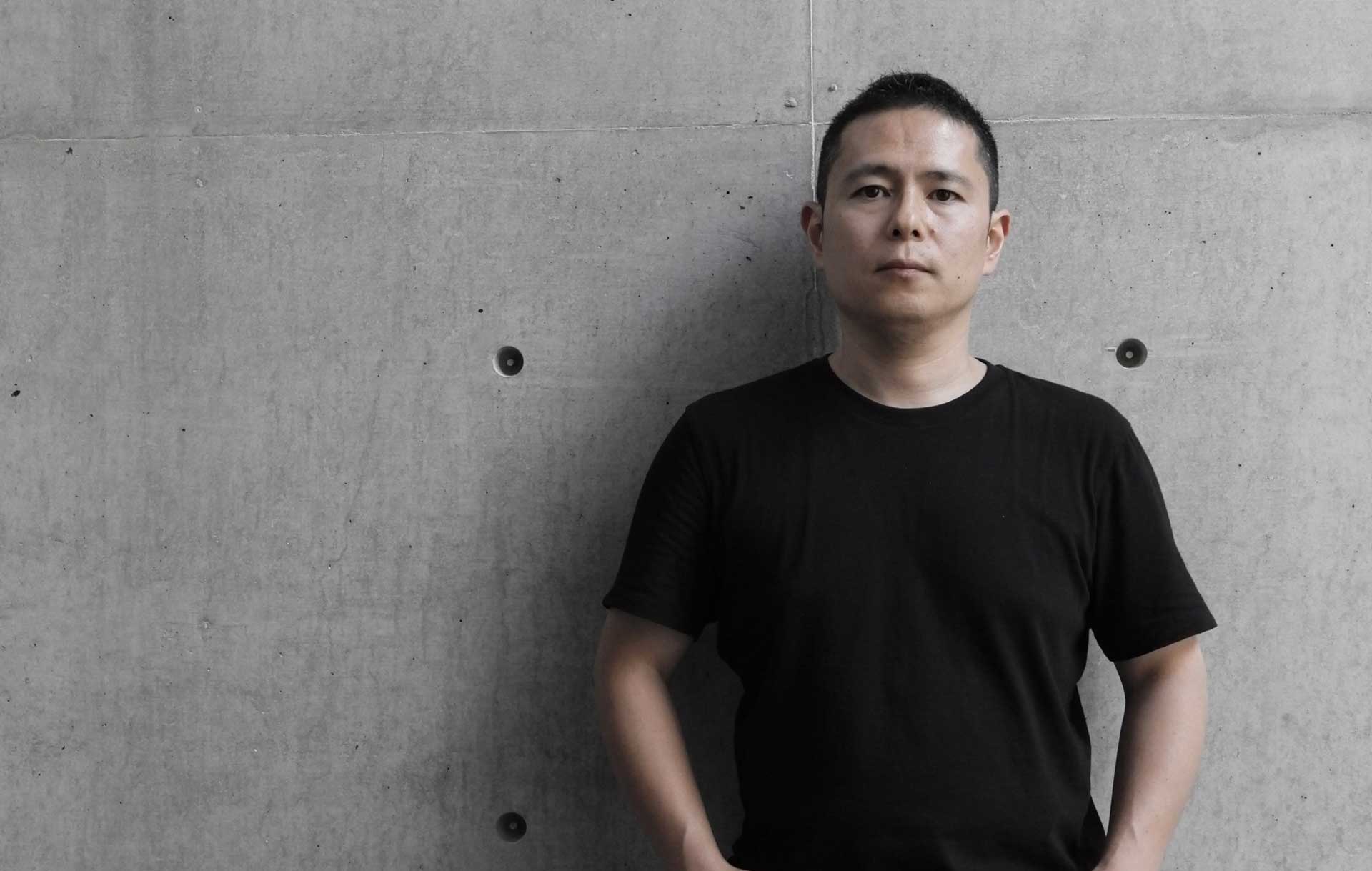
Tsukasa Ono Founder and Architect, tono Inc.
“Based on Yakushima, the UNESCO World Natural Heritage island in southern Japan, Tsukasa Ono, founder of tono Inc., has been exploring a radically different approach to architecture through what he calls “Regenerative Architecture.” Moving beyond conventional sustainability that focuses on reducing harm, his work seeks to restore relationships between humans, nature, water systems, soil, microorganisms, and the broader ecological cycle itself. Through projects such as Sumu Yakushima and the ADP Gold Winner Regenerative Vegan House, tono Inc. proposes architecture not as a static structure, but as a living process that evolves together with the land over time. In this interview, we spoke with Tsukasa Ono about ecological coexistence, the future of regenerative cities, Japanese spatial philosophy, and the evolving role of architecture within the Earth’s living systems.”
To begin, could you briefly introduce yourself, along with the founding background of tono Inc. and its design philosophy?
I am Tsukasa Ono, an architect and the founder of tono Inc., based on Yakushima, a UNESCO World Natural Heritage island in southern Japan. The name “tono” comes from a Japanese expression that implies connection and relationship between two entities. I wanted the studio to become a platform for creating stories through collaboration with clients, craftspeople, artists, and various creators. Interestingly, when written in English, “tono” can also be read as “+ono,” which means “you + Ono” and symbolizes co creation. That idea of building relationships through creativity became the foundation of the company. The origin of tono Inc. is deeply connected to Yakushima. I happened to be staying on the island when the COVID pandemic began, and instead of returning to Tokyo, I decided to remain there. What initially started as a personal project to build a house gradually evolved into something much larger, eventually becoming Sumu Yakushima. Completed in 2022, Sumu Yakushima was conceived around the idea of Regenerative Architecture, architecture that not only minimizes environmental impact, but also actively contributes to ecological restoration. The project has received more than 25 international design awards around the world.
Before this experience, sustainability in architecture often felt abstract to me, almost like an obligation. I could not truly imagine how architecture could create a positive impact on the Earth. But through Sumu Yakushima, by reconnecting soil systems, underground water flows, and ecological relationships, I realized that architecture could become part of a mutually supportive relationship between humans and nature. Since then, the core focus of tono Inc. has become designing architecture that reconnects relationships between people and nature, humans and ecosystems, and ultimately all living systems.
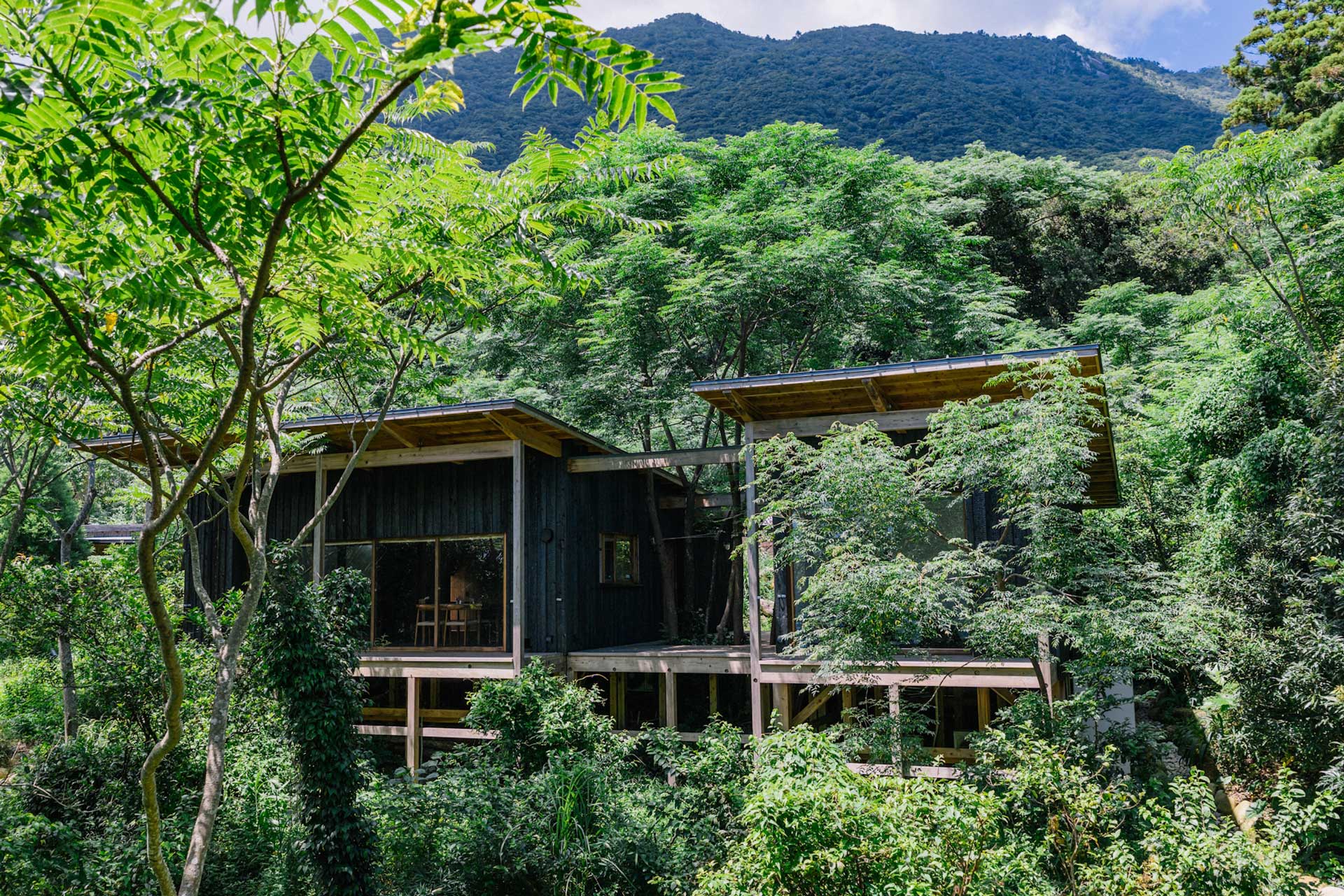
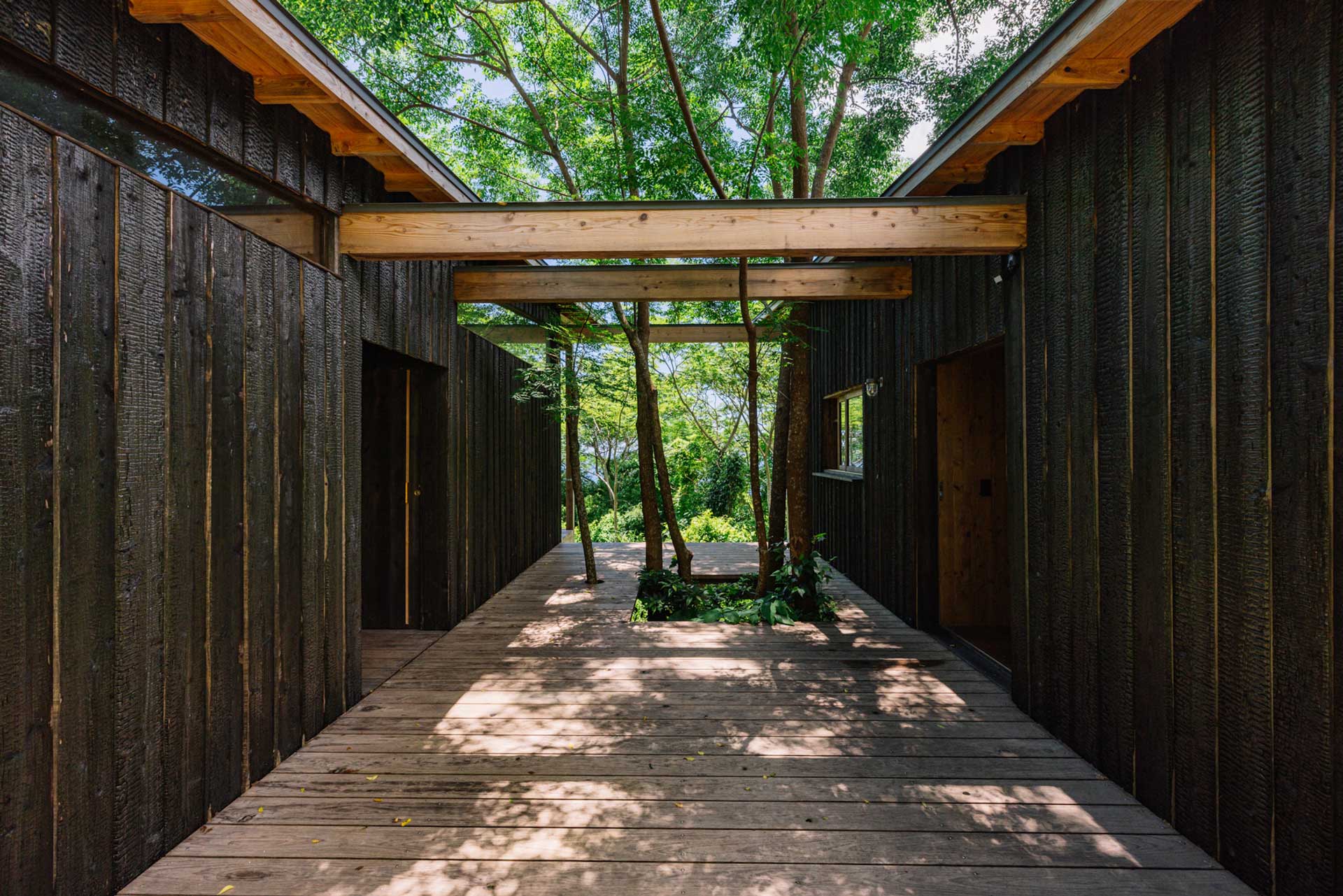
< Regenerative Vegan House, ASIA DESIGN PRIZE 2026 Gold Winner >
You mentioned “Regenerative Architecture” as a key theme for this interview. It seems to suggest a direction beyond conventional sustainability. How do you define Regenerative Architecture, and why do you believe this concept is particularly important today?
Regenerative Architecture can be translated as “environmentally regenerative design.” Conventional sustainable architecture has largely focused on reducing environmental harm, such as minimizing emissions, lowering energy consumption, or mitigating damage considered unavoidable. A symbolic example is the construction of large scale solar farms created by clearing forests. While they may reduce CO₂ emissions, they can simultaneously destroy ecosystems, weaken water retention in mountains, and increase the risk of landslides. This reveals the limitation of focusing only on isolated environmental metrics instead of understanding larger ecological systems. Regenerative Architecture also inevitably alters the environment during construction. However, its goal is fundamentally different. After completion, the architecture should reconnect with the surrounding ecosystem and contribute to its regeneration over time. When discussing environmental issues, people often argue that humans are inherently harmful to the Earth, and that the environment would recover if humanity disappeared. I do not agree with that perspective. Many microorganisms, animals, and even birds coexist closely with human settlements. Humans are also participants within ecosystems.
Traditional sustainability often places humans at the center, treating nature as something external that must be protected through sacrifice or restraint. As a result, sustainability can feel disconnected from daily life, as if it were something imposed rather than naturally integrated into the way we live. What we need today is a deeper paradigm shift: to recognize that humans are not separate from nature, but simply one small part of a much larger living cycle on this planet. The important question is no longer how humans can control nature, but how we can redefine ourselves within these interconnected cycles, and how architecture itself can become part of those living systems.
Sustainability has traditionally focused on “doing less harm.” In contrast, tono Inc.’s work appears to aim toward “restoration.” How is this difference translated into your actual design process?
As I mentioned earlier, terms like “eco” and “sustainability” originally represented care for the environment, but today they are sometimes used more like labels to justify products or developments. The same can happen in architecture. Reducing CO₂ emissions or generating renewable energy may be emphasized, while the deeper ecological impact on soil, water systems, or biodiversity remains invisible. Before arriving in Yakushima, I struggled to imagine a truly beautiful future emerging from that kind of sustainability alone. That perspective changed completely during the development of Sumu Yakushima. We decided to spend the COVID period living on the site itself, engaging with the land every day, observing the climate, soil, water, wind, and surrounding ecology while asking what kind of architecture truly belonged there. Throughout that process, we collaborated with people from many different disciplines, including microbiologists, water specialists, and experts in seaweed and salt production.
What emerged from those conversations was a realization that nature is not simply something fragile that needs protection. Nature is continuously regenerating itself through cycles, and humans, while capable of damaging those cycles, can also help restore them. From that point onward, our design process fundamentally changed. We no longer begin by designing the form of a building. Instead, we first observe how water flows through the land, how wind moves, and how microorganisms, plants, insects, and small animals coexist within the site. We study not only the property itself, but also the entire watershed system connecting mountain to sea, and consider how architecture can reconnect with those larger cycles. For example, we incorporate charcoal and organic matter into the soil to activate underground fungal networks, and we design foundations that can coexist with surrounding tree roots rather than severing them. In other words, rather than treating architecture as an isolated object separated from nature, we try to make it function as part of the ecosystem itself. If conventional sustainability is about reducing negative impact, Regenerative Architecture is about restoring relationships and reactivating ecological cycles.
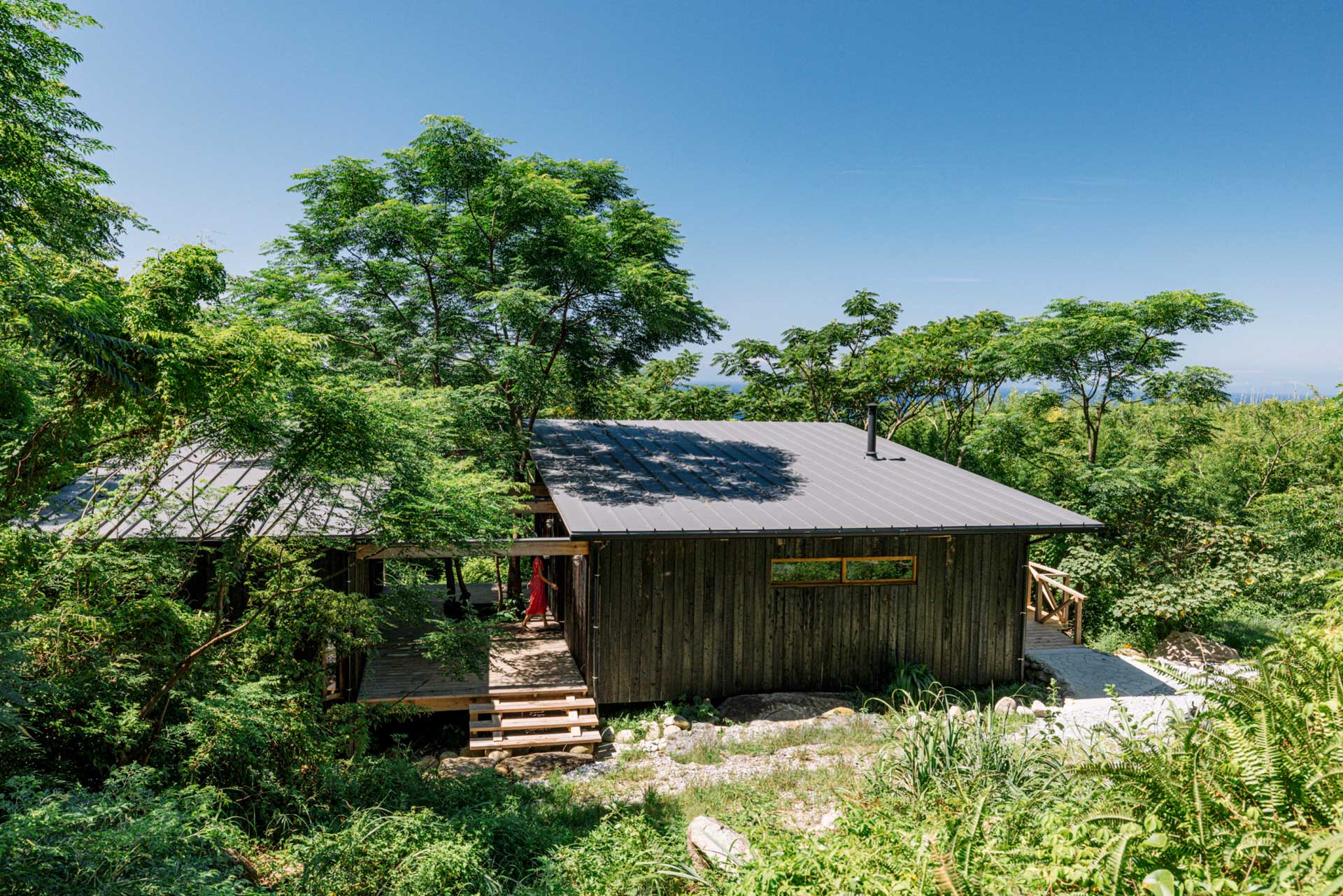
< Regenerative Vegan House, ASIA DESIGN PRIZE 2026 Gold Winner >
You mentioned that the “Regenerative Vegan House,” which received the ADP Gold Winner, represents this philosophy. Could you elaborate on the key concept behind this project and how it is reflected in the spatial design and user experience?
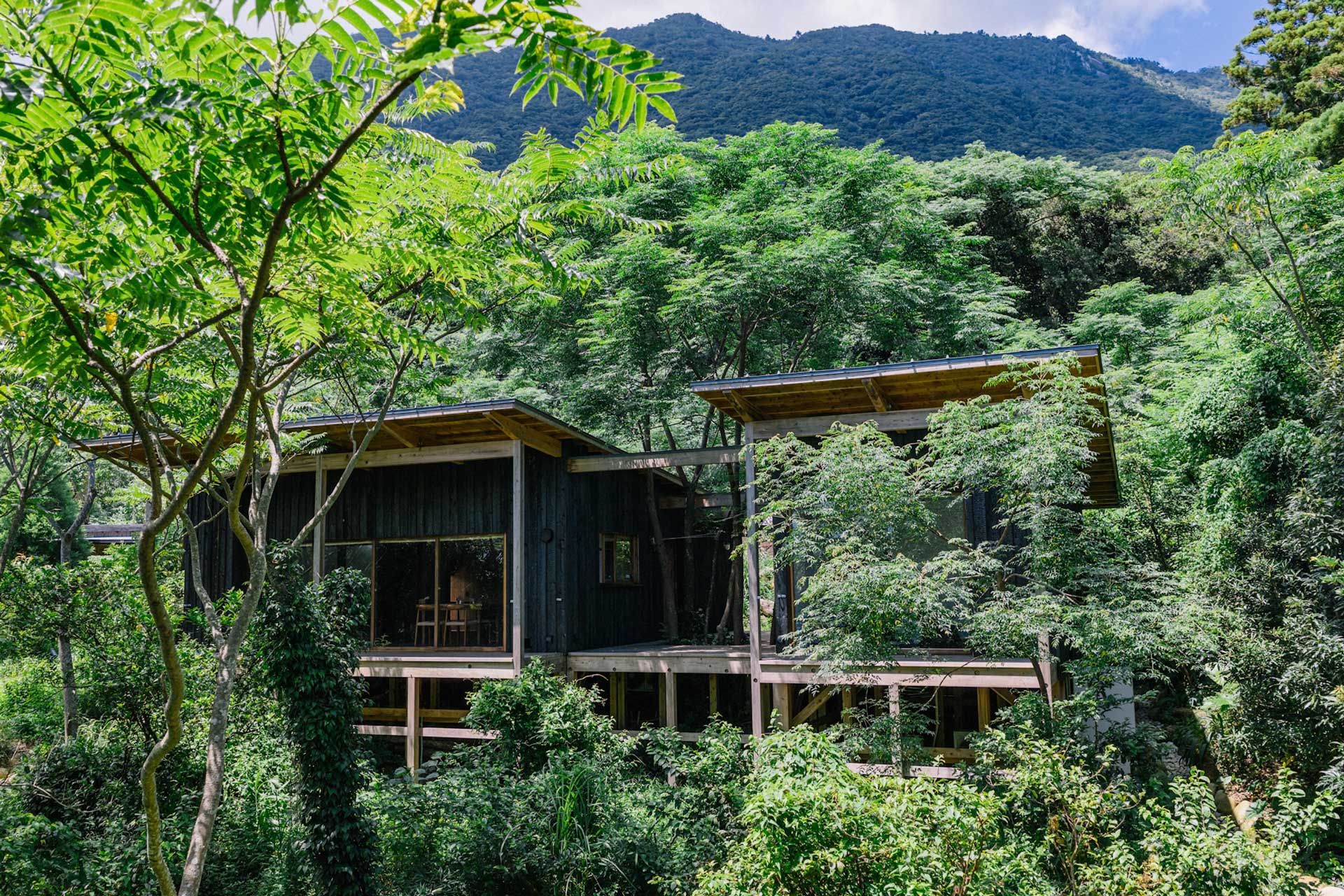
The Regenerative Vegan House in Yakushima was commissioned by a client who deeply resonated with the philosophy behind Sumu Yakushima. The project reconsiders the relationship between architecture, daily life, and ecology through the perspective of coexistence, not only with humans, but with all forms of life. The building was carefully positioned to preserve existing vegetation, rocks, and natural water flows, minimizing disturbance to the land while actively contributing to the surrounding ecosystem. The goal was not simply to reduce environmental impact, but to create conditions that support biodiversity and enrich natural cycles. The house primarily uses plant based natural materials, avoiding animal derived products wherever possible, reflecting the ethical values of the residents.
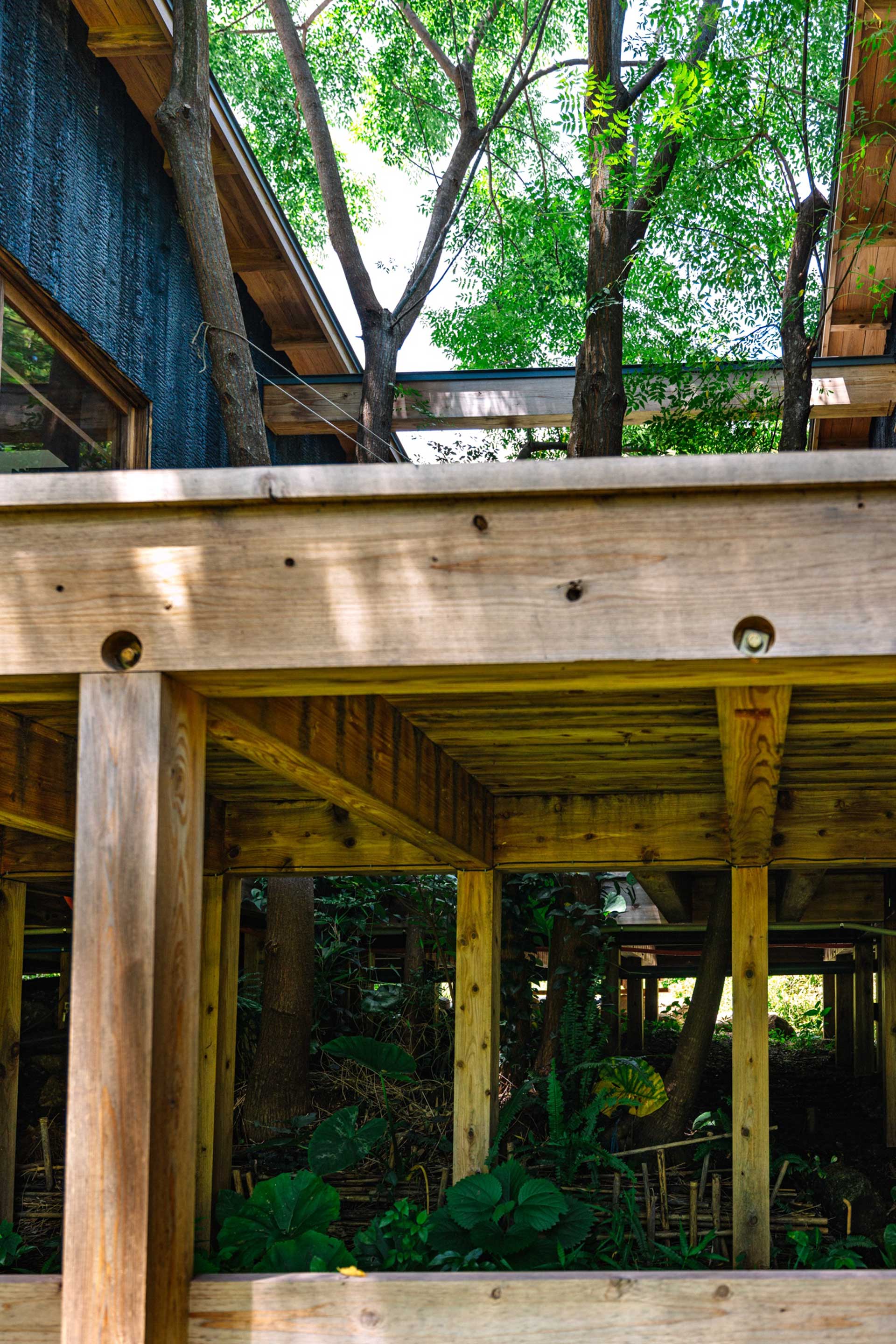
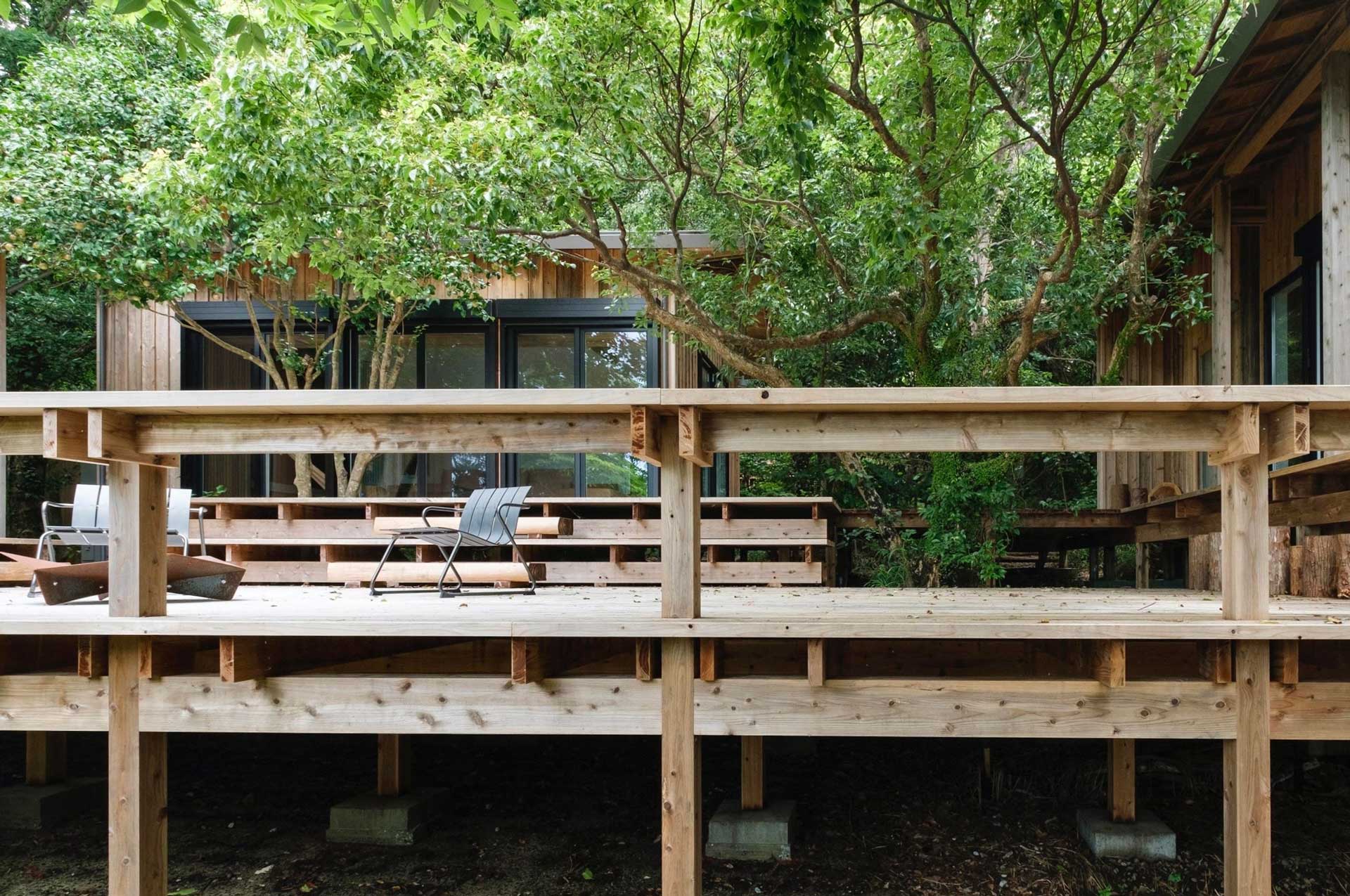
In this project, veganism is understood not merely as a dietary choice, but as a spatial and ecological philosophy grounded in respect for all living beings. Local cedar and traditional charred wood cladding are used to increase durability without chemical treatment. Hemp insulation, natural plaster, and linseed oil finishes create a healthy plant based interior environment. Located within the habitat of Yakushima deer and other wildlife, the house adopts an elevated stone foundation that allows animals to move freely beneath the structure.
Exterior lighting is also minimized at night to reduce disruption to the forest ecosystem. This project expands the idea of “social design” beyond human society alone. Animals, forests, microorganisms, and water systems are all considered participants within a shared network of life. In this sense, coexistence itself becomes the design practice. The regenerative approach is based on three principles: 1) plant based materials that avoid animal derived products, 2) ethical integration that protects habitats and fosters coexistence, and 3) regenerative practice that continuously restores and enriches the environment. The Regenerative Vegan House proposes a new architectural ethic: living gently within an ecosystem can simultaneously strengthen and regenerate it.
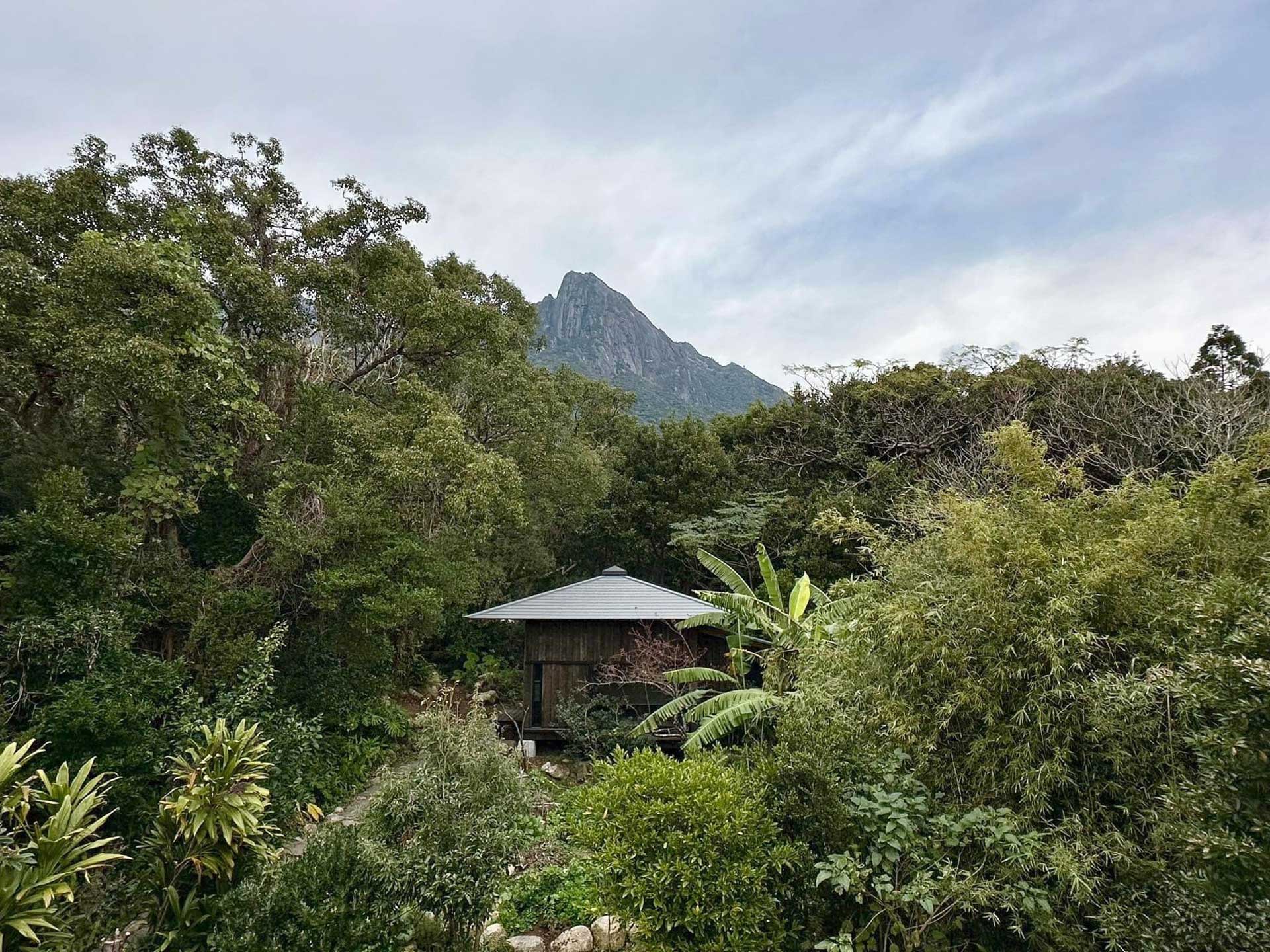
Your architecture appears to reconnect humans, nature, and systems. What are the most critical elements you consider within this approach?
The most important perspective for us is recognizing that humans are also part of the ecosystem. We do not want architecture to exist as an artificial object placed against nature, but as something that interacts with and participates within it. To do that, we must understand the larger cycles embedded within the land itself. In particular, we focus on the idea of the watershed. Water flowing from mountains to the sea is shared not only by humans, but also by plants, animals, and microorganisms. We consider not only surface water, but also underground water flows, and ask how architecture can reconnect with those systems. I also do not see architecture as a fixed or completed object.
I see it more as a process, something that deepens its relationship with nature over time. Plants grow, microorganisms transform the soil, and landscapes gradually evolve. Architecture should mature alongside those changes as part of the ecosystem itself. This way of thinking can also be found in traditional Japanese civil engineering techniques. Ancient stone structures were intentionally designed with small gaps that allowed plant roots to enter and intertwine over time. As roots and stone gradually merged, human made structures and nature stabilized each other. Humans were protected by plants, while plants gained places to grow. Rather than controlling nature, these techniques reflected a wisdom of coexistence. For us, the essential challenge is not designing the world from a purely human centered perspective, but redefining architecture within a larger network of life that includes non human beings as well.
You described your work as placing architecture within the Earth’s cycle. Could you elaborate on this idea, and how architecture should interact with natural cycles?
The first priority is to avoid disrupting the cycles of water, wind, and microorganisms, and if possible, to help strengthen them. I do not believe that untouched wilderness is the only form of beautiful nature. Rice terraces, for example, are landscapes created through human activity, yet they also function as water reservoirs, support biodiversity, recharge groundwater, and contribute nutrients back to the sea. Furthermore, it has been found that a remarkable 70% of Japanese amphibian, reptile, and freshwater fish species coexist in environments near human settlements rather than in deep forests.
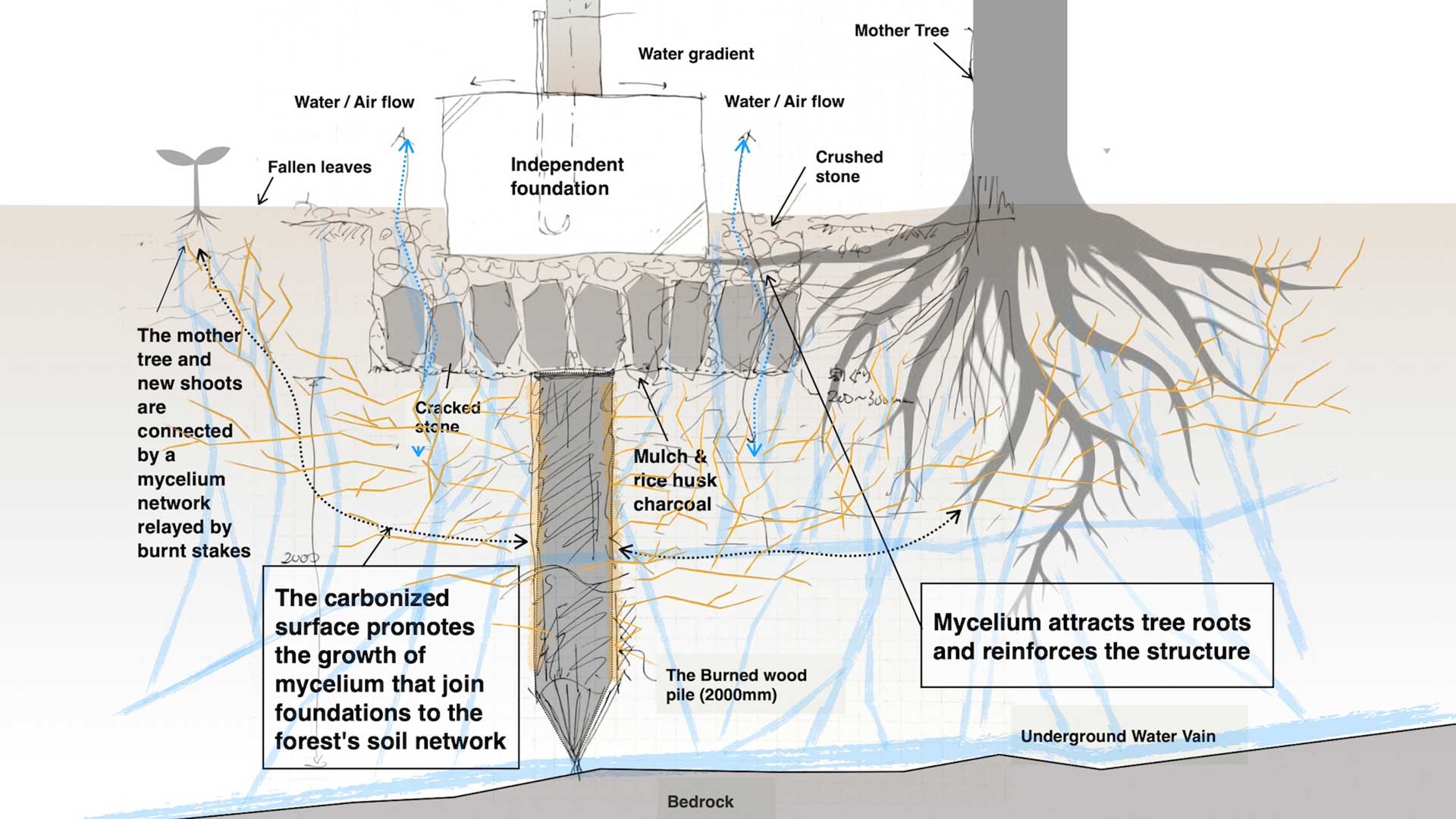
Humans can unknowingly create habitats and support ecological cycles. Modern architecture, however, has largely developed through controlling and homogenizing natural environments. Ground surfaces are sealed with concrete, water is quickly drained away, and indoor climates are mechanically stabilized. As a result, the land’s natural breathing and circulation are often severed. We want to move in the opposite direction, to return architecture to natural cycles. At Sumu Yakushima, for example, we embedded charred wooden piles and charcoal into the ground to stimulate soil microorganisms and reconnect the building with underground ecological systems. Tree roots gradually enter the stone foundation beneath the structure, transforming it into a living system over time.
In the Regenerative Vegan House, we expanded this idea further by using layered stone and charcoal foundation systems that connect deeply with underground water flows and soil conditions. I do not see architecture as a shelter opposing nature, but as something that breathes and merges with it. Architecture should not end at the moment of completion. It should continue evolving and maturing through its ongoing relationship with the surrounding ecosystem.
This philosophy seems to influence materials, energy use, and spatial structures. Are there any consistent design principles applied across tono Inc.’s projects?
Although every project responds to different conditions, several design principles remain consistent throughout our work. The first is reading the cycles of the land. Before designing architecture, we observe water, wind, light, soil, and ecological flows. We aim not only to avoid disrupting those systems, but whenever possible, to help restore them. The second principle is designing with non human existence in mind. We increasingly recognize that architecture is not created solely for humans. Birds, insects, microorganisms, small animals, water, and wind all participate in shaping an environment. We therefore consider habitats, migration paths, and ecological relationships as part of the spatial design process.
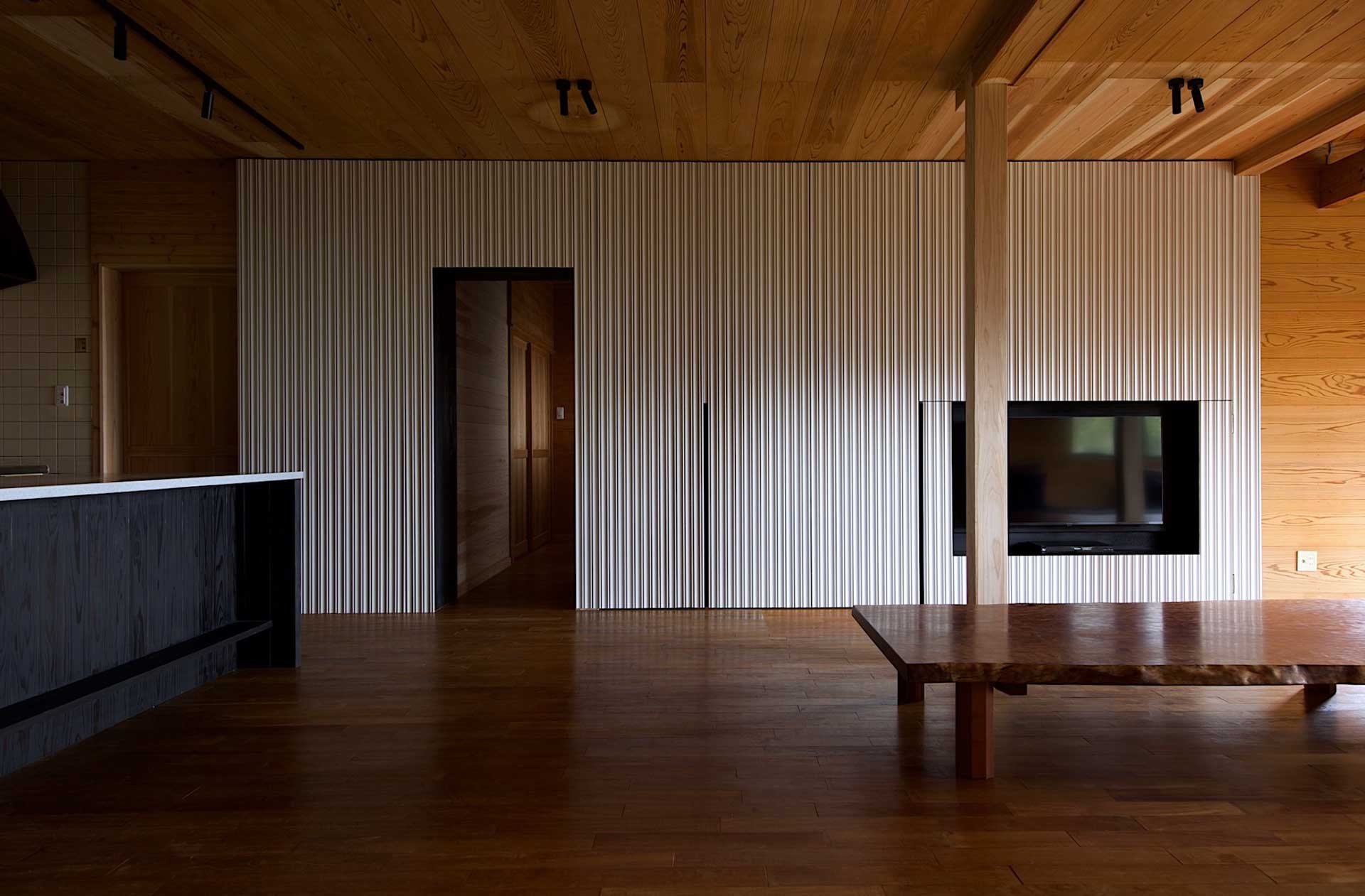
The third principle is respecting the temporality of materials. We choose materials that mature with time rather than simply deteriorate. Charred cedar, stone, earth, charcoal, and natural fibers gradually integrate into the surrounding landscape while maintaining relationships with the natural environment. We also consider what happens after a building’s life ends. Materials should not become harmful waste to the land. For example, exterior finishes are selected from natural sources whenever possible, and traditional yakisugi, or charred cedar, can eventually return safely to the soil. The fourth principle is the pursuit of Japanese simplicity. Traditional Japanese architecture contains a quiet simplicity created by removing excess.
However, this is not minimalism for its own sake. It emerged from a deep harmony with nature. Japanese spaces do not attempt to completely control wind, light, rain, or the changing seasons. Soft light filtered through shoji screens, shadows beneath deep eaves, and spaces that gradually dissolve into gardens all reflect an architecture that accepts nature rather than excludes it. There is also a Zen like sensibility of “emptiness” or “ma,” leaving intentional space rather than filling everything with information and form. By leaving room, architecture allows nature, time, and human perception to enter the space. I believe this sensibility will become increasingly important in the future. The architecture we design is therefore not intended to function as a self assertive object, but rather as a platform that reconnects human perception with nature. Instead of emphasizing form itself, we try to create spaces where people can feel the wind, light, water, scent, and silence that already belong to the site.
Finally, we do not reject technology or comfort. Some forms of back to nature architecture embrace inconvenience as a value in itself. However, for many people living in contemporary cities, sacrificing comfort entirely is not sustainable in everyday life. We believe it is important to appropriately integrate insulation, airtightness, and environmental technologies while still maintaining a deep relationship with nature. Technology should not be used to dominate nature, but to create a smoother relationship between humans and the natural world. In doing so, more people can experience Regenerative Architecture as part of ordinary life.
Regenerative Architecture may still be unfamiliar within the market. What challenges do you face in communicating and implementing this concept, and how do you overcome them?
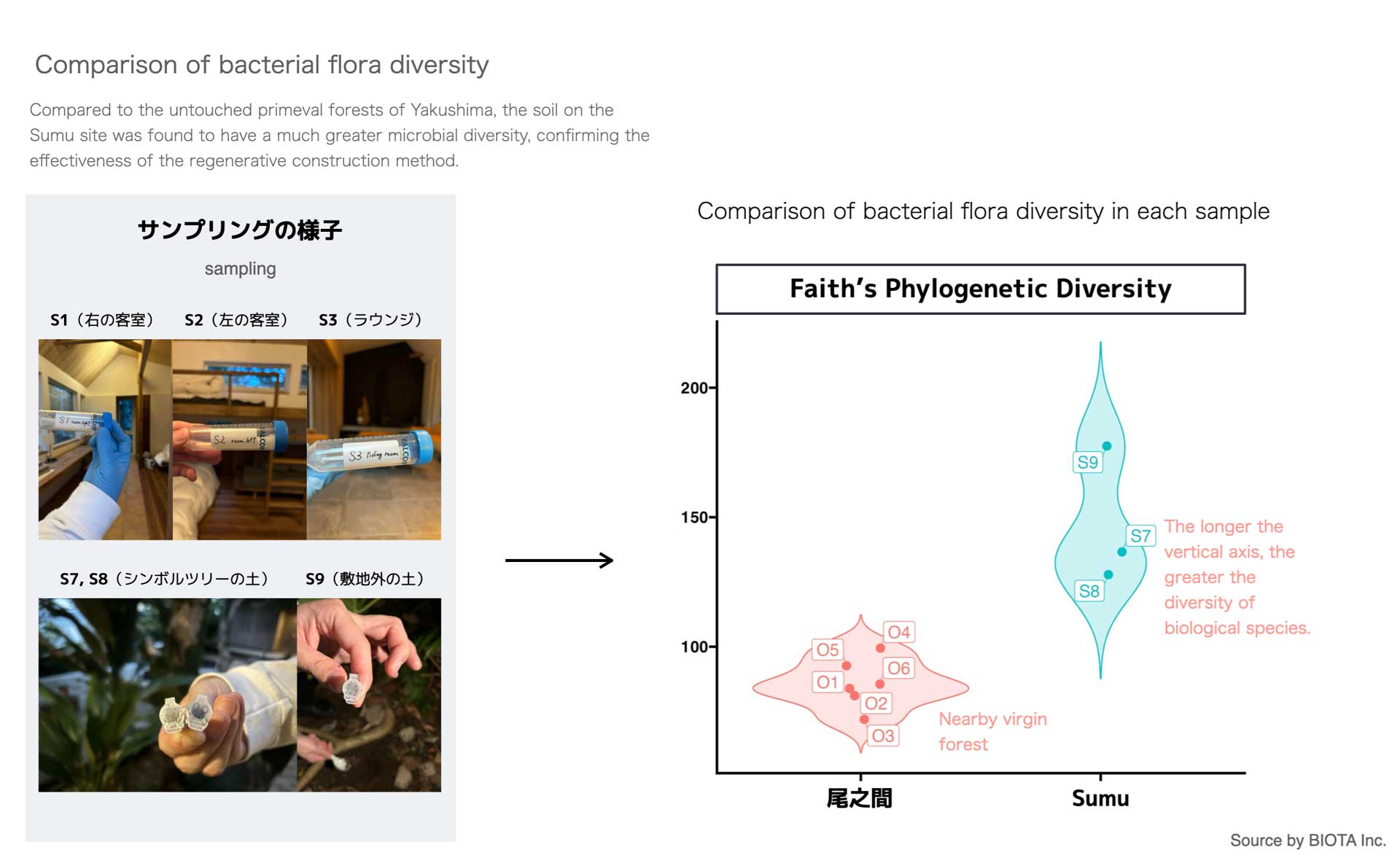
The greatest challenge is that Regenerative Architecture is still not a widely recognized value system. Today’s architectural industry is largely driven by metrics such as cost, efficiency, and construction speed. In contrast, values like soil regeneration or ecological relationships are difficult to quantify and rarely produce immediate short term profit. As a result, people sometimes ask, “Why go this far?” Of course, measurable data is important. At Sumu Yakushima, for example, we confirmed that microbial biodiversity was approximately three times higher than in the surrounding forest. It was a symbolic result suggesting that human involvement, under certain conditions, can actually increase biodiversity beyond the existing natural state.
However, I do not believe these ideas can be communicated through numbers and theory alone. Direct experience is essential. When people visit Sumu Yakushima, many immediately feel that “something is different” before they can intellectually explain it. The movement of wind, humidity, light, sound, the scent of soil, and the presence of living creatures create a bodily experience of the relationship between architecture and nature. We also believe that healthy soil environments and close contact with nature positively affect human physical and mental wellbeing. People often sleep more deeply, feel less stress, and regain a sense of balance.
Those sensory and emotional shifts are also part of the value of regenerative environments. At the same time, global interest is growing in moving beyond human centered design and toward ecological thinking. As that awareness expands, we are gradually meeting more clients and creators who resonate with these ideas. Rather than imposing a philosophy, we try to present a compelling experience, a landscape where humans and nature can truly coexist. If people can experience that and think, “I would like to live in a future like this,” then I believe the architecture has already begun to communicate something meaningful.
Do you see Regenerative Architecture expanding beyond architecture into cities, lifestyles, and broader industries? What future vision does tono Inc. envision?
Yes, I believe Regenerative Architecture extends far beyond architecture itself. Modern society faces many interconnected issues, including environmental degradation, health problems, social fragmentation, and the weakening of local communities. But I do not see these as isolated problems. I believe many of them stem from the same underlying issue, the breakdown of natural and social cycles. Because of that, a single regenerative approach can potentially improve multiple problems simultaneously. Agriculture is a good example. If farming shifts from industrial systems dependent on chemical fertilizers and pesticides toward regenerative agriculture that restores soil health, the soil becomes richer, water and air quality improve, and the food produced supports human health as well. Environmental issues and health issues are not separate.
They exist within the same cycle. Architecture is similar. Architecture is connected to cities, agriculture, energy, food, tourism, education, and culture. Practicing Regenerative Architecture is therefore not simply about constructing buildings. It is about rebuilding relationships between people and nature, people and local communities, and humans and other forms of life. Our activities in Yakushima are one example of this approach. At Sumu Yakushima, we offer immersive experiences centered around the entire watershed ecosystem. Visitors participate in regenerative farming, trail building, clearing vegetation to restore wind paths, and cooking with harvested vegetables. In the mountains, they help maintain forests, and by the sea, they participate in salt making. These are not simply activities or workshops. The actions themselves contribute to restoring ecological cycles and improving the environment. I do not believe humans must exist as negative forces against nature. Humans can also become contributors to ecological richness. Importantly, this does not need to depend on sacrifice or hardship. It can be integrated into everyday life in joyful and meaningful ways. I also believe cities themselves will change in the future.
Until now, urban development has prioritized efficiency and economic rationality. Going forward, however, the central question will become how cities reconnect with ecosystems. Every building stands on soil. Reconsidering our relationship with the ground beneath us is the first step. Large scale development will also need to move beyond efficiency alone and consider water systems, biodiversity, and ecological coexistence. At tono Inc., we hope to work across architecture, landscape, hospitality, local culture, material development, and education to propose new relationships between humans and nature. Ultimately, our goal is to move beyond the idea of merely “protecting nature” toward a future in which human activity itself becomes a force that enriches the Earth.














#14057, 905 49, Beolmal-ro 102beon-gil,
Dongan-gu, Anyang-si, Gyeonggi-do, Korea
Business Registration Number: 454-86-01044
Online Sales License No.: 2021-Anyang Dongan-1081
Copyright © DESIGNSORI Co., Ltd.