
Looking once again at the analytical results of the 2026 to 2027 Asia Design Trend Report, form is no longer a domain that is determined only once by the designer's hand. The design statements and keywords of numerous winning works prove that form has now been elevated to a living system that grows and changes within time. In other words, even after a design is completed, its form continues to operate as an active structure that keeps changing alongside the user's time, the conditions of the environment, and the breath of nature. The trend report has chosen to name this vast flow with a single word, 'BIOFORMA.' It is a concept that combines Bio, meaning life, and Forma, meaning form.
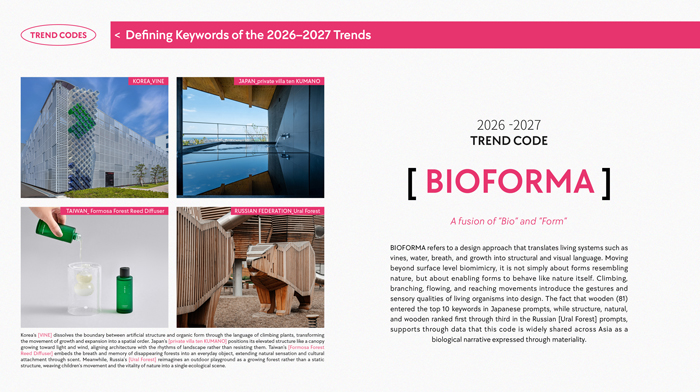
BIOFORMA is not merely a coined term that joins two words together. At the point where life and form meet, this word declares the birth of a new design paradigm. It carries an attitude that moves beyond simply imitating nature and toward pursuing forms that behave like nature, and it embodies the philosophy of designers who accept structures that grow and branch alongside the user's time as the core language of design. The results of text analysis provide an intriguing piece of supporting evidence. The word 'wooden,' which points toward materials and nature, appeared 81 times in the prompts of Japanese winning works, surpassing 'modern' (76 times) and entering the top ten for the first time. In Hong Kong as well, 'wooden' retained a position within the top ten with 32 occurrences, and in the prompts of the 'Ural Forest' project in the Russian Far East, 'natural' (10), 'wooden' (10), 'outdoor' (5), and 'wood' (5) all sit at the highest end of the frequency rankings.
The fact that the same word rises into the upper ranks across multiple regions at once cannot be dismissed as coincidence. Here, 'wooden' is not simply a term that denotes a finishing material. It is a signal that reveals 'through what kind of time a design was made,' and it tells us that the status of materials, which carry time, memory, and lineage together, has been elevated. The 'wooden' that recurs throughout this analysis points not to the mere frequency of timber as a material, but to a trend reading in which materials themselves have begun to emerge as the starting point of design.
Why, then, has design begun to grant life to form at this moment in time? On the surface, the reason lies in technological progress. Parametric design tools, generative algorithms, additive manufacturing technologies, and the development of new materials capable of changing their own shape have given designers the foundation needed to actually realize 'growing forms.' Yet technological progress accounts for only half of the reason. The more essential change is that the core subject of design is shifting from 'the design of an object's outer appearance' toward 'a design that contains the flow of time.' An object is defined by its form, while time is determined by action. In the era of 'design that crafts time,' the emergence of forms that live and move can be seen as an inevitable flow.
Added to this is another core factor: the transformed 'sense of the user.' We live within an overwhelming abundance of information, and inside it the thirst for 'something alive' continues to grow. Static objects, fixed forms, and closed systems no longer harmonize with the user's breath. The fact that the daily life of the urban dweller is increasingly placed under the condition of 'nature deprivation' also encourages this flow. Within the hours of the urban dweller surrounded by concrete, glass, screens, and consoles, the user longs not for the outer appearance of nature but for the breath of nature itself. Users now want objects that breathe alongside them and that change with their own time. BIOFORMA can be read as the response of design to precisely this demand.
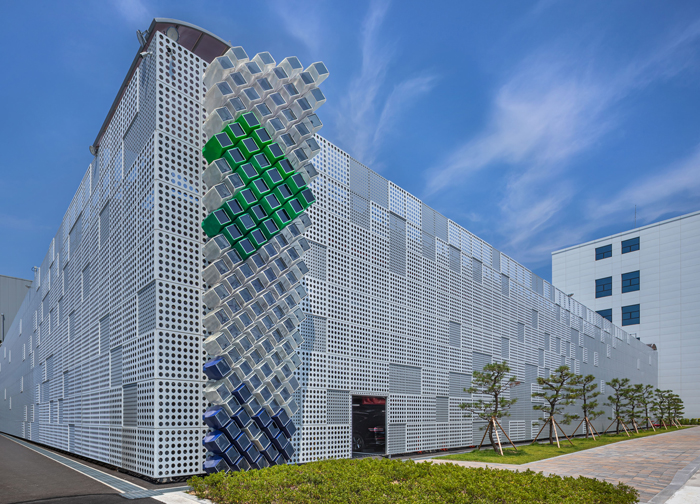
< VINE, ASIA DESIGN PRIZE 2026 Winner >
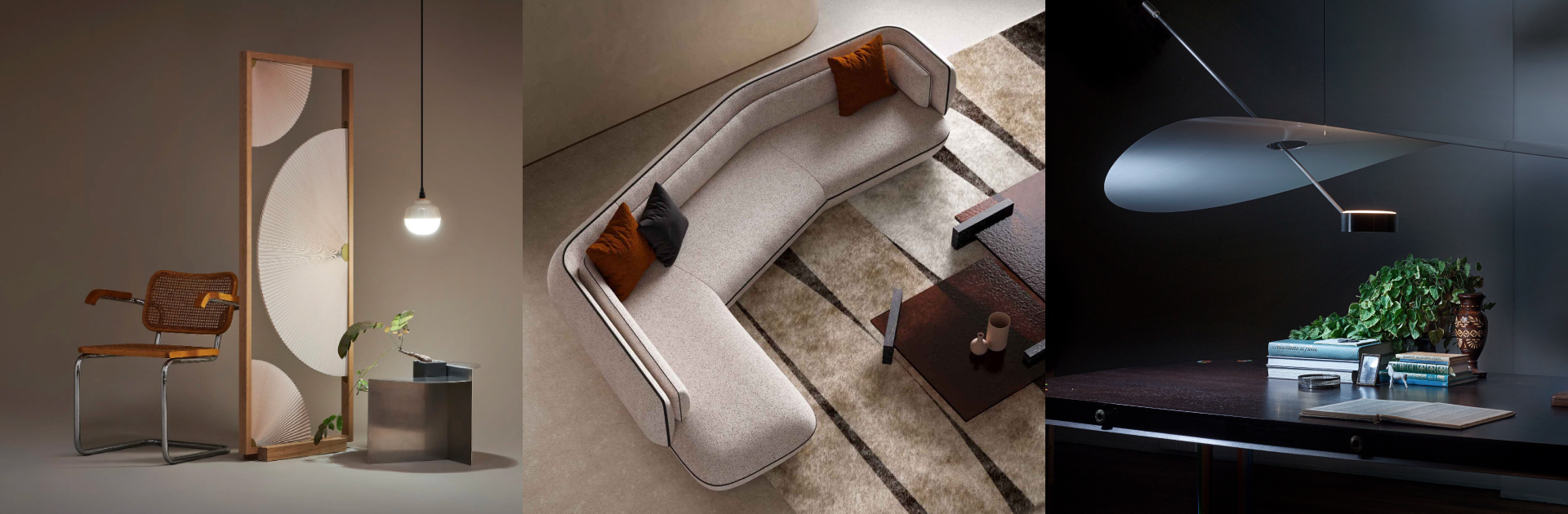
When we examine examples by region, this flow becomes even more vivid. Korea's 'VINE' can be regarded as one of the most honest examples of BIOFORMA. The name of the work itself means 'vine.' While gently undoing the boundary between artificial structure and organic form, it accepts the very movement of vines climbing and stretching their branches as the formal language of design. What is particularly interesting is that this project does not stop at the level of having merely 'modeled the shape of a vine.' The design crafts the directions in which the form can 'grow,' the surfaces along which it can 'climb' upward like ivy on a wall, and the branching points where it can 'split.' In other words, the form is not placed within a fixed result but within the 'possibility of unfolding toward the next stage.' VINE therefore exists not as a still piece of sculpture but in a state of 'movement that holds growth within it.'
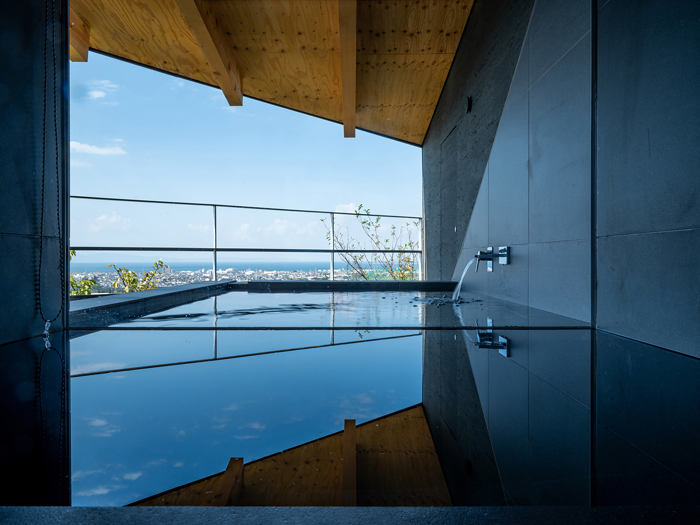
< private villa ten KUMANO, ASIA DESIGN PRIZE 2026 Grand Prize >
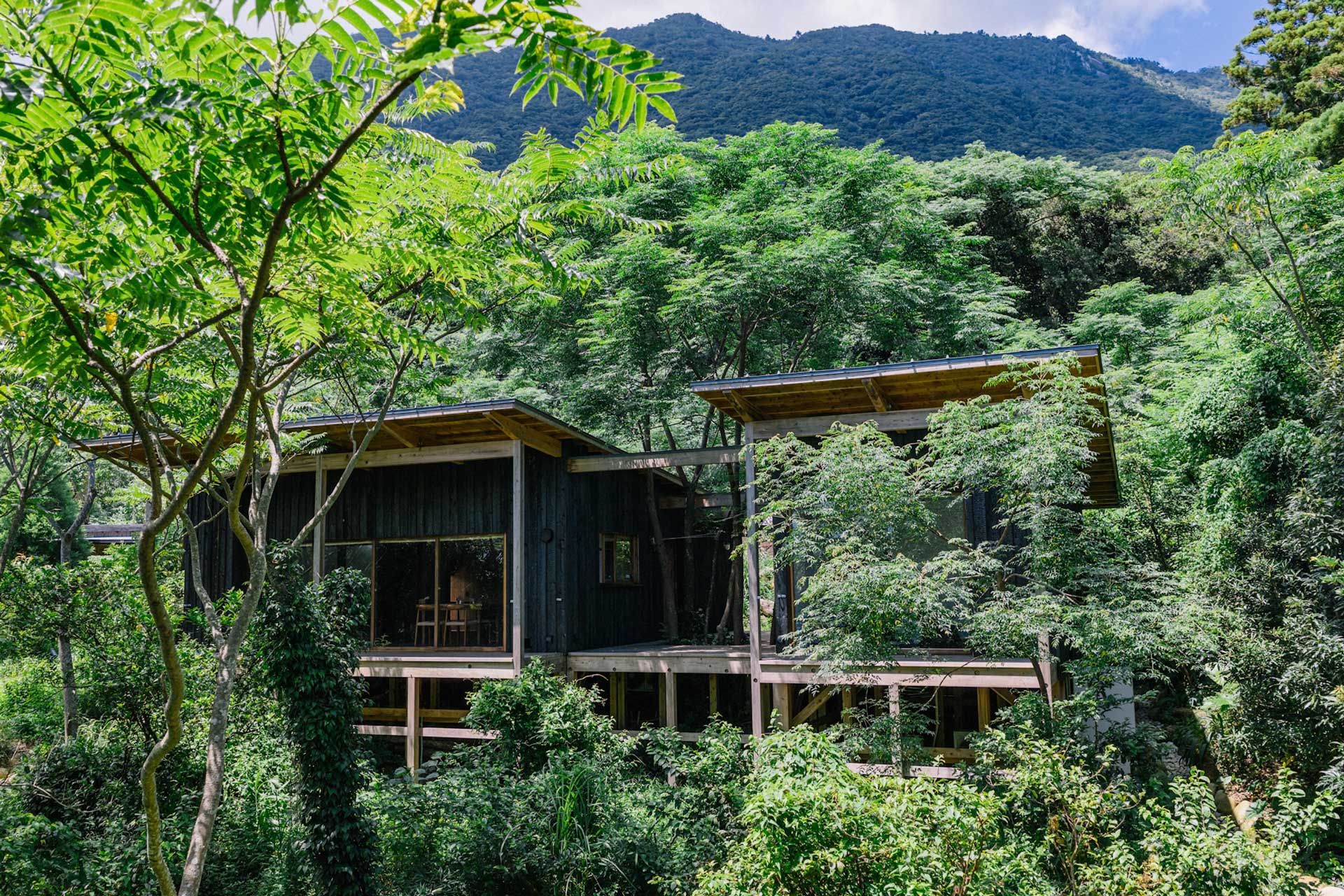
Japan's 'private villa ten KUMANO' shows how BIOFORMA operates at the scale of architecture. Sited at the point where mountain and sea come closest to one another, this villa raises its main floor on a piloti structure and receives the horizon as if framing it. What matters is that this architecture does not 'exploit' the terrain. KUMANO embraces the slope of the mountain, the direction of the wind, the angle at which light enters, and even the breath of the vegetation, operating as 'a structure placed according to the direction in which nature grows.' Like a tree extending its branches toward light and wind, the architecture does not resist the landscape but becomes part of it. This is not a 'resembling form' but a 'similar behavior.' KUMANO does not imitate nature; it performs the same actions that nature performs.
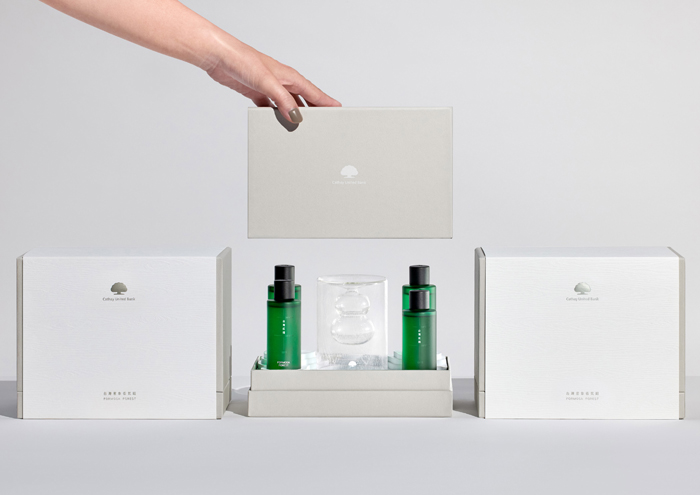
< Formosa Forest Reed Diffuser, ASIA DESIGN PRIZE 2026 Grand Prize >
Taiwan's 'Formosa Forest Reed Diffuser' reveals yet another texture. This design, which inscribes the breath and memory of a vanishing forest into the everyday scent, accepts nature not as 'form' but as 'sensation.' The small object of a diffuser carries the temporality of a vast forest. The way fragrance spreads through the air resembles the way plants breathe through their leaves, and through this single small object the user draws the 'behavior' of nature into the interior of their own space. It is a case that demonstrates BIOFORMA is not a vocabulary that functions only within large scale architecture but can operate by the same logic on objects that fit in the palm of a hand. To say that form lives and moves ultimately means that its 'manner of operation' resembles nature, and that operation is independent of scale.
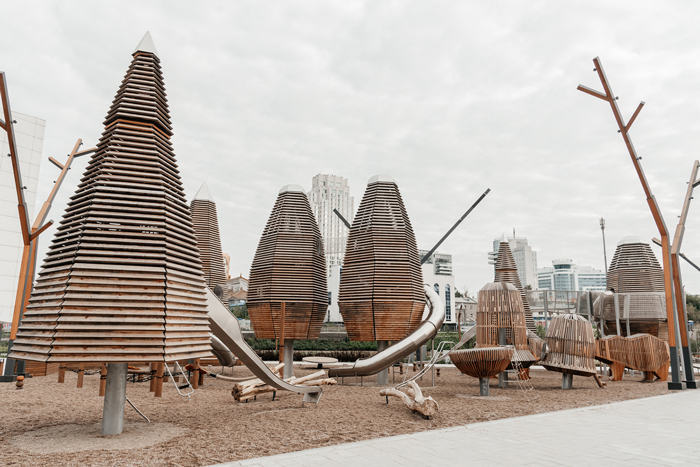
< Ural Forest, ASIA DESIGN PRIZE 2026 Gold Winner >
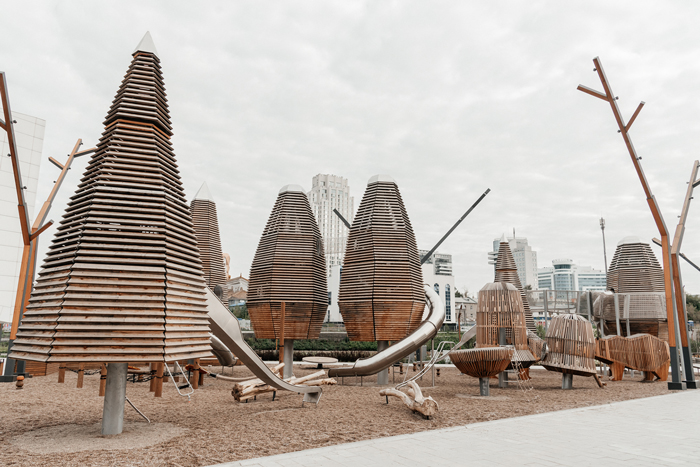
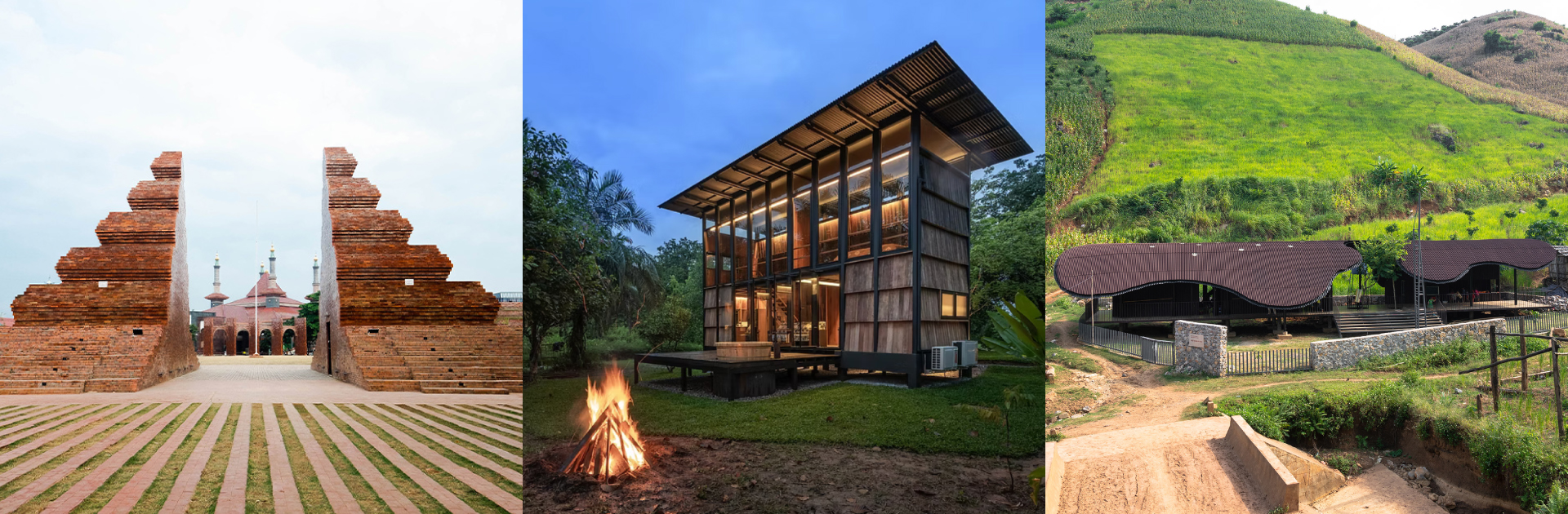
Russia's 'Ural Forest' shows how BIOFORMA unfolds within the realm of public design. The outdoor play space is treated not as 'a structure that simply stands there' but as 'an environment woven like a growing forest.' The movements of children, the growth of trees, and the breath of the forest are intertwined within a single ecological scene. The surface of the data, in which 'natural,' 'wooden,' 'outdoor,' and 'wood' occupy the highest positions in frequency, indicates that this space was not merely 'made' from natural materials but 'woven' according to the very logic by which nature grows. The play facility is no longer an object that stands still but an environment that changes alongside the flow of time. It is a project that quietly proves how deeply BIOFORMA can penetrate the daily life of citizens within the public sphere.
Bringing these regional examples together, the shared grammar of BIOFORMA emerges clearly. If Korea's BIOFORMA is 'a form that holds growth within it,' Japan's is 'an architecture that responds to landscape,' Taiwan's is 'an object that breathes through sensation,' and Russia's is 'a public environment that grows alongside its users.' Across all the major regions, 'wooden' and 'natural' surfaced as top keywords, yet the way nature operates within design appears thoroughly different according to regional context. Even so, the commonalities are evident. First, form is treated not as 'completion' but as 'process.' Second, design absorbs not the 'outer appearance' of nature but its 'verbs.' Third, users encounter form not by 'looking at' it but with the sensation of 'breathing alongside' it. The criterion for evaluating design has shifted from the nouns of form to the verbs of action.
< Keyaki Monogatari, ASIA DESIGN PRIZE 2026 Grand Prize >
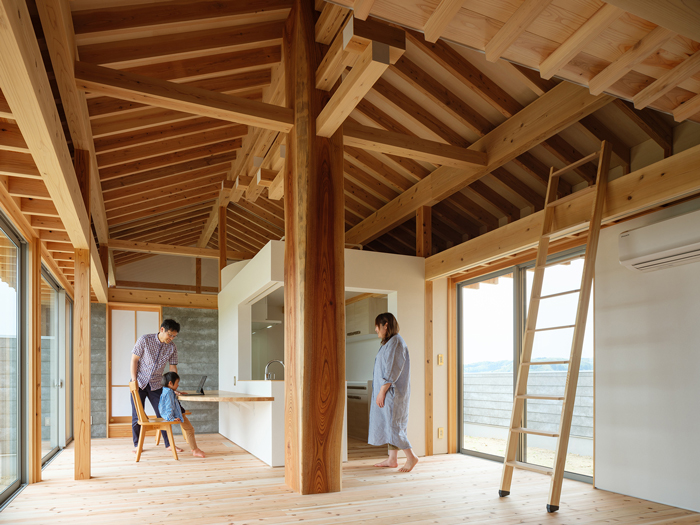
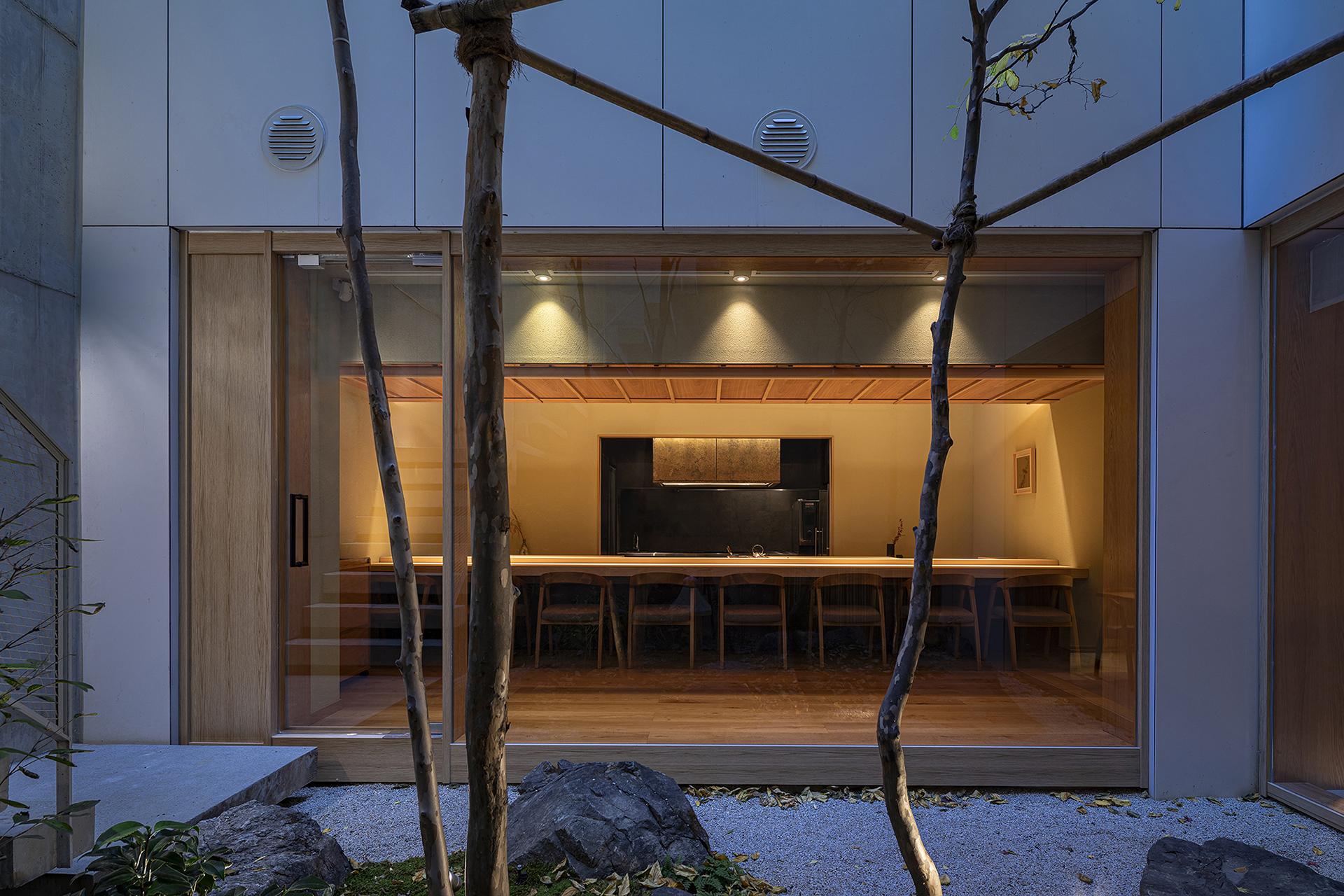
Here, one point should be approached with care. BIOFORMA is clearly distinct from 'the aesthetics of organic curves.' A graceful curve may be a visible result of BIOFORMA, yet the essence lies not in the form of the curve but in 'the logic of growth.' Even a design composed entirely of straight lines, if it is structured so that it can branch and expand in accordance with the flow of time and the changes in the user's life, enters the flow of BIOFORMA. Conversely, even a design filled with curves, if those curves remain mere visual ornament, departs from the essence of BIOFORMA. The core of the expression 'form has begun to live and move' is not 'movement' but 'being alive.' Another core clue of BIOFORMA lies in 'the ethics of materials.' Japan's 'Keyaki Monogatari' draws the zelkova tree that had stood in the garden of the client's family home into the structural columns of a new house, expanding design into an act of remembrance and inheritance. Material is no longer a mere finishing element but takes its place as 'a being that holds memory.'
< Ooyster, ASIA DESIGN PRIZE 2026 Winner >
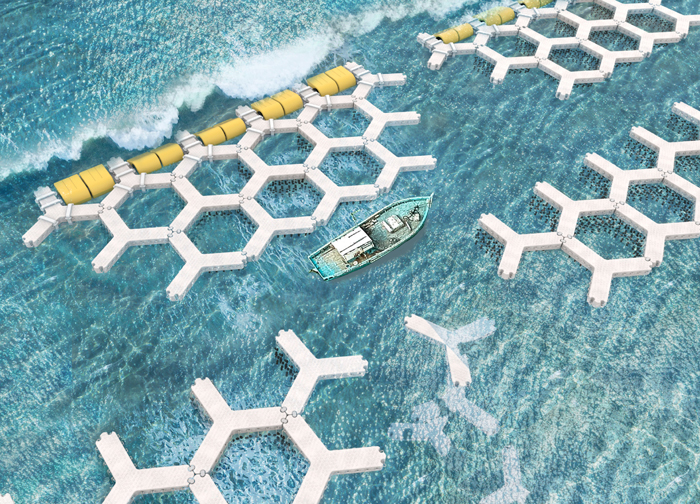
Taiwan's 'Ooyster' lies within the same flow. This project, which simultaneously designs an aquaculture system and the recovery of the marine ecosystem by using oyster shells and seaweed gel, repositions even the waste of nature as 'a resource that grows again.' When BIOFORMA operates not merely as 'the aesthetics of form' but as 'a system of circulation,' design draws closer to 'the work of cultivating' rather than 'the work of making.' The data showing that Japanese design places 'wooden' ahead of 'modern' tells us that design is evolving from a report of 'what something is made of' into a statement of 'through what time it was made.'
BIOFORMA is also a vocabulary tightly bound to 'locality.' Design that treats nature as the abstract notion of 'nature in general' is gradually losing its force. What nature is it? Whose nature is it? Alongside whom does this nature grow? KUMANO is tied to 'a specific landscape' formed by the mountains and the sea of its particular region, and Formosa Forest is tied to a concrete place, the vanishing 'forest of Taiwan.' Ural Forest as well begins from 'the nature of that very ground,' the coniferous ecosystem of the Ural region. In every case where BIOFORMA operates, nature is not 'an abstract nature' but 'a nature that exists alongside its users.'
At this point, the flow we cannot overlook is the fact that BIOFORMA is gradually absorbing the once firm boundaries among product, spatial, and material design. Until now, materials belonged to the domain of finishing selected at the final stage of design, and form was determined within each of the separate categories of product, space, and environment. In the full era of BIOFORMA, however, these boundaries gradually dissolve. Product designers must consider, from the very earliest stages of design, how an object will change within time, and spatial designers must accept the temporality and memory that materials carry as a core variable of form. In the place where the once firm boundaries among the design disciplines quietly come undone, BIOFORMA will firmly establish itself as a new shared language.
Finally, it is necessary to address the paradigm shift required from the perspective of the designer, the very subject of design. In the full era of BIOFORMA, designers must embody two new sensibilities. First, they must become not someone who 'Decides' the form after the fact, but someone who 'Cultivates' from the very beginning the conditions under which the form can grow. Second, they must move beyond treating materials as a simple 'Finish' and handle them with the sensibility of reading them as a 'Narrative' that carries time and memory.
The core capacity now demanded of designers reaches far beyond the act of tracing the outline of a form. They must be able to read, in their totality, the conditions under which an object can branch and expand within time, the memory and lineage that materials hold within them, and even the logic of growth that nature itself possesses. We no longer ask only, "What kind of object that looks like something will we make?" We must now ask, "What kind of object that grows like something will we cultivate together?" The true BIOFORMA emerges at the very point where this essential question begins. And we can see that the answers of contemporary designers, who have wrestled most fiercely with this question of our era, are expressed throughout the winning works of ADP 2026.













#14057, 905 49, Beolmal-ro 102beon-gil,
Dongan-gu, Anyang-si, Gyeonggi-do, Korea
Business Registration Number: 454-86-01044
Online Sales License No.: 2021-Anyang Dongan-1081
Copyright © DESIGNSORI Co., Ltd.