
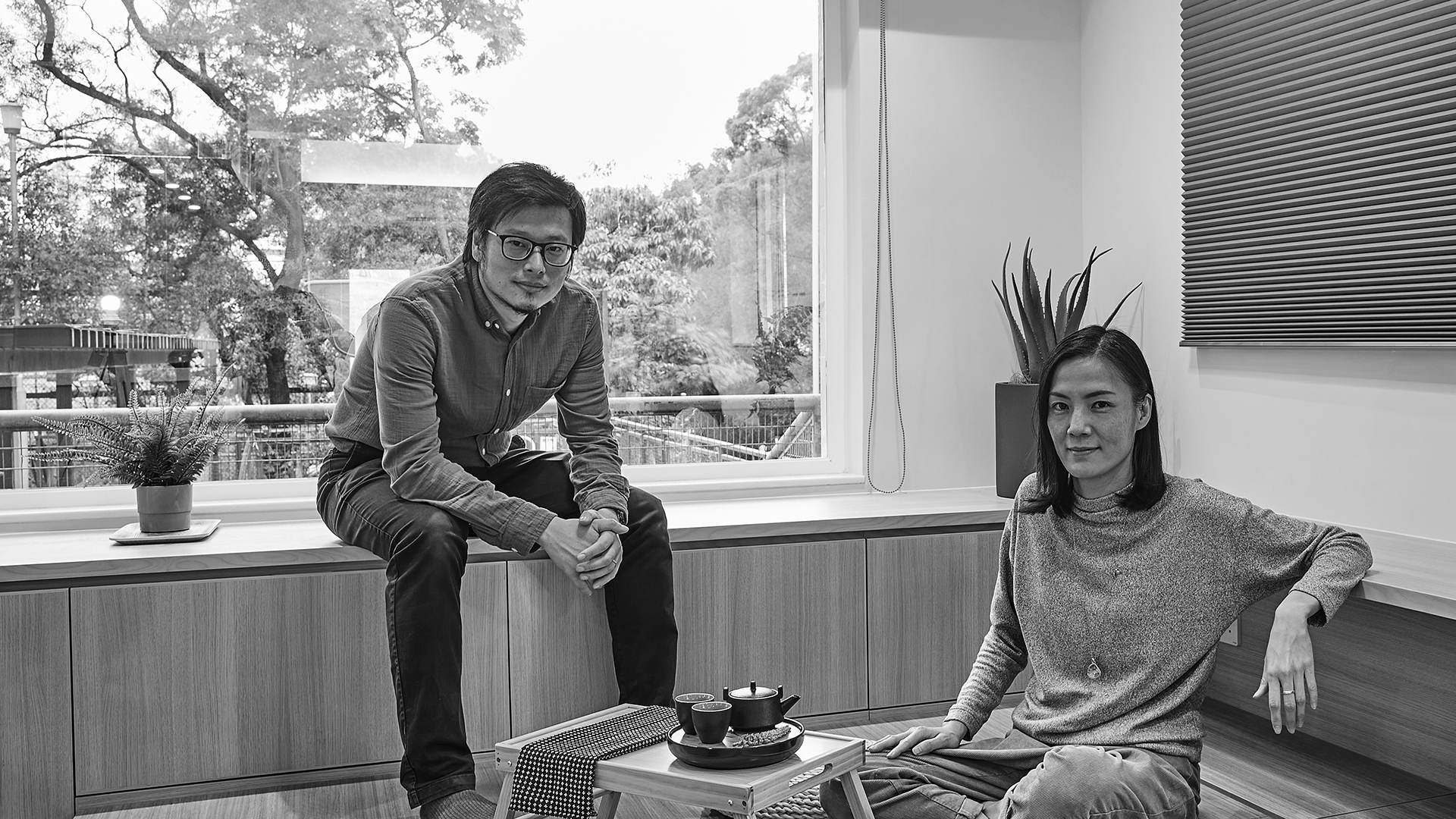
I am Hsieh Chia-Ling, the founder and design director of Grey Gate Interior Design. Our company operates under a dual-director system: one executive director is responsible for construction details and execution, while I focus primarily on the company’s development direction and the color composition of our design work. At Grey Gate, we consider circulation and spatial layout to be the most critical elements in residential design, as they determine the space's practicality. Rather than pursuing overly decorative interiors, we emphasize materials and construction methods that ensure durability and ease of maintenance. Because architecture and interior design can place a burden on the planet, we strive to minimize their environmental impact. What we provide our clients is not merely a house, but a space where both body and mind can rest and recharge. Knowing that our clients feel at ease when they return home is our greatest reward.
Please introduce a representative project.
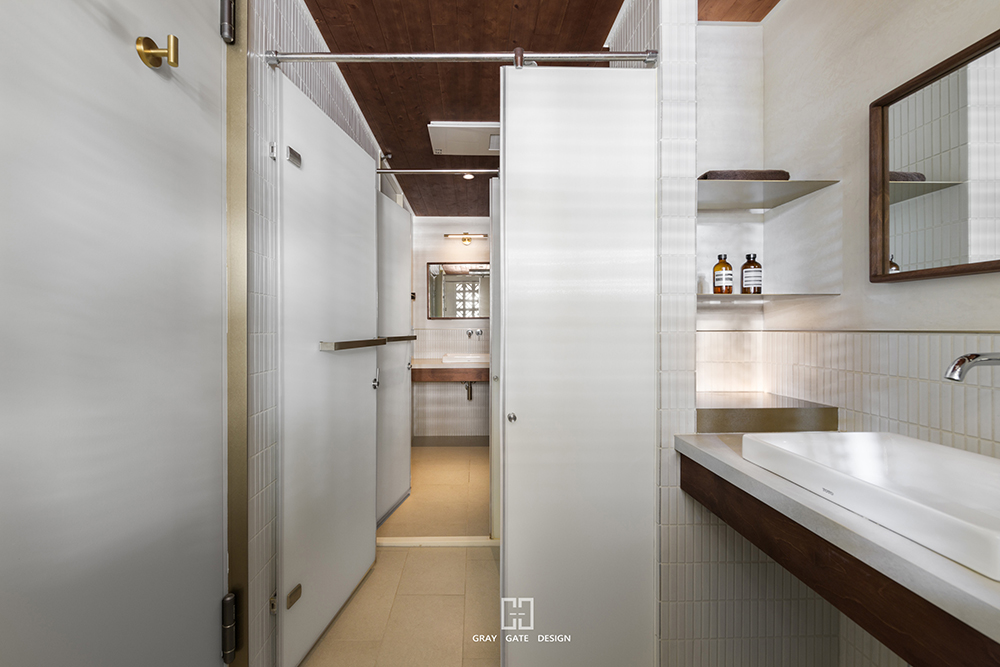
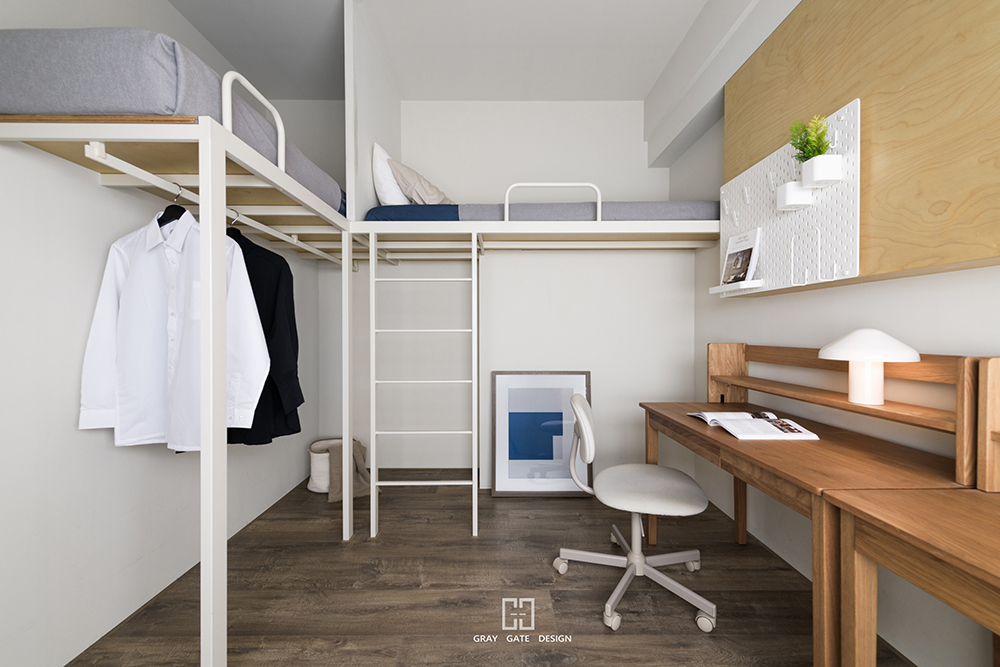
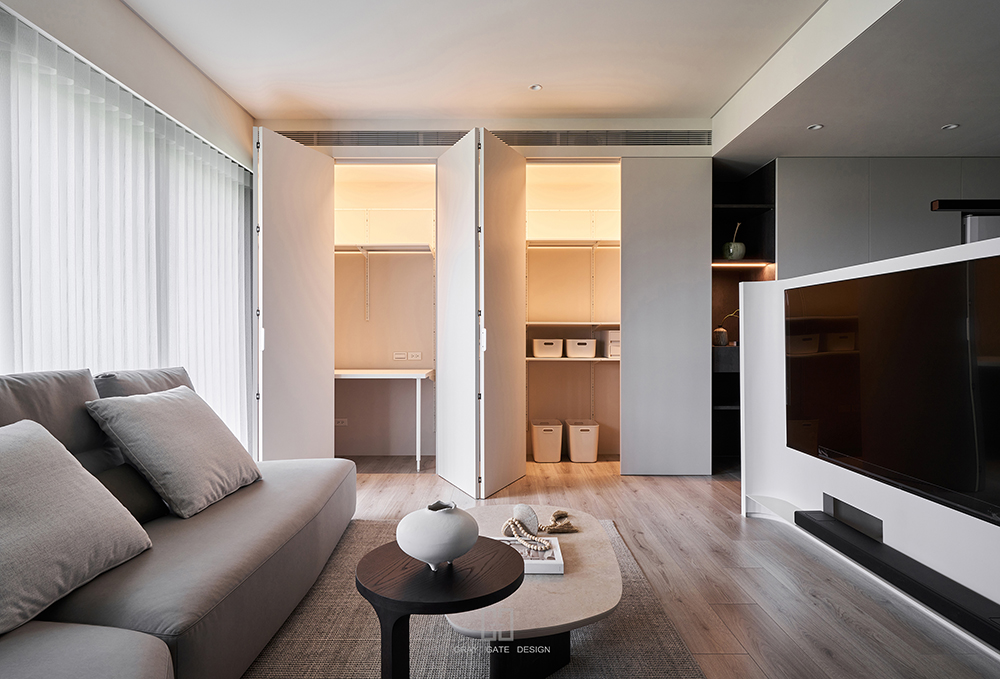
A skiff: This project is the personal residence of our design director and was created with the daily routines of a family of four in mind. The shower area was designed as a shared space between two restrooms, allowing the saved area to be used as a study within the master bedroom. As the two sons were entering their teenage years and would soon leave home for their studies, their rooms were designed with space-saving bunk-style layouts—beds above, and wardrobes and desks below.
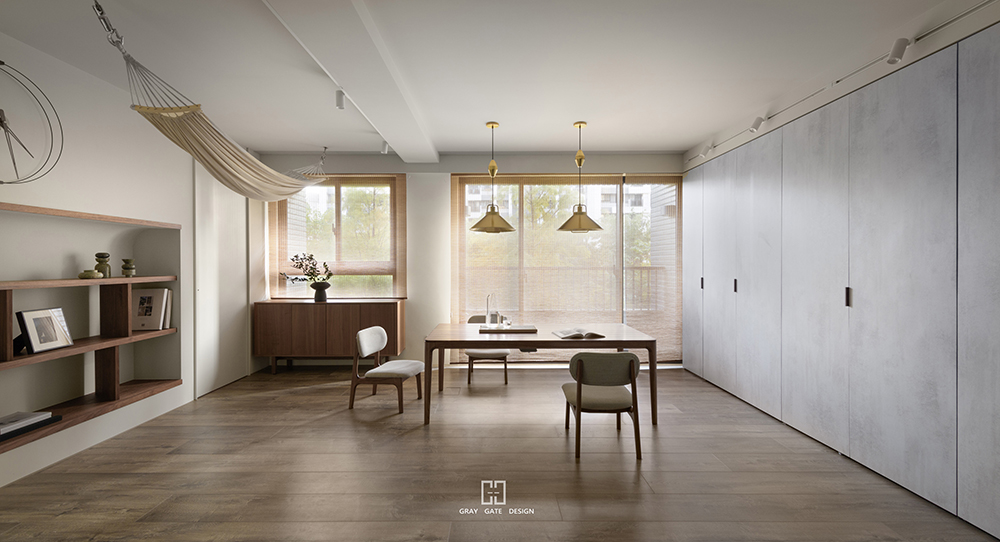
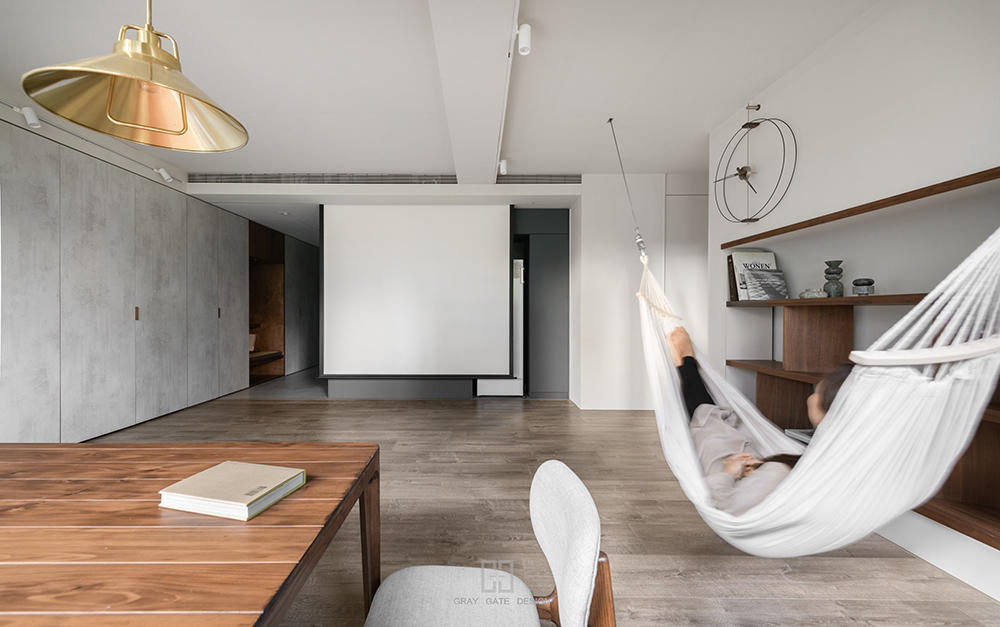
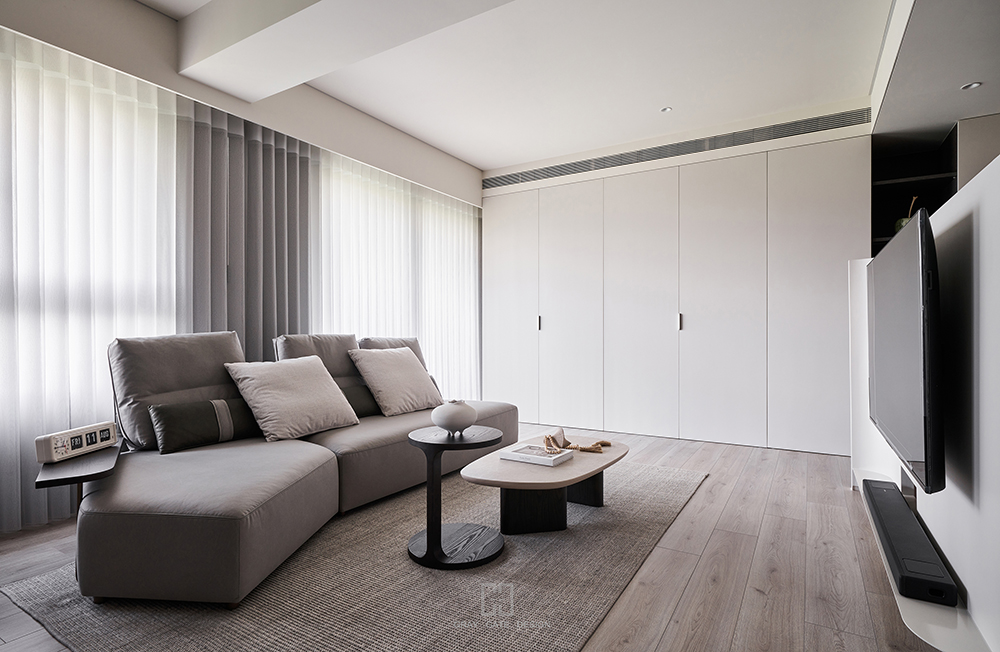
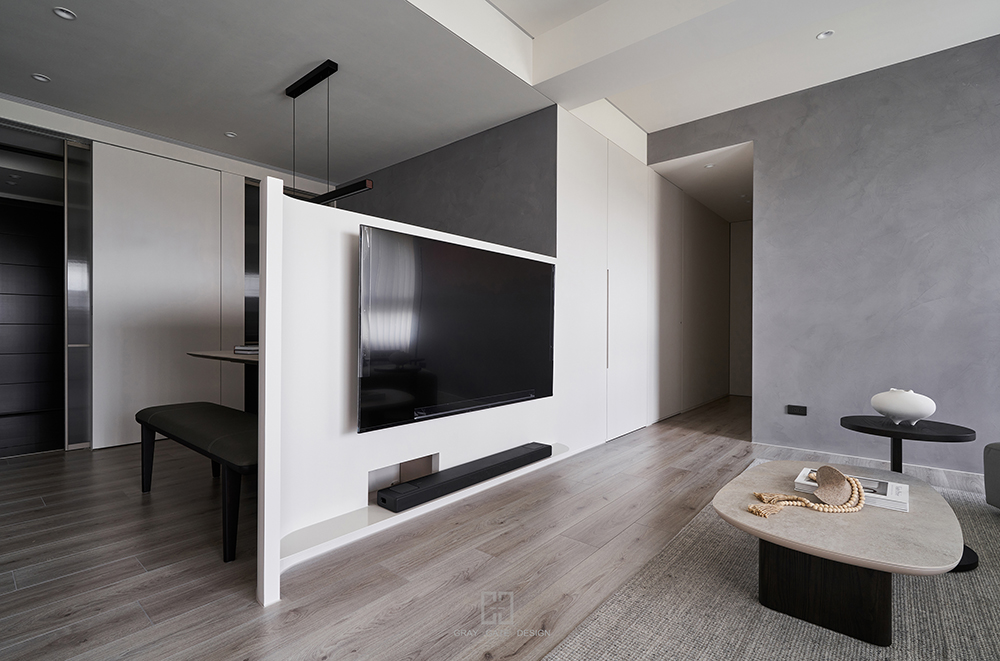
The living and dining areas were expanded to create a space where the entire family could gather. Instead of a television in the living room, the design encourages conversation and bonding among family members. It’s a space where they can eat together, watch movies, or enjoy playing Nintendo Switch. With bean bag chairs and a motorized hammock, it’s a place so cozy that one could easily fall asleep while watching a movie.
The core challenge of this project was to comfortably accommodate four people in a compact space. Every centimeter had to be meticulously considered. We also focused on multifunctional spatial planning—spaces needed to serve alternative purposes when not in use. The ceiling housed equipment like a heat exchanger, dehumidifier, and air conditioning system, which required precise planning and execution during construction. For the motorized lift hammock, we used a car winch system along with a custom pulley structure to ensure both ends would rise evenly. This was a technically demanding and innovative project.
How do you understand a client’s lifestyle and requirements when designing a space?
At Grey Gate Interior Design, our core principle is to understand the client’s daily habits and expectations for their future lifestyle. Style and technique are simply added value that designers contribute. Residential design is not a one-size-fits-all template—it cannot be universally applied to every household. This means designers must consider the client’s needs, practicality, safety, and lifestyle patterns, all within the limits of their budget.
To support this, we initially considered providing clients with a questionnaire to detail their routines. However, we soon realized that fully capturing their lifestyle would require too many questions, and few clients would have the patience to complete such a document. Instead, we allow clients to record their lifestyles in whatever format feels most natural to them. Some create organized lists in Excel, others prepare PowerPoint presentations with images and descriptions. Some send screenshots or hand-drawn sketches, while others prefer to share details through conversation. These varied methods help us clearly understand what each client values most and offer insights into their personality.
Having worked with a wide range of clients with unique and sometimes surprising requests, I’ve come to always ask one specific question: “How dark do you want your bedroom to be?” One time, I had a client who couldn't tolerate even the slightest light seeping through a pinhole in the curtains. He preferred a space so dark it resembled a cave. We even nicknamed the project “The Vampire’s House.” Understanding our clients’ lifestyles and fulfilling their needs—that is the true mission of a designer.
Your communication process with clients seems like a strong advantage. Does Grey Gate have a unique design workflow?
At Grey Gate Interior Design, we break down the entire project timeline from the very beginning, assigning specific dates to each stage. This provides a predictable and structured process for both the design team and the client. In the past, we only planned the design schedule in detail, without clearly outlining the construction timeline. But we eventually realized the importance of informing clients in advance about key milestones like the initial inspection, re-inspection, and moving dates.
By managing all phases of a project systematically, we not only streamline internal financial operations but also build client trust. Our workflow differs depending on whether the property is a new build, an older home, or a pre-sold apartment. We apply different pricing models and work items accordingly. This allows us to clearly assess workload and performance, and even calculate project bonuses for our designers. While we’re not sure if similar systems exist abroad, this approach is still uncommon in Taiwan. Since implementing this system, our designers have become more accountable and autonomous with their projects—and they appreciate being rewarded accordingly.
We also hear you host gatherings for designers. How do you engage with other professionals in the industry?
Like many design studios, we’re happy to share knowledge—whether it’s better design solutions or construction drawing details. We invite designers and architects to visit our completed projects and, in turn, visit other design firms to learn from their strengths and understand their past failures. In today’s design world, there are no more “secrets.” Open exchange actually accelerates the growth of the entire industry.
Working in isolation limits growth and eliminates the opportunity to identify blind spots—often brought to light through others’ questions. Beyond architecture, materials, and construction, design companies can benefit from open discussion on legal matters, contracts, finance, business systems, labor laws, and more. Here’s a funny story: one of our fellow designers had a client who kept a wide variety of insects at home. For work, they had to study and observe these bugs up close. But I have to admit—that was the one project I just couldn’t visit in person. I absolutely panic when I see insects!
Why is communication among designers important? And what kind of efforts are needed to foster meaningful exchanges?
In Taiwan, designer associations or industry organizations often host large-scale networking events. However, these gatherings frequently center around lectures or recreational activities like running or sports, which often lack practical relevance. In my experience, small-scale exchanges with around 10 to 15 participants are far more meaningful. In our current group, we focus on actionable topics like learning AI tools and platforms like Notion for project management, building internal company systems, improving construction drawing techniques, and even addressing common legal disputes that arise during projects. These discussions provide tangible value and help designers enhance their design, construction, and business management skills.
It’s also worth noting that the number of interior design firms and small studios in Taiwan is now second only to one of the country’s major convenience store chains. Yet, many of these companies continue to operate under outdated models—where designers are overworked, and recognition in design awards goes solely to directors or figureheads. I believe this is no longer acceptable. I know of firms in Taiwan where leaving the office at 11 p.m. is still considered "early." If interior designers themselves aren’t experiencing a healthy, balanced lifestyle, how can they possibly design comfortable, livable spaces for others?
We must remember that living well after work—resting, socializing, and enjoying our environment—is just as essential as working hard. Everyday experiences with dining, sleeping, and working spaces fuel a designer’s aesthetic sensibility and passion. Those experiences directly influence the quality and warmth of our design work.

















#14057, 905 49, Beolmal-ro 102beon-gil,
Dongan-gu, Anyang-si, Gyeonggi-do, Korea
Business Registration Number: 454-86-01044
Online Sales License No.: 2021-Anyang Dongan-1081
Copyright © DESIGNSORI Co., Ltd.