
Is the era of smooth, white, seamless minimalism slowly coming to an end? For a long time, we have regarded forms that encase complex technology within a designed shell and cover it with sleek plastic surfaces as a mark of sophistication. Yet consumers are now beginning to feel fatigue with that smoothness and to question the inefficiencies hidden beneath it. Just as fashion trends come and go, are we moving past the age of minimalism and shifting toward maximalism again? This is a change increasingly observed in contemporary industrial design.
When we think of brands currently drawing attention in the design scene, Dyson, Teenage Engineering, and Nothing inevitably come to mind. What they share is clear: they do not hide. Rather than concealing how technology operates or how things are constructed, they elevate these elements to the core of design itself. Printed circuit boards are openly visible, while motor coils and screw joints are confidently presented as a visual language in their own right. We have entered an era in which engineering itself becomes an aesthetic, almost a declaration that designers should no longer be confined to merely wrapping technology in an outer shell. Even so, I continue to pursue minimalism. What has clearly passed, however, is the era in which everyone rushed toward the same version of minimalism as if it were the single correct answer. Taste is becoming increasingly layered, and different aesthetics are beginning to coexist naturally. From the perspective of a designer who wishes to look across a broader spectrum, this current shift, in which diverse attitudes and expressions surface, feels genuinely welcome.
The aesthetics of concealment and its end
For the past two decades, we have lived within the myth of minimalism led by Apple. The iPhone and MacBook presented themselves as symbols of human control over technology, hiding all complexity within seamless unibody forms. Reduction became synonymous with sophistication, and eventually with what we now call “cool.” Countless design studios and educational institutions followed Apple’s aesthetic almost as an unquestioned truth, treating the act of covering complex structures with smooth shells as the ultimate goal of design.


But now, even Apple, the very emblem of minimalism, is changing. Consider the designs of the Mac Studio and Mac Pro. Where Apple once focused on perfectly concealing heat and noise, today’s Pro lineup boldly exposes massive ventilation openings and heatsink structures, as if openly displaying its performance. It feels like a return to functional beauty, delivering a message that says, “I am working right now. My structure itself is my performance.” Apple is no longer trying to hide technological complexity. Instead, it expresses the logic of “this level of performance requires this structure” directly through design. I see this as a highly symbolic shift. The fact that the company which most rigorously pursued concealment has turned toward revealing technological honesty and functional form feels like a signal flare announcing the gradual decline of an era dominated by shell centered design.
Industrial design is, by nature, a discipline that must balance engineering and art. Yet at some point, the role of the designer was reduced to that of a stylist, brought in only after engineering was complete, tasked with wrapping rough mechanical components in attractive packaging. This approach strays far from design’s true essence of problem solving and ultimately remains mere decoration. As we discussed in Episode 7, techniques for making appearances flashy can now be executed faster and more precisely by AI than by humans. Design that glosses over form without regard for internal structure borders on technological deception, and advances in AI are accelerating the end of such meaningless design even further. Consumers are no longer satisfied with simply beautiful shapes. They want to understand how a product works, its structure and underlying logic, and it is within that transparency that they discover trust and a contemporary aesthetic.
The end of the designer who does not understand engineering
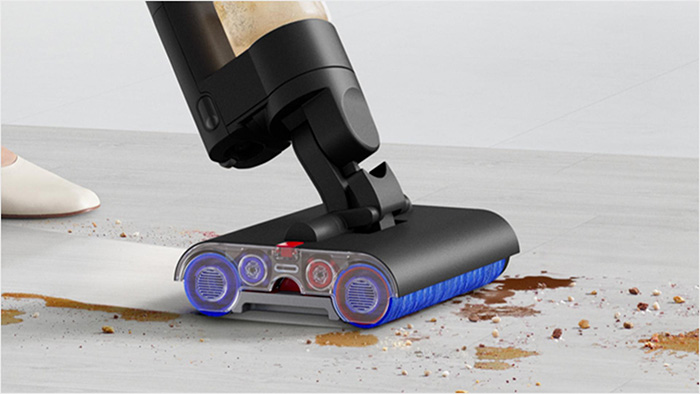
At the core of this new aesthetic lie honesty and transparency. Consider Dyson’s design philosophy. Their transparent dust canisters and vividly colored cyclone components are not merely visual devices. By allowing users to directly observe how air is drawn in and how dust is separated, the design makes the mechanical principles of operation visible, thereby building trust in the product’s performance. This is not decoration but a clear functional choice, and one of the clearest examples of form following function.
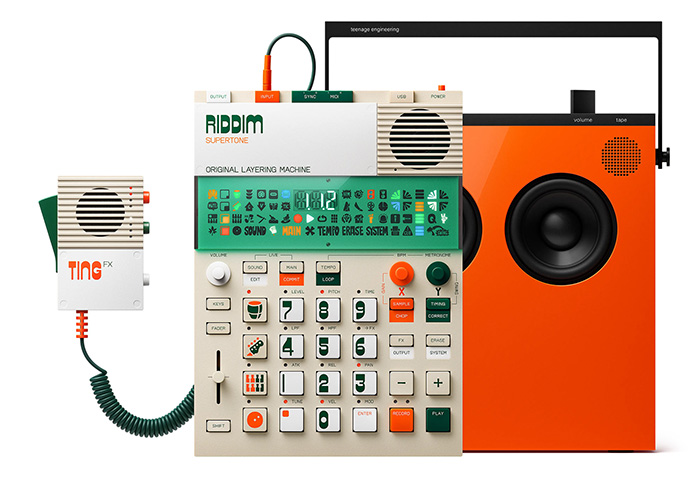
< Image source: Teenage Engineering >
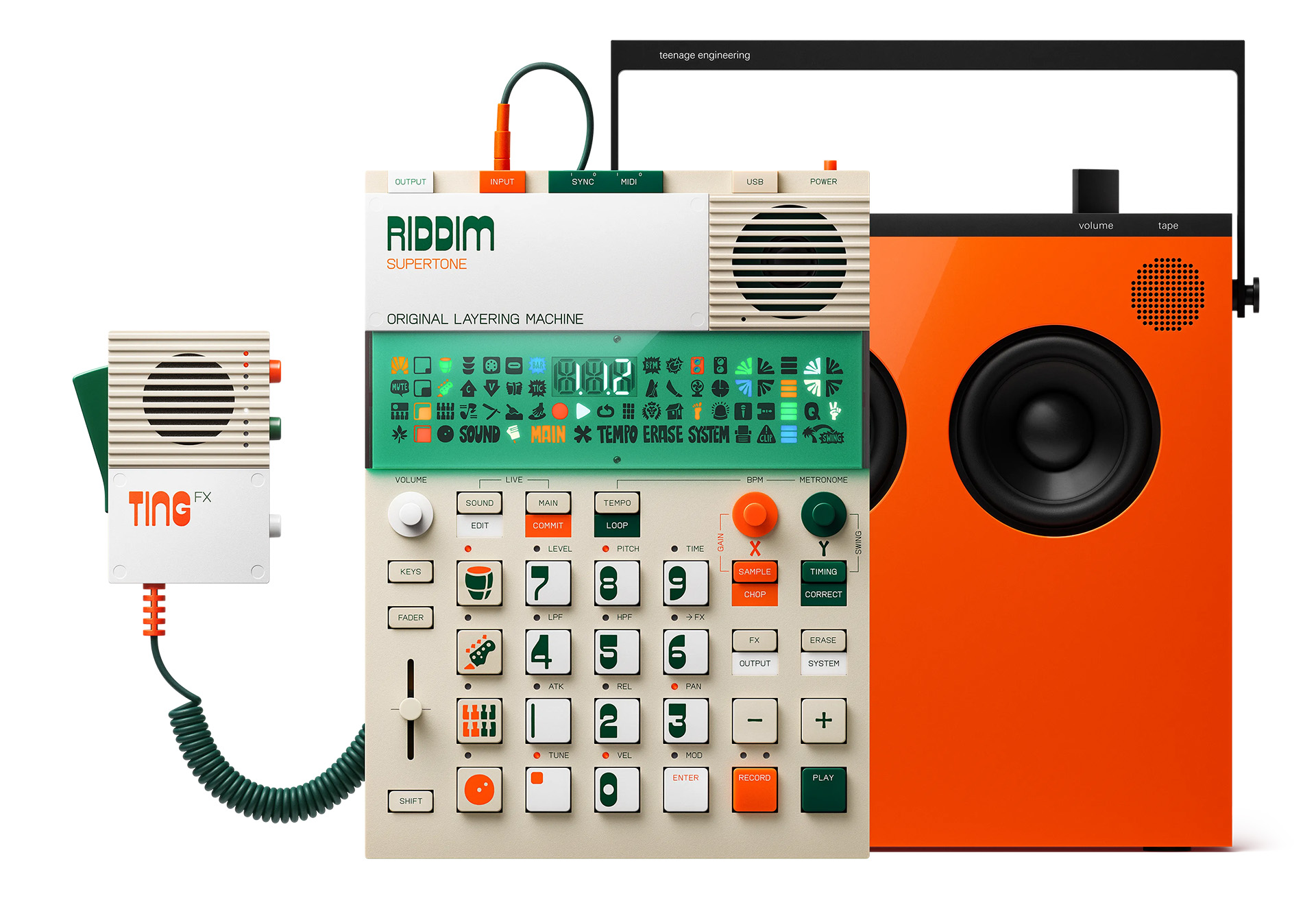
The same applies to the electronic products of Teenage Engineering. By stripping away elaborate finishes and openly revealing exposed screws, raw switches, and circuit boards, they create an aesthetic closer to laboratory equipment. This is not the result of incompleteness, but another form of beauty that confidently declares that every element exists exactly where it is for a functional reason. This can be seen as the most contemporary and radical revival of the modernist declaration from the early 20th century: “Form follows function.” When engineering is sufficiently well designed, an outer shell that conceals it becomes unnecessary excess. Today, the best design no longer begins by asking what to add, but by asking what to remove in order to reveal the inherent beauty of engineering within.
The message this aesthetic of engineering delivers to designers is clear: without understanding the inside, one cannot design the outside. Designing by stripping away the shell is not merely a change in appearance. When internal structure itself becomes the exterior, designers must spend less time refining surfaces in 3D tools and more time working alongside engineers to consider the placement of components. The position of the battery, the thermal structure of the motor, and the patterns and flow of the PCB, these engineering constraints and choices directly determine the external form. A transparent case cannot exist if the inside is not convincing. Ultimately, designers who cannot read engineering logic or aesthetically design even the unseen areas will lose their footing, handing over even the role of stylist to AI.
Architect Adolf Loos once declared, “Ornament is a crime.” In the industrial design landscape of 2025, this statement carries even greater weight. Acts of obscuring the essence of technology with flashy renderings and unnecessary decoration now feel like relics of a bygone era. Rather than focusing on surface embellishment, designers who cultivate an engineering mindset, one that assigns function and order even to the placement of a single screw or wire, will be the ones able to remain competitive and survive amid rapid industrial change, including the rise of AI.





















#14057, 905 49, Beolmal-ro 102beon-gil,
Dongan-gu, Anyang-si, Gyeonggi-do, Korea
Business Registration Number: 454-86-01044
Online Sales License No.: 2021-Anyang Dongan-1081
Copyright © DESIGNSORI Co., Ltd.