
One of the most notable changes in Japanese design in 2026 is the renewed importance of materials. Japanese design has long been recognized for restrained forms, high levels of refinement, and a close relationship with nature. More recently, this approach has moved one step further. Designers are paying greater attention not only to what form should be created, but also to what it should be made from and how long the material can remain useful. The Japanese award winning projects featured in the 2026–2027 Asia Design Trend Report clearly reflect this shift.
The ten most frequently used words in the prompts of Japanese award winning projects are space (119), room (94), large (92), wall (88), area (85), wooden (81), modern (76), side (64), interior (63), and white (62). Among these, wooden is particularly significant. In the Korean and Chinese datasets, words such as white, text, room, and space appear near the top, mainly describing spatial and visual characteristics. In Japan, however, wooden ranks sixth and appears more frequently than modern. This suggests that wood is not being used simply as decoration or as a way to create atmosphere. It is increasingly treated as an element that defines the character of a space or product. In other words, Japanese design is showing a tendency to explain what something is made of before explaining how contemporary it looks.
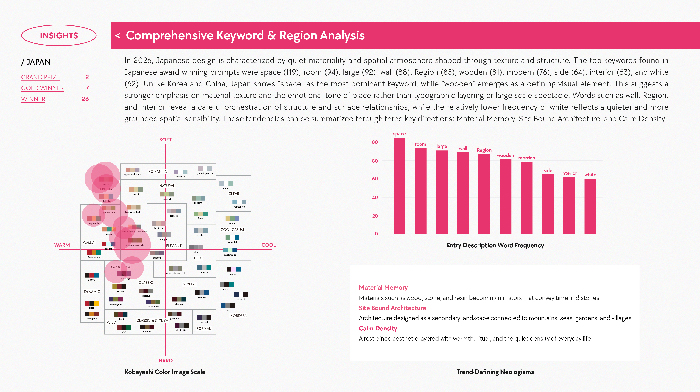
The report summarizes this direction through three keywords: Material Memory, Site Bound Architecture, and Calm Density. Although each addresses a different field, they share a common principle. Rather than focusing primarily on creating new forms, Japanese design is increasingly concerned with how existing materials, places, and ways of living can be adapted to contemporary life.
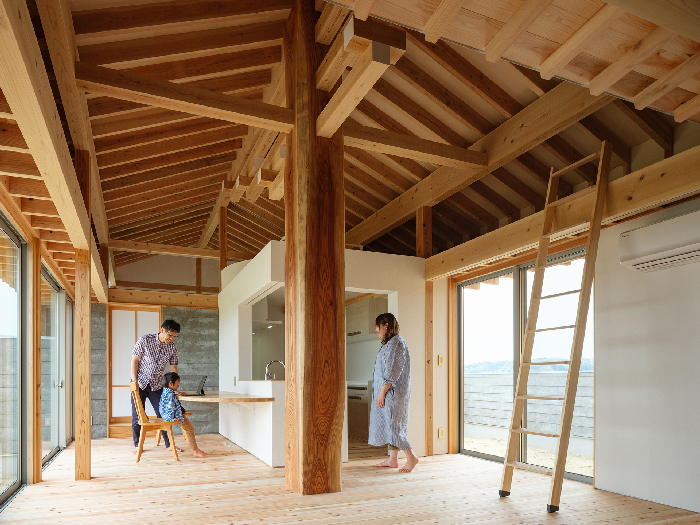
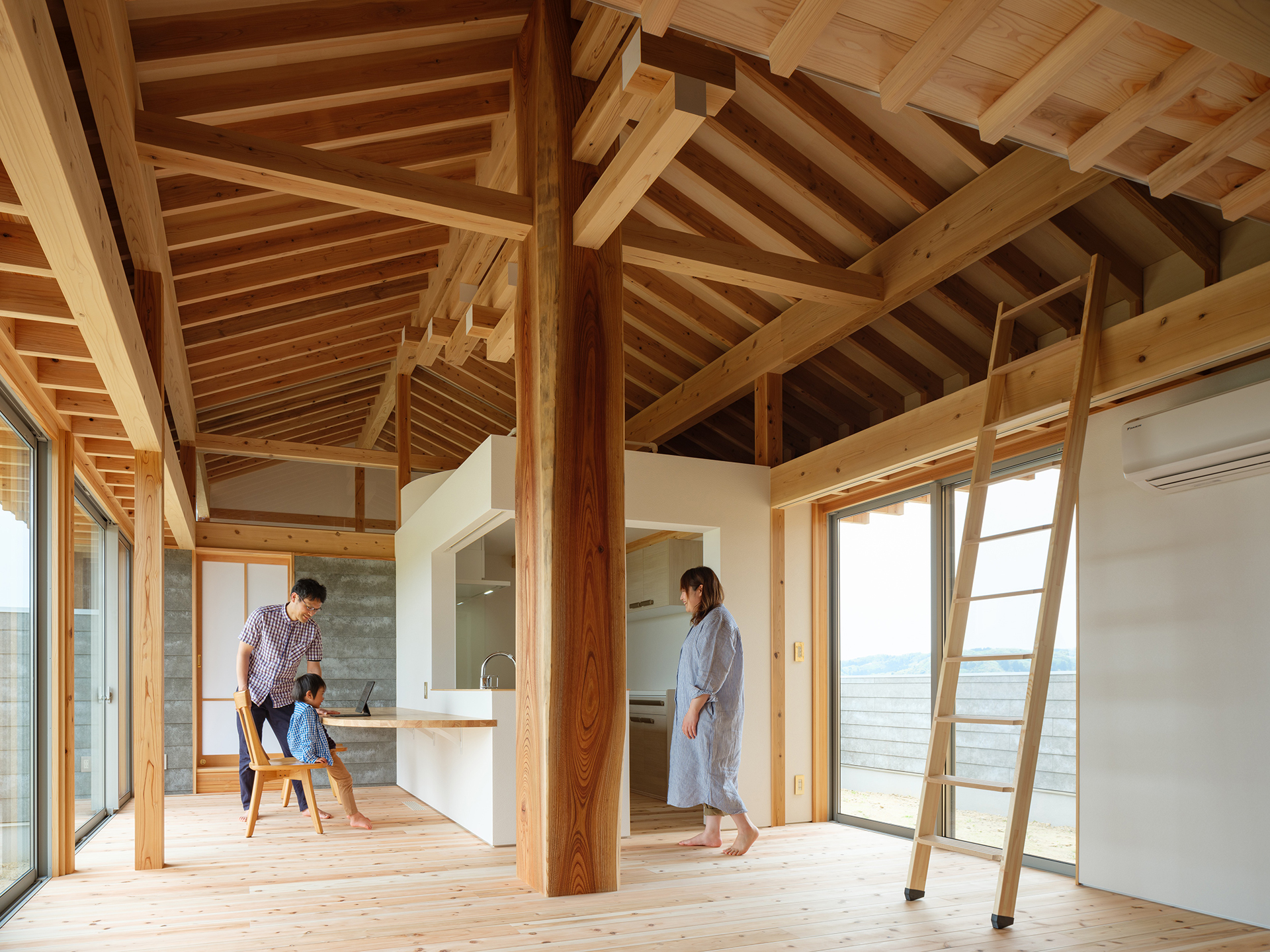
< Keyaki Monogatari, ASIA DESIGN PRIZE 2026 GRAND PRIZE >
The first trend, Material Memory, treats materials not simply as finishes but as elements that accumulate time and personal memory. Keyaki Monogatari clearly demonstrates this approach. A zelkova tree that once stood in the client’s family home garden was reused as a structural column in the new house, allowing an existing material to become part of a new living environment. The important point is not simply that an old tree was reused. What matters is that its previous meaning was preserved while it was given a new function. In recent Japanese design, natural materials such as wood and stone are increasingly used not only to create texture, but also to connect the history of a place with the experience of its users.
This approach is also changing how design quality is evaluated. A product or space is no longer judged only by how new or pristine it looks when first completed. Designers are also considering whether it can continue to be used naturally as time passes. Changes in the color of wood or traces of repeated use can become part of the product’s life rather than signs of deterioration. This is one reason material selection has become so important in Japanese design. The way a material changes over time is increasingly treated as part of the design itself.
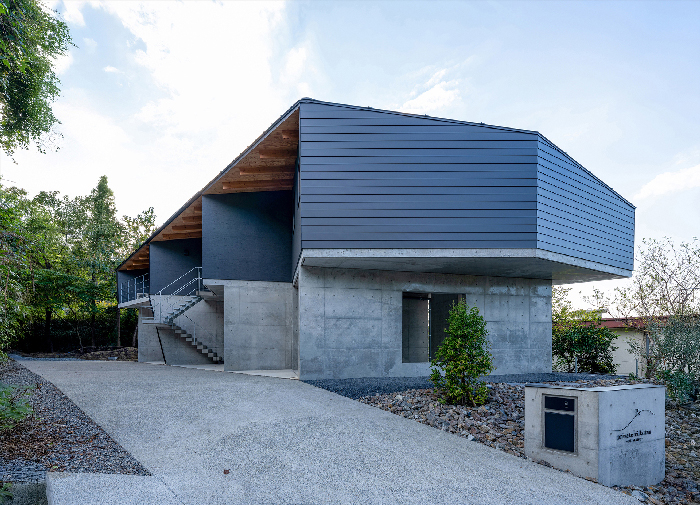
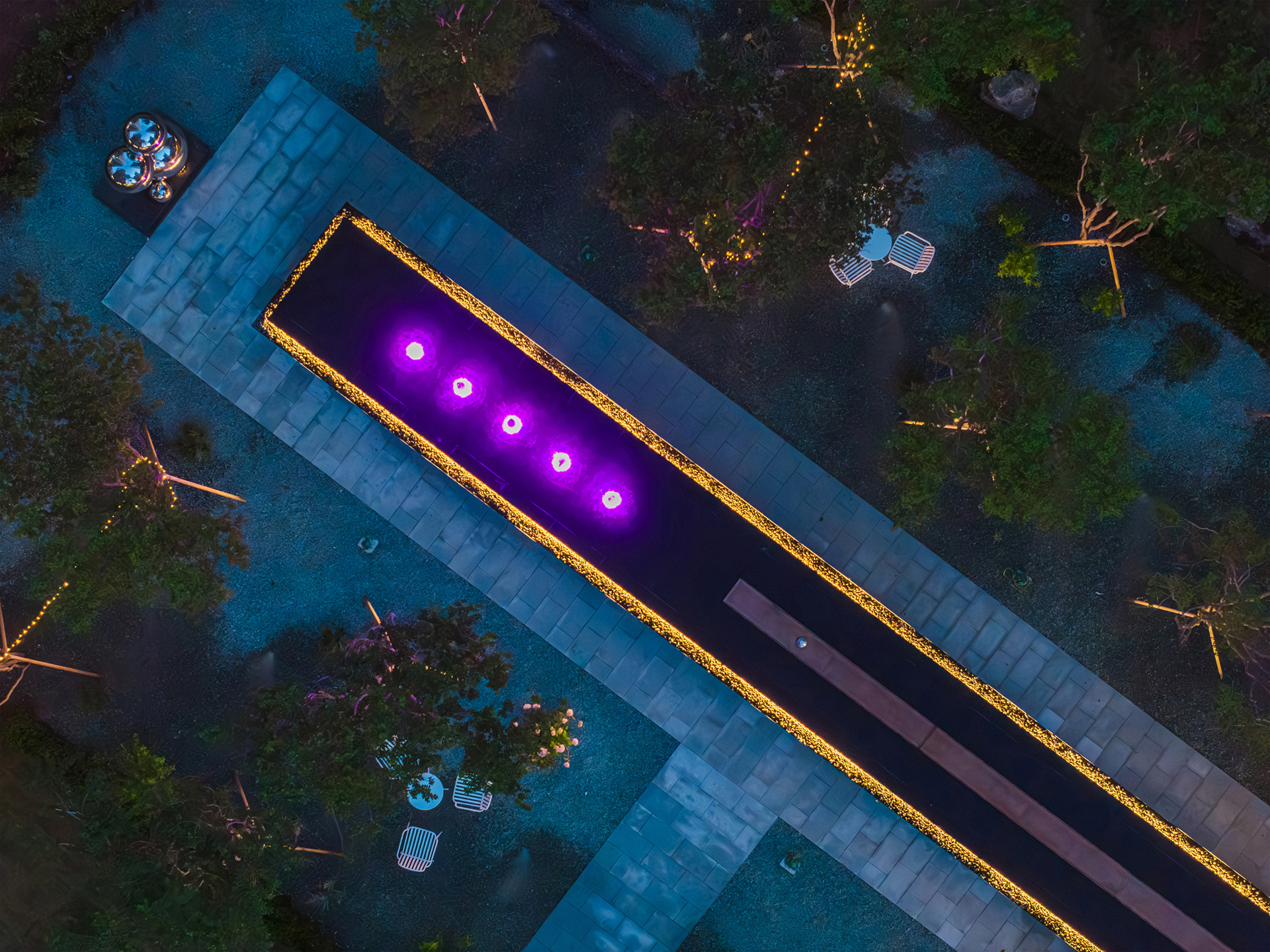
< private villa ten KUMANO, ASIA DESIGN PRIZE 2026 GRAND PRIZE >
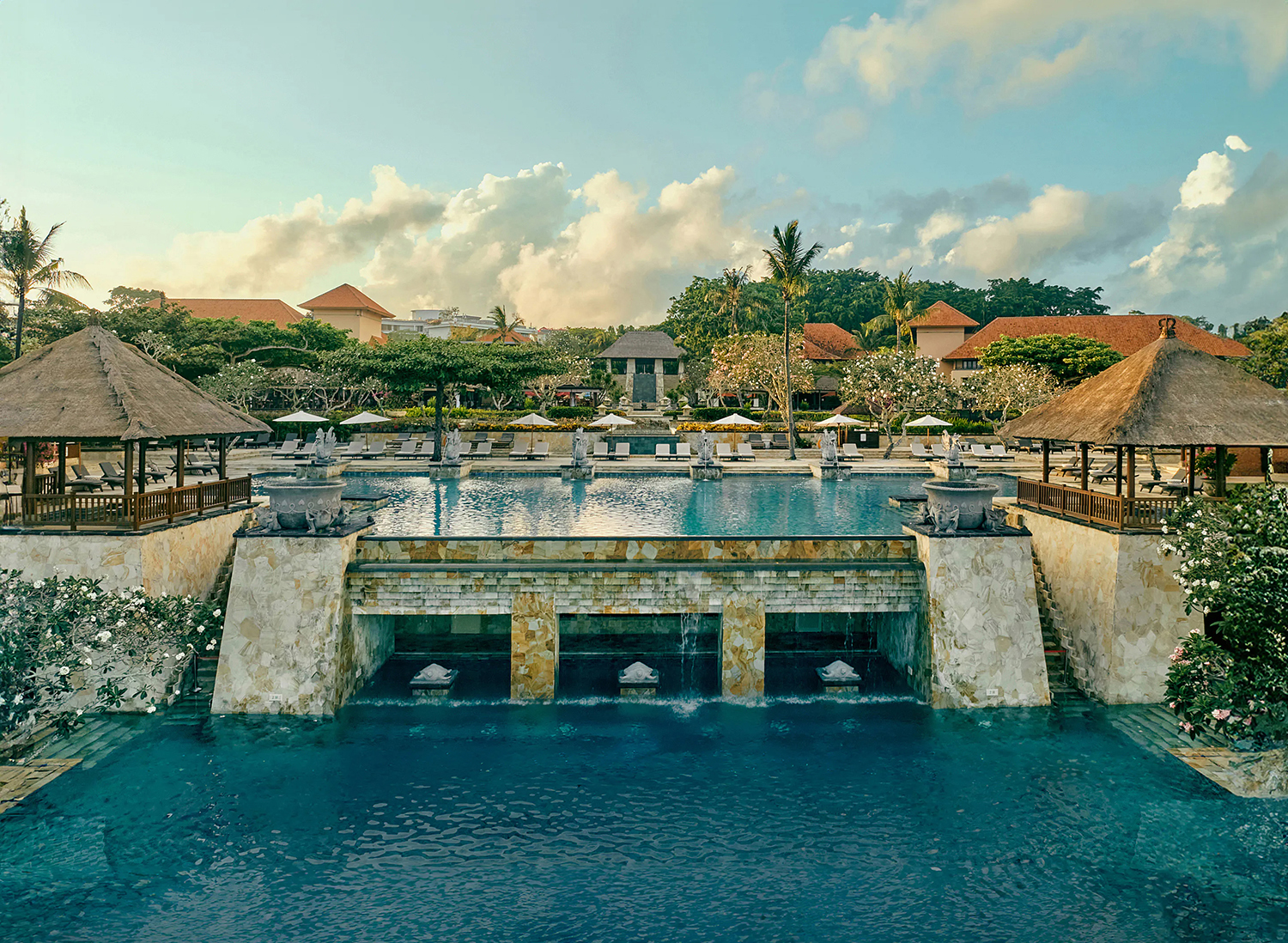
The second trend, Site Bound Architecture, treats topography and landscape as active design conditions rather than separating architecture from its surroundings. private villa ten KUMANO uses its location between mountain and sea to frame views of the horizon from key interior spaces. EWALU and FONTAINE BLEAU SENGOKUTEI also prioritize their relationship with the surrounding landscape rather than presenting the building as an isolated object. Orientation, window placement, the angle of incoming light, and exterior views are considered together so that the characteristics of the site become part of the spatial experience.
This does not simply mean creating environmentally friendly architecture. The key is to use existing conditions such as slope, wind, sunlight, and vegetation as active components of the design process. Rather than adding a new image to a location, the architecture helps users experience the advantages that are already present. This is also why materials and place are so often discussed together in contemporary Japanese architecture.
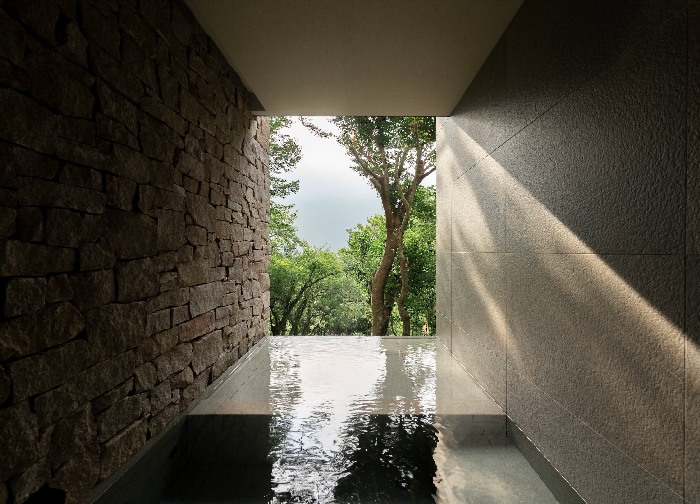
< FONTAINE BLEAU SENGOKUTEI, ASIA DESIGN PRIZE 2026 GOLD WINNER >
The third trend, Calm Density, adds more practical functions to the restrained spaces traditionally associated with Japanese design. If earlier Japanese minimalism focused on reducing objects and leaving space empty, recent projects are increasingly designed to support necessary daily activities more effectively. A small counter for tea, a family kitchen, a wood burning stove, a bathroom, or a resting area can all be carefully integrated into the space. The aim is not emptiness itself, but rather to retain what is useful and remove what is unnecessary.
Taken together, these three trends make the direction of Japanese design in 2026 much clearer. Material Memory extends the value and lifespan of materials. Site Bound Architecture strengthens the relationship between architecture and place. Calm Density incorporates repeated patterns of everyday use into spatial design. What they share is an interest in how existing resources can be used for longer and in more appropriate ways, rather than simply emphasizing novelty.
The first reason Japanese design is returning to materials is a growing market interest in extending the lifespan of products and spaces. Rapid consumption and replacement still shape many markets, but interest in products and spaces that can be used for longer periods is also increasing. Materials play a major role in determining that lifespan. A material that quickly appears worn and one that develops character through use can create very different long term values. Japanese design increasingly treats this difference as an important design factor.
The second reason is that information about materials is becoming part of design value itself. Even within the same type of wood, quality and appropriate use can differ depending on where it was sourced, how it was dried, and how it was processed. Consumers are beginning to look beyond appearance and consider material origin, production methods, and maintenance requirements. Materials are therefore moving from being simple production inputs to becoming information that helps distinguish one brand or product from another.
The third reason is the social need to reuse existing buildings and resources. As Japan experiences population decline and rapid aging, the question of how to use existing homes and regional assets has become as important as creating new spaces. Renovating older houses, reusing existing materials, and adding new functions while preserving the surrounding environment are becoming increasingly important design tasks. The renewed focus on materials is therefore connected not only to aesthetic preference, but also to broader social change.
The meaning of sustainability is also changing. Simply using an environmentally friendly material is no longer enough to describe a design as sustainable. Designers must also consider how long a product can be used, whether it can be repaired, whether existing materials can be reused, and whether its value remains over time. Japan’s return to materials can be understood as an effort to incorporate these conditions from the earliest stages of product and spatial design.
This shift is also changing the role of the designer. In the past, the ability to propose new forms effectively was often treated as a central design skill. Today, designers are increasingly expected to understand the characteristics of materials and anticipate how they will change over time. In spatial design, this means looking beyond the building itself to consider the surrounding environment, existing resources, and the user’s way of life. The point at which a design is considered complete is therefore expanding from the moment of launch or opening to the entire period in which it is actually used.
This tendency can also be seen in small everyday objects. In bowls, teapots, trays, and other frequently used items, designers are placing less emphasis on continuously adding new functions and more emphasis on tactility, maintenance, and the way materials change through repeated use. As time passes, traces of use naturally appear. Rather than reducing the value of the product, these traces can become part of the user’s accumulated experience. This shows that Japanese design increasingly sees material not simply as a visual element, but as a factor that shapes the entire lifespan of a product.
To summarize, the return to materials in Japanese design in 2026 does not mean repeating the design methods of the past. Material Memory extends the value and lifespan of existing materials. Site Bound Architecture uses the conditions of a place as part of the architecture. Calm Density retains necessary functions while improving everyday convenience. Together, these three trends point toward a design approach that makes better use of existing resources and environments rather than continually adding something new. Japanese design is returning to materials because materials determine far more than appearance. They affect lifespan, the relationship between space and place, maintenance, and sustainability. The central question is shifting from “What can we create next?” to “What can we make last longer?” In 2026, that question is once again becoming an important part of Japanese design.













#14057, 905 49, Beolmal-ro 102beon-gil,
Dongan-gu, Anyang-si, Gyeonggi-do, Korea
Business Registration Number: 454-86-01044
Online Sales License No.: 2021-Anyang Dongan-1081
Copyright © DESIGNSORI Co., Ltd.