
The screen is bright. The food photographs look appetizing, and the buttons are neatly arranged. Yet the person standing in front of the self-service ordering kiosk hesitates to reach out. As the line grows longer behind them, the pressure begins to mount. If they eventually give up and walk away without ordering, can we really call that kiosk well designed? Technology that saves one person a few seconds can become a barrier that prevents another from having a meal. How beautiful is it? How convenient is it? There is one more question we need to ask. Who is this design for?
Designers know how their creations work. They know which button leads to the next screen and how to go back after making a wrong selection. But someone encountering the interface for the first time must read small text, interpret unfamiliar terms, and constantly check whether they are doing things correctly. Many difficulties begin with the assumption that what feels obvious to the creator will be equally obvious to the user. Good design begins by setting aside that familiarity and seeing the world from someone else's perspective. A short distance on a drawing may be a long journey for someone who has nowhere to rest along the way. Instructions simplified for the sake of clarity may become incomprehensible symbols to another person.
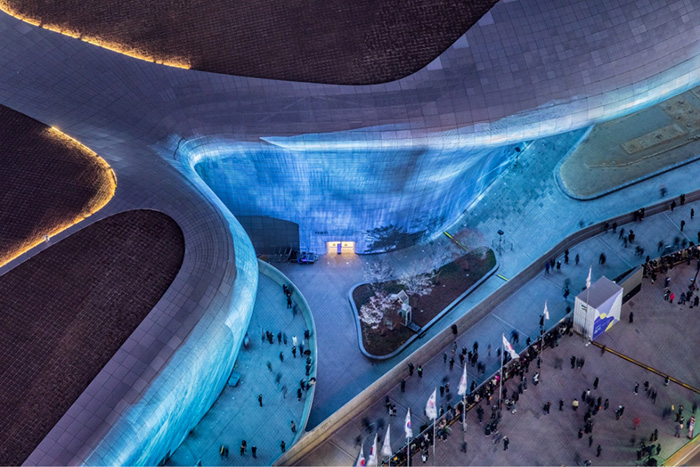
At DDP, I see both architecture and the people who experience it. Its flowing curves capture the eye, but it is the human experience that brings the space to life. A child asking questions in front of an artwork, a young designer presenting an idea for the first time, a visitor stopping to admire an unfamiliar form of beauty. These moments of discovery accumulate to create the value of a place. We must consider not only how many people visit, but also what they take away from the experience. Finding the entrance, navigating the space, and resting comfortably are all part of that experience. The beauty of a space should be evaluated alongside the quality of the experience it provides.

A human-centered approach to design can also be found in objects from centuries past. The Angbuilgu, a traditional Korean sundial, is beautiful in its form. Its concave surface, as though embracing the sky, the delicate lines crossing its face, and the shadows that move with the sunlight create a harmony of remarkable restraint. Its function of telling time becomes a beautiful form in itself. Yet within that beauty lies a thoughtful consideration for ordinary people, including those who could not read, who could still understand time through visual symbols. Beauty, functionality, and inclusiveness are brought together in a single object. Sunlight falls equally on everyone. But making that light understandable to everyone is the responsibility of design.
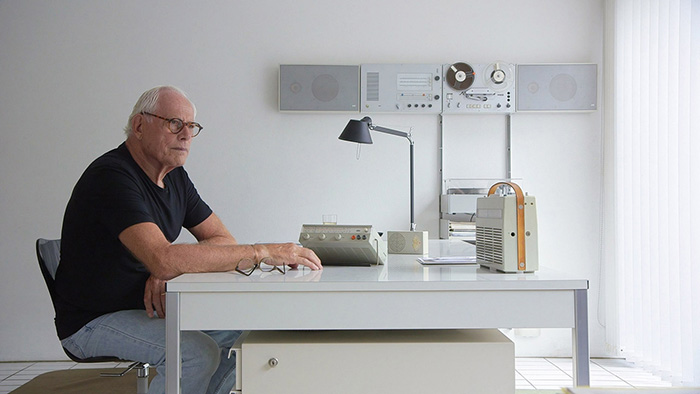
Dieter Rams once said, “Good design makes a product understandable.” Only when people understand something can they use it, and only when they can use it does technology become part of their lives. I came to understand this firsthand while working on safety design in industrial environments. Written safety instructions alone were often insufficient to communicate effectively with workers who spoke different languages. I used illustrations and colors to convey information and designed a system in which a smiling face would appear when a valve was fully closed. This allowed workers to confirm that the task had been completed safely without lengthy explanations. A simple facial expression can improve understanding and guide behavior. Putting up an instruction sign does not mean communication is complete. Communication succeeds only when the person standing before it understands the message and can take the necessary action.
I believe the value of design begins with beauty, extends to making everyday life more convenient, and ultimately deepens into the protection of human dignity. Visually pleasing forms, intuitive structures, and a genuine consideration for people must be designed together. This is why a self-service ordering kiosk should allow users to easily go back after making a mistake and receive assistance when needed. Above all, people should never have to feel ashamed of their difficulties. If using a service requires them to repeatedly explain their struggles, that process itself becomes a burden. People should be able to understand and make choices independently whenever possible, while also feeling comfortable asking for help when necessary. Design that accommodates different abilities, paces, and experiences is design that protects human dignity.
As AI becomes increasingly integrated into everyday life, this responsibility grows even greater. Technology can generate answers rapidly, but it is up to us to decide whose problems should be addressed first. If we design only for the average user, the lives of those outside that average can easily be overlooked. Differences in age, language, physical ability, and experience must become the starting point of the design process. We must also consider whether people can choose an alternative when they encounter difficulties in an automated process, and whether they can understand and correct an incorrect result. The value of innovation should be measured not only by its speed but also by how widely its benefits reach.
This responsibility cannot be left solely to the consideration of individual designers. Readable font sizes, understandable instructions, and accessible support channels all depend on decisions made during planning, budgeting, and operations. Many challenges cannot be resolved through the authority granted to those responsible for refining an interface alone. Design must therefore be involved from the earliest stages of defining problems and determining the structure of services. For a human-centered philosophy to function in practice, organizations and institutions must support the decisions that bring it to life.
This is also why I have consistently advocated for the establishment of a National Design Committee under the President. Citizens do not experience their daily lives according to administrative divisions. Taking public transportation, visiting a hospital, and applying for public services are all interconnected experiences within a single life. We need a system that connects capabilities currently dispersed across industry, culture, urban development, and public services, while identifying the inconveniences and gaps that exist between them. The success of such a system should ultimately be measured by how effectively it reduces the difficulties people encounter in their everyday lives.
I return to the image of the person standing in front of the self-service ordering kiosk. With a screen that is easy to read, a process that allows mistakes to be corrected, and a helping hand available when needed, the experience could be entirely different. That person would complete their order and take a seat. The simple act of independently choosing a meal, something that may seem ordinary to most people, can become an important source of confidence for someone else.
Who is design for? The answer cannot be found only in those who use our creations with the greatest ease. We must also listen to the experiences of those who hesitate, those who lose their way, and those who eventually give up trying. Just as the Angbuilgu made time understandable to people through its carefully considered form, design today must embrace the possibilities of more people. The journey beyond beauty toward human dignity begins by recognizing the needs of the person we might otherwise overlook.















#14057, 905 49, Beolmal-ro 102beon-gil,
Dongan-gu, Anyang-si, Gyeonggi-do, Korea
Business Registration Number: 454-86-01044
Online Sales License No.: 2021-Anyang Dongan-1081
Copyright © DESIGNSORI Co., Ltd.