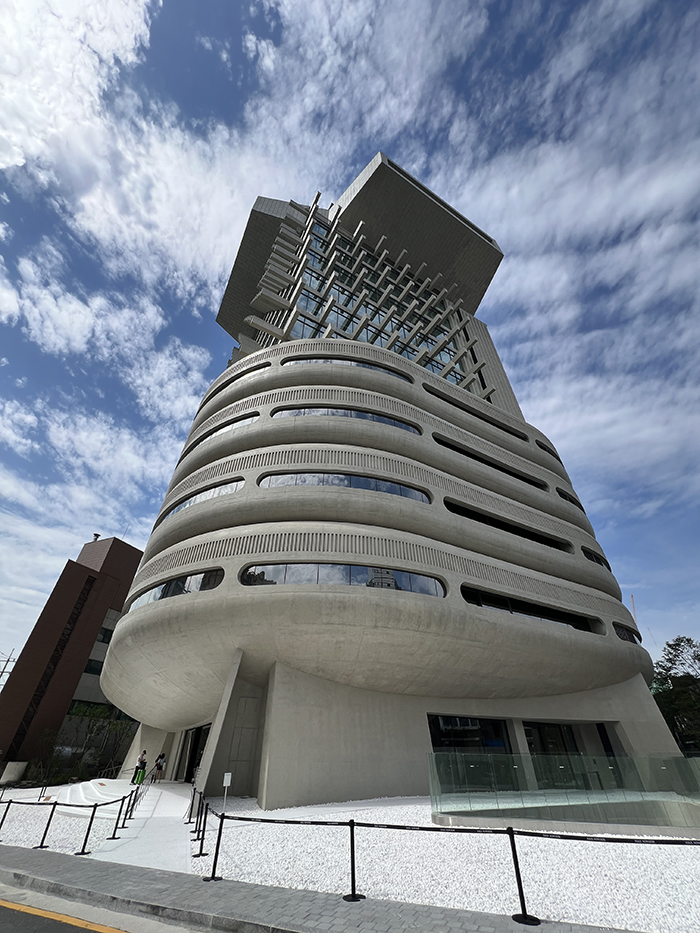
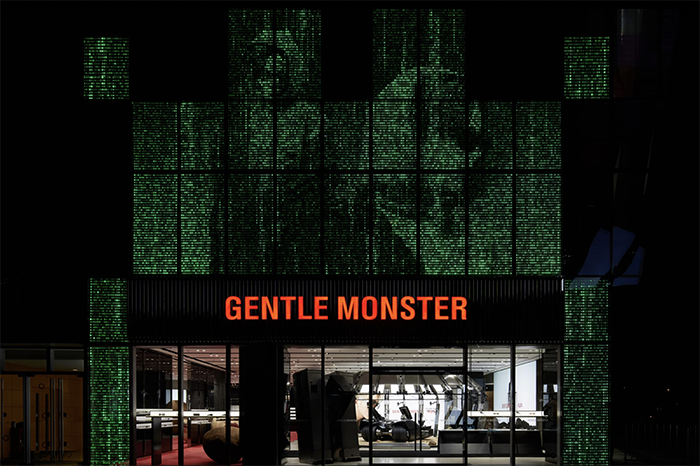
In the heart of Seoul’s Seongsu district, a building that looks as if it stepped out of a science-fiction film has appeared. This is House Nowhere Seoul, the new headquarters and multi-brand cultural space of IICOMBINED, the company behind Gentle Monster. More than a retail site, it is an architectural embodiment of IICOMBINED’s philosophy: to create “a place that exists nowhere else.” From the moment visitors enter, they encounter an artistic experience that goes beyond shopping. Inside, they will find the eyewear brand Gentle Monster, the scent-driven beauty label Tamburins, the dessert brand Nudake known for its sculptural pastries, the recently launched hat brand ATiiSSU, and the new kitchenware label Nuflaat.
In 2024, IICOMBINED recorded revenue of approximately KRW 789.1 billion and operating profit of about KRW 233.8 billion, approaching the 30 percent margin often called a “dream” figure in manufacturing. It is not only that margins are high; cost of goods sold is remarkably low. While global luxury group LVMH reports a COGS ratio around 32.4 percent, IICOMBINED’s 2024 figure was just 15.7 percent. Put simply, if LVMH earns three times cost, Gentle Monster is earning closer to six. The brand’s success is far from domestic only: roughly 40 percent of total sales last year came from overseas markets, and when spending by international visitors at Korean stores is included, the share rises to an estimated 60–70 percent. Despite a slowdown in China, its largest market, rapid growth in Japan and the United States propelled overall results.
Recently, Google invested about KRW 145 billion in IICOMBINED, a strong signal of confidence in the company’s design and branding capability as Google revisits smart-glasses initiatives. The plan to develop new wearable products at the intersection of technology and fashion underscores IICOMBINED’s expansion potential. The beauty brand Tamburins, which adapts Gentle Monster’s playbook to fragrance and skincare, reached roughly KRW 160 billion in sales last year and is emerging as a powerful second growth engine. It is not unusual now to hear that some consumers did not realize these were Korean brands—yet their positioning rivals or exceeds global luxury houses. How did this begin?
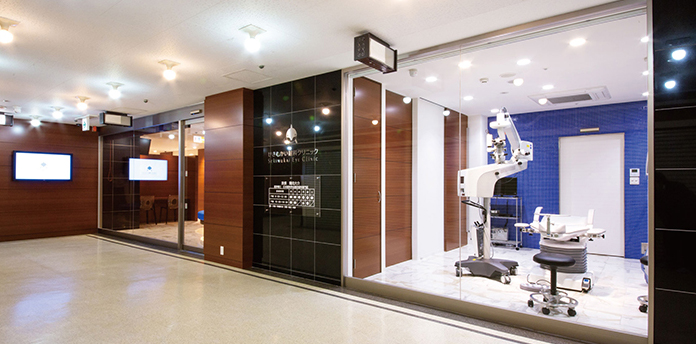
Gentle Monster’s origin was unconventional. Founder Kim Han-kook left a large financial firm to join an English-education company. When an internal competition for new businesses was announced, he proposed an eyewear venture. Kim argued that glasses—then viewed mainly as medical devices for vision correction—could be redefined as fashion items. The CEO accepted the proposal. With KRW 50 million in seed capital, IICOMBINED was born. As the company grew through multiple investment rounds, former education-company CEO Oh Jaeuk and related parties remained the largest shareholders, with Kim as the second largest. Kim’s persistence in launching and leading the business is striking, as is Oh’s early conviction and backing.
Kim sums up his management philosophy as “surprise the world.” Even as a salaried employee, he did not fear taking a different path. In a rare YouTube interview, he recalls crossing Europe on KRW 1 million—at times resorting to begging—and says the journey taught him to push past limits and attempt the truly unusual. At work, he once read one hundred books in three months to outpace his peers. These experiences shaped a rule he lives by: find work that is exciting and joyful, then pursue it relentlessly.
Most eyewear businesses in Korea operate as suppliers dependent on nationwide optician networks. Kim defined his field not as the glasses business but the brand business, so Gentle Monster took a different path. The first experiment was a showroom in Nonhyeon in 2013. A full-scale boat was installed in the yard, its bow appearing to pierce the shop wall—a scene that instantly became a talking point. Next came the Quantum Project, which reset the showroom installation every twenty-five days, and bold conversions such as turning a closed public bathhouse into a store or recreating a comic-book parlor.
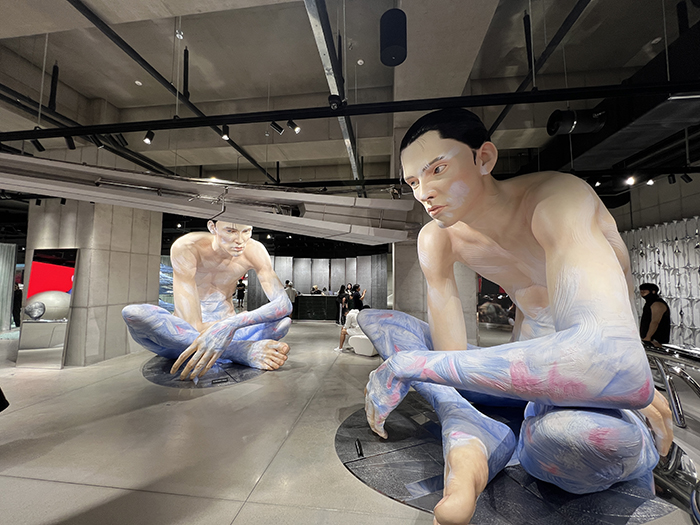
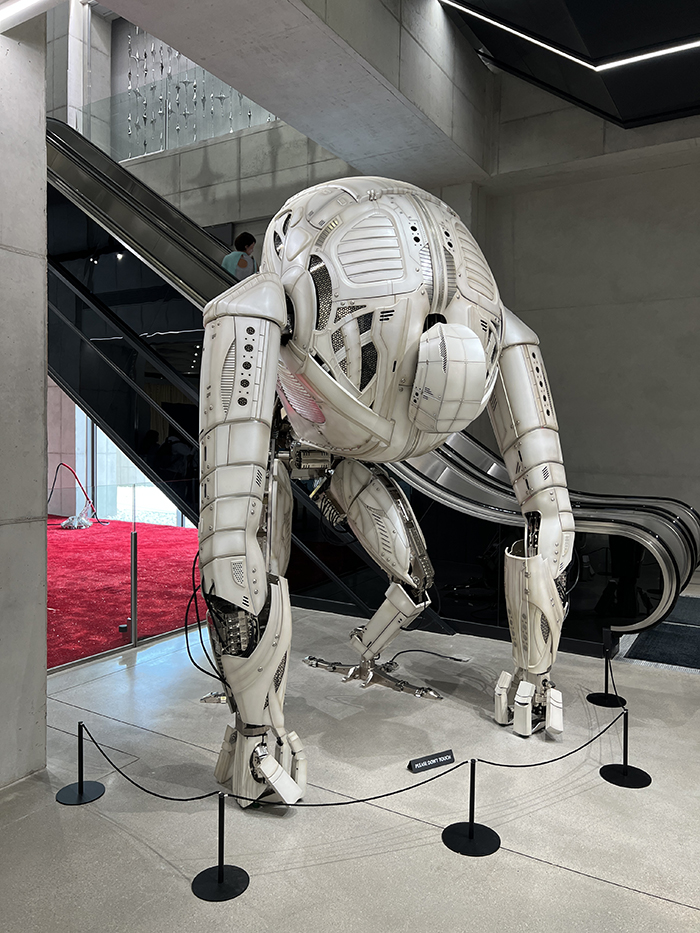
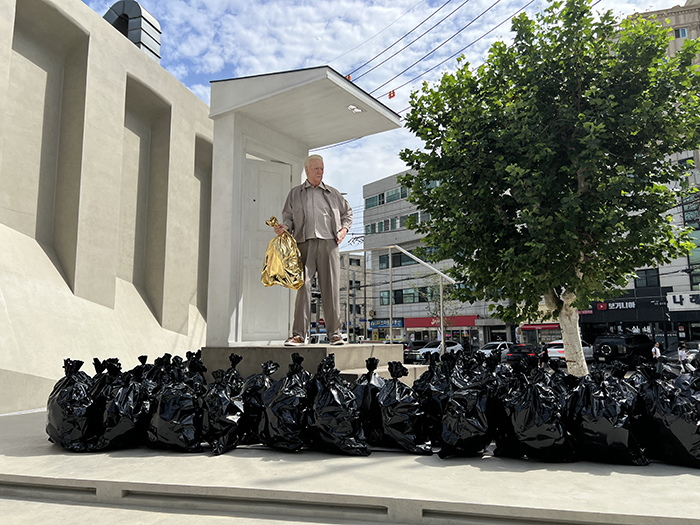
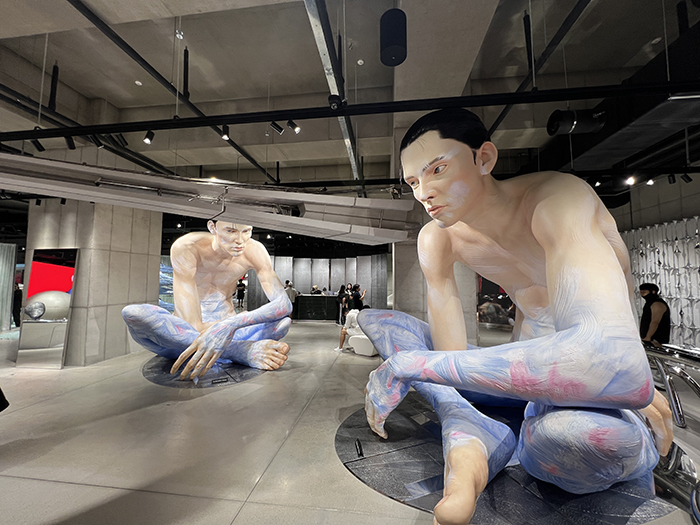
Opened in 2021, HAUS DOSAN brought the approach to full scale. Filled with monumental installation art, the space hardly reads as an eyewear store. Visitors feel as though they have entered an exhibition or museum, which naturally fuels social-media sharing and organic buzz. The risk-taking was not limited to displays. Kim recruited designers from fashion and jewelry to produce experimental products rarely seen in eyewear, and pursued collaborations with luxury houses such as Maison Margiela and Moncler to create genuine identity exchange rather than simple logo pairing.
This combination of form-breaking presentation and a clear identity has placed Gentle Monster at the cultural vanguard and turned it into a global name representing K-fashion. In a 2022 conversation with writer Song Gil-young, Kim’s outlook was unmistakable. Asked about the brand’s shorter history compared with heritage luxury labels, he replied:
“There is no use lamenting what we do not have. We are building our own history in our own way. Pile up great moments, and you become a great brand.”














#14057, 905 49, Beolmal-ro 102beon-gil,
Dongan-gu, Anyang-si, Gyeonggi-do, Korea
Business Registration Number: 454-86-01044
Online Sales License No.: 2021-Anyang Dongan-1081
Copyright © DESIGNSORI Co., Ltd.