
Every brand begins with a story. What may start as a personal expression or a casual encounter can evolve into a compelling narrative that defines a brand’s identity. In today’s market, consumers don’t just buy products—they buy stories. Features can be copied, but stories cannot. An authentic narrative helps people remember the brand and gives direction to its purpose. For small brands striving to find their place in a competitive market, creating a unique story is often the first step.
Daniel Wellington is a powerful example of this principle. The brand’s origin is remarkably simple: founder Philipp Tysander met a British gentleman while traveling. This man wore a vintage watch paired with a weathered NATO strap, a style that sparked Tysander’s inspiration for what he called “understated sophistication.” The man’s name? Daniel Wellington. That one impression became the philosophical foundation of the brand. With the motto “Don’t decorate time. Embody it,” Daniel Wellington avoided complicated features in favor of clean design and a timeless aesthetic.

< Image source: Daniel Wellington >
Interestingly, Daniel Wellington wasn’t backed by vast capital. The product was initially a low-cost, mass-produced watch. But rather than selling the product, the founder sold a story. He intuitively grasped the rules of the social media era. Stories grow through users. By enabling influencers and customers to expand the brand’s narrative, Daniel Wellington chose empathy over advertising. Instead of promoting features, the brand showcased the lifestyle of those who wore the watch. As a result, consumers didn’t feel they were just choosing a product. They felt they were choosing the kind of time they wanted to live. This story-driven strategy led to explosive growth. Within just a few years, Daniel Wellington had sold millions of watches worldwide and emerged as a global fashion brand. What resonated wasn’t the product’s utility but the attitude and philosophy it conveyed. For Daniel Wellington, storytelling was not just a method of explanation. It was the essence of the brand itself.
Aesop, the Australian skincare brand, similarly built its identity through narrative. Rather than focusing solely on product efficacy, Aesop centers its brand around the sensory experience. It communicates not through advertisements but through scent, texture, packaging, retail spaces, and language. Each Aesop store is uniquely designed to reflect the culture and context of its location, creating spatial narratives that enhance the experience. From the moment a customer enters, the journey is scripted with intention. Philosophical quotes replace sales slogans. Product descriptions read like poetic literature. In applying Aesop’s cream, the customer isn’t simply caring for their skin. They are entering a world of attitude and sensibility. Without loud marketing, Aesop has cultivated one of the most loyal brand communities worldwide. Its story lives in space, scent, and sentiment, proving that a brand’s narrative need not be told aloud to be deeply felt. Many brands speak stories. Few allow people to live them.
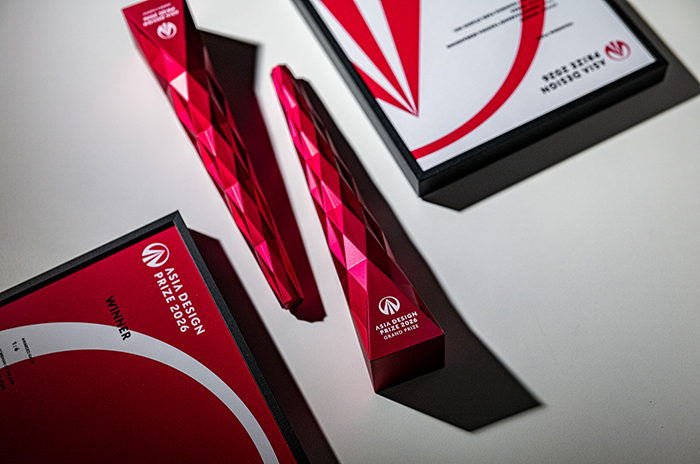
The power of storytelling is also evident in the journey of the Asia Design Prize (ADP). Over the past decade, ADP has operated around a singular principle: “Fair Reviews Only.” While other design awards often emphasize lavish ceremonies and scale, ADP defined itself with one simple phrase. That clarity built the foundation of its trust. Fairness was not just a procedural matter. It was a philosophy. From juror selection to evaluation methods and public result disclosures, fairness remained the absolute standard and became the brand’s identity. This principle extended to ADP’s visual language, jury guidelines, and even the tone of its ceremonies. As a result, ADP became a rare brand remembered not for “who won” but for “how fairly it was judged.” The brand’s commitment to a single story completed its trust.
A story is the skeleton of a brand and the language of its philosophy. Even when products disappear, stories endure. Just as Daniel Wellington and ADP demonstrate, it is not capital but a brand’s narrative attitude that defines its value. Only those with small yet resolute stories will be remembered across generations. This is how stories build identity.



















#14057, 905 49, Beolmal-ro 102beon-gil,
Dongan-gu, Anyang-si, Gyeonggi-do, Korea
Business Registration Number: 454-86-01044
Online Sales License No.: 2021-Anyang Dongan-1081
Copyright © DESIGNSORI Co., Ltd.