The growth of a brand requires two sources of energy. One is creativity, and the other is systems. Many creators and small brands begin with a “good idea,” but the brands that actually survive and grow without exception are those that have a “good system.” A system is not meant to replace people, but to create a structure that allows people to immerse themselves in more meaningful and creative work. For small brands, automation and outsourcing are not survival mechanisms—they are essential strategies for expansion.

< Image source: airbnb >
The early story of Airbnb illustrates this principle most clearly. Today, Airbnb is a platform that has reshaped the global travel ecosystem, but in 2008 it was a tiny start-up run by just three people, with little funding, limited manpower, and almost no experience. Founders Brian Chesky and Joe Gebbia started with a simple idea because they could not afford rent, yet the platform initially struggled to gain any traction. The problem was surprisingly basic: the quality of the listing photos was too low. No matter how good a space was, if the photos were dark, no bookings were made. To solve this, the founders picked up their cameras and personally visited hosts to reshoot the photos.
This was far more than “hustling.” Every automated system in the early stage of a brand begins with this kind of human, manual work. Later, this experience became formalized and evolved into a system: hosts could upload their photos, the platform automatically analyzed the quality, and when needed, connected them with local photographers. What started as a hand-made process eventually became the blueprint for full automation.
This principle is especially important for small brands. Automation is not a technology that simply “saves time”—it is a mechanism for protecting the quality and consistency of the brand. For example, a design studio or content-driven brand needs a workflow where every step—briefing, production, review, and distribution—is automatically recorded, organized, and synced through a cloud-based environment. This structure enables creators to focus on the essential parts of their craft: strategy, judgment, and conceptual thinking.
Outsourcing operates on the same logic. Traditionally, outsourcing meant “assigning tasks one cannot do,” but today it has become a structural decision about where a creator’s time should be invested. Separating non-core tasks and devoting energy only to work that aligns with the brand’s direction and standards is the essence of management.
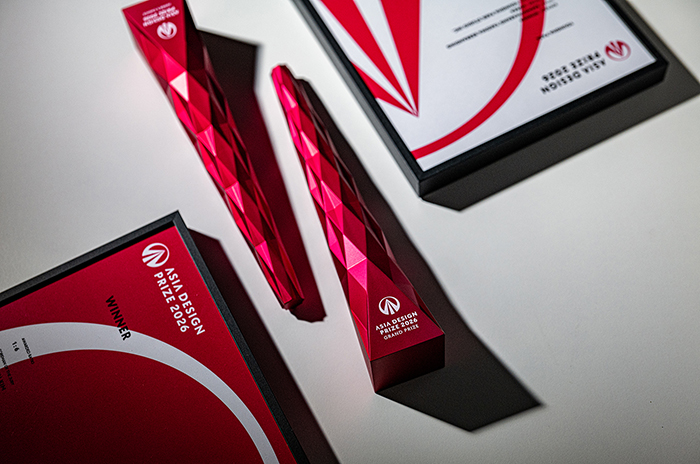
Asia Design Prize is a clear example of strategic system based outsourcing. ADP operates with the philosophy that a brand is the face and operations are the foundation that allows the brand to function. With this philosophy, ADP has built an operational system that is highly automated. Most importantly, the two critical elements of award operations, customer experience and quality control, are never outsourced. This ensures that the Secretariat directly identifies user pain points, collects data, and continuously improves the service design every year. This structure enables a small organization to respond to market needs faster than much larger institutions.
In contrast, specialized and complex design tasks such as branding, development of key visuals, and global communication design are entirely outsourced. Instead of endlessly stretching the abilities of the internal team, these tasks are entrusted to experts in each field. What matters most is the ability to distinguish what needs to be done internally and what should be delegated. This structure allows a small organization to operate with greater efficiency than a large one and is one of the main reasons ADP has grown into a global award in a short time.
Today, artificial intelligence is the central tool that accelerates both automation and outsourcing. Repetitive tasks can be handled automatically, and tools that are based on artificial intelligence can quickly support the process of connecting external resources. Drafting proposals, summarizing, translating, conducting research, assisting with design, and organizing documents can all be automated. Creators can focus on defining the brand’s philosophy and direction. Ultimately, automation for a solo brand is not a technical issue but a mindset. The moment you distinguish between what you must do and what the system should do, the brand acquires the structure needed for growth.
The early methods used by Airbnb and the operational model of Asia Design Prize reveal the same truth. Small brands do not grow through ideas. They grow through systems. Discovering problems through human intuition, solving them through hands on action, and transforming those steps into structured automation is the only realistic strategy for a small brand to sustain itself and expand. Automation is not a technology that replaces humans. It is a tool that protects human focus. When a system provides stability, creators can work longer, deeper, and closer to the essence of their craft. The foundation of every small brand is always the people. And the system that allows those people to remain immersed is the true meaning of branding.















#14057, 905 49, Beolmal-ro 102beon-gil,
Dongan-gu, Anyang-si, Gyeonggi-do, Korea
Business Registration Number: 454-86-01044
Online Sales License No.: 2021-Anyang Dongan-1081
Copyright © DESIGNSORI Co., Ltd.