
We are living in the most convenient era in history. But can we truly say it is the happiest one? People reach for their smartphones the moment they open their eyes in the morning and spend the entire day moving through life inside those screens. On the subway during the commute, at lunchtime, and even before falling asleep, our gaze is fixed on a small display. In the process, opportunities to meet people, to feel joy, and to experience the world through our senses are quietly disappearing. As technology advances, are we not, perhaps, living increasingly lonely lives?
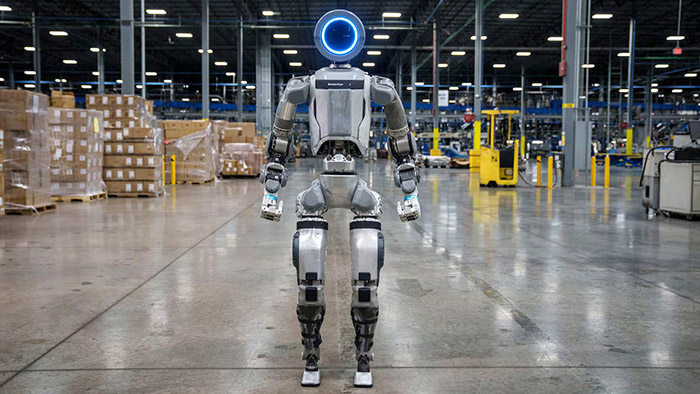
< Image source: Boston Dynamics Atlas >
Humanoid Robots and the Digital Revolution
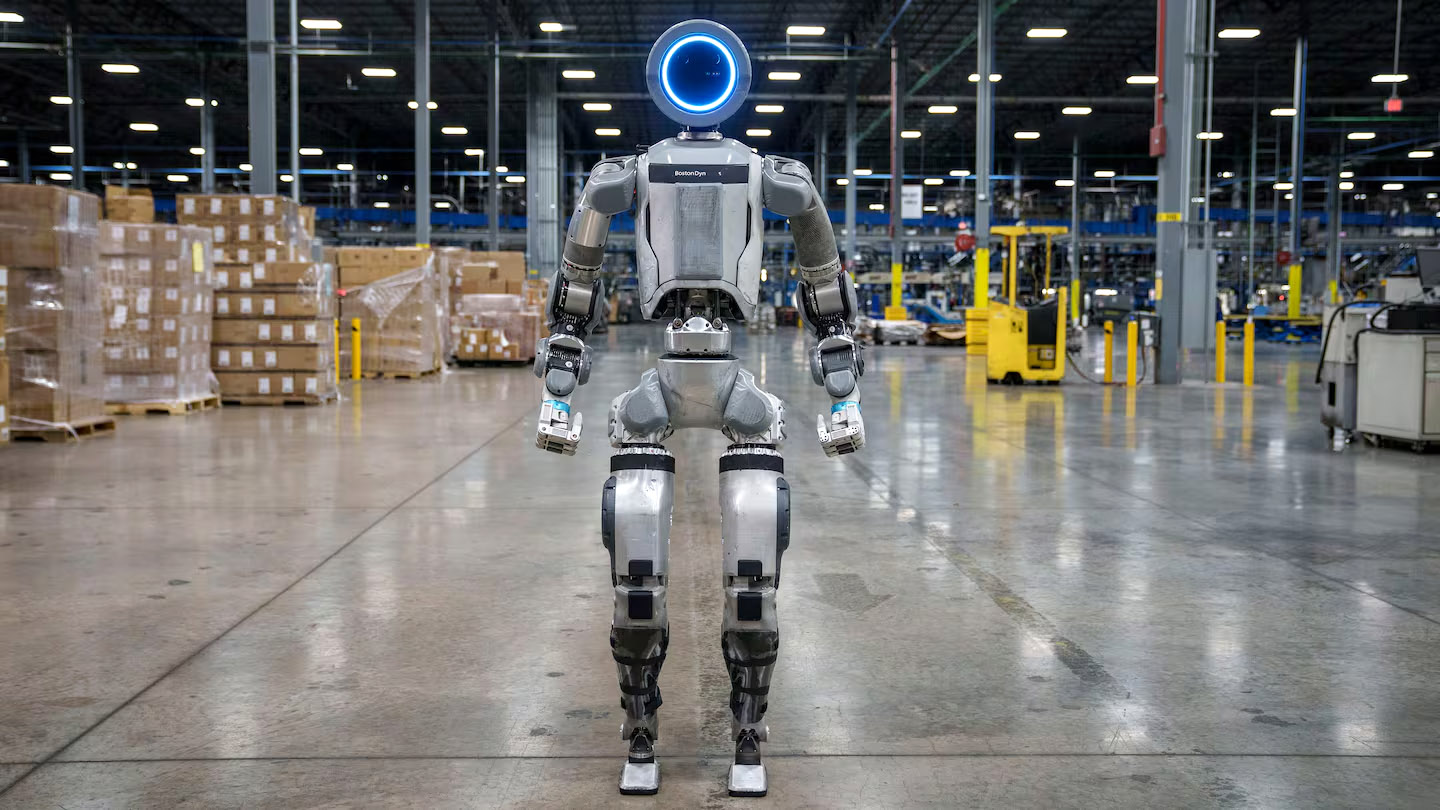
One of the highlights of CES 2026 in Las Vegas this January was Atlas, the humanoid robot developed by Boston Dynamics, a subsidiary of Hyundai Motor Group. The company plans to establish an annual production capacity of 30,000 robots by 2028 and deploy tens of thousands of units across its global factories. With 360-degree rotating joints, Atlas is capable of natural walking and fully autonomous movement. Technical validation was completed in October 2025 at Hyundai Motor Group Metaplant America, with plans for phased expansion. The arrival of Atlas is set to transform the manufacturing paradigm. Robots will take over repetitive tasks, hazardous processes, and precision assembly that are difficult for humans to perform. Once fully deployed, a significant reduction in manufacturing jobs is expected. By 2030, as its scope expands into parts assembly and other processes, scenes of humans and robots working side by side on factory floors will become commonplace.
Media has been completely reshaped, shifting from television, radio, newspapers, and magazines to smartphones, the internet, and social networks. The speed of this transformation is striking. It took 50 years for landline telephones to reach 50 percent of U.S. households, but smartphones achieved the same penetration in just five years. Radio took 30 years to reach 50 million listeners, while Facebook reached the same milestone in 12 months and Twitter, now X, in just nine months. What these numbers clearly show is that the pace of technological innovation is accelerating exponentially. From 50 years to five, from 30 years to nine months. How long will the next innovation take? Perhaps only weeks, or even days. The digital revolution is accelerating even as we read this. Living alongside humanoid robots in our homes is no longer a distant fantasy, but an approaching reality.
Poverty Amid Abundance
Does this mean humanity is becoming happier? Living in the age of big data, we experience the irony of feeling relative deprivation and isolation while constantly viewing each other’s lives through social media. Seeing a friend’s overseas travel photos, a colleague’s promotion announcement, or an acquaintance’s happy family picture inevitably leads us to compare them with our own lives. The development of social media amplifies loneliness, information overload increases fatigue, and genuine emotional resonance diminishes. Technology gives us efficiency and saves time, yet the amount of work expands and satisfaction disappears. Where once we handled ten tasks a day, we are now expected to handle fifty in the same amount of time. Technology has saved time, but that time is filled with even more demands. This is the paradox of data. Technology has brought material abundance, but are our lives truly happier? Instead, as we eat alone and sink into our smartphones alone, happiness seems to drift further away. The emergence of terms like eating alone, drinking alone, and watching movies alone is no coincidence. The trajectories of technological evolution and human happiness appear to move in opposite directions. As technology advances, we possess more, yet feel lonelier. So how can design address this situation?
Interactive Design That Awakens the Senses
The answer lies in designing interactive experiences that awaken human senses. The moment we touch something directly, we act and experience, realizing that when we move, the world responds. Rather than merely looking at a screen, we touch, press, and move, experiencing change firsthand. A good example is the mystery vending machines installed on the streets during the launch of Korea’s JTBC broadcasting network. With a simple action of pressing a button, passersby encountered unexpected gifts and moments of joy. Expecting a drink, they received a bouquet of flowers. Expecting a snack, they got a doll. People laughed, felt surprised and delighted, captured the moment in photos, and shared it with friends. A simple vending machine became a medium for delivering happiness.
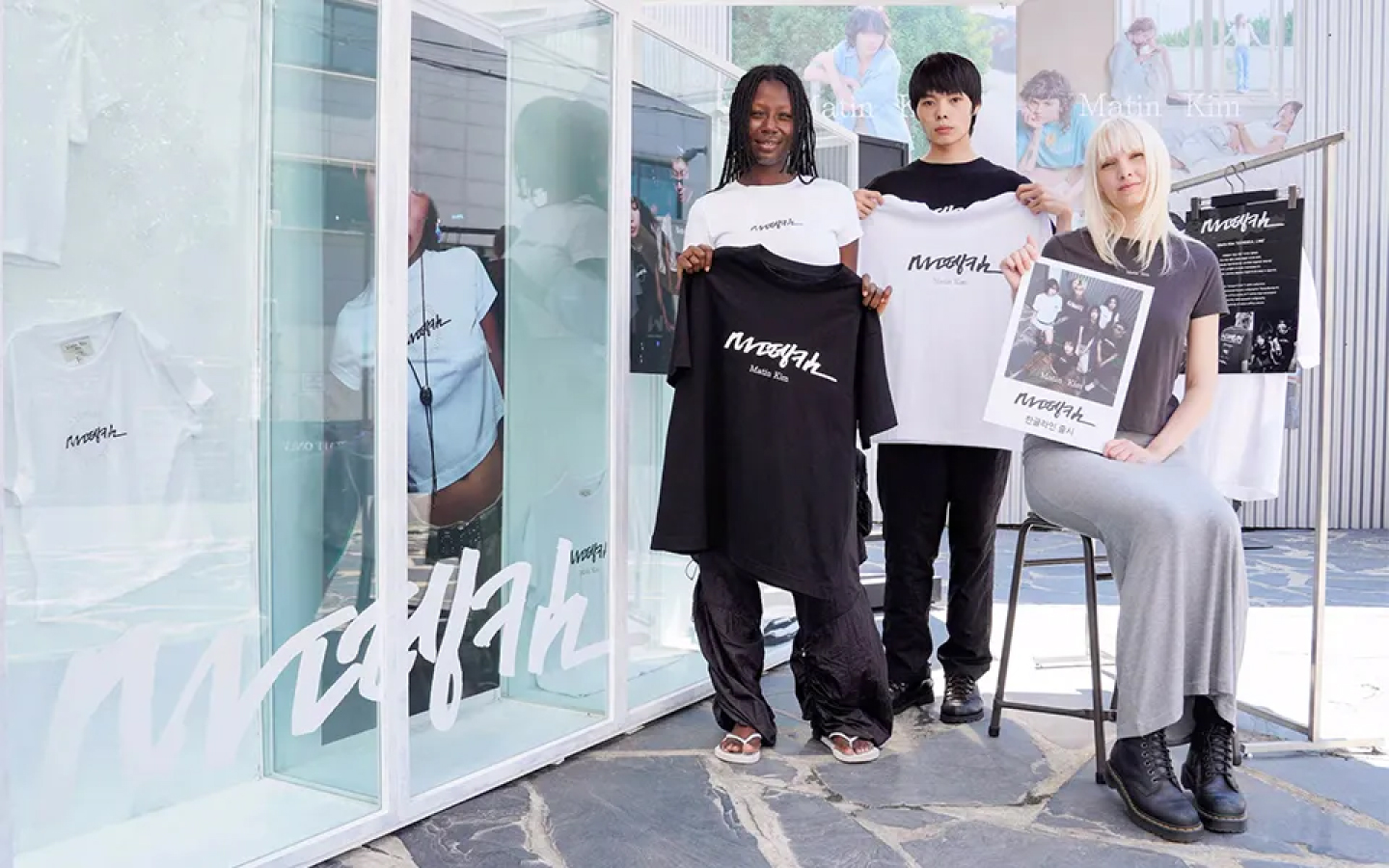
In the UK, Subway encouraged consumer participation through 3D billboards that allowed customers to select topping combinations via QR codes and see them visualized on screen. People who once hesitated over dozens of topping options enjoyed creating combinations on their smartphones and watching their custom sandwiches being prepared on a massive display. Ordering became play, and waiting turned into enjoyment. Japanese designers Noto and Fusai created T-shirts with interactive designs, such as real pens inserted into illustrated books or belts worn over drawn bags, with the work completed only through touch and use. Wearers and viewers laughed together, felt curious, and took photos. Fashion became a starting point for conversation.
Coca-Cola delivered warmth through a Valentine’s Day promotion where strangers met via video screens at bus stops. French mineral water brand Contrex achieved over 15 million YouTube views and rapid sales growth with a playful idea in which pedaling a bike triggered a laser light strip show. People began pedaling out of curiosity, soon finding themselves exercising and sweating. Naturally, they drank water and remembered the brand. BBC and Netflix’s Dracula advertisements revealed illuminated shadows at night, while Netflix Italy surprised commuters with characters bursting out of buses, leaving a strong impression. People were startled, laughed, and shared the experience with friends. Advertising was no longer something to watch, but something to experience.
Book covers that change color with the warmth of one’s hands turn the act of touching into the completion of design. Watching a cold book turn green from body heat evokes a sense of living warmth. Interactive art where letters flow across the body as people approach makes viewers part of the artwork itself. The German nonprofit Miserior’s credit card donation campaign transforms the simple act of swiping a card into a warm experience of helping someone. Donation becomes not a burden, but a natural act of participation. All these examples demonstrate the power of design that goes beyond observation into direct participation and response. Not a world inside a screen, but experiences we touch with our hands, feel with our bodies, and empathize with our hearts. These are the senses we have gradually lost.
Giving Technology a Human Temperature
Amid technological abundance, humanity faces poverty and loneliness. The cause is the loss of sensory experience, and the solution is interactive design that invites participation and response. Is your design having a conversation with its users? If that question is hard to answer, now may be the time to rethink design. Design must go beyond looking good to creating experiences that feel good. No matter how advanced a robot or how innovative a technology may be, without awakening human senses and delivering emotional resonance, it remains a cold machine. Design is the act of giving technology a human temperature. Adding a warm touch to cold screens, lively responses to expressionless machines, and two-way interaction to one-way information. That is the power of interactive design. Press a button and music plays. Touch a screen and images change. Wave your hand and receive a greeting. These small responses accumulate, making us feel connected to the world.
The future in which 30,000 robots are deployed in Hyundai factories by 2028 is approaching. Technology will continue to evolve. But whether it makes humans happier or lonelier will be determined by design. When robots take over our work, what will we do? Will we do more work, or spend more meaningful time? Answering that question is also the role of design. What we need is not faster technology, but warmer design. An experience that lets us smile one second longer matters more than a processor that is one second faster. A design that creates one more memory matters more than a gigabyte of extra storage. At this very moment, you are touching a smartphone screen, pressing buttons, and handling products. Is that experience merely a click, or does it awaken your senses? That difference is made by design. The more technology advances, the more we need interactive design.
Preserving warm humanity within cold technology, creating emotion within efficiency, and discovering happiness within convenience. That is the mission of designers in the 21st century. Technology is only a tool. What we choose to create with that tool is the designer’s responsibility. When cold technology is dressed in warm design, technology finally becomes truly human centered.
















#14057, 905 49, Beolmal-ro 102beon-gil,
Dongan-gu, Anyang-si, Gyeonggi-do, Korea
Business Registration Number: 454-86-01044
Online Sales License No.: 2021-Anyang Dongan-1081
Copyright © DESIGNSORI Co., Ltd.