
Every year around May, I visit London to attend the D and AD Festival. I go to the city to see countless campaigns, analyze award winning work, and read the direction of the industry. Advertising is the most radiant language there. We talk late into the night about what was well crafted, which strategies worked, and which messages felt more persuasive. Yet despite traveling back and forth to London so many times, I had never known this brand.
Jolene. It felt strangely ironic to discover, in a city I visit to study advertising, a brand that grew without it. We are taught to understand brands through campaigns. In our industry, brands are explained through strategy decks, proven through films, and validated through awards. Most people in our field believe that success is recorded through recognition. But a small bakery in Newington Green, North London, poses a different question. Can a brand exist without advertising? Jolene rarely advertises. There are no grand slogans, no lengthy manifestos defining who they are. And yet, people line up. Carrying a simple paper bag stamped with a handwritten logo feels like sharing a certain attitude. This phenomenon cannot be explained by taste alone.
Jolene designed a structure before it sold bread. That structure ultimately replaced advertising. Its origin was not product, but philosophy. Founders Jeremie Cometto Lingenheim and chef David Gingell were already experienced restaurateurs in London, but with this project they chose a different direction. They saw food not as a consumable commodity, but as a value that must take responsibility for how it is produced. After visiting regenerative farms in France, they changed the way they viewed wheat. They built a system in which grain grown without harming the soil is milled directly, supply chains remain tightly connected, and a loaf of bread becomes part of soil restoration rather than mere carbohydrate consumption.
In this place, buying bread becomes not consumption, but choice. And that choice becomes participation. Advertising attempts persuasion, but story builds structure. Structure, when repeated, becomes culture. Advertising creates awareness. Story creates identity. Awareness can be measured in numbers, but identity reveals itself through attitude. Yet we still place advertising at the center of branding. Advertising is fast, visible, and explainable. It can be summarized in reach, clicks, and revenue graphs. Story, by contrast, is slow, difficult to measure, and unwilling to promise immediate results. So we choose advertising. But Jolene asks something deeper. Is speed truly what allows a brand to endure? Being quickly known and being long remembered are entirely different matters. This philosophy is reflected even in its identity.
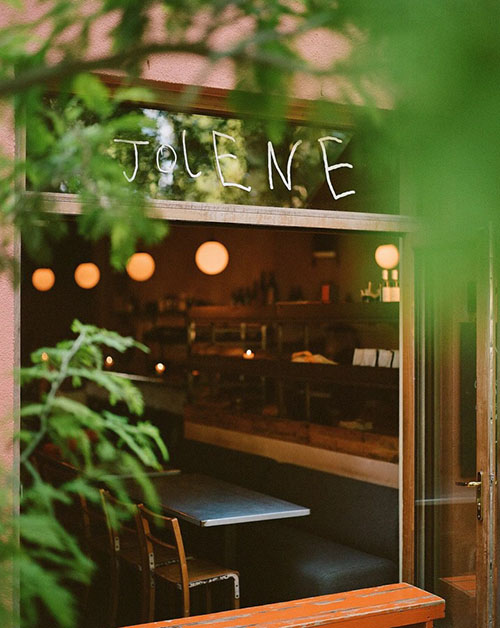
Jolene’s logo is written in the handwriting of a six year old child. It is unrefined, imperfect, and a mix of uppercase and lowercase letters. From a conventional branding perspective, it is a risky choice. Yet this naïve lettering aligns precisely with the brand’s philosophy. A child symbolizes the future. Unfinished handwriting symbolizes possibility. Choosing honest handwriting over a perfectly polished logo reveals what the brand truly believes. Advertising often seeks trust through perfection, but Jolene secures authenticity through imperfection. The logo quietly suggests that what matters is not perfection itself, but the question of what that perfection is built upon.
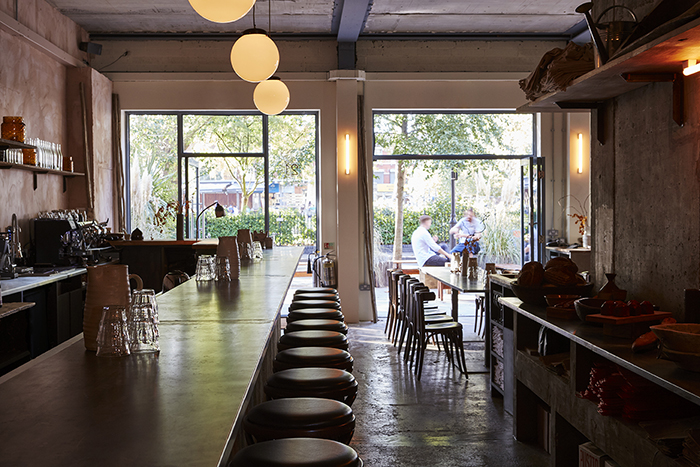
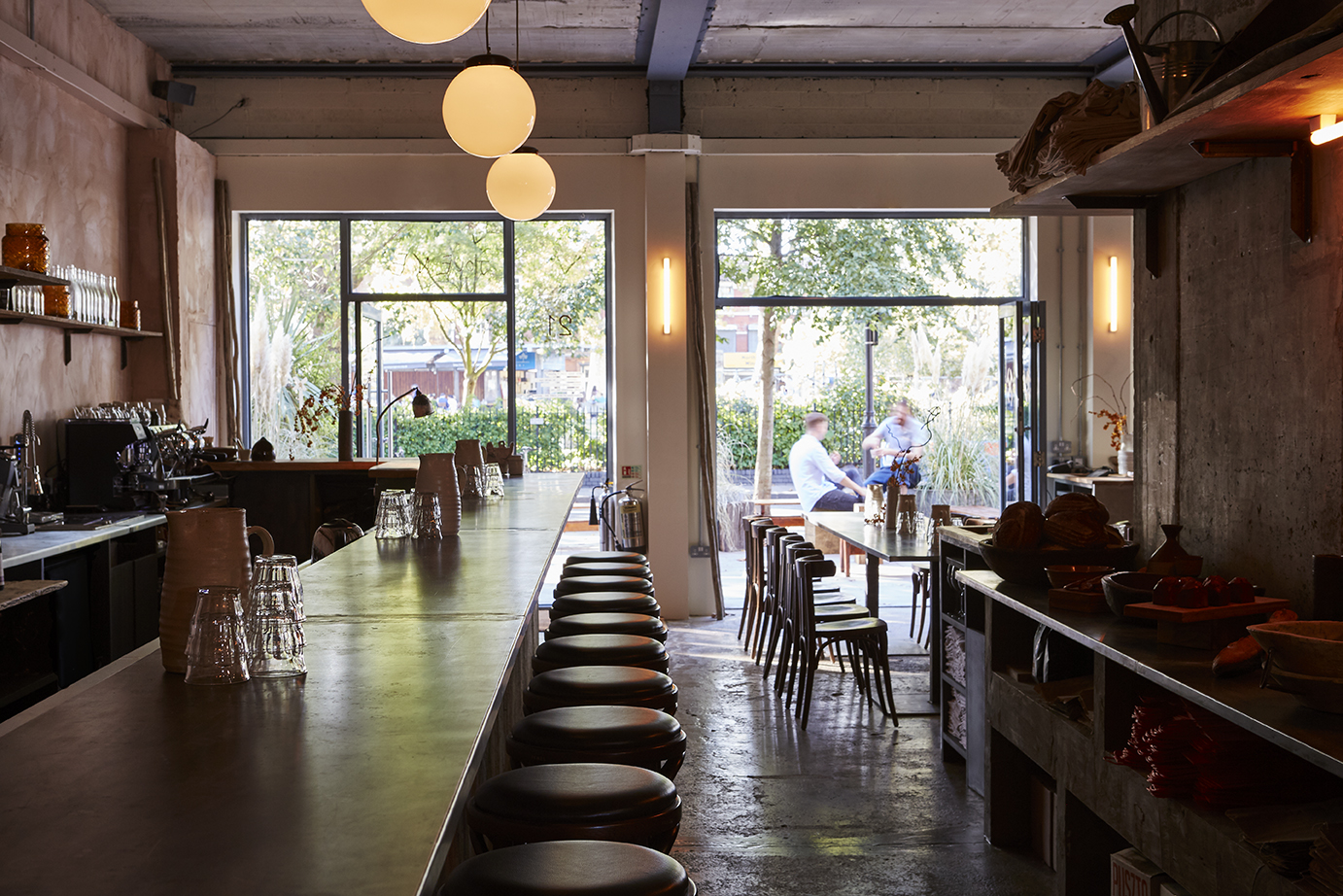
The space follows the same logic. Rough plaster walls, exposed lighting, tables and chairs that are not overly styled. This is not a space designed to consume trends. It is shaped by prioritizing the kitchen and ingredients, assembled with what remains. Yet that restraint sharpens the brand’s attitude. While many brands design spaces around a concept, Jolene allows its method to define the space. As a result, it is not a place to visit once for a photograph, but a place where everyday repetition accumulates. A brand is not completed by a single powerful campaign. It becomes culture when the same attitude is repeated every day.
Today, many brands speak about story. But often that story exists only within a campaign. It lives inside a well edited film and disappears when the campaign ends. Jolene’s story is different. Their narrative is operated every day. Where the wheat comes from, which farmers they collaborate with, why they mill their own flour, why they keep the handwritten logo. The answers to these questions are practiced daily. To say that story defeats advertising does not mean packaging the story more attractively. It means operating the story in reality. It is not about changing the sentence that explains the brand, but about changing the way the brand functions. We often reduce branding to a communication problem, as if changing the message or refreshing the visuals will solve everything. But a brand is not a message problem. It is a question of existence.
Philosophy comes first. Philosophy shapes method. Method defines design. Design creates experience. Experience forms culture. When this structure is complete, advertising becomes peripheral rather than central. It shifts from a tool of persuasion to a tool of documentation. Advertising can create noise. Story creates culture. And brands with culture do not need to shout to be remembered. Jolene quietly proves this. Even without seeing a campaign, we understand the brand. Through a single piece of bread, we feel invited to participate in its philosophy. This small bakery shows that a brand is ultimately not about what it says, but about how it lives. On my next visit to London, I will likely go to Jolene first. Not to see advertising, but to taste the story itself.


















#14057, 905 49, Beolmal-ro 102beon-gil,
Dongan-gu, Anyang-si, Gyeonggi-do, Korea
Business Registration Number: 454-86-01044
Online Sales License No.: 2021-Anyang Dongan-1081
Copyright © DESIGNSORI Co., Ltd.