
There is a saying, “From one, you can know two.” These days, I find myself rephrasing it like this: when you look at a branding agency’s website, you can see how that company truly handles brands. For a firm whose profession is designing brands, the way it presents itself is never a trivial matter. Rather, it is the very space where the depth of the organization is revealed. Most branding and advertising agencies focus on proving their capabilities through client cases: the brands they have worked with, the campaigns they have executed, and the awards they have won. Of course, these are important. But in reality, the first point of contact a client encounters comes even before the portfolio. It is the company’s website. In the few minutes spent searching, landing on the homepage, reading the About page, and scanning project descriptions, people have already begun to judge what problems this company can solve, how far they can go together, and above all, whether it is a partner they can trust.

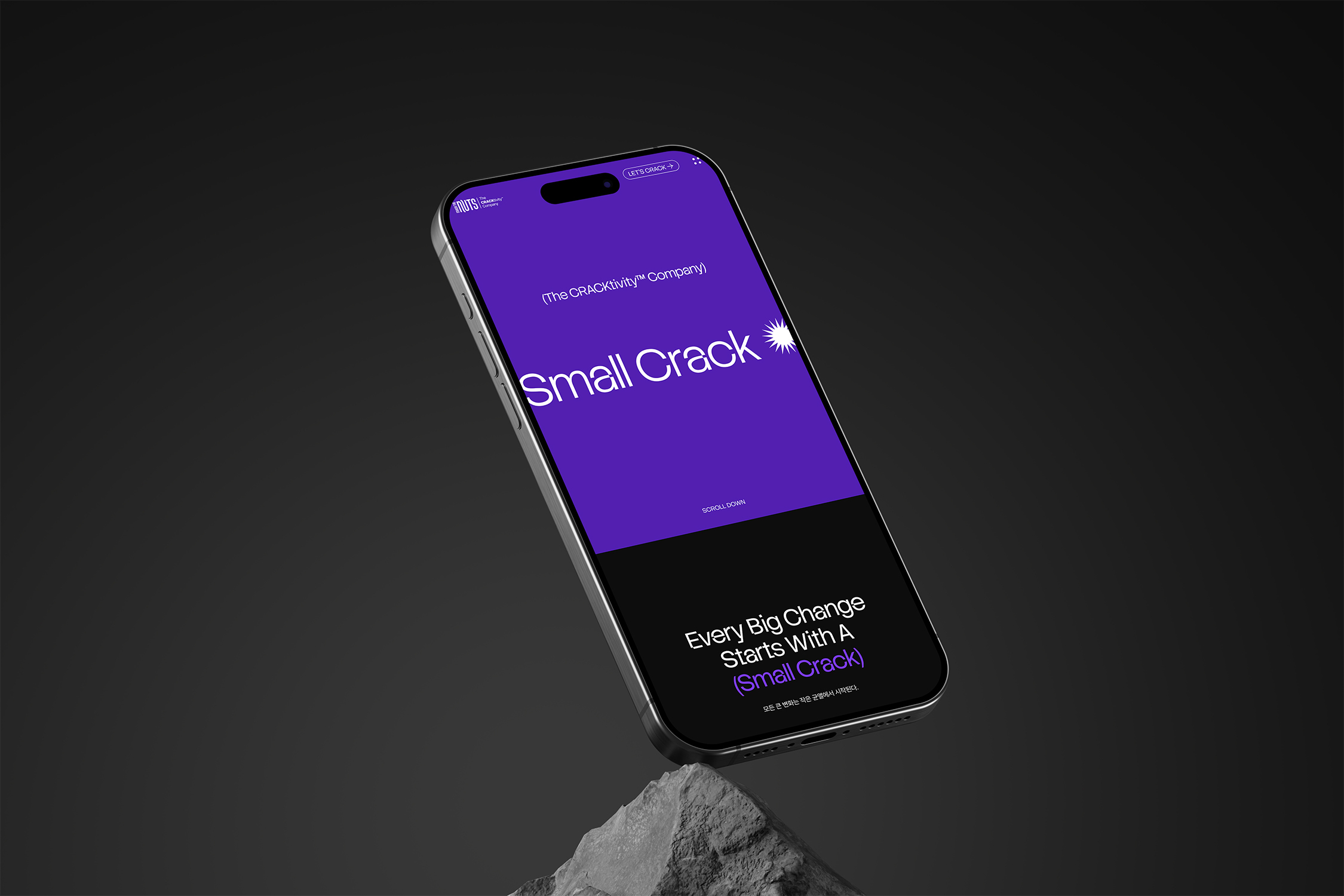
< Image source: Crack The Nuts >
Branding is ultimately a continuous series of choices. What a company chooses to value, how far it takes responsibility, and what it deliberately decides not to pursue accumulate to form a brand. Yet on many branding agency websites, these traces of decision-making are not clearly visible. There may be numerous polished outcome images, but often missing are explanations of why a project began, what business problem existed, how that problem was interpreted, and where a meaningful turning point was created. As a result, visitors naturally begin to wonder whether this company can truly solve their own problems.
It is worth thinking one step further. Many companies still approach website development as either a design task or a technical build. From a branding perspective, however, a website is much more than that. It is a structured space where the way a brand sees the world is translated into form. Philosophy and strategy are embedded into information architecture, user flow, language, and screen transitions, forming a coherent system of thought. Which menu appears first, which copy is placed on the opening screen, how case studies are ordered, and where the contact button is positioned all go beyond simple UX or UI decisions. They reveal the brand’s priorities and attitude. For that reason, website development is not about creating something visually impressive. It is a sophisticated process that proves how mature and well-structured a brand’s thinking truly is. A website becomes a three-dimensional stage where strategic reasoning unfolds, almost like an architectural structure that exposes how a company defines and approaches problems.
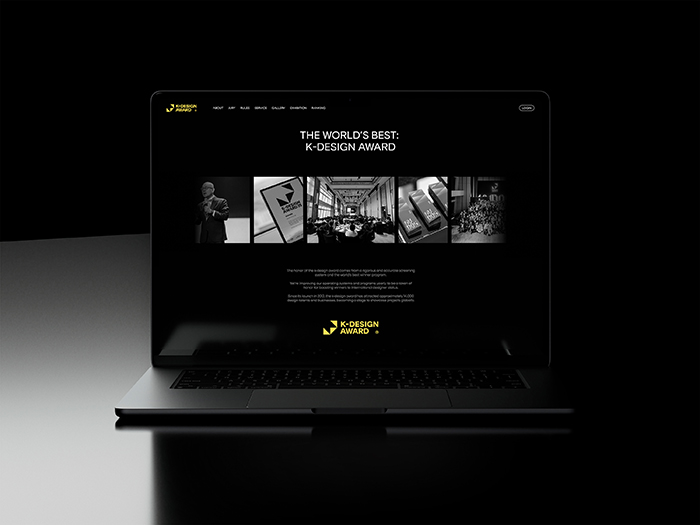
< Image source: K-Design Award >
From this perspective, a branding agency’s website becomes even more significant. If an organization claims to elevate other brands, then its own brand thinking must be realized at the highest level. The more a company positions itself as a branding firm, the more rigorously it should approach storytelling on its website. Storytelling here does not mean arranging emotional phrases. It means clearly articulating why the company exists, how it works, and rather than simply claiming what it does well, revealing how it thinks differently. A strong website does not merely list projects. It explains the process. It describes the context in which a project began, the specific bottlenecks a client faced, how those issues were structurally interpreted, and how that interpretation led to strategy and execution. When a website unfolds in this way, visitors begin to imagine how the company operates. They can picture the kinds of questions asked in meetings, where the team would dig deeper, and how success would be defined. Without such narrative structure, even the most impressive portfolio risks feeling like nothing more than a collection of finished works.
Ultimately, a website is the first conversation a company has with the world. If that conversation lacks direction, it becomes difficult to envision the direction the company might take with a client’s brand. A company that builds brands must brand itself with equal strategic intent, and that starting point should always be its website. A website functions both as a company profile and as a manifesto. It should quietly embody the organization’s way of questioning, the scope of its responsibility, and the depth at which it engages with brands through every sentence, structure, case description, and design decision. Even the headline copy placed on the homepage should not merely aim to appear new or clever. It should be examined carefully to ensure that a single line reflects the company’s depth of thought and its method of defining problems. From one, you can know two. When you look at a branding agency’s website, you can see almost everything about its level of thinking and its attitude. That is precisely why any company that claims branding as its profession should design its own website with the greatest intensity and care.





















#14057, 905 49, Beolmal-ro 102beon-gil,
Dongan-gu, Anyang-si, Gyeonggi-do, Korea
Business Registration Number: 454-86-01044
Online Sales License No.: 2021-Anyang Dongan-1081
Copyright © DESIGNSORI Co., Ltd.