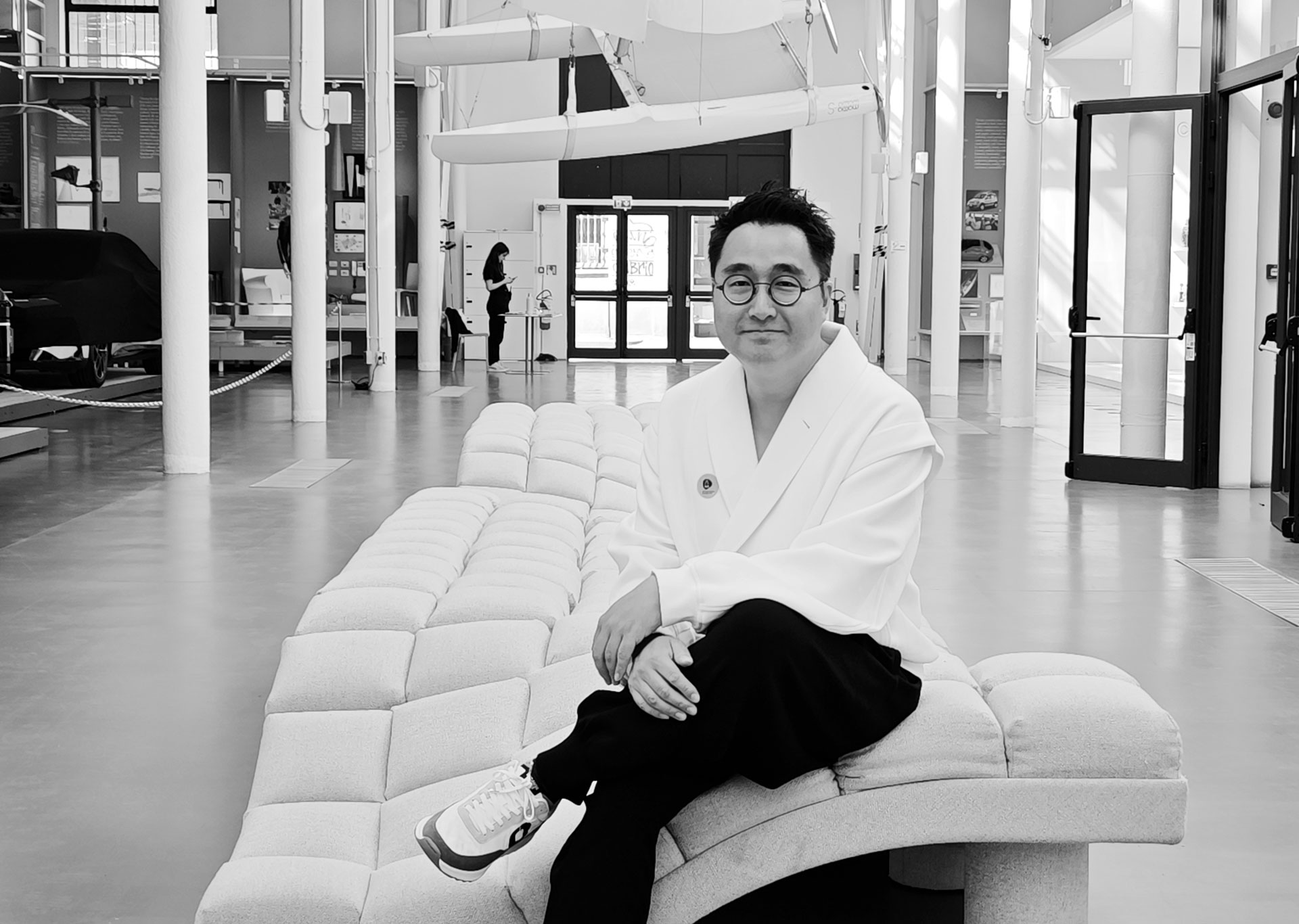
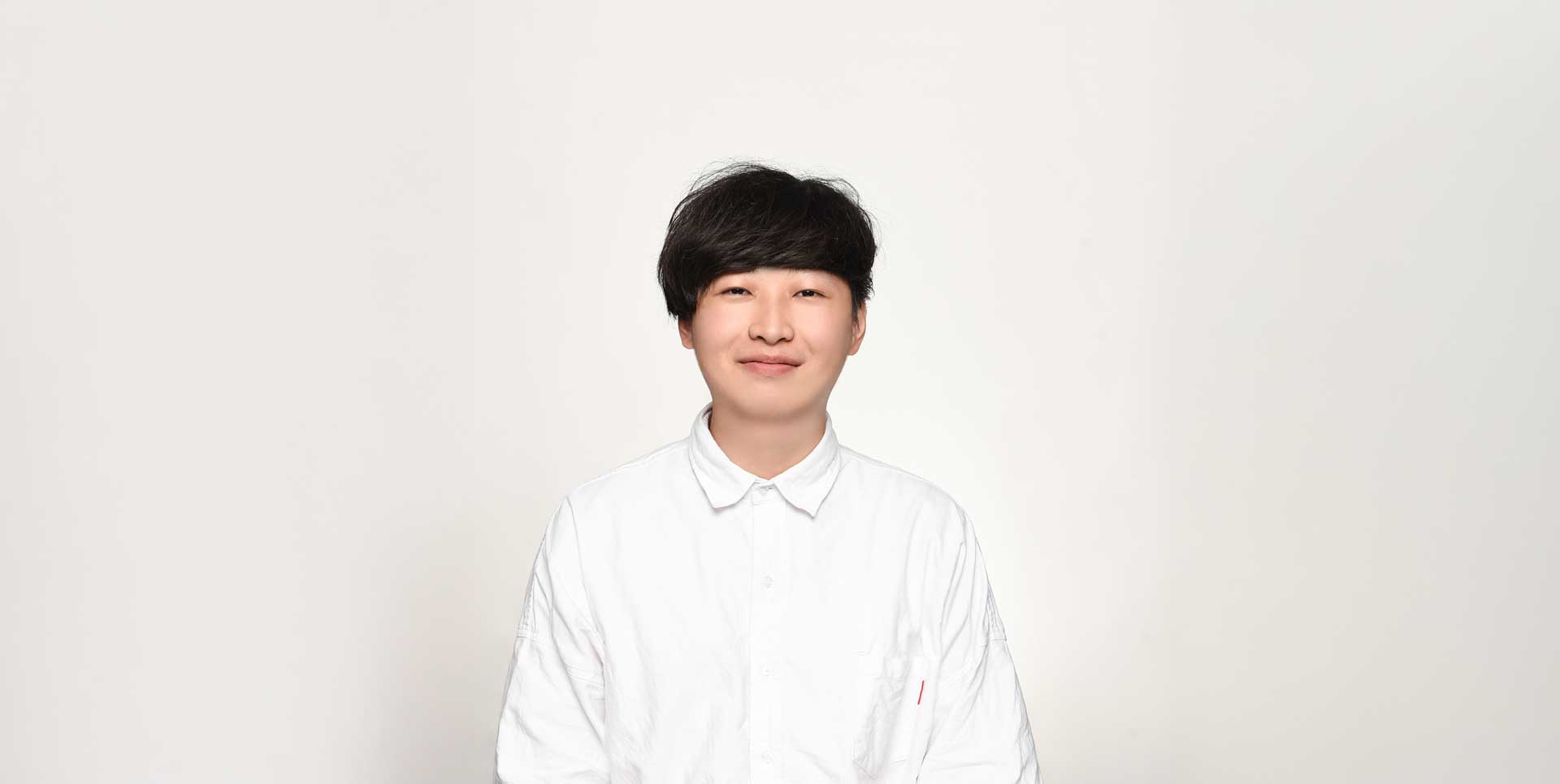
Eric Chan Co-Founder, O&O Studio
“Founded in Hong Kong in 2018, the practice led by Eric Chan explores architecture, interiors, public installations, furniture, and product design through a philosophy of “de-stylisation and localisation.” Operating between Hong Kong and Shanghai, the studio approaches each project not through imposed aesthetics but through contextual inquiry, seeking to uncover the latent identity of place and community. Rather than repeating formal signatures, their work emphasizes process, cultural memory, and humanistic values. In this conversation, Eric Chan reflects on removing style to reveal identity, translating intangible urban memory into material language, and envisioning new possibilities for cross-border collaboration within the Asian design ecosystem.”
To begin, could you briefly introduce O&O Studio and your founding story in Hong Kong. What initial motivation led you to start the studio in 2018, and how has your long term vision of ‘Out and Outer’ continued to shape your work today.
O&O Studio is an award winning design practice based in Hong Kong, founded in 2018 by Suzanne Li and myself, Eric Chan. The studio was established with the intention of creating work that integrates deeply with its physical and cultural environment rather than applying predefined visual formulas. Our initial motivation arose from a shared concern that much contemporary design was becoming increasingly standardized and detached from local context. We wanted to build a practice that responds to memory, humanistic values, and the everyday realities of the city. This led us to articulate our core attitude of ‘de stylisation and localisation’, which continues to guide our methodology.
The name O&O originates from the idea of ‘Out and Outer’. It reflects a dual perspective. ‘Out’ suggests stepping beyond conventional boundaries of discipline and style, while ‘Outer’ refers to extending our inquiry outward into broader social, cultural, and environmental conditions. This vision still shapes our work today. Rather than relying on recognizable signatures, we focus on cultivating project specific morphologies that emerge from context. Each project becomes an opportunity to explore new spatial language while remaining grounded in its community and place.
O&O describes its core attitude as ‘de stylisation and localisation.’ How does this principle function as a real decision making rule during a project, and when does ‘removing style’ paradoxically become the strongest way to build identity.
The principle of ‘de stylisation and localisation’ is not a slogan for us. It operates as a concrete decision making framework at every stage of a project. In practice, this means that we begin by questioning any visual impulse that feels automatic or fashionable. Instead of asking, ‘What style should this project adopt?’ we ask, ‘What is already present here that deserves to be amplified?’ This shift in questioning changes the entire trajectory of the design process. By consciously removing preconceived stylistic preferences, including our own past successes, we create space to uncover the authentic identity of a site, brand, or community. We study its spatial conditions, social behaviours, material culture, and historical layers. Through this process, what initially appears neutral or understated often reveals a distinctive character rooted in memory, routine, and local sensibility. That character then becomes the foundation for form, circulation, and material expression.
Paradoxically, ‘removing style’ often becomes the strongest way to build identity. When design is not driven by trend or signature aesthetics, the outcome feels more inevitable and grounded. It belongs to its context rather than competing with it. This approach allows identity to emerge from relevance rather than decoration. In that sense, de stylisation is not about erasing expression. It is about refining it until only what is essential and contextually meaningful remains. Ultimately, our goal is to create work that resonates deeply with its local environment and fosters a genuine sense of belonging. When users recognize fragments of their own memory or culture within a space, identity becomes lived experience rather than visual branding.
You emphasize that design should begin with a rigorous and consistent process. When you connect strategic thinking, visual logic, and user experience into one continuous workflow, what are the key stages or guiding questions you insist on keeping intact.
We believe that a rigorous and coherent design process is not optional but fundamental to achieving meaningful results. For us, process is what allows strategy, visual logic, and user experience to operate as one continuous system rather than as isolated layers added at different stages. Without this consistency, design risks becoming fragmented or overly driven by surface decisions. There are several key stages and guiding questions that we insist on keeping intact throughout every project.
First, we always begin with the question: Who are the end users, and what are their real needs? This goes beyond demographics. We try to understand their behaviours, habits, emotional expectations, and the specific conditions in which they will encounter the space or object. This stage forms the strategic foundation of the project. Second, we ask: How does the design integrate into its context? Context includes not only physical surroundings but also cultural, social, and historical layers. We examine scale, circulation patterns, neighbourhood identity, and existing spatial language. This ensures that visual logic emerges from place rather than being imposed upon it. Third, we consider: What narratives or values should the design communicate? Every project carries an implicit story, whether it is about brand identity, local memory, innovation, or community belonging. Clarifying this narrative helps align form, material, and detail with a deeper conceptual direction. Finally, we ask: How can we ensure functionality while enhancing user experience? Function is never treated as secondary to aesthetics. We evaluate how people move, interact, pause, and engage. We test whether the design supports intuitive use and long term comfort, rather than just creating a strong first impression.
By continuously returning to these questions at each stage of development, we are able to connect strategic thinking, visual logic, and user experience into a unified workflow. This disciplined structure allows creativity to emerge with clarity and purpose, rather than relying on stylistic instinct alone.
Working across Hong Kong and Shanghai, you also speak about integrating with local context and responding to ‘memory’, humanistic values, and the spirit of the city. What kinds of observation or research help you translate those intangible layers into form, circulation, and material language?
Translating intangible layers such as memory, humanistic values, and the spirit of the city into form requires immersive and sustained observation. For us, research is not limited to archival study. It involves being physically present, observing everyday behavior, listening to conversations, and understanding how people occupy space without formal design intervention. We pay attention to informal use patterns, spatial habits, and small gestures that reveal collective values. This includes repeated site visits at different times of day, documentation of movement flows, conversations with residents and shop owners, and review of historical imagery and local narratives. We also examine material traces such as aging surfaces, improvised repairs, and vernacular adaptations, which often communicate more than official records.
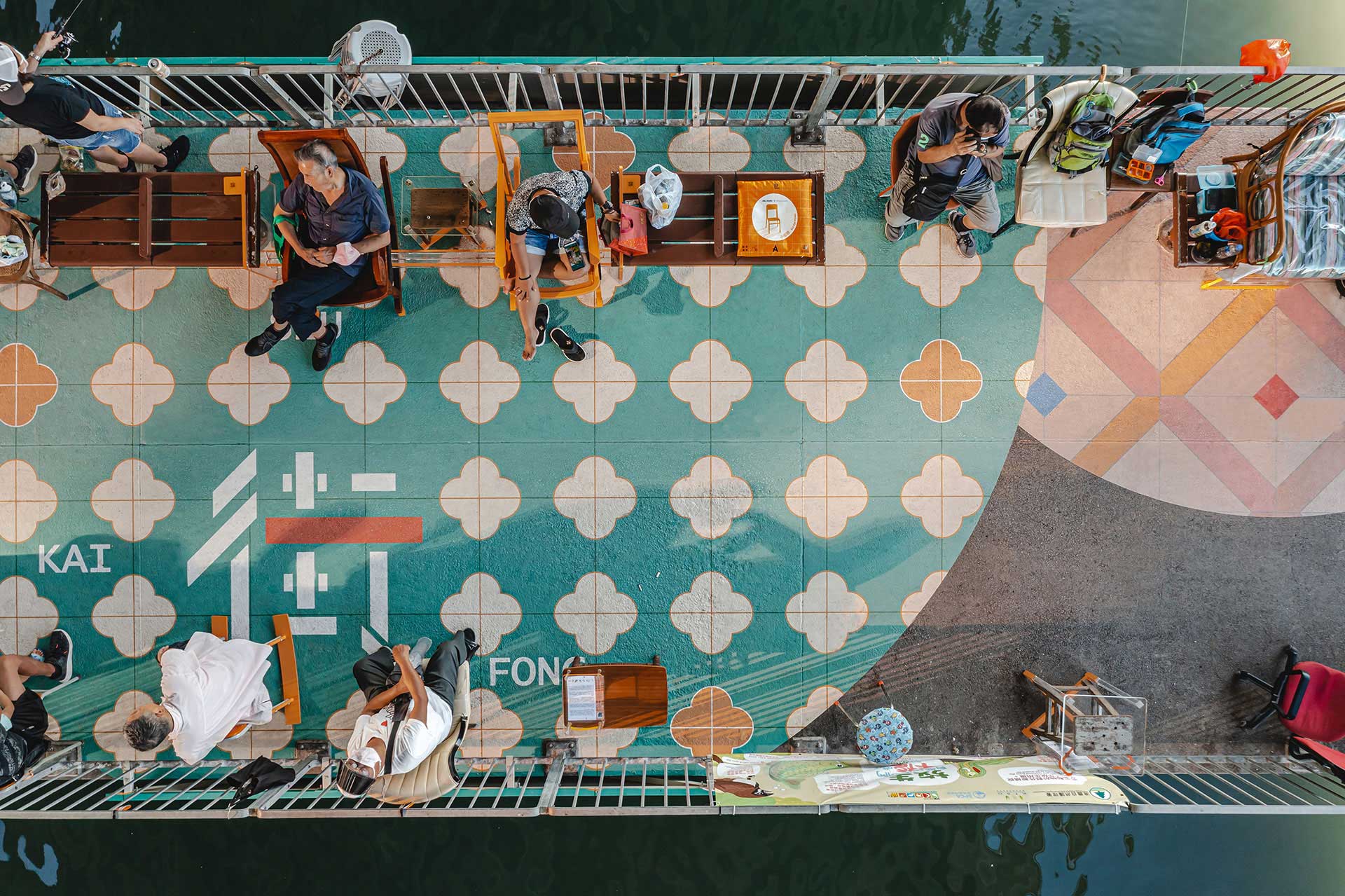
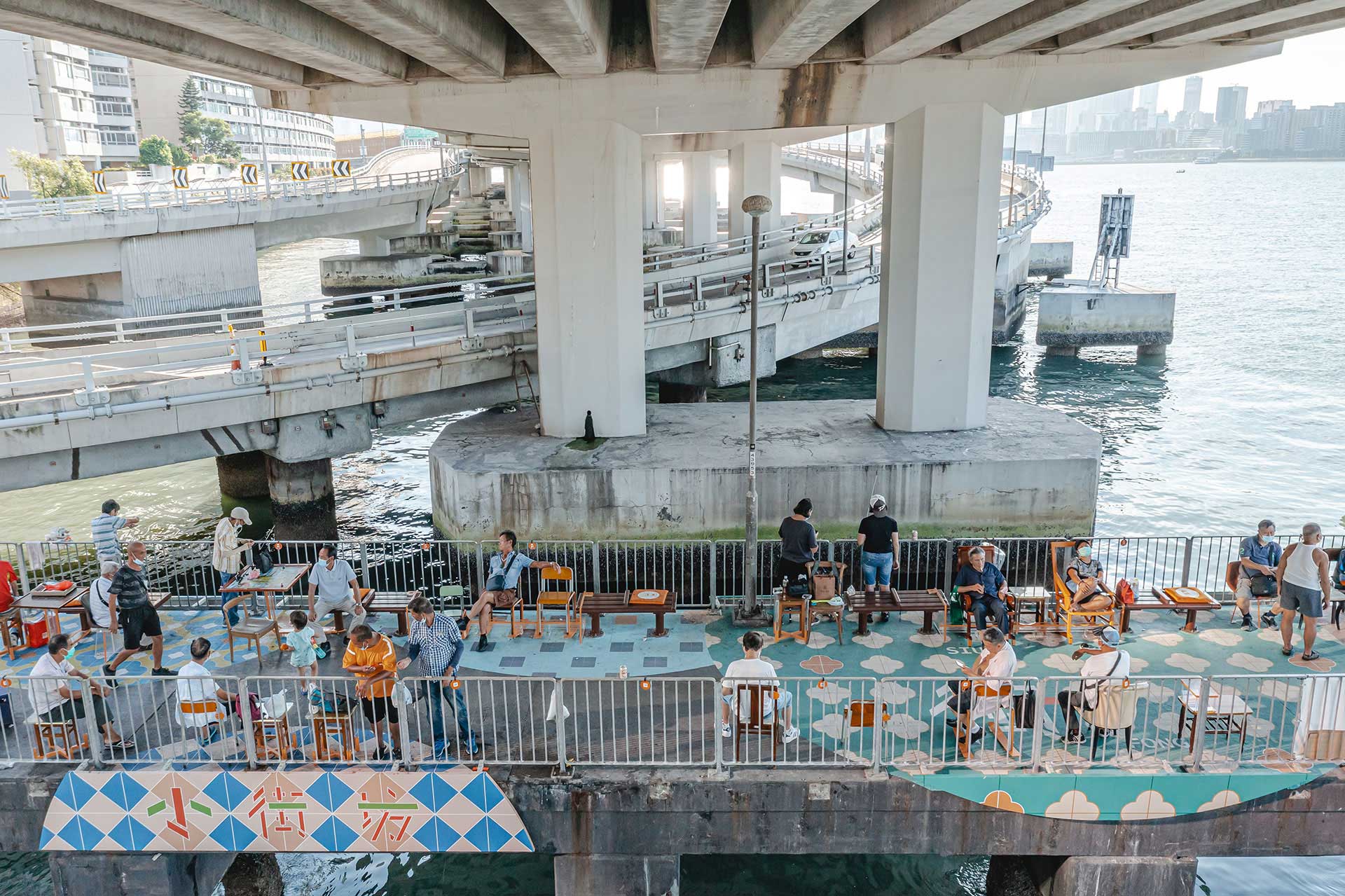
Our ‘Siu Kai Fong’ project in North Point, Hong Kong, illustrates this approach. Through multiple visits to the public pier, online research, and direct engagement with the community, we observed that residents often brought their own chairs and tables to gather informally. Rather than introducing new furniture, we collected nearly fifty pieces donated by local households and businesses. Each object carried personal and district memory. By integrating QR codes that linked to recorded oral histories, we allowed these narratives to become part of the spatial experience.
Material language emerged directly from this process. The repurposed chairs and tables defined both form and circulation. Transparent acrylic supports enabled flexible arrangements, encouraging spontaneous interaction and reinforcing existing social habits. Ground graphics inspired by traditional Hong Kong tenement tiles further anchored the installation in local visual memory. Through this layered research process, intangible qualities were translated into tangible spatial strategies. The project did not impose identity onto the site. Instead, it amplified what was already present, allowing memory and humanistic values to shape structure, movement, and material expression.
Your studio states that rather than applying standardized solutions, you aim to bring new value to each project through a distinctive formal language. How do you keep generating ‘new language’ while still maintaining a consistent studio standard, and what do you consciously avoid repeating?
Our ability to generate a distinctive formal language for each project comes from a disciplined process rather than a pursuit of novelty for its own sake. The foundation remains our philosophy of ‘de stylisation and localisation’. We do not begin with a predefined aesthetic. Instead, we begin with inquiry. We examine the project’s cultural context, spatial conditions, client intentions, and user behavior before allowing any formal expression to emerge. Maintaining consistency at the studio level does not mean repeating visual motifs. It means repeating a way of thinking. Our standard lies in the rigor of our process, the clarity of our conceptual framework, and the precision of execution. Strategic thinking, visual logic, and user experience are always integrated. What changes from project to project is the formal outcome, not the intellectual discipline behind it.
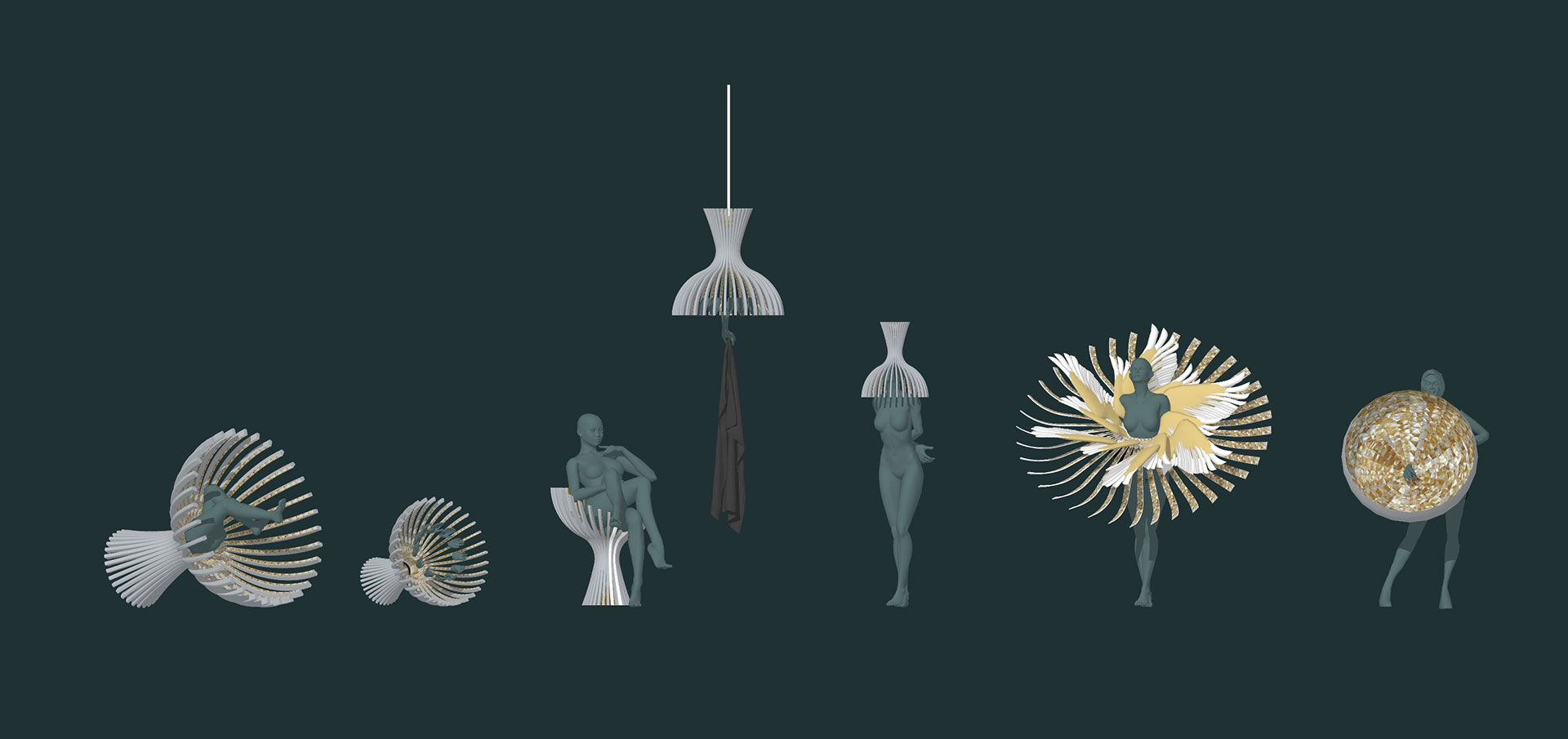
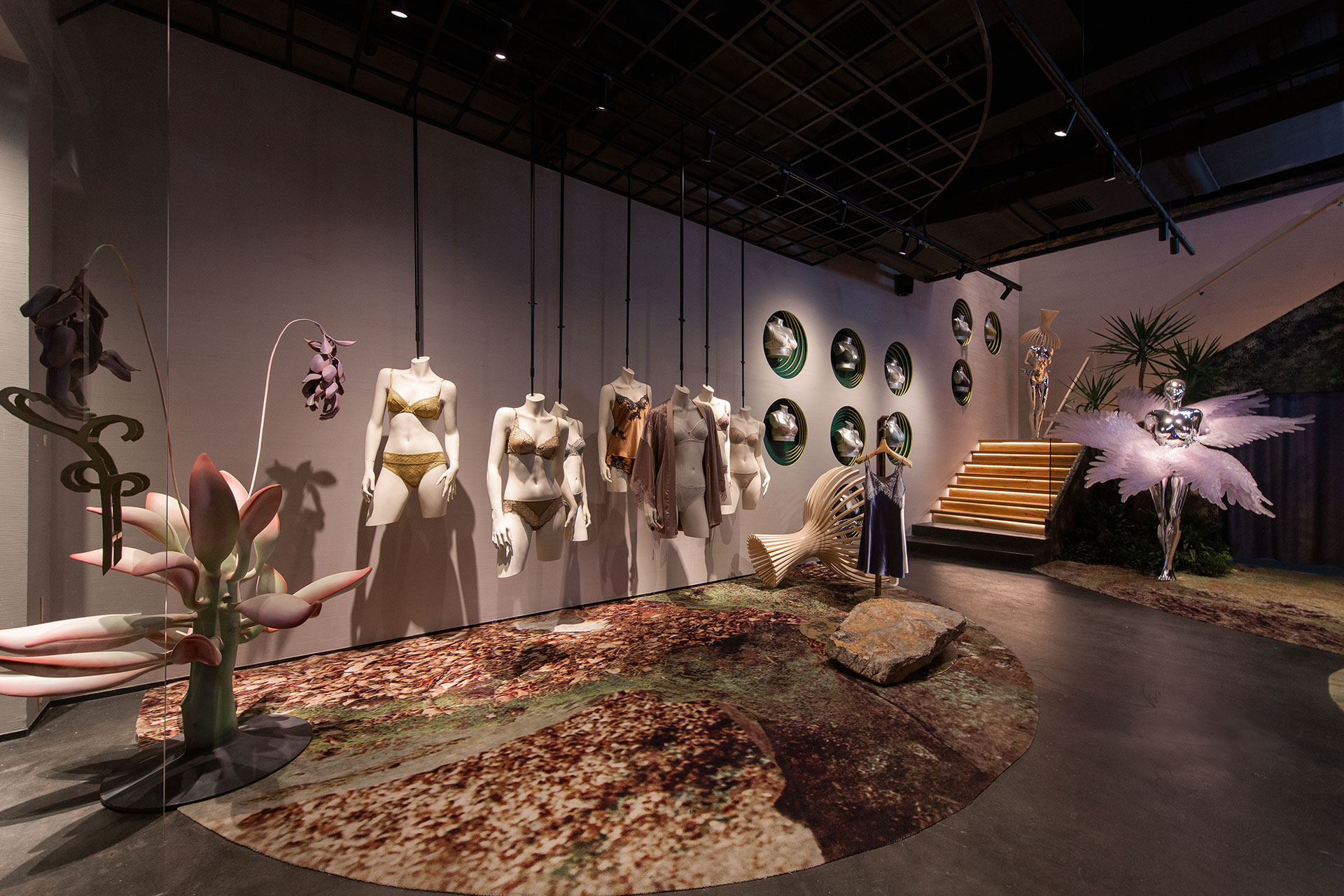
We consciously avoid repeating our own previous successes. Once a formal solution has been fully explored in one context, we resist transplanting it elsewhere. We also avoid industry conventions that default to predictable stylistic cues. For example, in the Atelier Intimo Flagship project, a conventional retail approach for a lingerie brand might rely heavily on soft pink tones and ornamental lace references. We deliberately moved away from these expectations. Through a process of de stylisation, we reexamined femininity beyond stereotype. The concept of ‘Rebirth of the Scorched Earth’ informed the integration of mannequins and sculptural installations, creating an atmosphere that was sensual yet resilient. The spatial narrative expressed strength and transformation rather than decorative softness.
In this way, a ‘new language’ emerges not from stylistic experimentation alone, but from reframing the core question of each project. By consistently questioning assumptions while maintaining a rigorous methodology, we protect both originality and studio coherence.
O&O’s practice spans architecture, interior, art installations, furniture, and product design. When you move from spatial scale to product scale, what design principles do you carry over unchanged, and what do you intentionally discard or rewrite?
When O&O Studio shifts from architectural and interior scales to furniture and product design, we carry over several core principles without compromise. These include a rigorous and coherent design process, our philosophy of ‘de stylisation and localisation’, and a commitment to generating distinctive morphologies that create new value rather than replicate trends. At the same time, the way these principles manifest is carefully recalibrated. Architecture operates within broad physical, social, and environmental systems, whereas product design requires precision within a highly condensed framework. The conceptual clarity must remain, but its expression becomes more distilled.
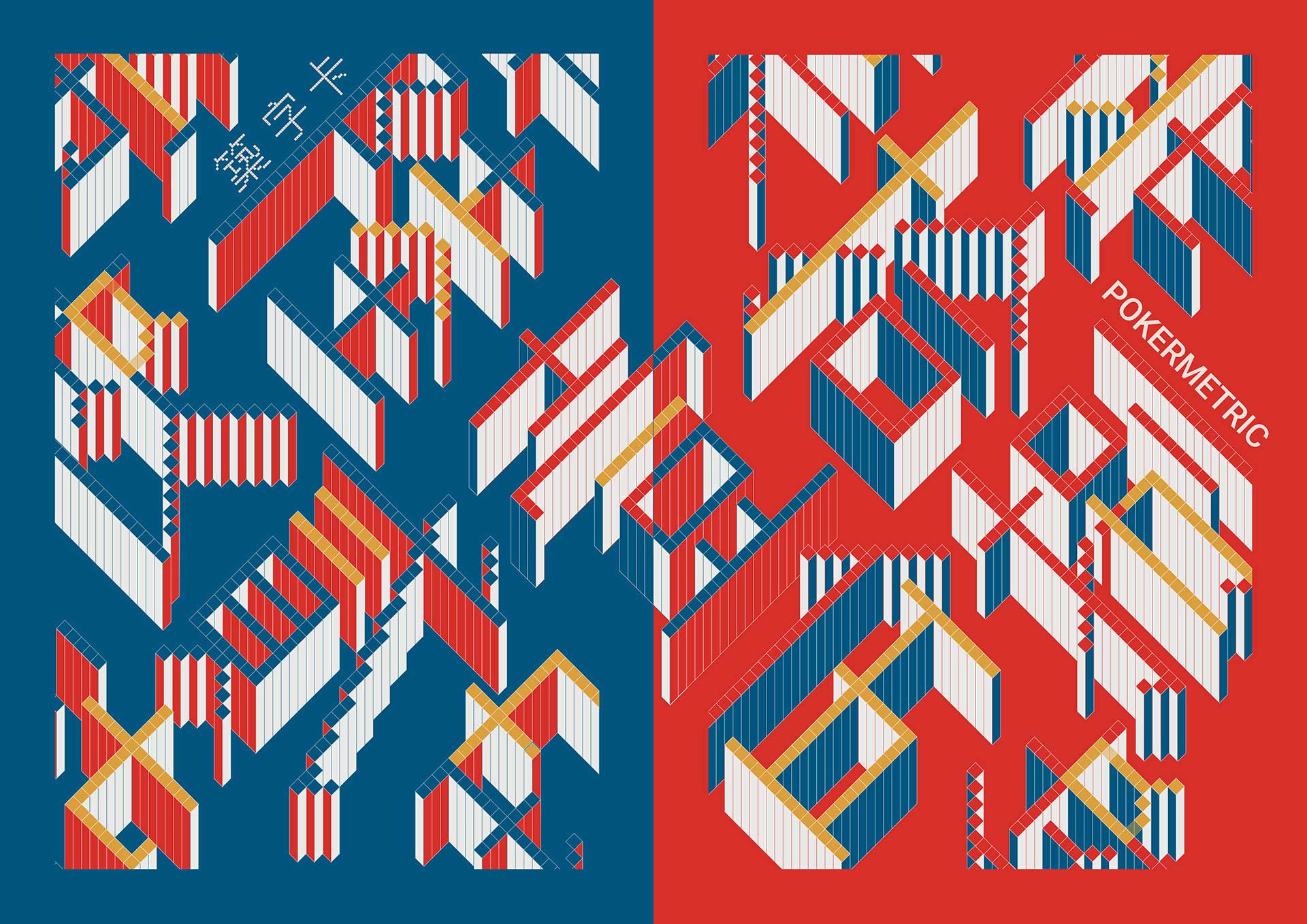
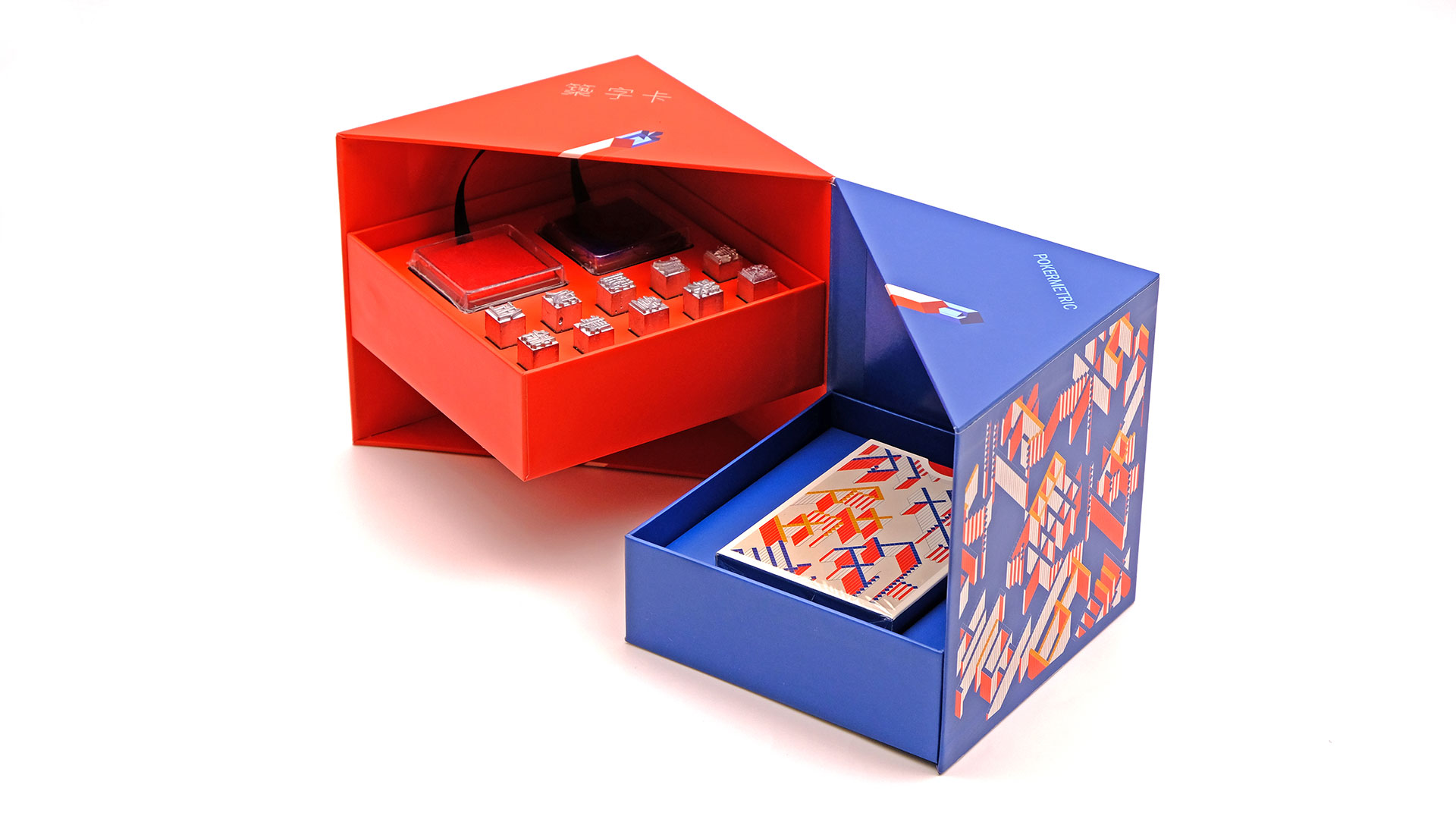
‘Pokermetric’, our East meets West poker card set, illustrates this translation clearly. In this project, architectural thinking is embedded into the structure of the object itself. Each English letter and Arabic numeral is reinterpreted as its corresponding Chinese character and constructed as a three dimensional axonometric form. This approach applies spatial representation methods typically used in architecture to a compact handheld format. The resulting composition resembles a mapping of a high density city, reflecting our ongoing interest in urban spirit and cultural layering, yet expressed through a portable and playful medium. We retained graphical clarity and a primary colour palette to align with our principle of ‘de stylisation’. Instead of decorative excess, the focus remains on structure, logic, and legibility.
What we intentionally rewrite at the product scale are the expansive contextual narratives and large scale spatial gestures inherent to architecture. In their place, we intensify attention to symbolic precision, tactile quality, and fabrication detail. The collaboration with printing production partners on ‘Pokermetric’ was essential to ensure that material, colour registration, and dimensional accuracy faithfully executed the concept. Even at a smaller scale, the discipline of process and the pursuit of precision remain unchanged.
On product and furniture projects specifically, what production realities matter most to you: materials, fabrication constraints, local manufacturing capacity, tolerance, or durability? Where do you typically push the hardest to protect quality and precision?
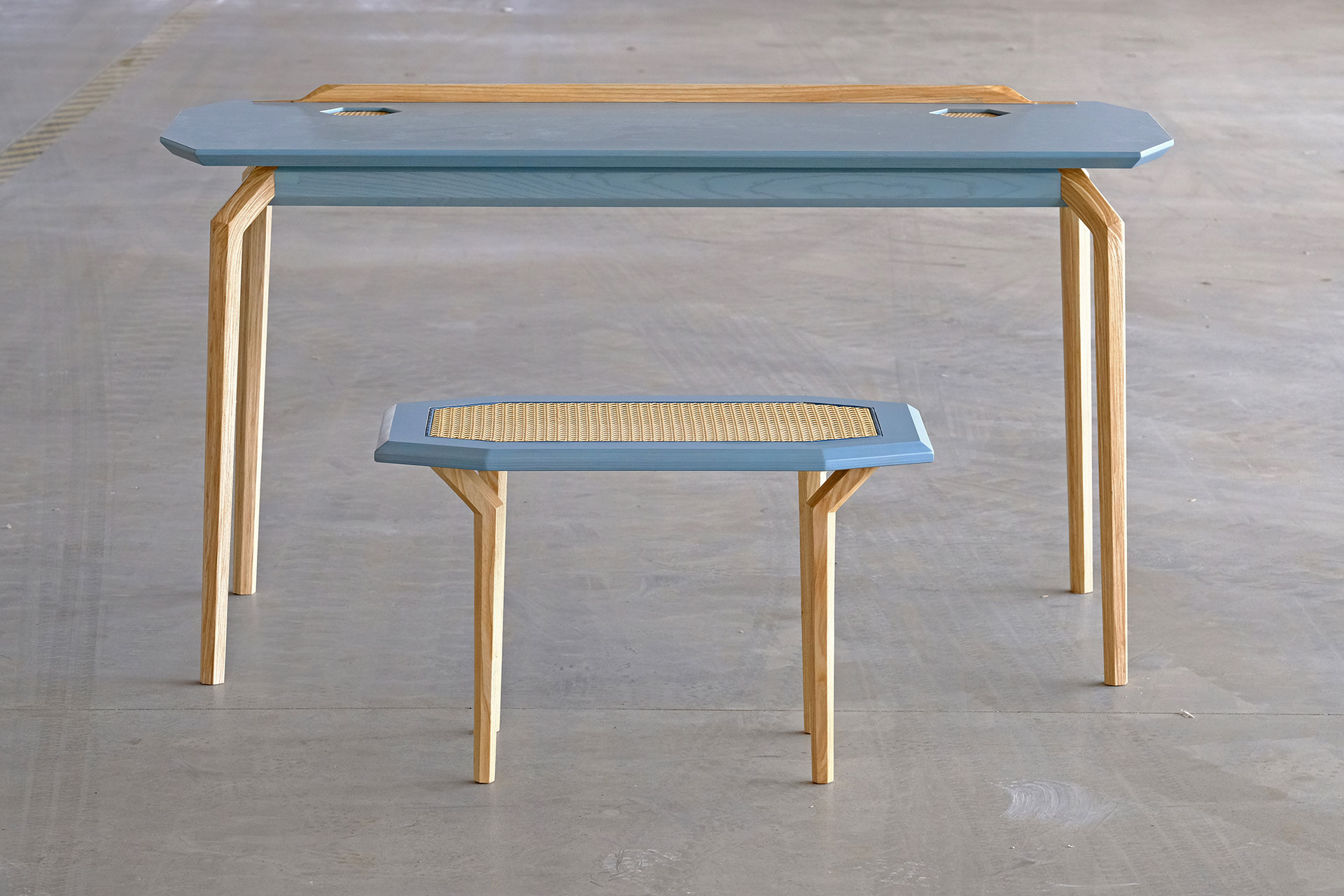
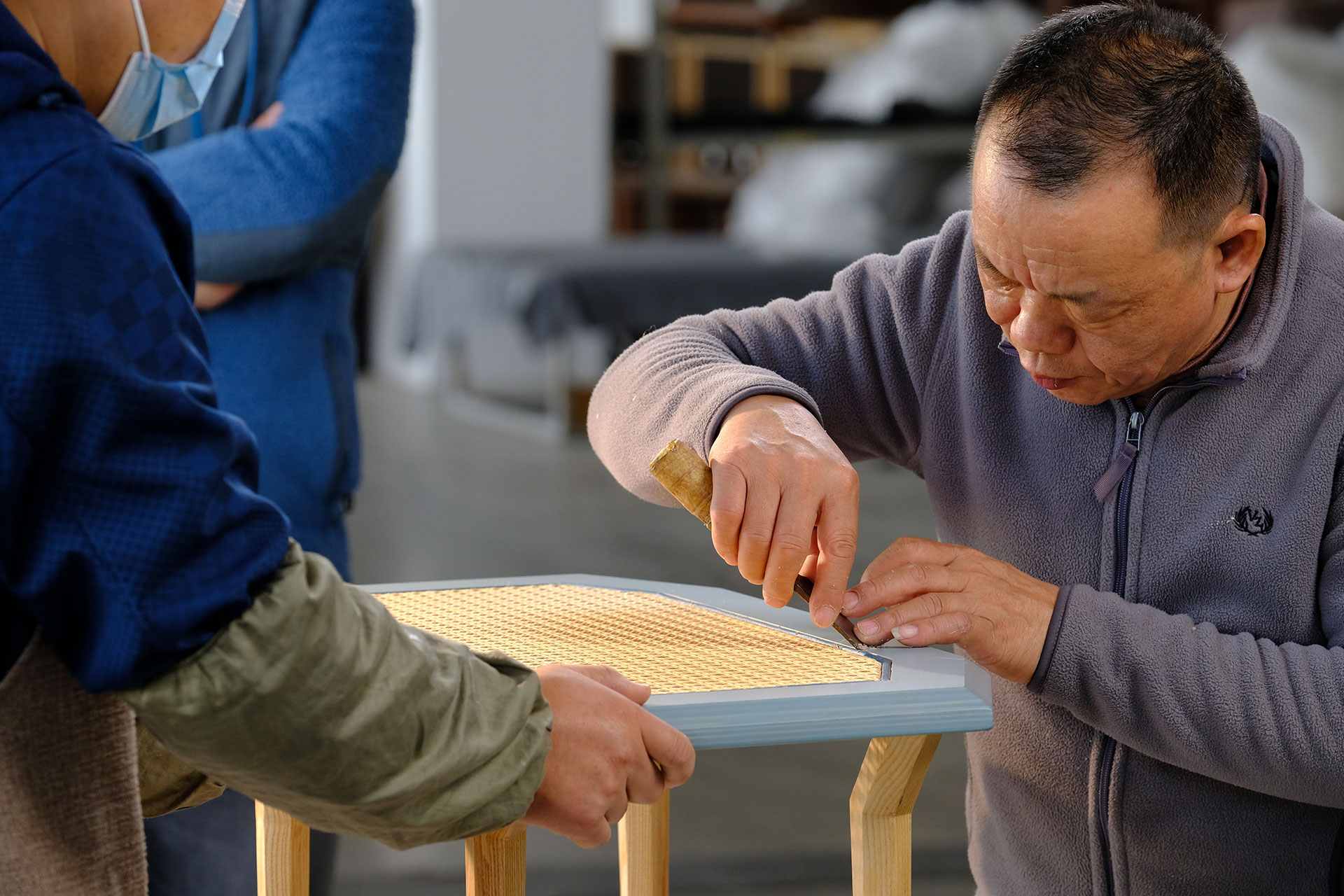
On product and furniture projects, O&O Studio prioritizes the interplay between material properties, fabrication techniques, and precise craftsmanship to ensure both aesthetic integrity and functional durability. We typically push hardest on quality and precision at the points where these elements converge to define the product’s character and longevity. Our Yi Si furniture set, comprising a hexagonal desk and bench, illustrates this clearly. The desk’s anti scratch matte painted plywood top is selected for its resilience. However, the greater challenge, and where we enforce rigorous precision, lies in the laminated 1.5 millimeter beech veneer sheets that form the legs. We meticulously control the wood grain direction during lamination, molding, and machining to maximize structural strength, particularly at the critical forty five degree folding angles. This level of precision ensures structural stability and long term durability while also achieving the distinctive diamond pattern along the fold’s outer edge, which is essential to the design’s visual identity. By applying advanced production techniques with strict quality control, we ensure the pieces remain lightweight yet robust, achieving a balanced integration of form and function.
Your public space initiative Meet’n Meal is highlighted as a practice that engages community. In particular, the Siu Kai Fong project is described as a design others could learn from, with a focus on local identity and the next generation. What were the concrete design moves that turned those themes into lived experience rather than messaging?
Our public space initiatives, ‘Siu Kai Fong’ and ‘Meet’n Meal’, demonstrate how abstract themes such as local identity and intergenerational engagement can be translated into tangible lived experiences. For ‘Siu Kai Fong’ in North Point, Hong Kong, we deliberately avoided producing new furniture. Instead, we collected nearly fifty chairs and tables donated by local residents. Each piece carried its own history, ranging from colonial era government chairs to old mahjong tables. We embedded QR codes into the installation, linking each object to recorded oral narratives. In this way, memory became part of the physical experience. Flexible acrylic supports allowed the community to rearrange the furniture freely along the pier, effectively creating an ‘urban living room’ that encouraged spontaneous gathering and conversation. The ground surface incorporated graphic patterns inspired by traditional local tiles, visually anchoring the installation within the neighbourhood’s collective memory.
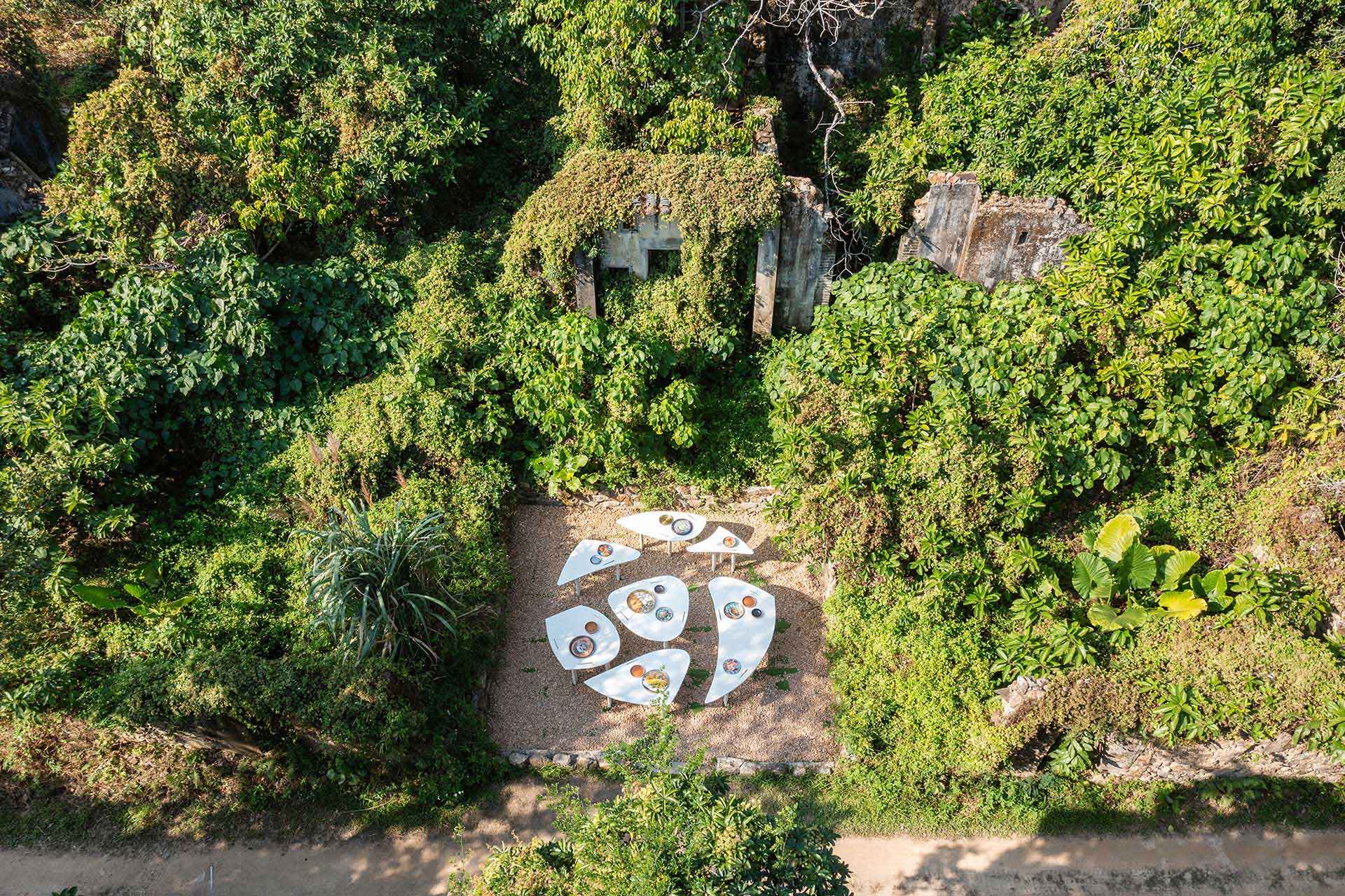
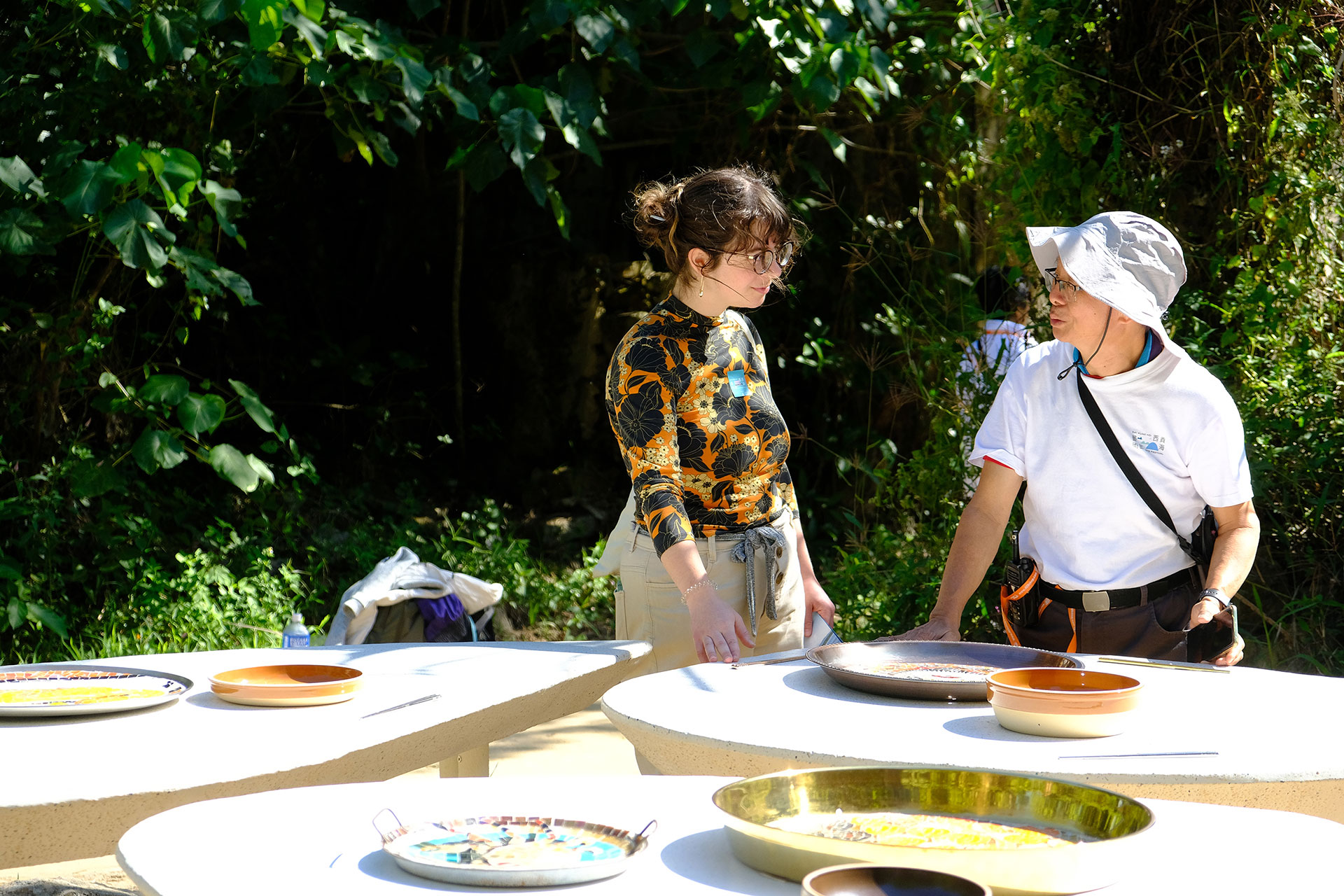
Similarly, in ‘Meet’n Meal’ on Yim Tin Tsai, a Hakka village on an island in Sai Kung, the design centred on a large circular dining table that symbolised gathering and continuity. Its geometry referenced the island’s historic salt pans. The table featured sixteen plates decorated with mosaics representing nine traditional Hakka dishes and ingredients, all derived from local oral histories. Positioned in front of a historic village wall, the installation quite literally ‘served’ the community’s culinary heritage. It invited residents and visitors to sit, share stories, and reconnect with local memory. Both projects reflect our philosophy of ‘de stylisation and localisation’. Rather than communicating identity through visual messaging alone, we embed cultural context and participation directly into spatial structure. The result is not a symbolic statement but a lived social experience.
Looking ahead, you are expanding into new typologies such as playgrounds and heritage revitalization. What themes or questions do you most want to explore next, and what conditions do you believe enable meaningful cross border collaboration within the Asian design ecosystem?
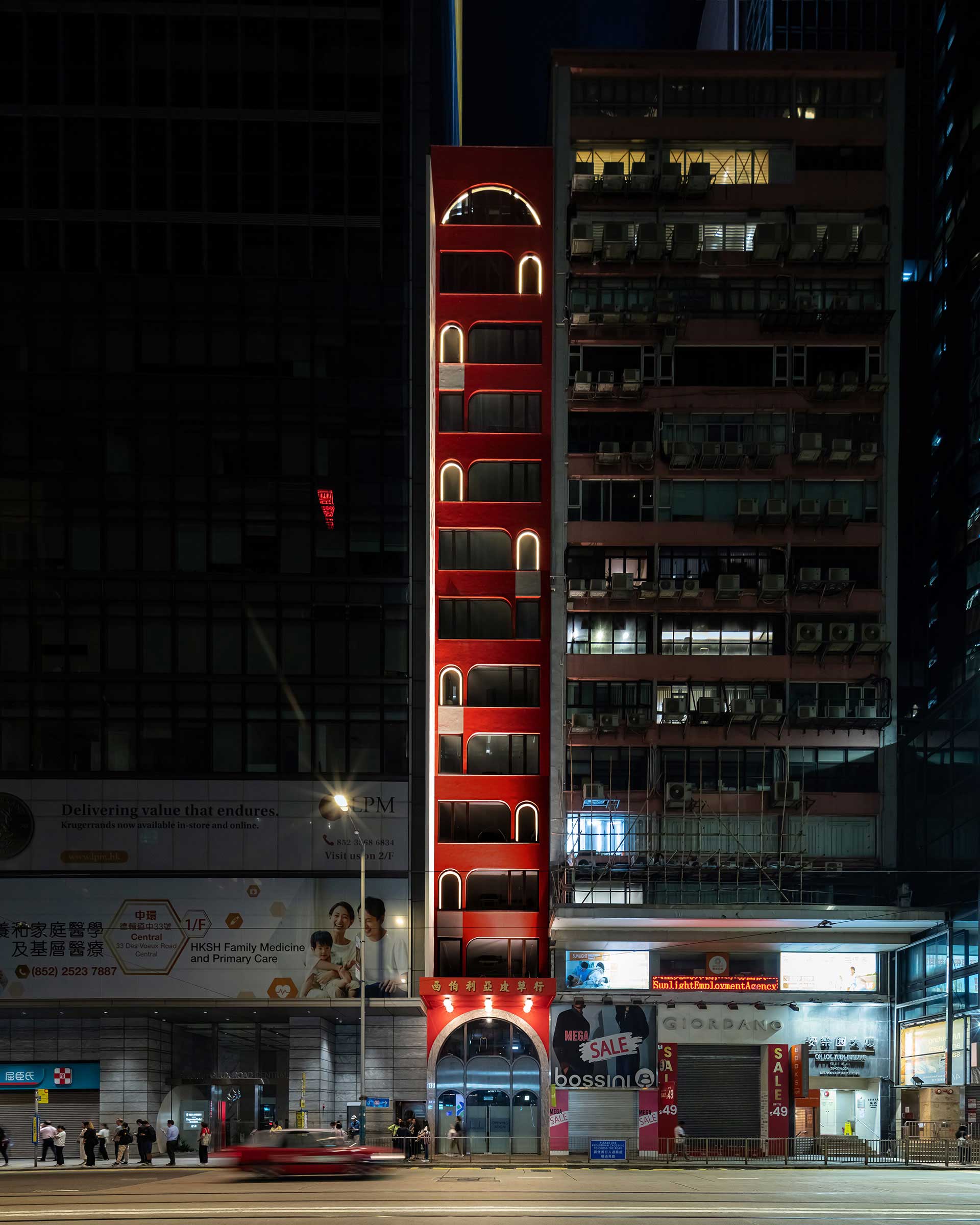
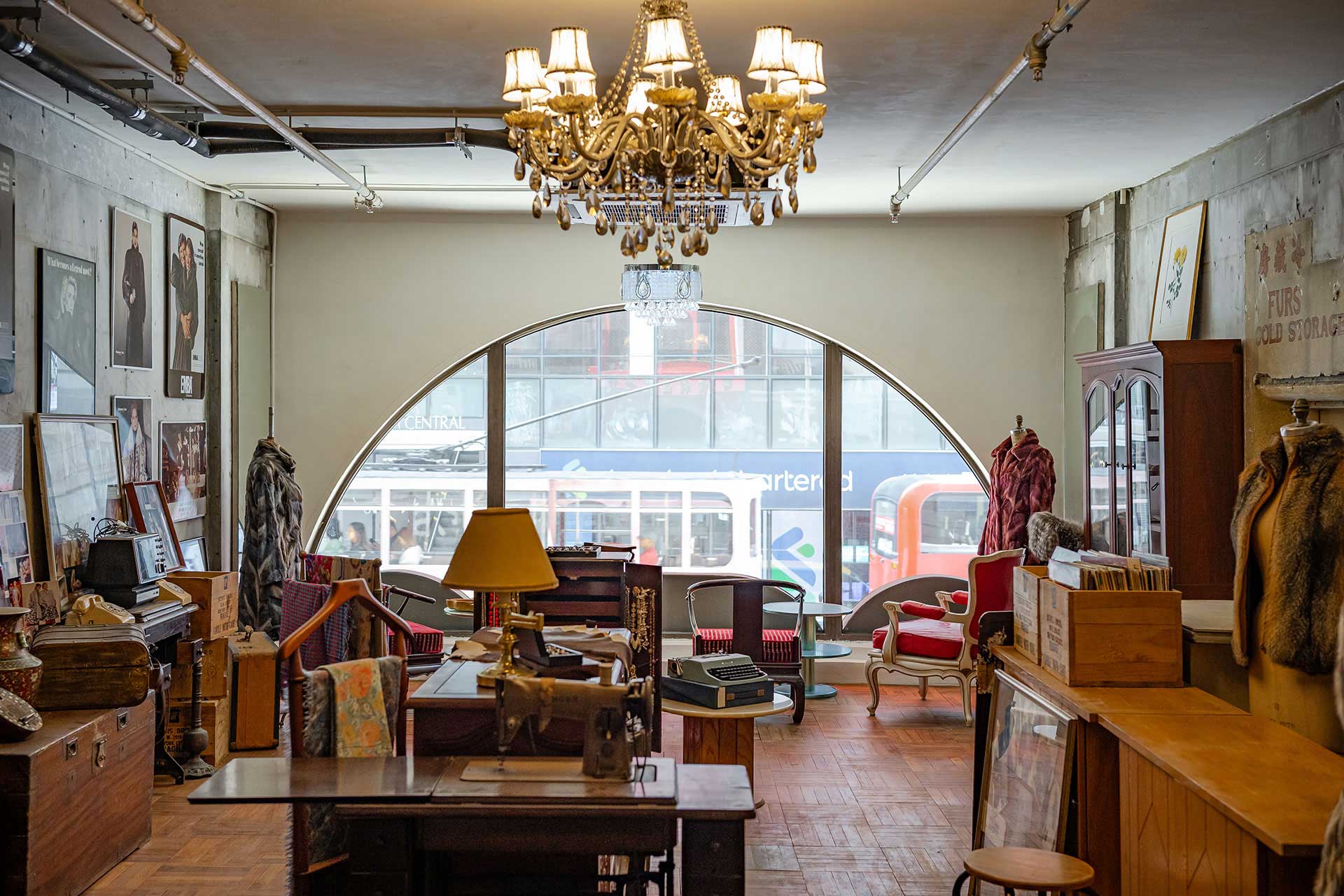
As we expand into new typologies, particularly playgrounds and heritage revitalization, we are increasingly interested in how design can bridge past and present while deepening connections to local identity and collective memory. We are drawn to questions such as how spaces can carry history without becoming static, and how contemporary interventions can activate heritage rather than simply preserve it. Our recent project, ‘The Siberian’, a sensitive renovation of a 1967 modernist building in Central, Hong Kong, embodies this direction. Instead of replacing the structure, we sought to preserve its spatial character and material memory while adapting it for contemporary use. The approach was deliberately restrained. Through what we describe as a ‘minimally invasive design’, we carefully restored original architectural elements and introduced new components that respect the scale, proportion, and spirit of the existing building.
The project carries emotional weight. It reflects Hong Kong’s multi generational family businesses and its garment trade history. Rather than treating heritage as an artifact, we approached it as a living framework. We envision the building evolving into a flexible platform for the community, potentially accommodating retail spaces, cultural programming, and even a small museum. In this way, its past becomes an active resource for future engagement. We believe meaningful cross border collaboration within the Asian design ecosystem depends on cultural literacy, mutual respect, and openness to difference. Collaboration works best when partners are willing to understand local contexts deeply rather than impose universal solutions. Shared values around sustainability, memory, and social responsibility create a common ground. When these conditions are present, design can operate across borders while remaining rooted in place, enriching communities by honoring their histories and shaping their futures.

















#14057, 905 49, Beolmal-ro 102beon-gil,
Dongan-gu, Anyang-si, Gyeonggi-do, Korea
Business Registration Number: 454-86-01044
Online Sales License No.: 2021-Anyang Dongan-1081
Copyright © DESIGNSORI Co., Ltd.