On February 24, 2022, armed conflict began between Russia and Ukraine. Tanks crossed the border, missiles struck cities, and countless people died. And designers picked up their pens. Posters were created, shared on social media, and spread across the world. The blue and yellow of the Ukrainian flag, doves of peace, collapsed buildings, children in tears. Design helped communicate the brutality of war to the global public. In February 2026, military tensions in the Middle East expanded into armed conflict. Another war began in the Middle East. Missiles fell on cities, oil facilities burned, and civilians were killed. A new war had begun before the war in Ukraine had even ended. Throughout human history, there has never been a time without war. Yet wherever war exists, voices calling for peace have always followed and designers have often been the ones to visualize those voices.
War Is Designed, and Peace Is Designed Too
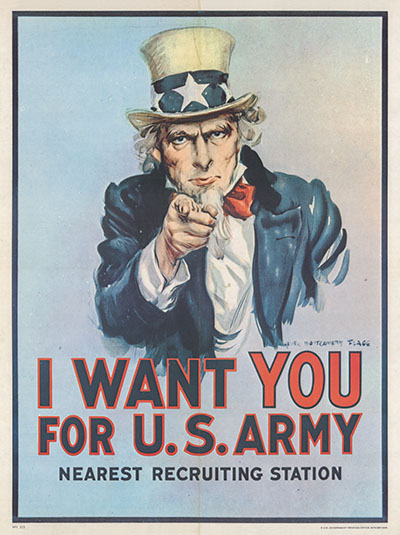
“Design itself has no guilt. The problem lies in the people and societies that use it.” This is the view of graphic designer and writer Yukimasa Matsuda. Design can become a tool that promotes war, or a weapon that opposes it. During World War I, a poster appeared in which British Secretary of State for War Herbert Kitchener pointed directly at the viewer with the words, “Britons Want You.” When the United States entered the war in 1917, the poster was reborn as the famous Uncle Sam version. With the phrase “I Want You for U.S. Army,” Uncle Sam pointed his finger directly at anyone looking at the poster. The design changed the history of recruitment posters. A simple message, an intense gaze, and a direct command. The poster sent countless young men to the battlefield. Design had become a tool of war. Its effectiveness was so powerful that similar recruitment posters were later produced in countries such as the Soviet Union and Germany. Design became a universal language for promoting war across national boundaries.
The Russia–Ukraine War and the Emergence of the “Z” Symbol
During the Russia Ukraine conflict that began in 2022, the “Z” symbol emerged. Painted in white on Russian tanks and military vehicles, the letter quickly became a sign associated with the conflict. At a World Cup event organized by the International Gymnastics Federation, a Russian athlete even stood on the podium wearing a “Z” symbol on his uniform, sparking international controversy. The letter “Z” was no longer just an alphabetic character. It had become a political symbol connected to the conflict. Russian state media interpreted the “Z” as standing for “Za Pobedu,” meaning “For Victory.” Soon, flags bearing the “Z” appeared in public spaces, and sculptural installations of the symbol were erected on buildings. Design had become a propaganda tool used in the context of war.
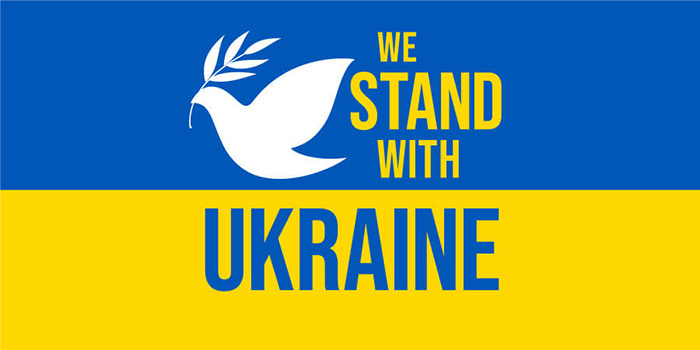
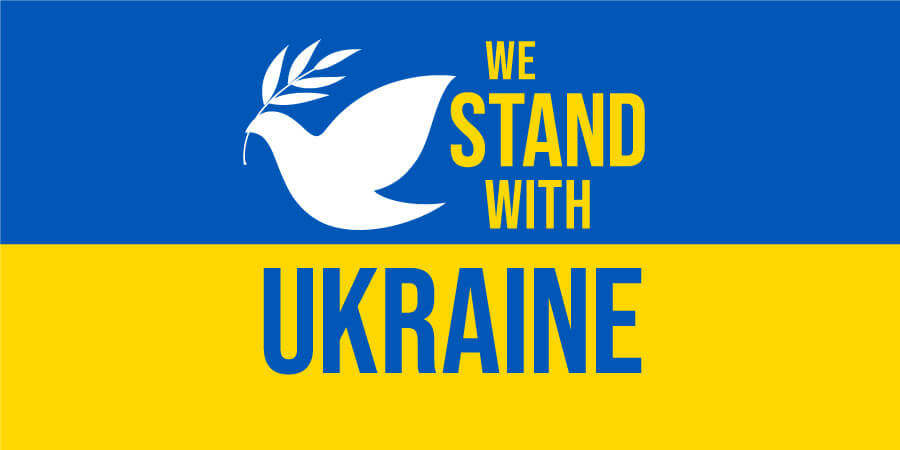
At the same time, however, a wave of design supporting Ukraine spread across the world. Posters featuring the blue and yellow of the Ukrainian flag, images combining the dove of peace with the Ukrainian colors, and the slogan “Stand with Ukraine” circulated widely. Designers around the world created posters free of charge and shared them through social media. In this context, design became a tool that called for peace.
The Nazi Hakenkreuz: The Dark History of Design
During World War II, the Nazi Party led by Adolf Hitler adopted the “Hakenkreuz” (卍), a hooked cross, as its symbol. Originally a sign used across many ancient cultures, it was transformed by the Nazis into a symbol of hatred and genocide. A red background, a white circle, and a black swastika at the center. The design was simple, striking, and unforgettable. The Nazis used this symbol consistently on flags, uniforms, armbands, and architecture. This visual consistency reinforced Nazi ideology and manipulated the collective unconscious of society. Design was also used as an instrument of discrimination and persecution. The Nazis forced Jews to mark their storefronts with the Star of David and compelled them to wear the symbol as an armband. Yellow stars on shop windows and yellow badges on sleeves became tools of identification and exclusion. In this way, design became the first step toward segregation, oppression, and ultimately mass violence.
When Colors Speak of War
In times of war, color is not merely an aesthetic choice. It carries ideology, emotion, and the power to mobilize people. Red, for example, became the color of communist revolution. Black symbolized the authority and terror of Nazi Germany. White has long represented peace. The red of the Russian Revolution evoked both blood and fervor. Red flags, red stars, Red Square. Red became the visual language of revolution and communism. The black of Nazi Germany conveyed fear and absolute authority. Black uniforms and the black SS attire. Black demanded obedience. The blue and yellow of the Ukrainian flag symbolize sky and wheat fields. An image of a peaceful agricultural nation. Yet when that flag waves over the ruins of war, blue and yellow transform into the colors of hope and resistance.
The Responsibility of Designers, Messengers of Peace
Wars are decided by politicians, but it is often designers who visualize them. James Montgomery Flagg, the artist who created the famous Uncle Sam poster, sent countless young men to the battlefield. Did he intend that? Did he know his poster would contribute to the deaths of thousands? Designers carry responsibility. What will we design, for whom will we design, and what message will we deliver? These choices shape the world. When the conflict between Russia and Ukraine began in 2022, designers across the globe responded. They created posters and shared them freely, changed their social media profile images to the Ukrainian flag, and launched “No War” campaigns. They used design to oppose war. In Korea, the cyber diplomacy organization VANK also communicates messages to the international community through digital posters. Addressing issues such as historical distortions in Japan, the Dokdo dispute, and the naming of the East Sea. In the digital age, a single designer can sometimes surpass the influence of a thousand diplomats. One poster uploaded to social media can spread worldwide and shape public opinion.
Human History Has Never Known an Age Without War
The tragic truth is that there has never been a period in human history without war. From the conquest wars of the Roman Empire, the medieval Crusades, and the Napoleonic wars, to the First and Second World Wars, the Korean War, the Vietnam War, the Gulf War, the Iraq War, the Afghanistan War, the Syrian civil war, and the ongoing conflict between Russia and Ukraine as well as rising tensions in the Middle East. Wherever war has existed, design promoting war has existed alongside it. Recruitment posters, propaganda images, victory monuments, and caricatures demonizing the enemy. Design has often served faithfully at the side of war.
Yet design has also spoken for peace. During the Vietnam War, anti war activists parodied the famous Uncle Sam poster. In their version, a bandaged and wounded Uncle Sam declares, “I want out.” The design that once promoted war was turned into a visual protest against it. Picasso’s Guernica, painted in response to the German bombing of a Spanish town during the Spanish Civil War, stands as one of the most powerful visual condemnations of war ever created. Its distorted figures of humans and animals, filled with screams and suffering, transformed the horrors of war into a permanent visual testimony.
February 28, 2026: The U.S.–Iran Conflict and Our Choice
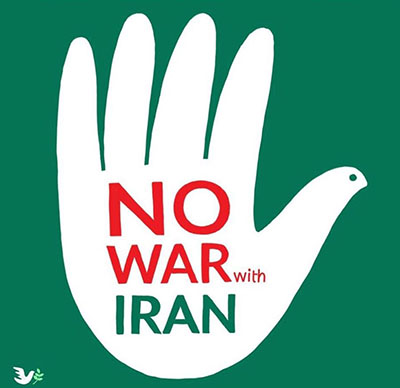
In February 2026, military tensions in the Middle East expanded into armed conflict. Once again, conflict erupted in the region. The skies above cities burned red, civilians fled into shelters, and children cried in fear. Countless lives are being lost. And once again, designers must choose. Will we create posters that promote war, or posters that call for peace? Will we follow the command of a nation, or the voice of our conscience? Design is never neutral. It always stands on someone’s side. Either the side of war or the side of peace. The side of power or the side of the people. The side of hatred or the side of compassion.
Designers, Become Messengers of Peace
Designers are messengers who communicate both war and peace. A single poster, a single logo, even a single color can influence the world. Just as the Uncle Sam poster once sent countless young men to the battlefield, an anti war poster can contribute to stopping a war. During the conflict between Russia and Ukraine, we witnessed once again the power of design. Blue and yellow flags covered buildings around the world, the slogan “Stand with Ukraine” spread across social media, and the dove of peace exposed the tragedy of war. Communicating the brutality of war and the value of peace through design. This is the mission of designers in the twenty first century. Wars are started by politicians and soldiers, but they are stopped by the power of citizens. And it is designers who can move the hearts of those citizens.
The conflict between Russia and Ukraine continues even now. Years of conflict have taken hundreds of thousands of lives and forced millions into exile. In addition, tensions in the Middle East have expanded into armed confrontation, adding further instability to an already fragile world. The situation grows more chaotic, and more lives are lost. Yet we do not give up. We create posters, share them on social media, and raise our voices for peace. We speak about war through design, and we call for peace through design. A single poster created by one designer can move the hearts of a million people. Those million voices may gather in the streets and demand peace. And those voices can help stop a war.
Design itself has no guilt. But designers carry responsibility. What will we design? For whom will we design? Will we stand on the side of war, or on the side of peace? History will remember the answer. It remembers the designers who promoted war, and it remembers those who called for peace. The designer who drew Uncle Sam remains in history, just as those who created anti war posters do. So the question remains. What kind of designer do we wish to be remembered as? Let us speak about war through design, but always call for peace. That is our choice, our responsibility, and our mission.

















#14057, 905 49, Beolmal-ro 102beon-gil,
Dongan-gu, Anyang-si, Gyeonggi-do, Korea
Business Registration Number: 454-86-01044
Online Sales License No.: 2021-Anyang Dongan-1081
Copyright © DESIGNSORI Co., Ltd.