
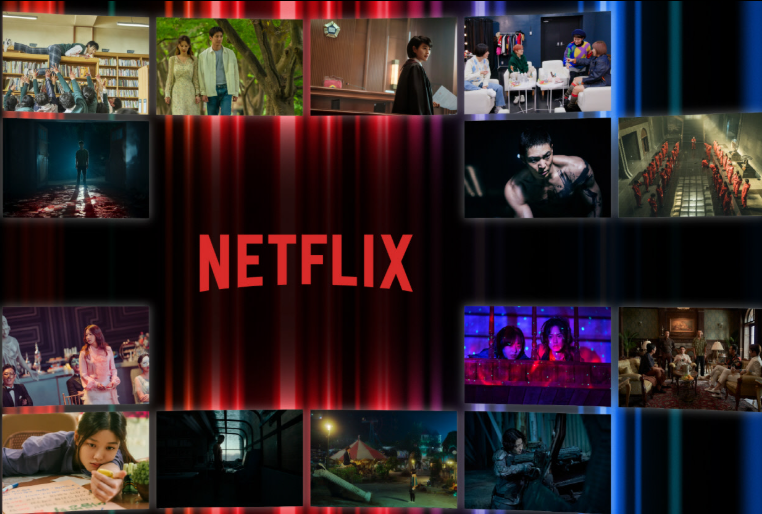
Have you ever noticed that even with the same Netflix account, the screen you see can be different from the one the person sitting next to you sees? This is not simply a matter of having different recommendation lists. Quite literally, the thumbnail image of the same drama or film can appear differently depending on the user. For someone who frequently watches romance, the thumbnail may show a couple embracing. For someone who prefers comedy, the same title might display a humorous expression from one of the actors. According to Netflix, users take about 90 seconds to decide whether to select a piece of content. If the image fails to capture attention within that time, even the best content can disappear in the endless scroll.
What is interesting is that no one designs these thumbnails individually. Netflix automatically extracts tens of thousands of frames from a single piece of content, selects the image with the highest probability of being clicked, and continuously updates that selection in real time. This can be understood simply as a matter of technology. However, from the perspective of someone who has worked on designing business structures at ValueFormer, this phenomenon can also be interpreted as a question of design strategy rather than technology alone. Within that strategy lies a shift in the fundamental question of what design actually is.
One Finished Image vs. A Structure That Operates
Traditionally, a “good poster” has been a single finished outcome created through the careful consideration of a talented designer. Composition is arranged, color is balanced, typography is placed, and the essence of the work is condensed into one image. This is valuable work, and it will continue to be so. But Netflix began with a different question. Instead of asking, “Can we create the single best poster?” they asked, “Can we build a structure in which the optimal image automatically reaches each individual user?” The distance between these two questions is greater than it first appears. The former focuses on the quality of the result, while the latter redesigns the process through which results are produced. In previous columns, I discussed the “structure of perspective” and “design as structure.” Netflix’s thumbnail system extends that idea one step further. Design is no longer something that ends with a single execution; it becomes something that continues to operate independently. This is the point where design moves beyond production and becomes strategy.
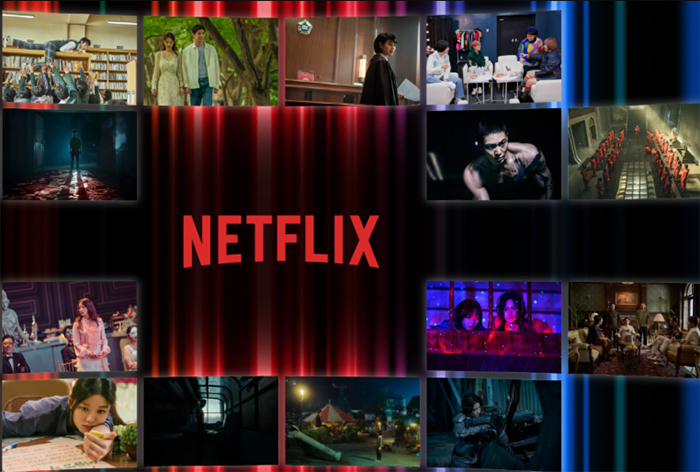
< Image Source: Netflix >
Netflix Posters
Netflix did not begin with this approach from the start. Until around 2015, the platform simply used existing movie posters or DVD covers as thumbnails. According to Netflix’s technology blog, this method had a fundamental limitation. Posters designed for theatrical release were created for roadside billboards or theater lobbies, not for competing with dozens of other titles within the small grid of a mobile screen.
Here, an important shift in perspective occurred. The problem was not the quality of the poster. No matter how well designed a poster might be, it still faces a limitation when confronted with the question: can a single image work in every context? An image that appeals to someone who enjoys romance may not resonate with someone who prefers thrillers. The same image may also produce entirely different effects depending on whether it appears on a television screen or a mobile display, during an evening browsing session or on a weekend afternoon.
The conclusion Netflix reached was this: what was needed was not “a better single image,” but “a structure that optimizes itself according to context.” The process of arriving at this conclusion is strategically interesting from a design perspective because the definition of the problem itself changed. At ValueFormer, the core of what we call “Value Forming” operates in the same way: rather than correcting what is visible, it redesigns how the problem itself is framed.
Netflix’s approach is not simply about automation. There are many reasons for this, but one of them is scale. Netflix hosts thousands of titles and serves hundreds of millions of users worldwide. From a single drama alone, more than 86,000 frames can be extracted. Managing all of these combinations manually would be physically impossible. What the structure solves here is not merely efficiency; it opens a design domain that extends beyond the limits of human capability.
The Moment When Design Becomes Strategy
In the first article of this column series, I wrote about “designing perspective,” emphasizing that the way we look at a problem is itself the starting point of design. In the second article, I discussed “designing structure,” suggesting that the essence of design lies in seeing the underlying structure rather than the surface. Through Netflix’s thumbnails, what I want to explore now is the condition under which design becomes strategy. Even when perspective and structure exist, if the result is exhausted in a single execution, it is still difficult to call it strategy. When something that has been designed once continues to operate repeatedly, learns on its own, and becomes increasingly refined over time, design finally enters the realm of strategy.
A Netflix thumbnail is, in essence, just a small image. Yet behind it operates a vast structure capable of delivering an optimized experience to hundreds of millions of users individually. The value of a single poster crafted overnight by a designer remains significant. However, when that same depth of thinking and sensitivity becomes embedded within a structure that operates repeatedly, design moves beyond production and becomes strategy. And designing such a strategy is precisely what we describe as Value Forming at ValueFormer.




















#14057, 905 49, Beolmal-ro 102beon-gil,
Dongan-gu, Anyang-si, Gyeonggi-do, Korea
Business Registration Number: 454-86-01044
Online Sales License No.: 2021-Anyang Dongan-1081
Copyright © DESIGNSORI Co., Ltd.