
Beomkwan Kim | Prof. University of Ulsan Jury Member, Asia Design Prize
Architecture has always spoken of its era through materials. Stone symbolized permanence, steel accelerated industry, and concrete completed the speed of the modern city. What, then, does the wood we are rediscovering today signify?
We already possess a culture of timber architecture. Sungnyemun in Seoul demonstrates how a wooden structure can simultaneously shape both spatial hierarchy and symbolic meaning. Yet it is not merely a single building. When we think of Geunjeongjeon and Gyeonghoeru in Gyeongbokgung Palace, we see how the repetition of columns and beams creates a grand spatial order. The pavilions, open toward wide courtyards, organize space not through walls but through the arrangement of columns. The space between columns, known as a “kan,” functions both as a unit of measurement and as a unit of spatial experience.
This structural order continues within the spatial system of the hanok, the traditional Korean house. A hanok is organized through an interconnected structure of walls, courtyards, wooden halls, and ondol heated rooms. Columns support loads while also establishing visual reference points, and the extended eaves regulate light and shadow to create depth in space. The space of the hanok is both enclosed and open, capable of flexible change within a disciplined structural frame. The essence of timber architecture lies precisely here. It lies in its refusal to conceal structure and in its method of organizing space through that structure.
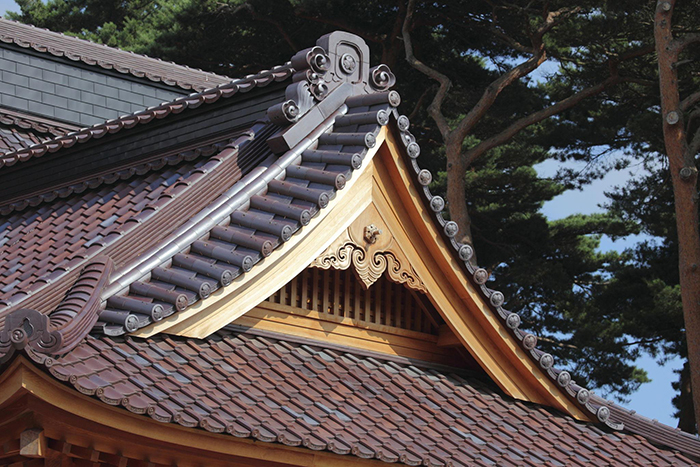
This tradition also continues in Japan. Hōryū ji, located in Nara Prefecture, was founded in the early seventh century and preserves one of the oldest surviving complexes of wooden architecture in the world. The five story pagoda and the main hall have maintained their structural form for more than 1,300 years, demonstrating the sophistication of traditional timber construction in which columns and beams interlock through refined joinery to distribute loads. Wooden joints that use almost no nails, along with the central pillar known as shinbashira designed to respond to earthquakes, prove that timber can form a long lasting and stable structural system. This example represents not only a single temple but also the broader structural strengths of Japanese timber architecture. By utilizing the directional properties and elasticity of wood to absorb lateral forces and distributing loads through flexible connections between members, timber construction demonstrates its capacity to endure both time and disaster.
The situation changed after industrialization. Steel and concrete enabled cities to grow taller and faster, and structure gradually retreated into the interior. Smooth surfaces concealed structural systems, and architecture moved toward abstract forms. Timber stepped away from the center of urban construction. Yet it never completely disappeared. In twentieth century Northern Europe, Alvar Aalto reinterpreted wood as a material of human scale. Wood was both structure and sensation. Strong yet not cold, solid yet not oppressive. As the material closest to the human body, timber regulates the emotional temperature of space.
In the twenty first century, timber architecture has reached another turning point. Engineered wood products such as glulam, LVL, and CLT have transformed timber into a structural material as strong and predictable as steel or concrete. CLT in particular has shifted timber construction from a system of linear members to one based on planar structural surfaces. At the same time, heavy timber construction reveals structure more directly through large columns and beams. Thick timber members char on the outside during fire, protecting their inner core. Technology has not only strengthened wood but has also made it visible again. Structure is no longer something to conceal. It has become a central element of architectural design.
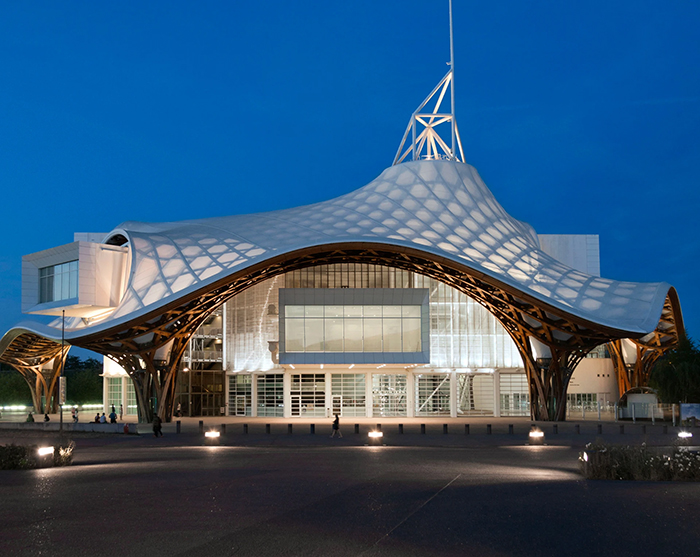
< Image source: Centre Pompidou-Metz >
Yet the value of timber design does not lie only in structural logic. Wood carries colors created by nature. Even within the same species, variations in grain direction and density produce different tones, and the way light touches its surface alters the atmosphere of space. The fine texture of wood stimulates touch, and its subtle scent adds emotional depth. While concrete and glass tend to produce spaces experienced primarily through sight, timber creates spaces where sight, touch, and smell operate together. Standing on the wooden floor of a hanok’s main hall, one does not simply see the form of space but feels it.
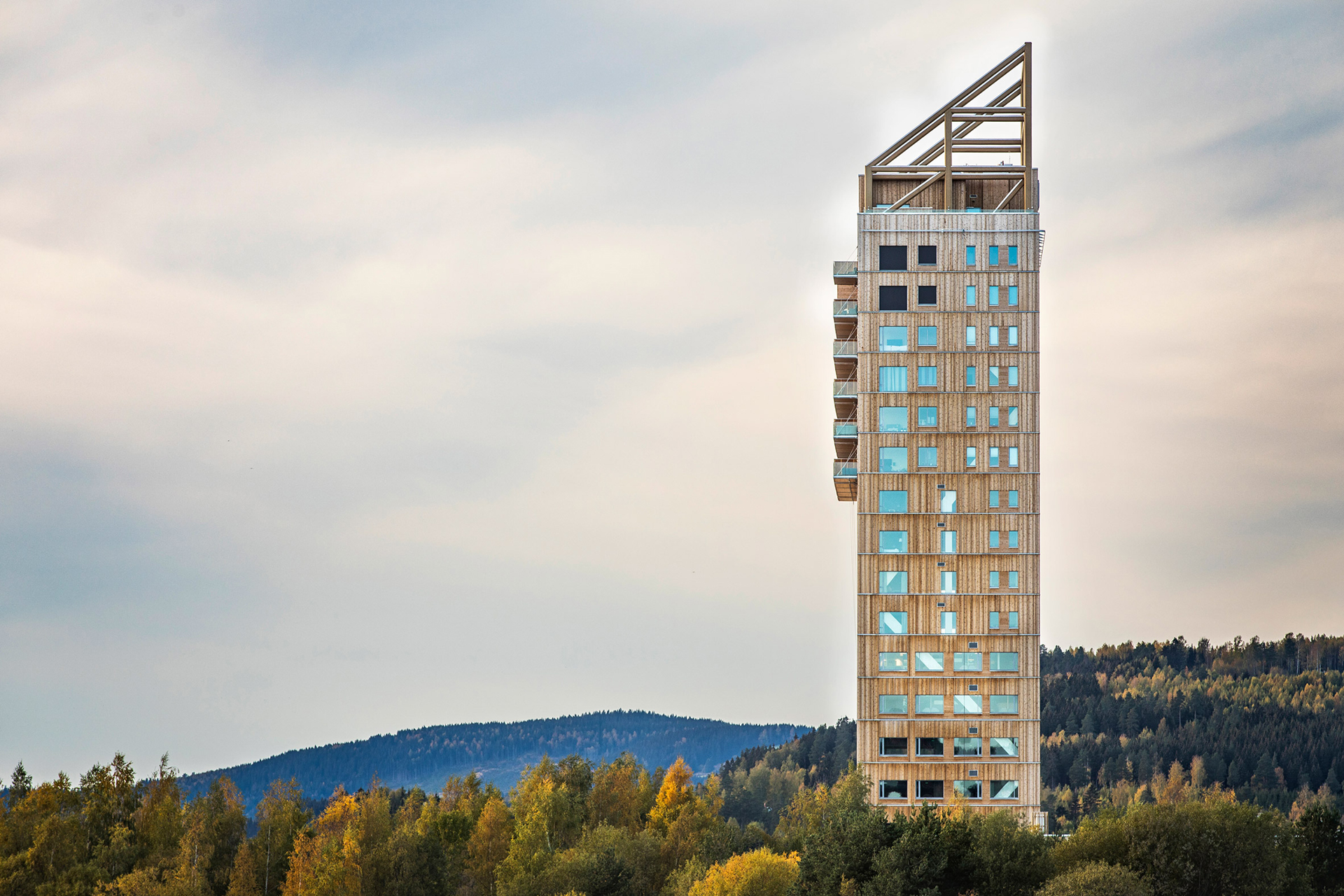
In contemporary architecture, these possibilities continue to expand. Kengo Kuma used timber in the Japan National Stadium to connect the city with nature, while Shigeru Ban reinterpreted traditional patterns through the vast wooden roof structure of the Centre Pompidou Metz. In Norway, the Mjøstårnet tower demonstrates that timber construction can extend into high rise urban architecture.
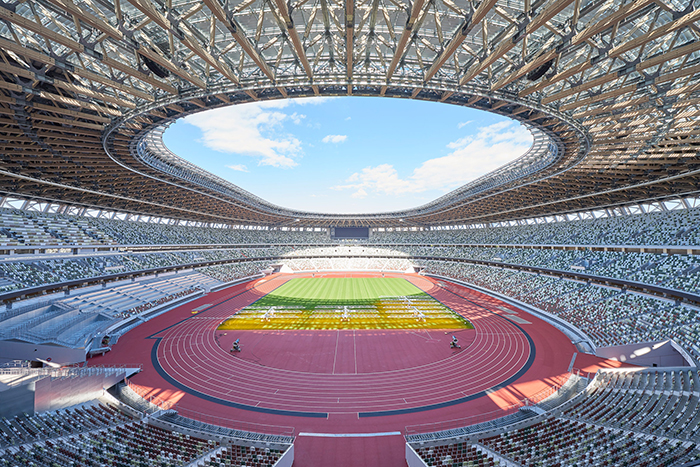
< Image source: Japan National Stadium >
Why timber again? Environmental and carbon concerns certainly provide an important background, but they are not enough. What we seek once more are human centered spaces. Spaces where light reflects softly, where the grain of a surface can be felt by hand, and where color deepens as time passes. Wood does not maintain a flawless surface. It changes color, wears down, and records traces of use. Yet these changes are not flaws but accumulations of time.
Structure, sensation, and time. It is at the intersection of these three elements that timber design regains its meaning. The reason the oldest material becomes the future again is simple. It continues to ask architecture its most fundamental questions. What should architecture stand upon? And what should it reveal? Timber architecture offers one possible answer. An architecture that reveals structure. An architecture that accepts time. At the beginning of that path stands wood. Timber is no longer merely a technology for low rise housing. It is evolving into the structural language and spatial framework of future cities.
















#14057, 905 49, Beolmal-ro 102beon-gil,
Dongan-gu, Anyang-si, Gyeonggi-do, Korea
Business Registration Number: 454-86-01044
Online Sales License No.: 2021-Anyang Dongan-1081
Copyright © DESIGNSORI Co., Ltd.