
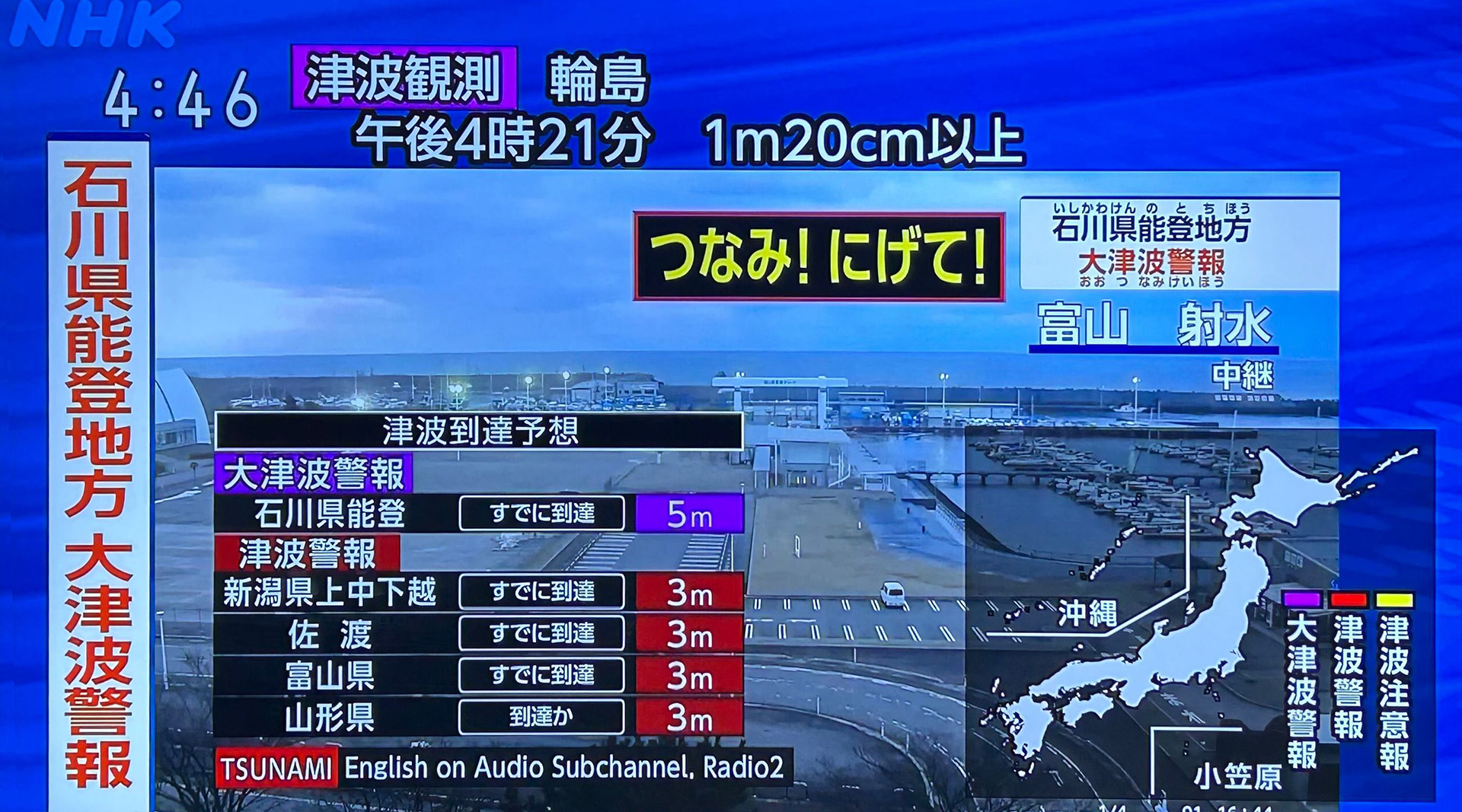
“Run for your life!” The urgent voice of the announcer, delivered alongside a warning message filling the screen, was clearly different from conventional disaster broadcasts. In 2024, NHK’s emergency broadcasting no longer remains calm and formal in tone. Moving away from a purely informational approach, it now uses more direct and forceful language to demand action. This shift stems from the accumulated lessons of the 2011 Great East Japan Earthquake, representing a strategy designed not just to inform, but to trigger immediate behavior. However, public response has been divided. Some criticize it for causing confusion, while others support it, arguing that in life-threatening situations, prompting immediate action must take priority.
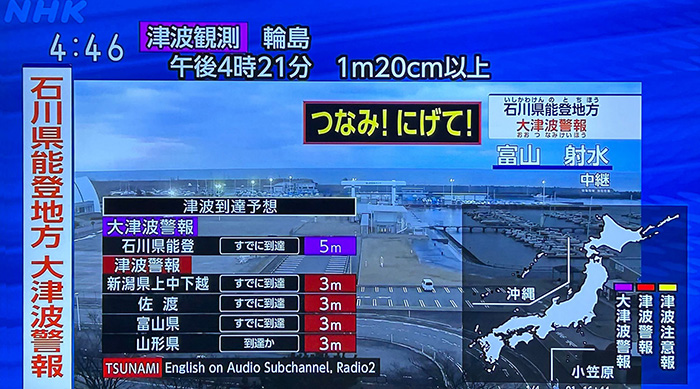
In large scale disasters, everyone knows that life must come first. The challenge lies in determining whether that moment is now. Most people have never directly experienced a life threatening situation. It is difficult to instantly assess how dangerous their current environment is or what actions they should take. As a result, in real emergencies, judgment is delayed, and even normal cognitive abilities fail to function properly. Ultimately, leaving disaster response to individual judgment reveals fundamental limitations. In this context, more active intervention from the public sector is no longer optional, it is essential.
Traditional safety information design has focused on delivering accurate and consistent information in dangerous situations to support user understanding. Its core principle is to maximize clarity and cognitive efficiency while minimizing emotional influence. It is a structure that helps users understand the situation and make their own decisions, with the final action left to the individual. This approach is reasonable in that it allows flexibility across various scenarios. However, repeated large scale disasters challenge this assumption. It raises a fundamental question: Are there situations where action must come before understanding?

At this point, the concept of local safety information design becomes especially important. This approach reflects the specific environment, types of disasters, and user experiences of a given region to actively induce immediate action. While traditional safety information design has focused on delivering information, local safety information design aims to trigger behavior through that information. Four key elements define this approach.
First is urgency. Imperative expressions such as “Evacuate immediately” shorten the decision making process and accelerate action. Second is emotional activation. Emotions like fear and tension are not irrational distractions but essential mechanisms that prompt action, eliciting responses even before cognitive processing. Third is contextual relevance. Information tailored to local disaster types and environments provides concrete behavioral guidance, improving situational awareness and response accuracy. Fourth is intuitiveness. Elements such as color, direction, and sound must enable immediate reactions without the need for interpretation, here, information functions not as something to be understood, but as a signal that drives action.
Ultimately, the role of public design cannot remain at simply “delivering information well.” In moments of crisis, speed matters more than understanding, and action takes precedence over explanation. If traditional public design has been a passive structure that leaves judgment to the user, then in life threatening situations such as large scale disasters, a more proactive form of intervention is required. Disasters arrive without warning, and in those moments, human judgment operates more slowly than expected. Bridging this gap is the role of public design, to reduce hesitation, accelerate action, and ultimately save lives. The direction that public design must now pursue is clear.















#14057, 905 49, Beolmal-ro 102beon-gil,
Dongan-gu, Anyang-si, Gyeonggi-do, Korea
Business Registration Number: 454-86-01044
Online Sales License No.: 2021-Anyang Dongan-1081
Copyright © DESIGNSORI Co., Ltd.