
Take a moment and look around at the design that surrounds you right now. The placement of buttons on your smartphone screen, the height of a café chair, the lines on a subway platform floor, the speed at which an elevator door closes. How many of these do you consciously recognize as “design” while using them? Probably very few. And that, in itself, is proof that they are doing their job perfectly. Good design does not reveal its presence. It quietly blends into life, guiding our actions, calming our emotions, and smoothing our interactions. This is the essence of “invisible design.” And today, with the rise of the AI era, this invisible design is being re-evaluated as a more powerful value than ever before.
A Philosophy That Begins with a Door Handle
Consider something as simple as a door handle. At first glance, the difference between a round knob and a lever handle may seem like a matter of form. But within that small distinction lies a profound level of consideration for others. A lever handle allows children, the elderly, people with disabilities, or someone carrying items in both hands to open a door using just their elbow. In contrast, a round knob requires a certain level of grip strength to function at all. Is it designed for someone, or not? This simple question determines the presence of thoughtful design. Good design always begins by considering the “next person.”
In 2000, shortly after returning to Apple, Steve Jobs said in an interview with Fortune, “Most people make the mistake of thinking design is what it looks like. But design is not just what it looks like and feels like. Design is how it works. It is the fundamental soul of a human made creation that expresses itself through successive outer layers.” Although these words were spoken a quarter century ago, their meaning resonates even more deeply today, as AI reshapes our daily lives. Design is not about visible form, but about the intention and philosophy embedded within it. And in the age of AI, that philosophy operates more powerfully than ever, precisely because it remains invisible.
A Line, A Circle—Design That Changes Everyday Life
On the platforms of Taipei’s MRT, boarding and alighting lines are drawn on the floor. Without announcements or staff guidance, thousands of people naturally form two lines and leave space for those getting off. This silent order begins with nothing more than a single line on the ground. Guiding behavior without force, moving people not through commands but through environment, this is the core value of public design.
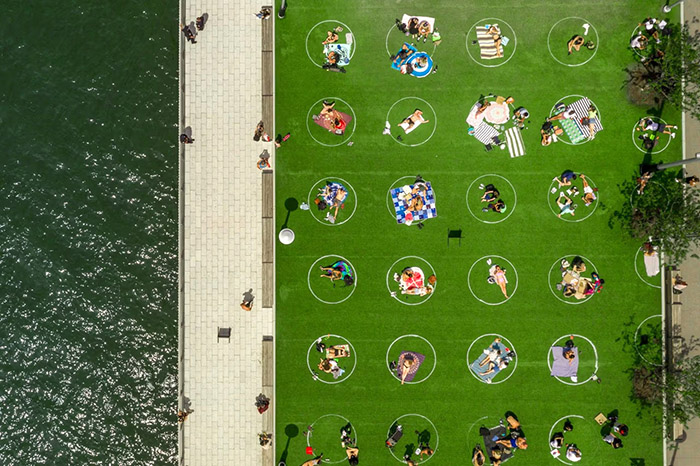
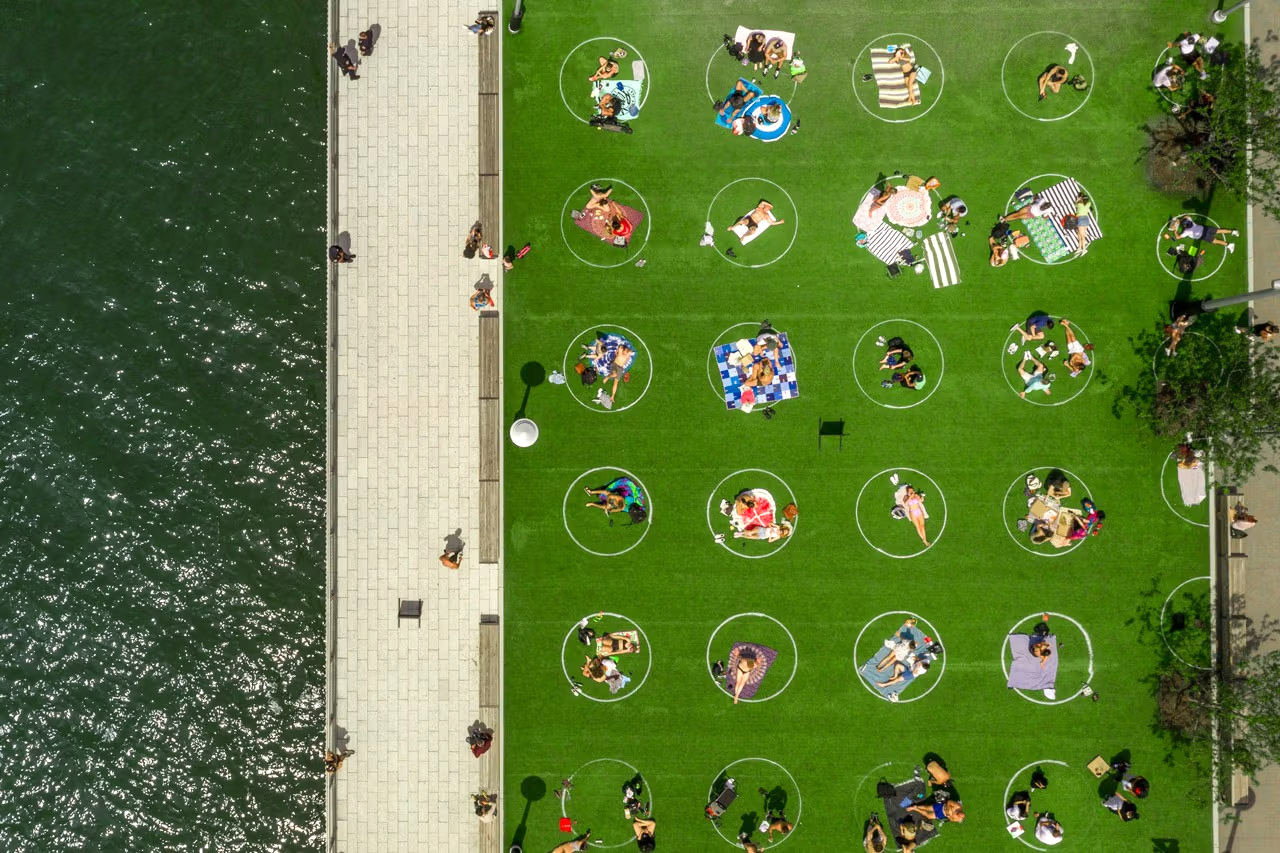
When the COVID 19 pandemic spread across the world in 2020, Domino Park in Brooklyn, New York, painted yellow circles at intervals across its lawn. Not warning signs or barriers, but simple circles guided visitors to maintain safe distances. People instinctively sat within the circles, and the space between them was naturally preserved. The circle, one of the simplest forms, became a language of public health. Allowing the environment to speak instead of enforcing rules, this reveals the social power of invisible design.
Seoul offers a quiet yet powerful example as well. As accidents involving pedestrians distracted by smartphones increased, an idea from a police officer led to the installation of LED traffic signals embedded in sidewalks. Instead of directing attention upward, the signal meets the gaze directed downward. This approach, observing user behavior first and then adapting the environment, is a classic example of behavior centered design. Rather than blaming people, it changes the environment. This is the attitude that thoughtful design must take, and it continues directly into service design in the age of AI.
A Form That Speaks Without Words — Affordance Design
Affordance Design refers to an approach that enables users to intuitively understand how to use an object or interface, through its form, texture, or color, without the need for explanation. A protruding handle “tells” you to pull, blue underlined text “suggests” you to click, and a flat horizontal surface “implies” that you can place something on it. Design communicates through form rather than language. Great affordance design eliminates the very question, “How do I use this?” If your hand naturally moves before you even think, that is the moment when affordance is fully realized.
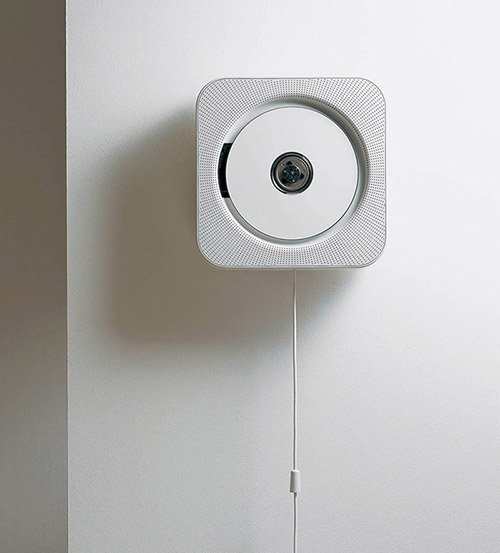
Japanese industrial designer Naoto Fukasawa is a master who elevated this concept into the language of everyday unconscious behavior. By closely observing human habits, he discovered the seeds of design. Noticing that people instinctively look for a way to secure their umbrellas, he designed an umbrella stand with grooves. No explanation is needed, upon seeing the groove, people naturally place the tip of the umbrella into it. He also observed that when an object has a string, people feel an unconscious urge to pull it. This insight led to a CD player inspired by the act of pulling a ventilation fan cord. With no visible power button, simply pulling the string starts the music. Function is completely embedded within form.
His observations go even deeper. From the habit of placing keys, wallets, and personal items down upon returning home, he designed an entryway stand. From observing how people place their bags on the floor when sitting, he created a bag holder shaped like a shoe sole. He even designed umbrellas with small grooves in the handle, allowing shopping bags to be naturally hooked onto them. In all these cases, the design begins by understanding human behavior, and then shaping form to complete that behavior seamlessly. What makes his work remarkable is that he does not add new functions, he allows design to complete behaviors that already exist. This philosophy is now being rediscovered as a fundamental principle in interface design in the age of AI.

Design for Everyone — Universal Design and Service Design
Universal Design is an approach that creates products, architecture, environments, and services so that they can be used safely and conveniently by everyone, regardless of age, gender, nationality, or disability. Its core principle is not designing for a specific group, but designing from the outset with everyone in mind. A ramp designed for wheelchair users is equally useful for parents pushing strollers, travelers with suitcases, and cyclists. Good universal design is not “special consideration” for a particular group, it becomes a natural environment for all. Jeju Island offers several leading examples of this approach in public design. Low floor buses and boarding assistance systems designed for people with disabilities, along with braille signage and audio guidance systems for the visually impaired, go beyond convenience to embody the social value of “equal mobility.” A city where no one is excluded from movement, this is the future envisioned by universal design.
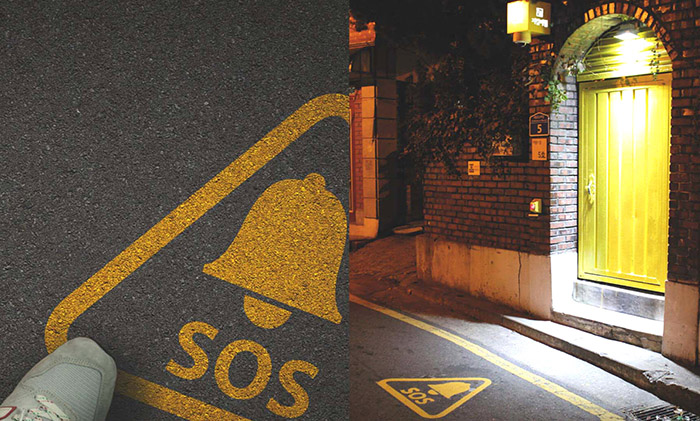
There are also notable examples in service design. Yeomni dong in Mapo gu, Seoul, was once an aging residential area with dark alleys and rising safety concerns, gradually turning into an urban slum. A service design approach was introduced there to prevent crime. Experts and residents collaborated to monitor the area, identify vulnerable spots, and install guardian characters, lighting, and security sensors throughout the neighborhood. As the physical environment changed, residents’ sense of psychological safety improved as well. Design did not replace law enforcement, it changed the language of space, discouraging criminal behavior in advance and fostering a community where people naturally look out for one another. Service design, in this way, is less about visible outcomes and more about the entire flow of experiences behind them. And the ability to design these flows is emerging as one of the most critical competencies for designers in the age of AI.
Why “Invisible Design” Matters Most in the Age of AI
Today, tech companies and design labs around the world are moving in a shared direction, not toward more visually impressive interfaces, but toward interfaces that become increasingly invisible. As AI advances, design gradually disappears from the user’s field of view, leaving only the essence of experience. The paradigm is shifting from an era where users search menus and press buttons to one where AI anticipates intent and acts proactively, an “intent based interface.”
This is often referred to as “Zero UI.” It describes an environment without screens, buttons, or icons, one that eliminates cognitive load entirely and allows systems to recognize and respond to situations autonomously. In a world where devices respond to a single voice command, a glance, or a gesture, the role of design shifts completely, from creating forms to orchestrating experiences. As visible elements diminish, the quality of invisible design becomes the defining factor of the entire experience. In this era, the core value of design is no longer visual appeal, but trust. Trust that AI understands and executes our intentions accurately, a sense that the system is considerate of us, and confidence that technology works in our favor, all of these are built through layers of invisible design decisions. When users never once ask, “How does this work?” the experience is truly complete. The best technology and UX ultimately disappear, converging into a seamless, invisible value.
This is not merely a technological issue. It is the culmination of decades of insight from considerate design, affordance design, universal design, and service design. It is about observing human behavior first, creating environments that function without explanation, and designing systems that exclude no one. These philosophies now directly inform the principles of interface design in the age of AI. The unconscious cues that Naoto Fukasawa discovered in something as simple as a groove in an umbrella stand have evolved into algorithms that predict user intent. The philosophy of consideration that began with a door handle has now transformed into trust based experience design in the era of Zero UI.
The Century of Design—and Where We Stand
The history of design has always reflected the values of its time. In the 19th century, following the Industrial Revolution, design was driven by mass production. The virtue lay in making the same form faster and in greater quantities, with education centered on manufacturing techniques. Design was a tool of production. In the 20th century, design expanded into a domain that expressed how people experience, think, and act. The spirit of the Bauhaus took root, and with the emergence of ergonomics and user centered design, humans began to occupy the center of design.
Now, the 21st century is the era of “integrated design.” Beyond creating objects or designing experiences, the goal of design has become to shape a better world. Communication, empathy, and inclusivity have become the language of design, as considerate design, public design, affordance design, universal design, service design, and UI UX design converge toward a single direction. That direction is clear, design that exists but is unseen, operates without imposing, and excludes no one. And as AI becomes deeply embedded in human life, this direction is no longer a choice, it is an inevitable demand of our time.
Ultimately, the finest design is complete when no one even recognizes it as design. It becomes consideration embedded in everyday life, philosophy inscribed in space, and the quiet yet profound language of trust that technology offers to humanity. As the age of AI advances, the value of “invisible design” will only grow stronger, because the most perfectly invisible design is the one that understands humans most completely.















#14057, 905 49, Beolmal-ro 102beon-gil,
Dongan-gu, Anyang-si, Gyeonggi-do, Korea
Business Registration Number: 454-86-01044
Online Sales License No.: 2021-Anyang Dongan-1081
Copyright © DESIGNSORI Co., Ltd.