
In the 1980s, Japan was in the midst of an economic boom. The market was overflowing with flashy and extravagant products, yet Muji emerged from the exact opposite direction. The brand name itself meant “no-brand quality goods,” and it began as a private label for the Japanese supermarket chain Seiyu. Its philosophy was simple: remove the unnecessary, focus on the essential function of the product, and avoid excessive packaging. Today, this approach may feel natural, but at a time when everything competed through extravagance, choosing such a direction was a remarkably bold decision.
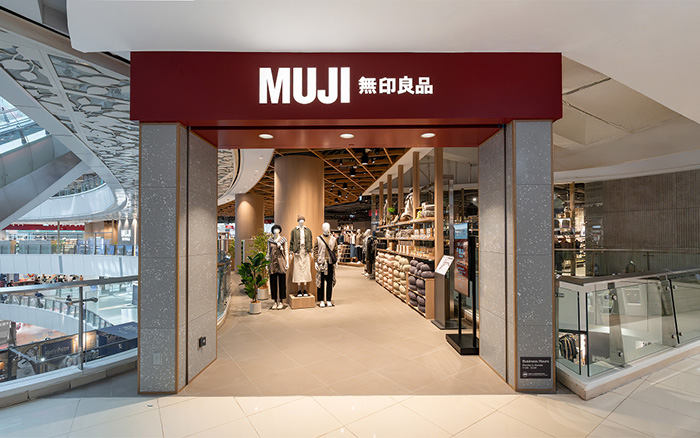
Forty five years have passed since then. Today, Muji operates more than 1,000 stores worldwide and sells over 7,000 products, expanding from clothing and stationery into furniture, food, cosmetics, prefabricated houses, and even hotels. Yet there is one remarkable thing about this 45 year journey of expansion: Muji’s message has barely changed. “This is enough” (これでいい). It said the same thing in 1980, and it continues to say the same thing in 2025.
Normally, over the course of 45 years, a brand changes direction many times. Markets shift, leadership changes, and consumer tastes evolve, so naturally, messaging changes as well. But Muji repeated the same philosophy for 45 years and turned that repetition itself into a strategy. From the perspective of design strategy, this raises an interesting question: How does accumulation become strategy? Why is repeating the same message so difficult?
Muji’s art director Kenya Hara once described the brand’s philosophy as creating products with the utmost simplicity, products that naturally fit into diverse living environments and seamlessly blend into any level of lifestyle. The statement sounds simple, but it is extremely difficult to execute. The principle of “maintaining simplicity” inevitably faces pressure over time within an organization.
When sales stagnate, the temptation arises: Shouldn’t we create something more eye catching? When competitors launch flashy collaborations, anxiety follows: Shouldn’t we do the same? In fact, Muji itself faced a serious crisis in the mid 2000s, partly because it aggressively expanded products that deviated from its original principles in pursuit of growth. Repeating the same message for 45 years also means resisting, for 45 years, the temptation to abandon it.
What Muji did after the crisis is particularly interesting. Instead of searching for a new direction, it designed structures that reinforced its original one. A representative example is the MUJIGRAM, a manual that contains every aspect of store operation, from greetings and handing products to customers, to giving change and arranging merchandise. The goal was to ensure that customers would have the same experience in any Muji store, anywhere in the world. Muji also established advisory committees composed of external designers to verify that products did not stray from the brand philosophy. In other words, Muji did not survive simply through the willpower to “repeat the same message.” It survived because it built structures that allowed that message to be repeated consistently for 45 years. For philosophy to accumulate, philosophy alone is not enough. The structures that protect that philosophy must accumulate alongside it.
What Accumulation Creates
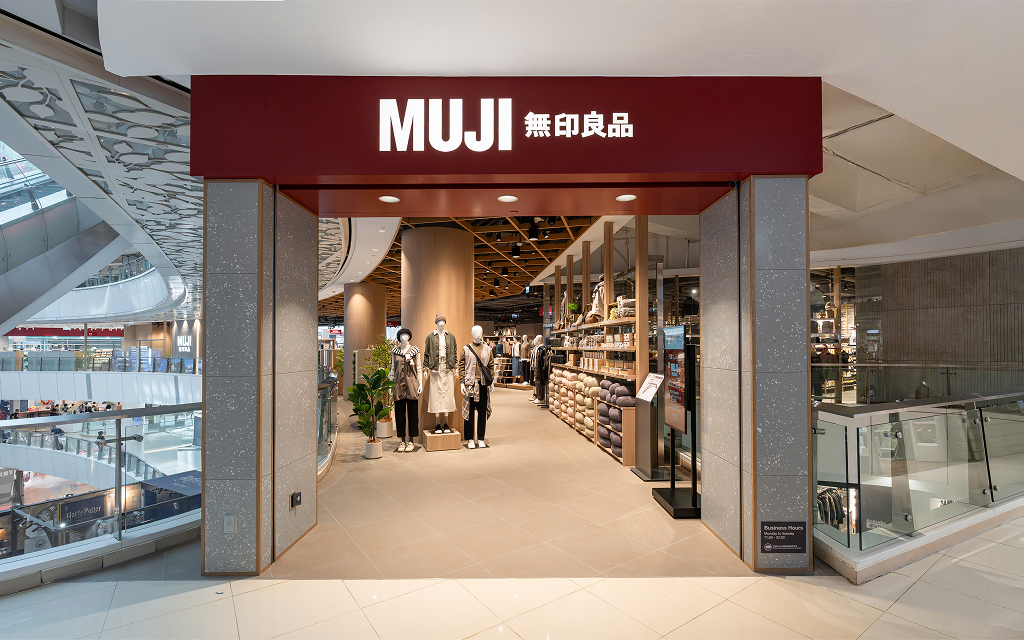
The power of accumulation is rarely visible on the surface. When someone enters a Muji store, what they feel is usually a vague sense of comfort, not an analytical realization that “this brand has accumulated the same philosophy for 45 years.” Yet that vague sense of comfort is precisely the result of accumulation. Every Muji product is limited in color palette, displayed with minimal packaging, and accompanied only by functional information and pricing. If this were true of only one or two products, it would simply be called “simple design.” But when more than 7,000 products are created according to the same principles and gathered within a single store, they transcend individual product design and become an entire worldview. Consumers are not merely purchasing products, they are stepping into that worldview.
This cannot be created overnight. It is only possible because the message “This is enough” has been repeated tens of thousands of times and embedded into products, stores, and services. Muji’s paradox, that having “no brand” became its brand, could never exist without accumulation. A worldview is not created through a single declaration; it emerges only through the long term accumulation of consistent practice.
When Accumulated Interest Becomes the Foundation of Design
Speaking of accumulation as strategy, I would like to share a personal experience. Not long ago, I unexpectedly started a herbal tea business. It seemed strange because someone deeply immersed in designing systems and platforms suddenly began making herbal tea. I developed the tea recipes myself, searched for herbal ingredient suppliers, and led the packaging, branding, and distribution strategy. What began as a brief escape during spare moments of the week became a deeply rewarding source of dopamine for me.
Looking back, what made this possible was the long accumulation of knowledge and interest in herbal medicine and traditional remedies, something I had studied for years simply out of curiosity, sometimes as a hobby and sometimes as a passing fascination. I never studied it to start a business. Yet over time, that accumulation became the foundation for one. When developing recipes, I already had an intuitive sense of ingredient compatibility and proportions. When sourcing materials, I could distinguish quality through experience. When designing packaging, I instinctively understood the expectations and anxieties consumers have toward the category of herbal tea.
The scale was incomparably smaller than Muji’s, but I believe the essence was the same. Without accumulated experience and interest, the starting point for designing the business structure itself would not have existed. Good recipes emerged from accumulated herbal knowledge. Strong sourcing systems came from accumulated experience in judging quality. Packaging that reflected consumer psychology came from years of trying to understand users empathetically while designing systems. None of these appeared suddenly on the day the business began.
Strategy Without Accumulation, Accumulation Without Strategy
Throughout this series, I have explored design strategy from multiple perspectives: shifting viewpoints, designing structures, and turning constraints into principles. What I want to add through Muji is this: beneath all of these lies accumulation. Time is perhaps the most underestimated element in design strategy. Sharp ideas, insightful perspectives, and clever systems easily draw attention. But for them to exert real power, they must be supported by years of accumulation. When Muji first said “This is enough,” it was simply a slogan. After 45 years of repetition, it became a worldview.
At the same time, accumulation alone is not enough. Experience gathered without direction is like an unorganized warehouse, when the right moment comes, nothing can be properly retrieved or used. For accumulation to become strategy, what has been accumulated must be connected and structured. Just as Muji did not survive through philosophy alone but created systems like the MUJIGRAM, accumulation only gains value when it is transformed into strategy. Strategy without accumulation is shallow. Accumulation without strategy is scattered. In the end, the depth of design strategy is determined by how long, how consistently, and toward what meaningful direction something has been built.

















#14057, 905 49, Beolmal-ro 102beon-gil,
Dongan-gu, Anyang-si, Gyeonggi-do, Korea
Business Registration Number: 454-86-01044
Online Sales License No.: 2021-Anyang Dongan-1081
Copyright © DESIGNSORI Co., Ltd.