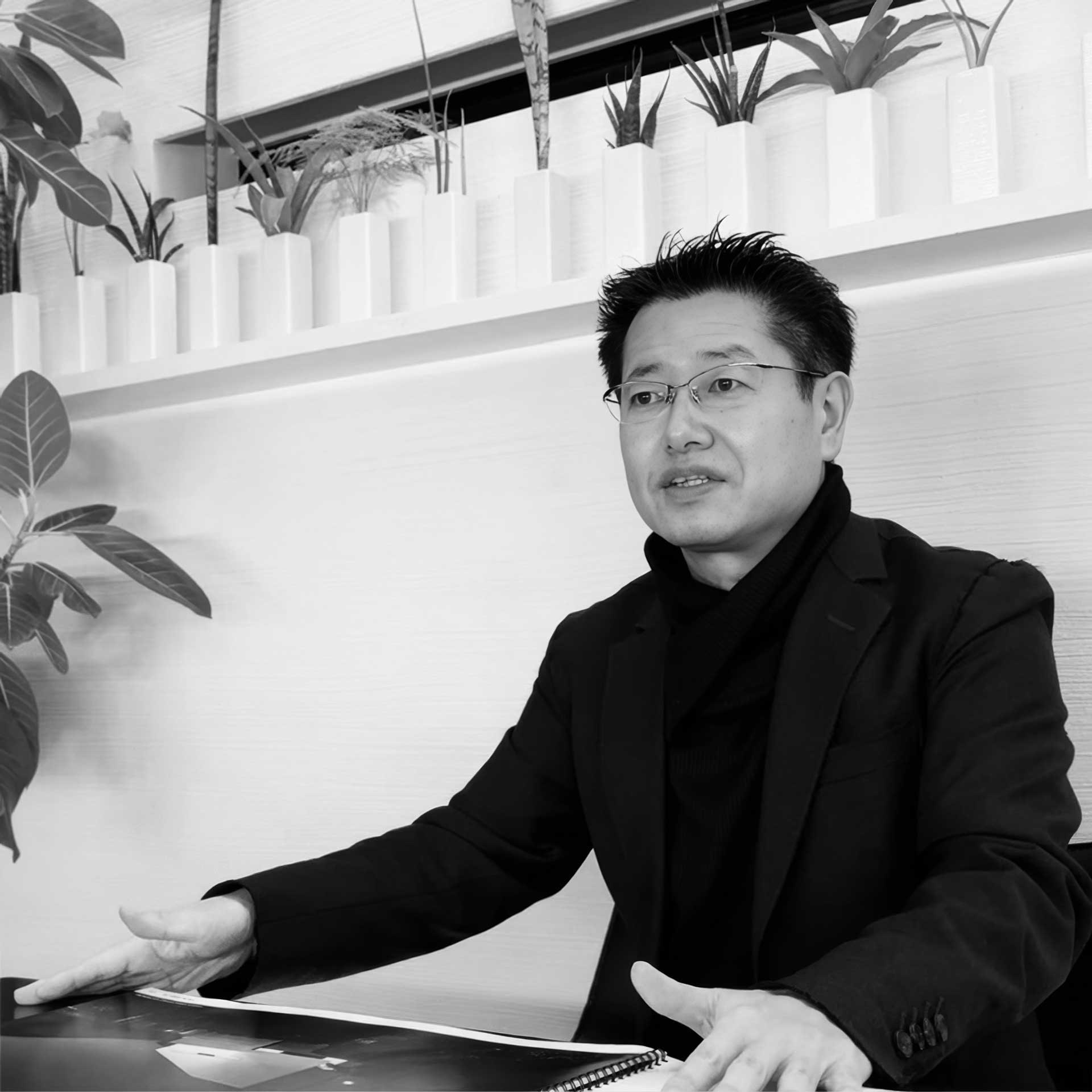
Nobuaki Miyashita Founder / Principal Architect, MR STUDIO
“Architecture is not a mere physical structure, but a medium that conveys the thought and will of the subject embodied within it. The attitude of reading principle rather than surface, and interpreting essence before form, poses a profound question about the role architecture must play within society and across time. This interview traces the work of MR STUDIO, a practice that has translated the inherent values of companies and places into space. By integrating corporate history, technology, philosophy, and the will toward the future into a single architectural structure, principal architect Nobuaki Miyashita has consistently proposed a perspective of ‘architecture that visualizes identity,’ continuing to inquire into how architecture can remain in the memory of people and grow in meaning through time.”
First, could you introduce MR STUDIO and your design journey? We would also appreciate it if you could share the kinds of problems you have addressed through architecture, and how your current design philosophy has been shaped.
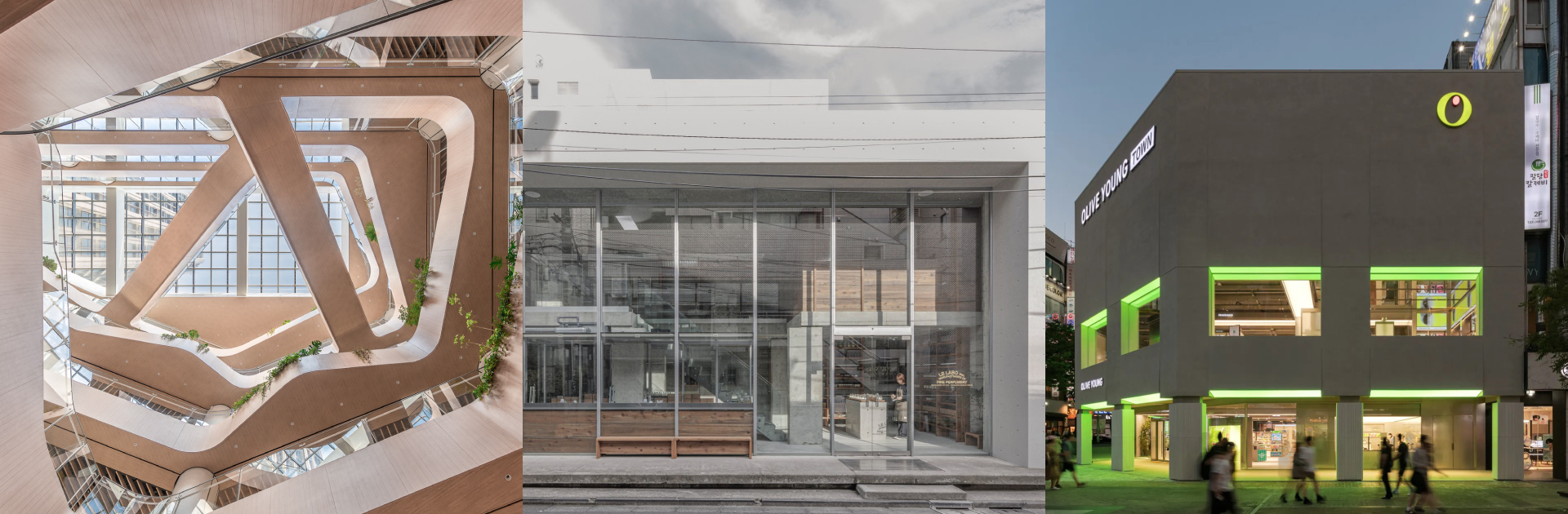
MR STUDIO is an architectural practice founded in Tokyo in 2017, which I lead as its principal. After accumulating twenty years of experience in the design division of a major general contractor, I became independent, and for approximately thirty years I have been involved in a wide range of projects spanning housing, offices, production facilities, and commercial spaces. At MR STUDIO, we place particular emphasis on concept making, design supervision, and design development from the very earliest conceptual stage, not merely organizing given conditions, but reading the values and individuality inherent within them and expressing them clearly through architecture.
What I have consistently pursued is the idea of architecture not as a mere vessel, but as a medium that conveys thought and intention. The process of exploring how invisible dimensions such as technology, history, values, and visions of the future can be translated into space has become the foundation of my current design philosophy. For this reason, my practice places importance on extracting the essence of a subject and translating it into space. The attitude of conceiving not only the architecture itself, but also signage, lighting, products, and landscape as an integrated whole lies along that same trajectory.
Your concept of ‘architecture that visualizes identity’ is particularly compelling. Could you elaborate on what this means, and how it is realized in your projects?
What I call “architecture that visualizes identity” is the act of clearly translating into space the unique value inherently possessed by a company, organization, or place. The identity I refer to here is not limited to surface level elements such as logos or colors, but encompasses history, technology, philosophy, attitudes toward craftsmanship, and aspirations for the future. In other words, I see this as the spatialization of the very essence of a brand held by a company or organization. By carefully interpreting these elements and translating them into form, composition, materials, light, and experience, I aim to allow the character of the subject to naturally permeate the entire architecture. What matters is not the addition of symbolic motifs, but the creation of a condition in which the architecture itself naturally communicates “what it is” and “what kind of brand it embodies.”
To achieve this, our projects incorporate the principles of products and technology into spatial composition, while consistently weaving the philosophy of the company into lighting and signage. At the core of this approach is the idea of conveying through architecture the individuality and raison d’être of the subject, along with the coherence of the brand, as a fully embodied experience.
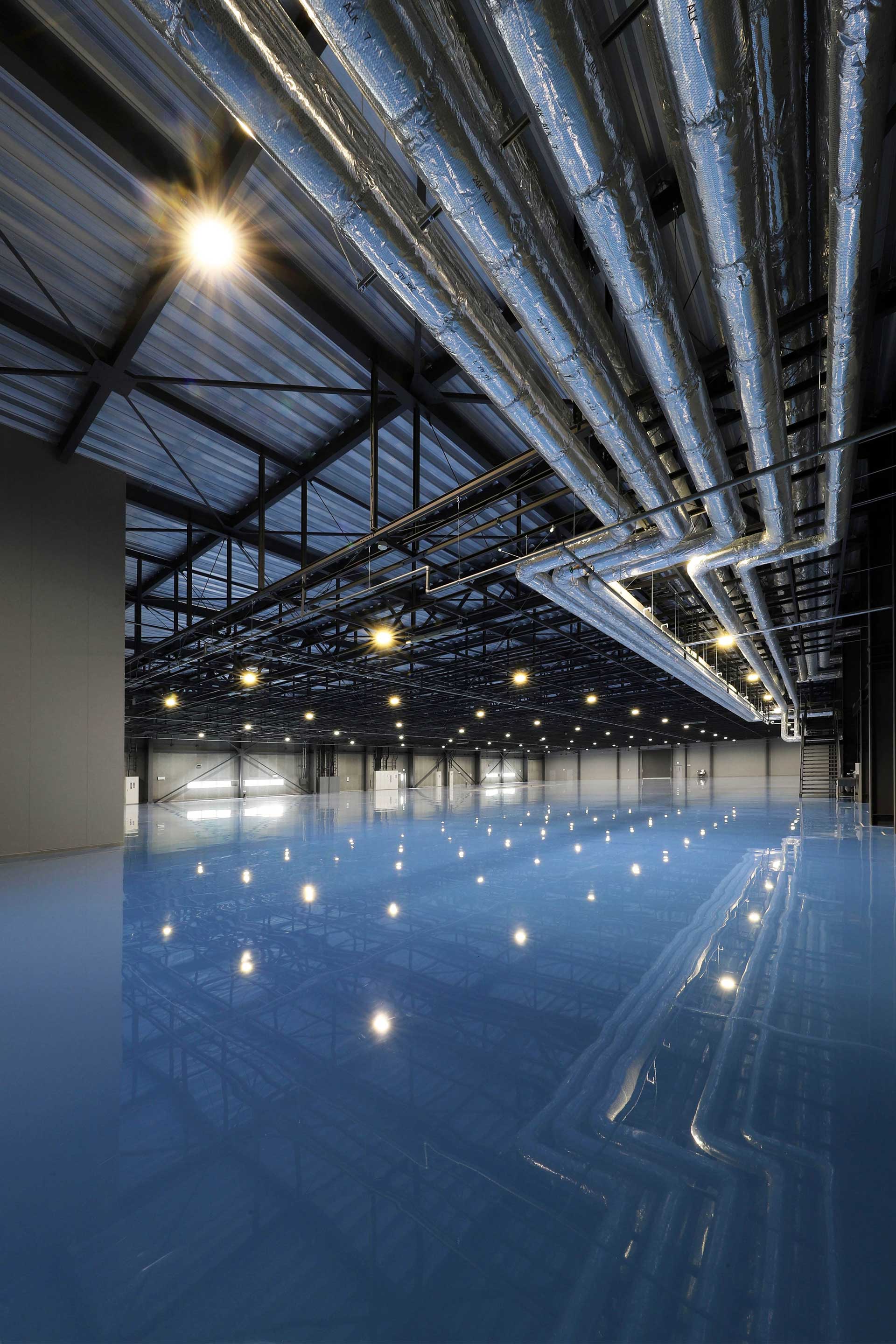
In your projects, corporate technology, history, and values are translated into spatial expressions. Could you explain the research and analytical process behind this approach?
The starting point of design is a deep understanding of the subject. I first conduct careful research into the company’s history, business, product characteristics, technological strengths, and the role it has played within society. Through dialogue with those in charge, on-site visits, and close observation of products and components, I explore where the true essence of the company resides. What I regard as most important here is not surface-level information, but the discovery of the structure and principle that sustain the company itself. By deciphering which processes underpin its quality and which philosophy shapes its present form, the core that should be translated into space begins to reveal itself.
Building upon this, these findings are never left as mere explanation but are translated into form, composition, material, and light, and embedded within the skeleton of the architecture. Research, for me, is not an act of accumulating knowledge, but a process of finding the essence required for architecture to be truly realized.
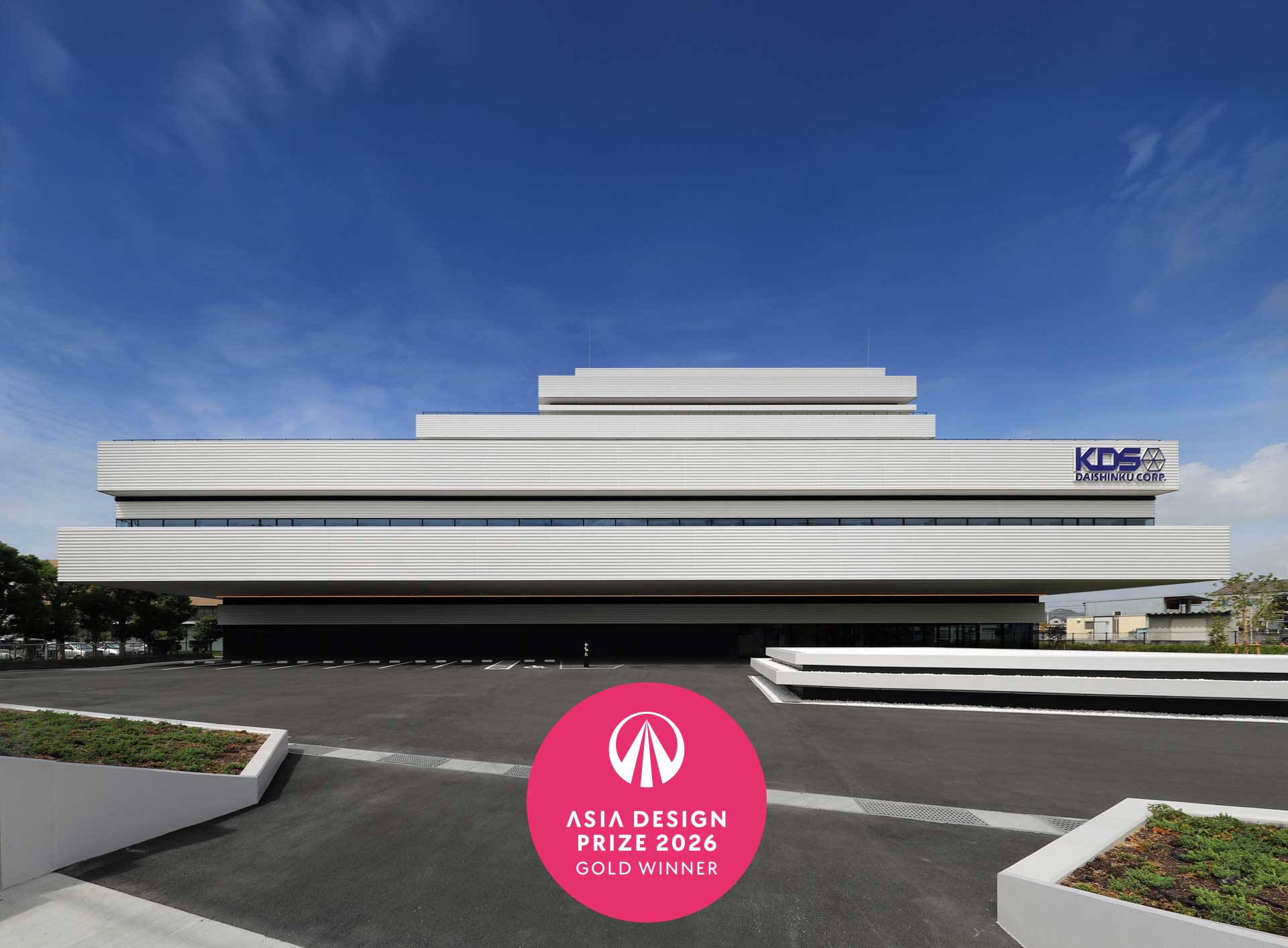
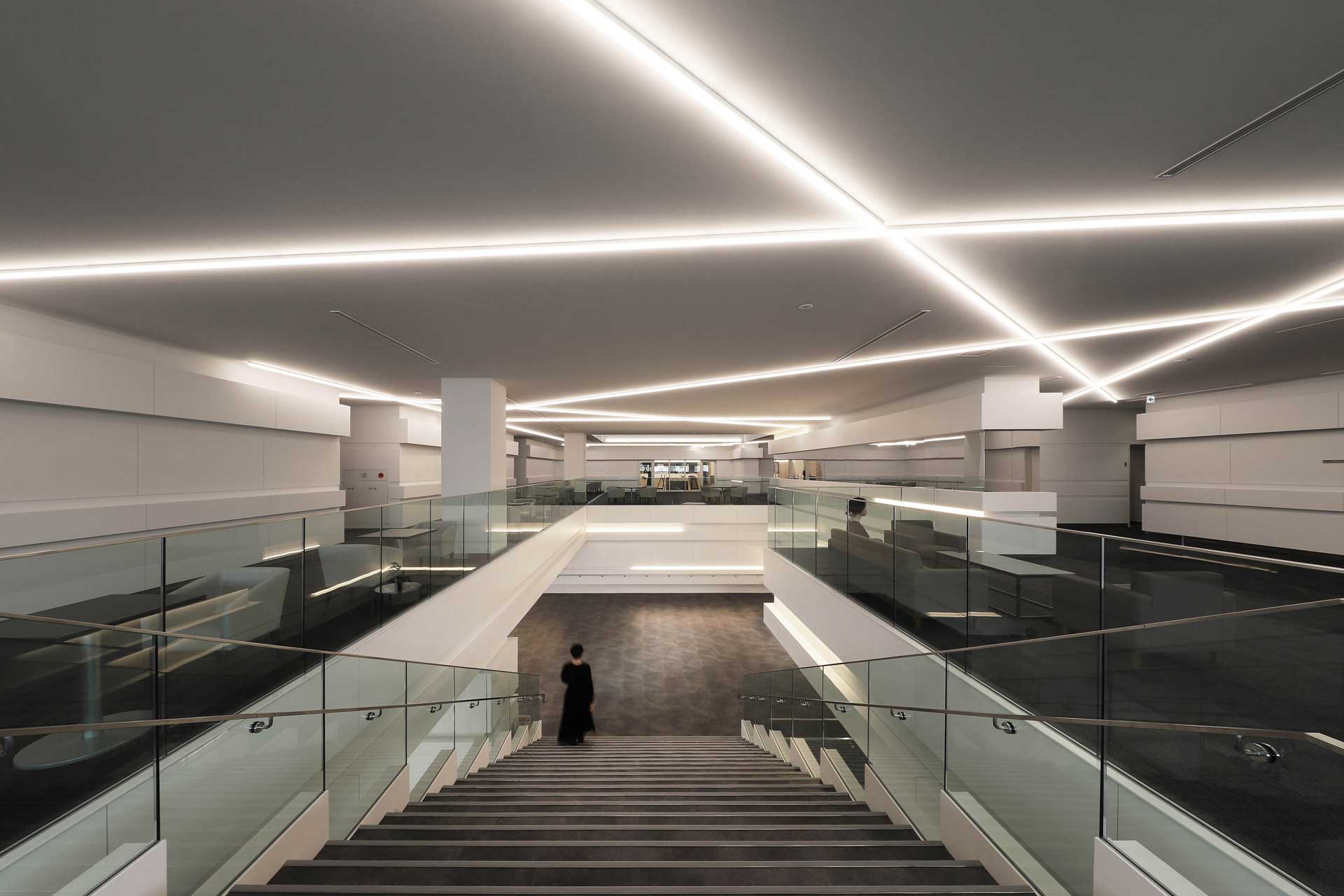
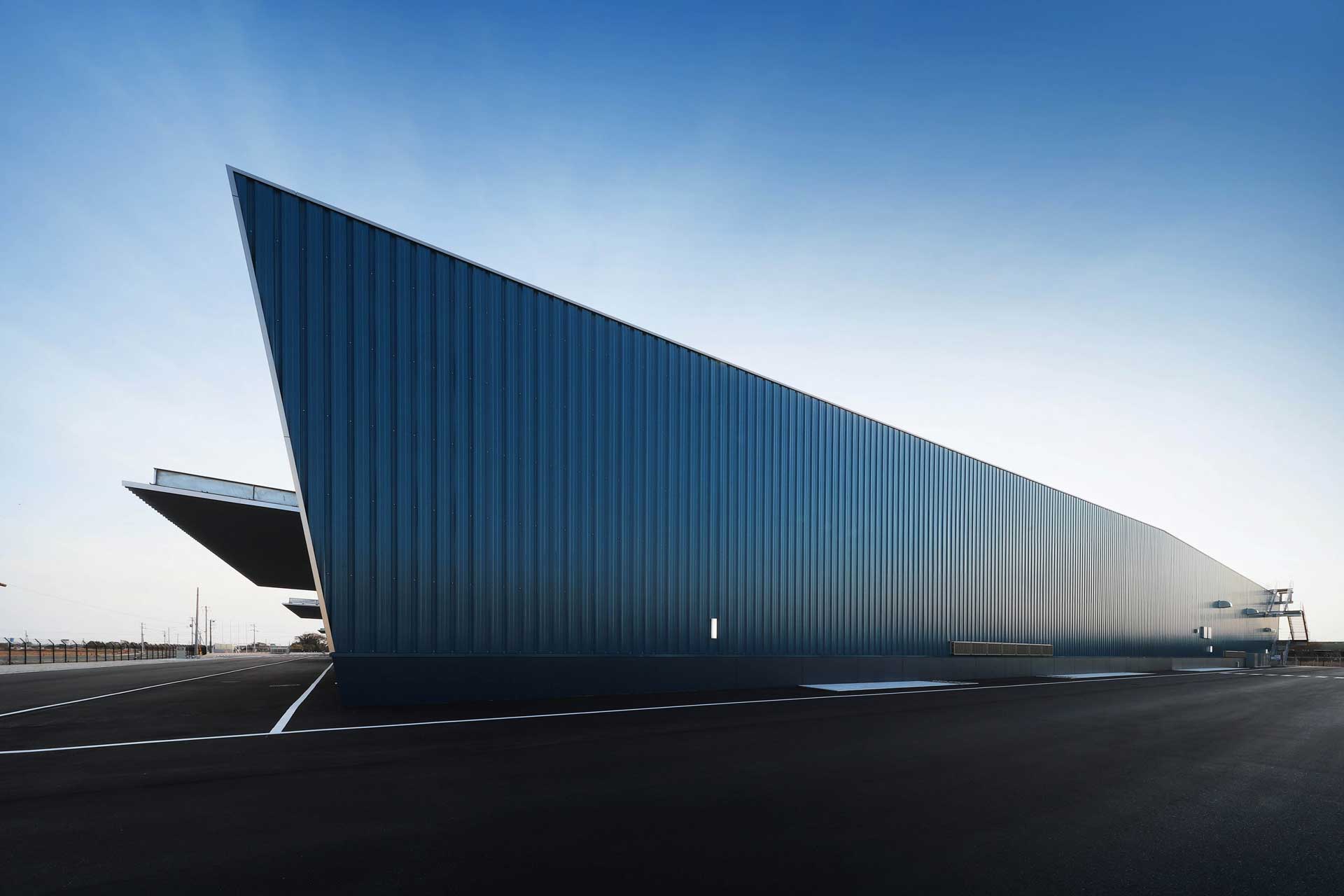
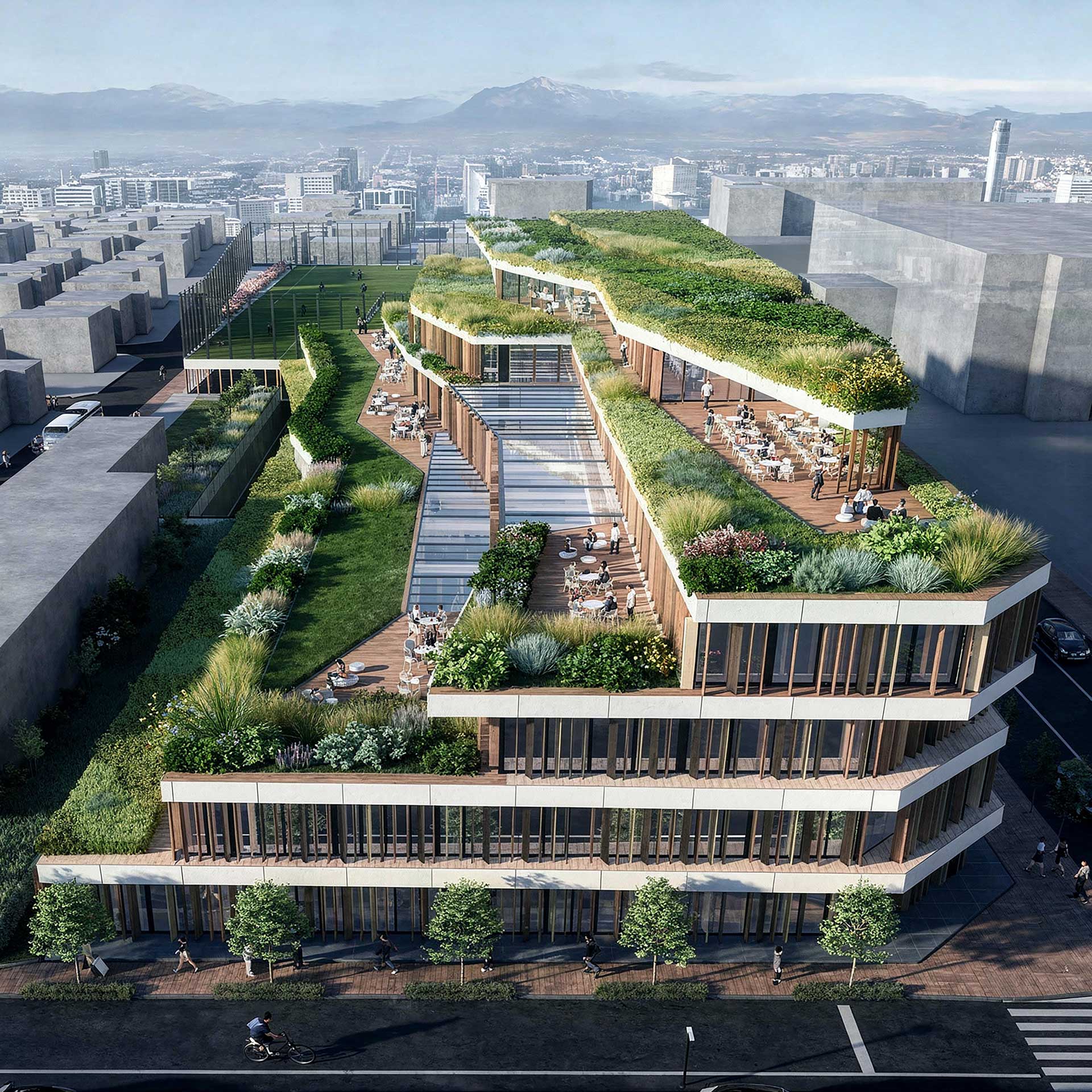
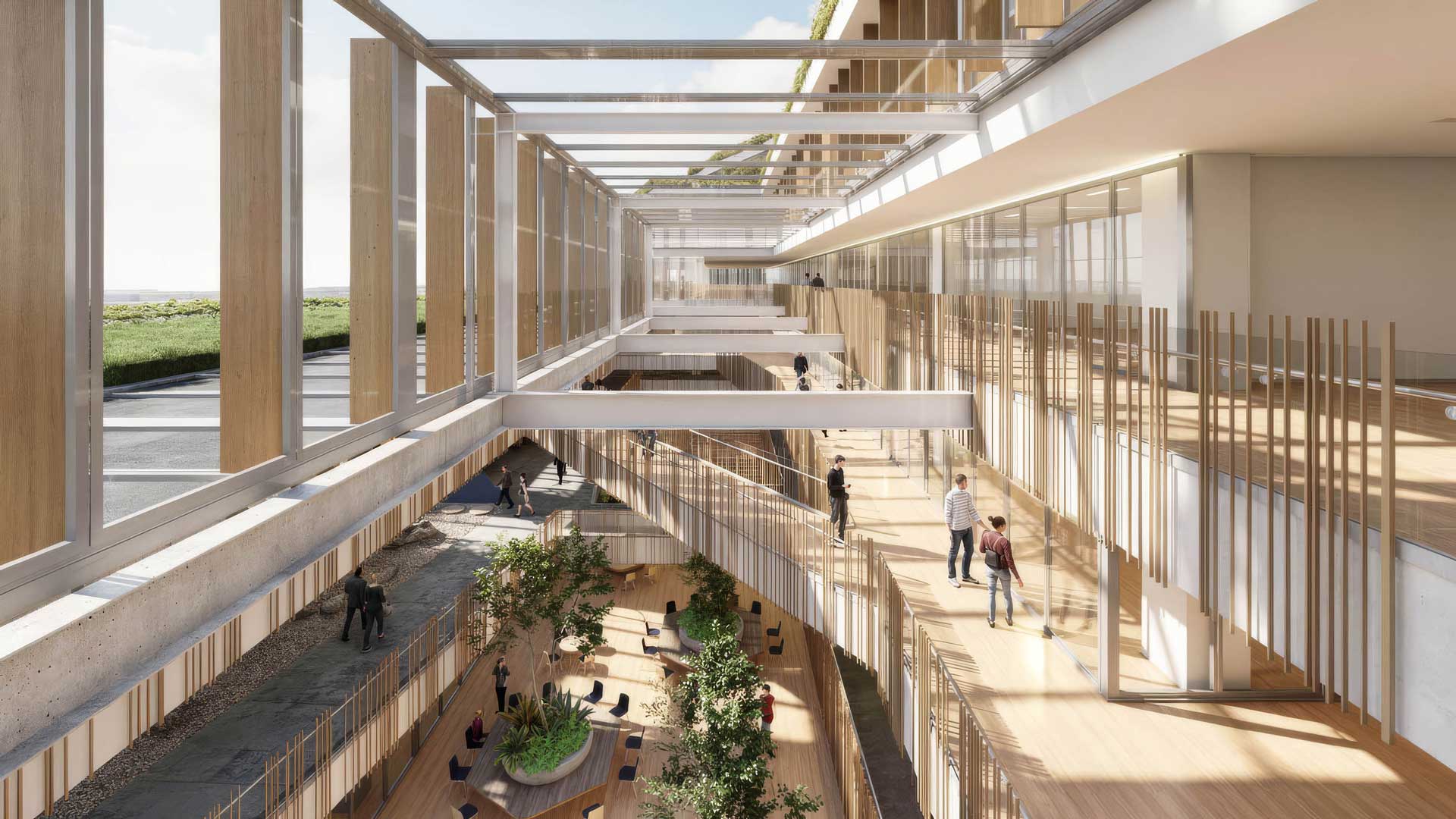
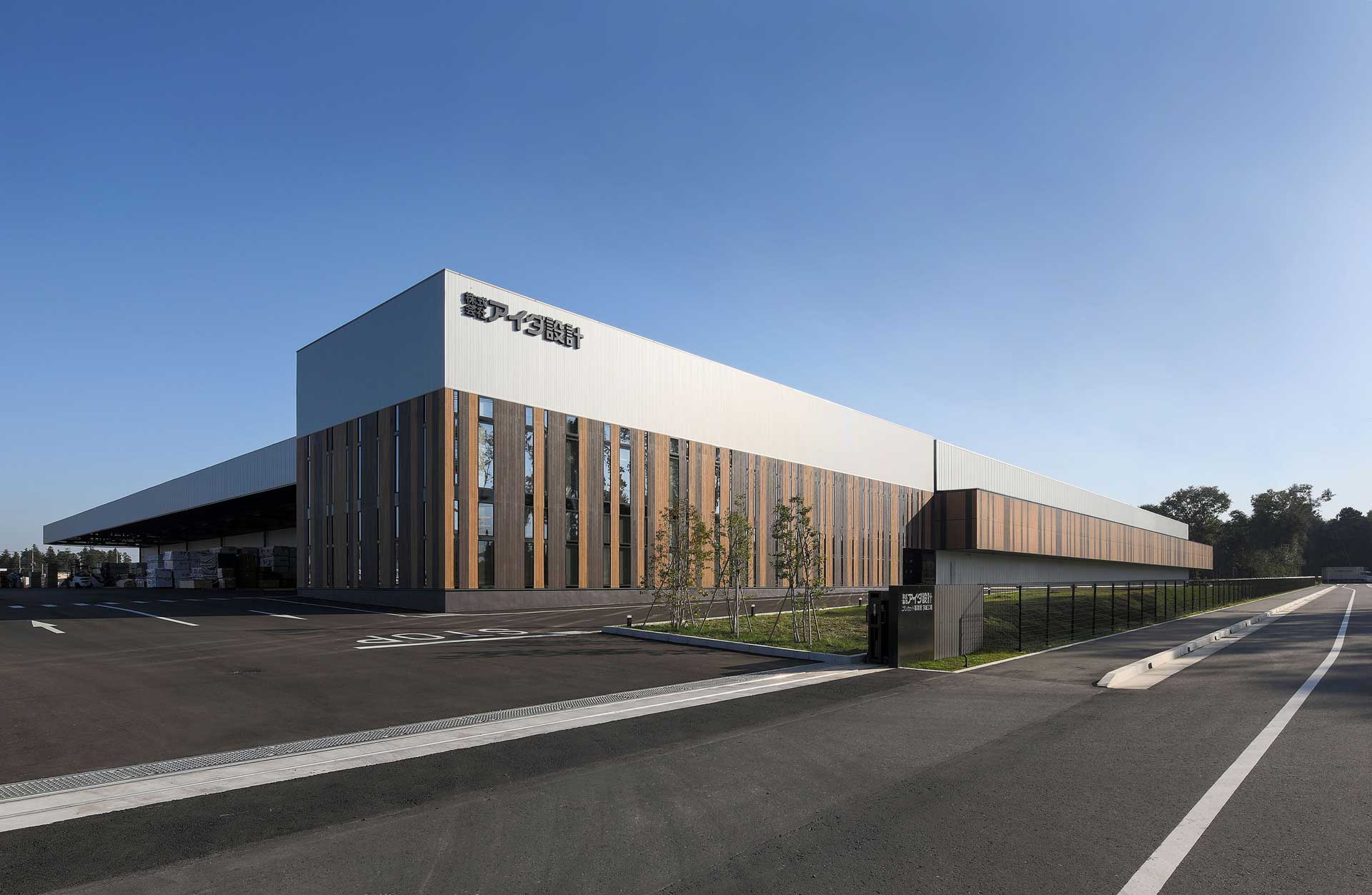
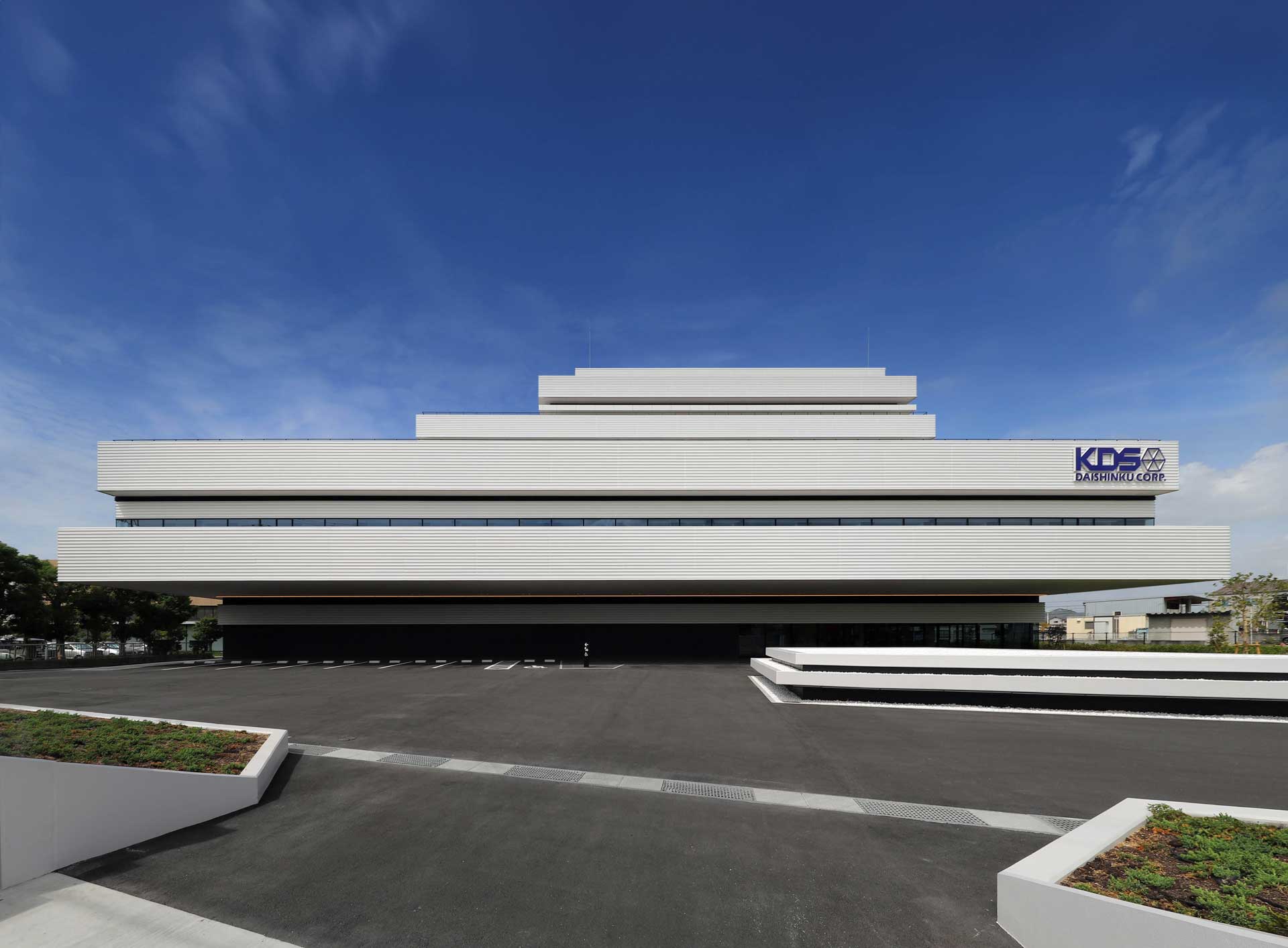
< DAISHINKU CORP HEADQUARTERS AND PLANT, ASIA DESIGN PRIZE 2026 Gold Winner >
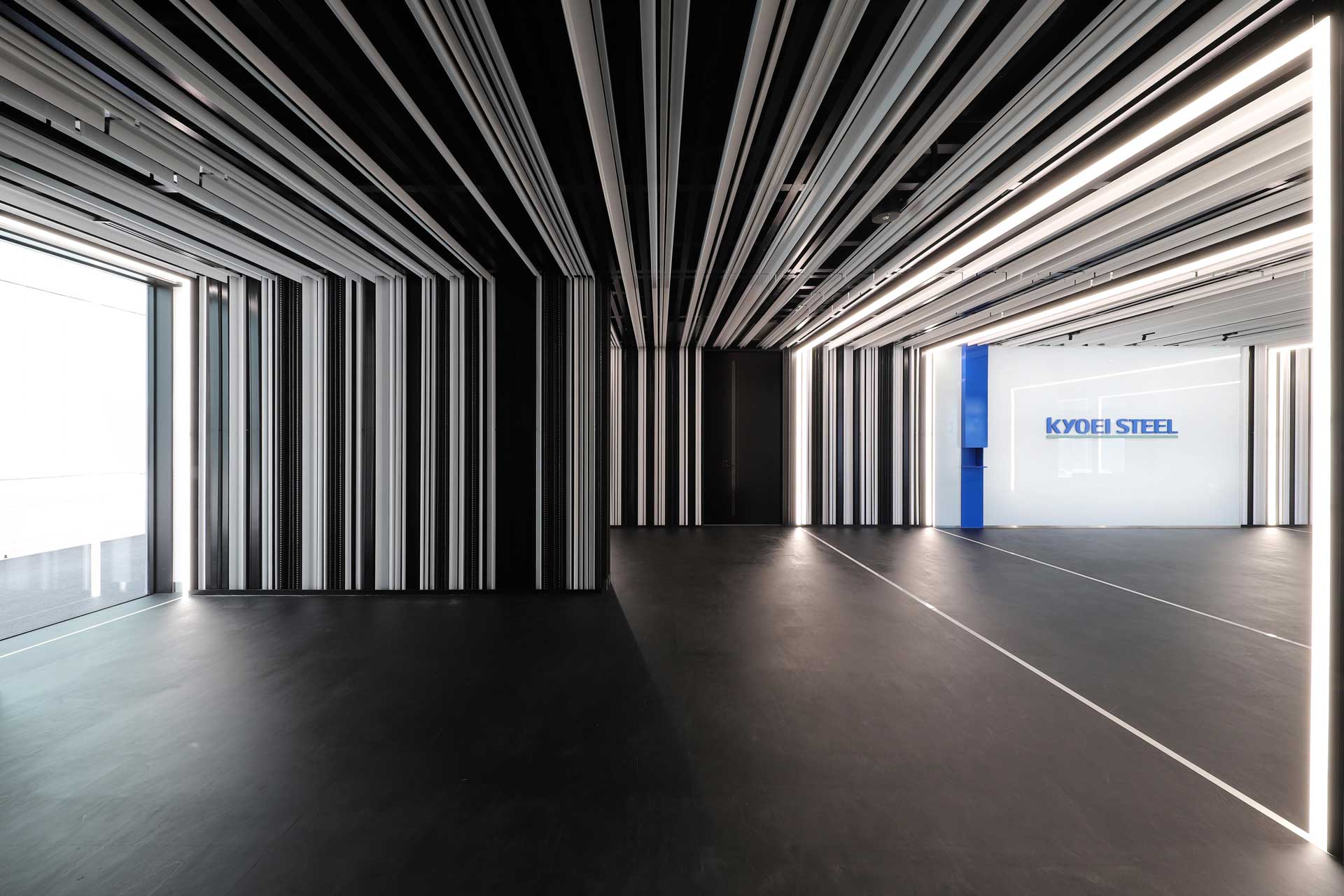
For instance, in the Daishinku (大真空) project, the ‘structure of crystal’ was translated into architecture, while in the Kyoei Steel (共英製鋼) project, the ‘process of regeneration’ was expressed spatially. What criteria do you consider most important when translating the essence of an industry into space?
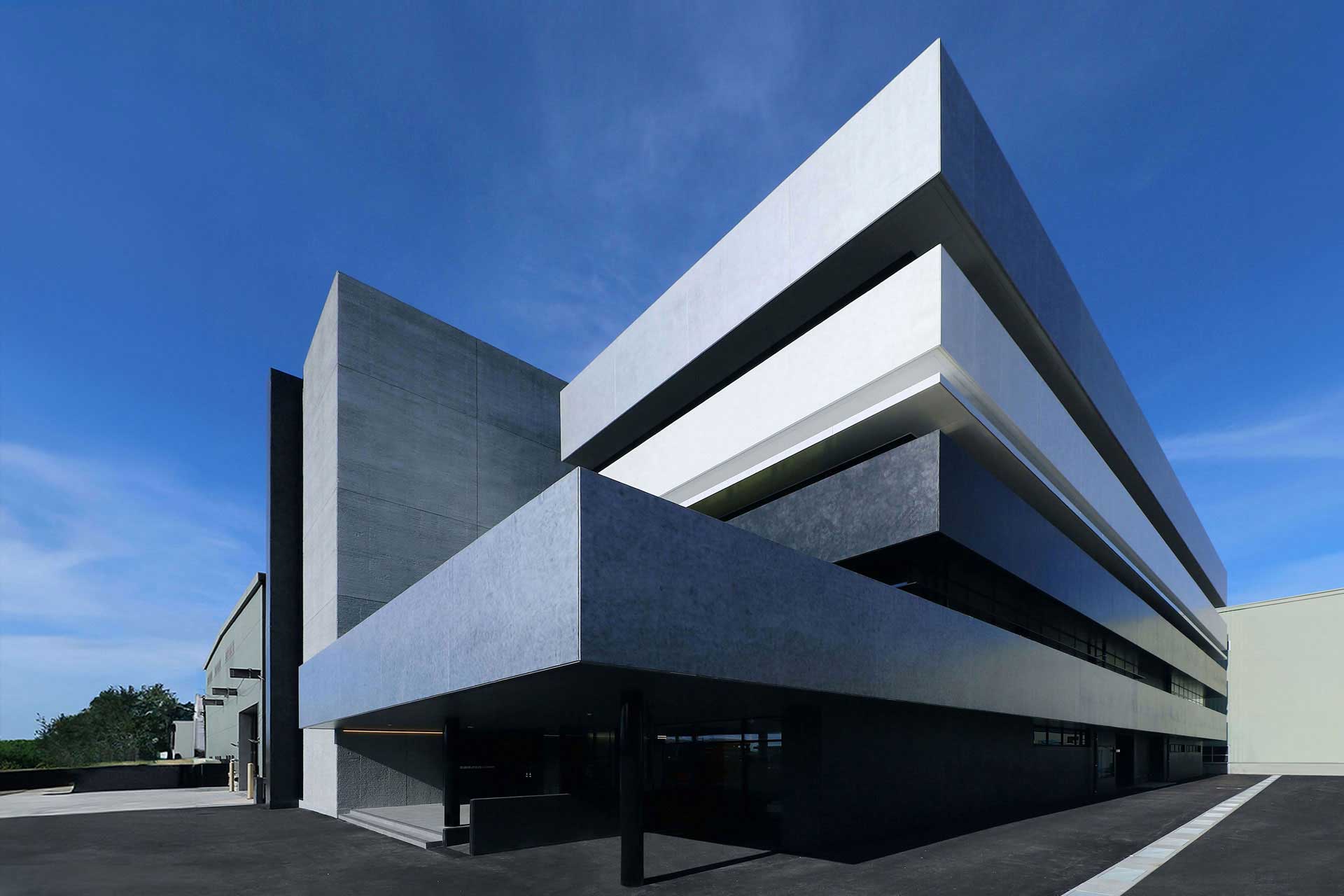
What I regard as most important is whether such an interpretation moves beyond mere metaphor or decoration and stands as a principle of the architecture itself. Rather than superficially expressing the characteristics of an industry, I place importance on whether its logic and structure permeate the very ways in which space is composed, and how form, light, and materials are articulated. For example, in 〈Daishinku Headquarters Factory Building (大真空本社工場棟)〉, the defining properties of the crystal chip at the heart of the device, its thickness, angle, and precision, were developed into the compositional principles of the architecture itself. In 〈Kyoei Steel Yamaguchi Works New Office Building (共英製鋼山口事業所新事務所棟)〉, the process through which steel scrap is regenerated into new value became both the meaning and expression of the architecture.
The criteria for translating essence into space are clear: it must be fundamental, it must function as the structural backbone of the architecture, and it must be conveyed as an experience to users and visitors. The goal is to create a condition in which the space itself communicates the philosophy of the industry and the company naturally, without the need for explanation.
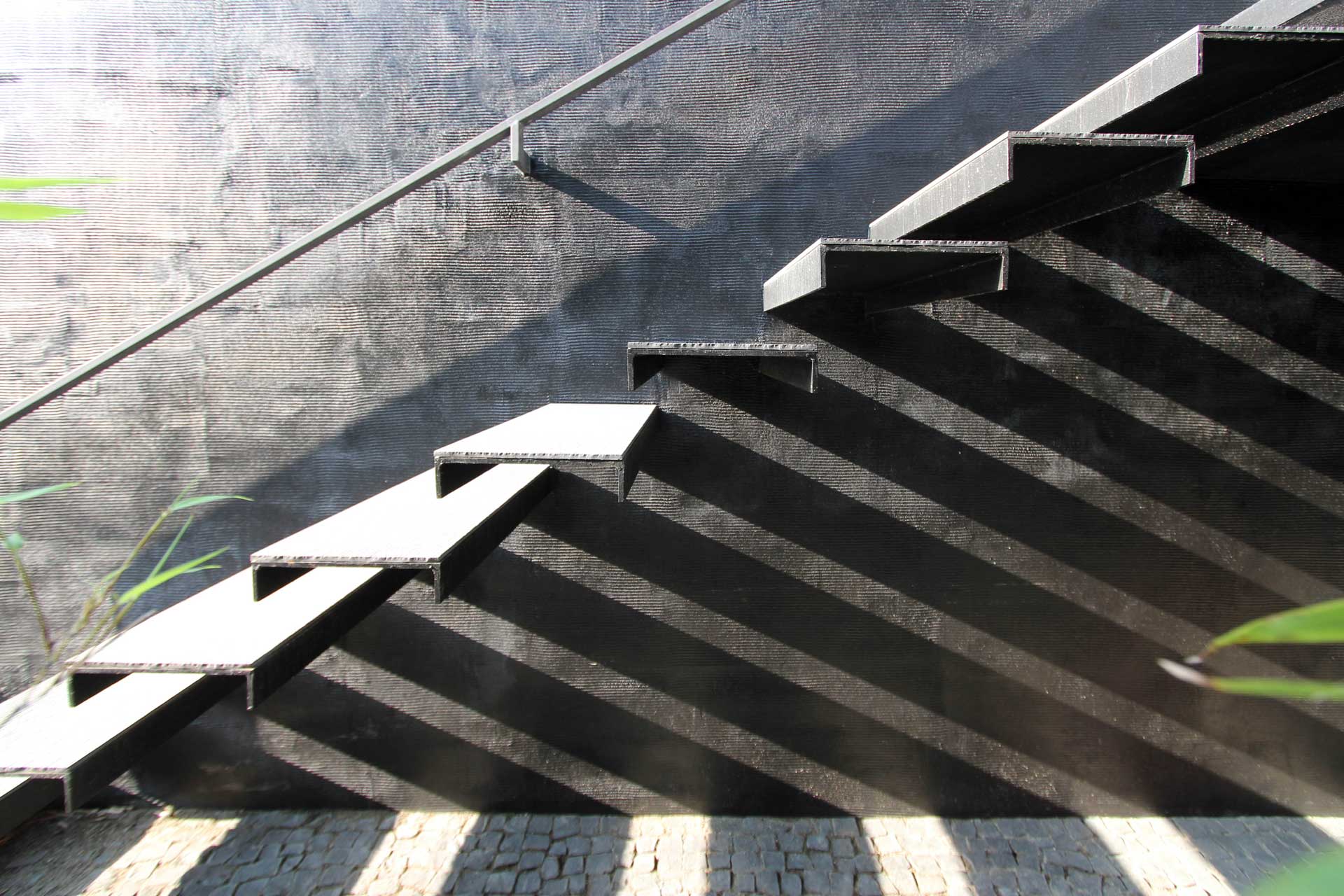
In your design process, one has the impression that structure and principle are defined before form. How do you establish the direction of a project in its early conceptual stage?
In the initial stage, I do not begin by thinking of form, but by searching for the principle to be inscribed within the architecture. After organizing the site conditions, regulations, program, and business viability, I read the unique meaning that the client or the place itself carries, and determine what this architecture must most powerfully express. For me, a concept is not about crafting an evocative phrase, but about establishing a criterion of judgment that runs through the entire design. When that principle is clear, the direction of composition, circulation, facade, light, and material is naturally determined, and an inevitability arises even within form itself. Form, therefore, is not something to be decided at the outset, but something drawn out as the consequence of deciphering essence. By honoring this sequence, I believe the architecture gains a resilience that does not rest on appearance alone.
Architecture is also a medium that transforms over time. Could you share how the perspective of embedding ‘time, memory, and the will toward the future’ into space is reflected in your design?
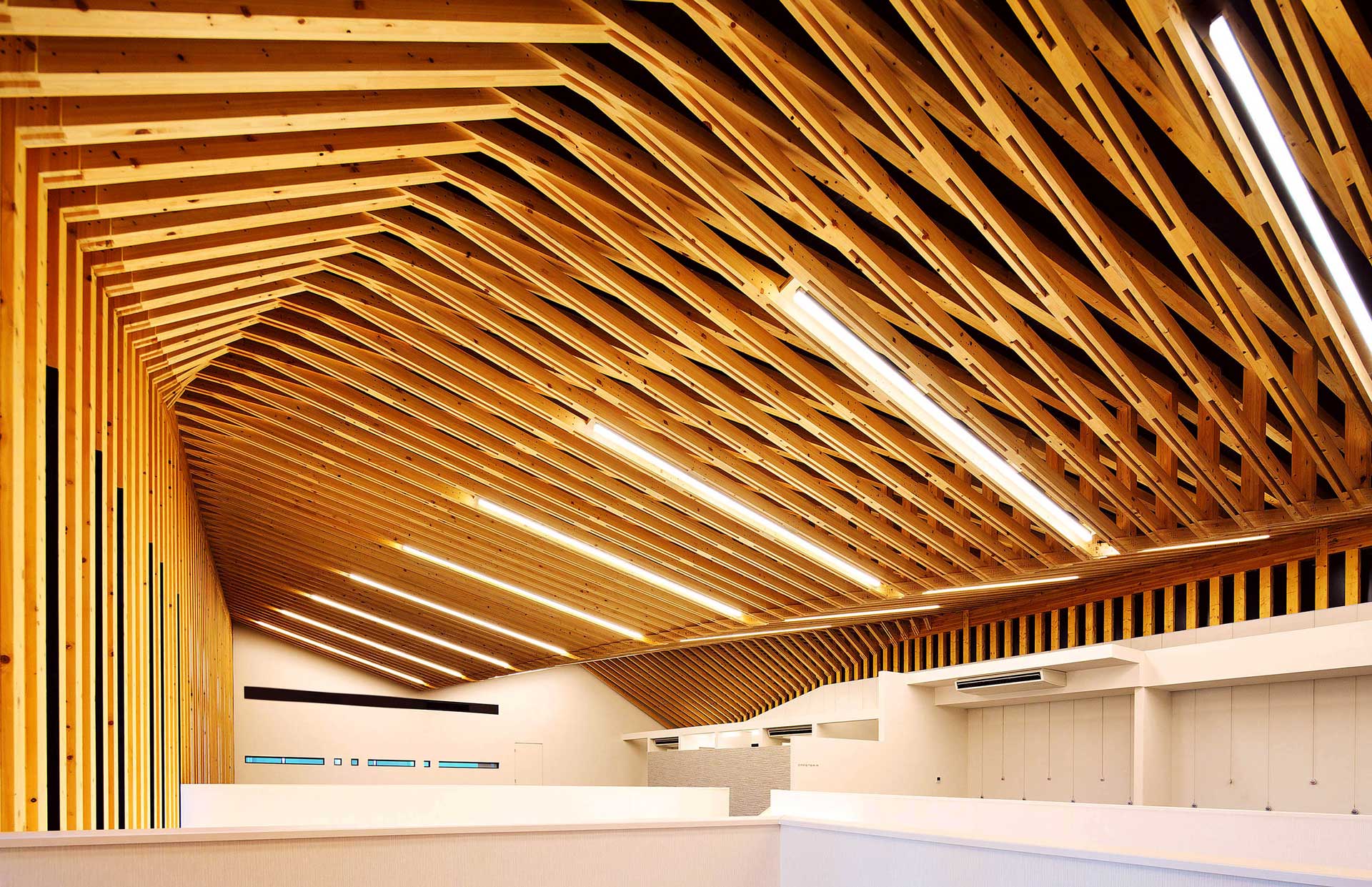
Architecture is not something complete at the moment of its completion; it is a presence that is used, remembered, and deepens in meaning through time. In my practice, I value not only responding to the demands of the present, but weaving both the memory inherited from the past and the will directed toward the future into the space. Memory refers to the history of a company, the context of a region, and the accumulated layers of value that have been built up until now. The will toward the future, on the other hand, is the sense of direction in which that place or organization is headed. Rather than placing these two in opposition, I seek to treat them as a continuous whole within architecture. To this end, I reinterpret historical elements and context while layering visions of the future through new technologies and environments of light. Furthermore, by choosing materials and compositions whose charm deepens with time, I aspire to architecture in which meaning continues to grow even after completion.
Another distinctive characteristic of MR STUDIO’s projects is that not only the architecture, but also signage, lighting, and landscape are designed as an integrated whole. How is this holistic approach realized?
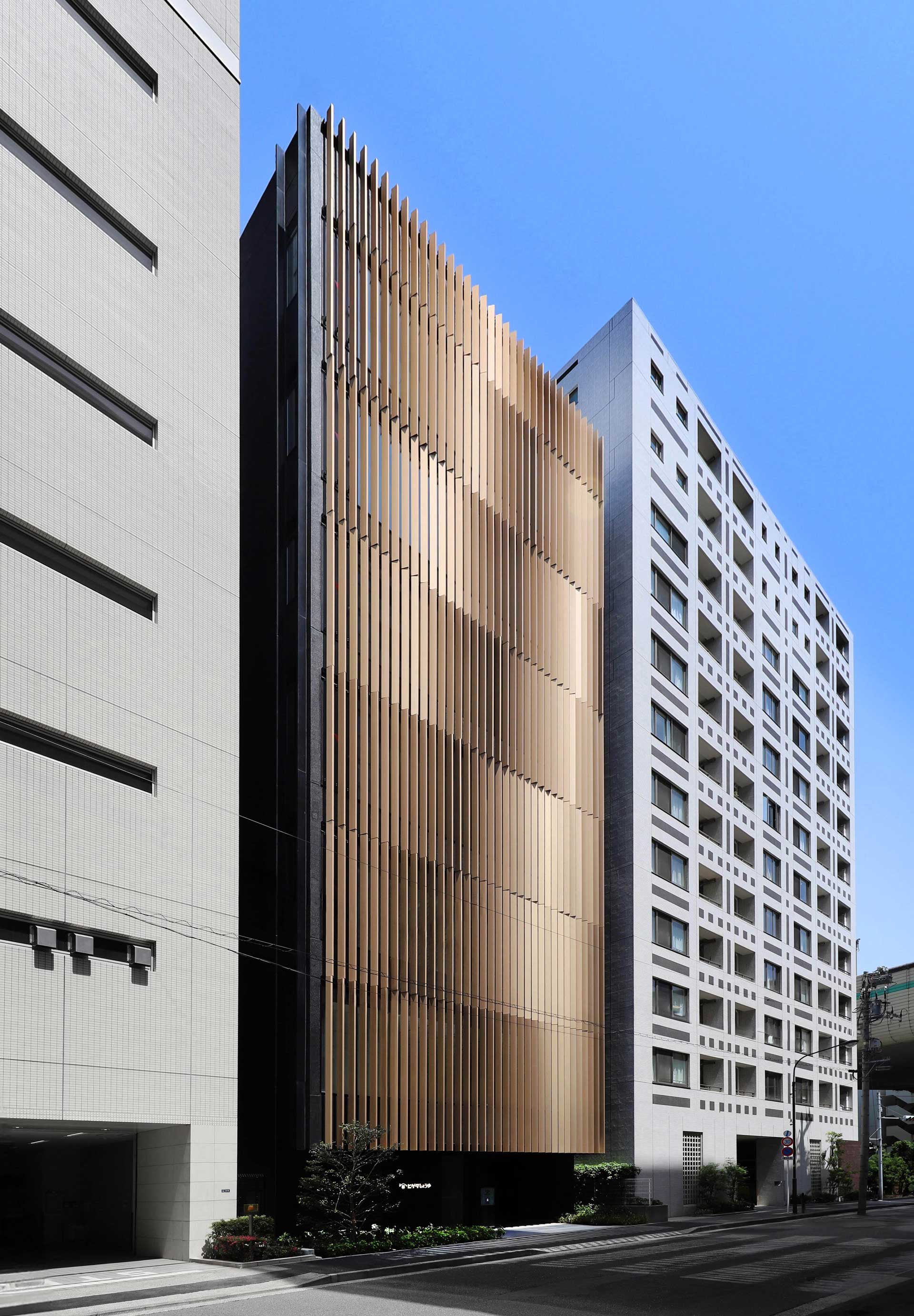
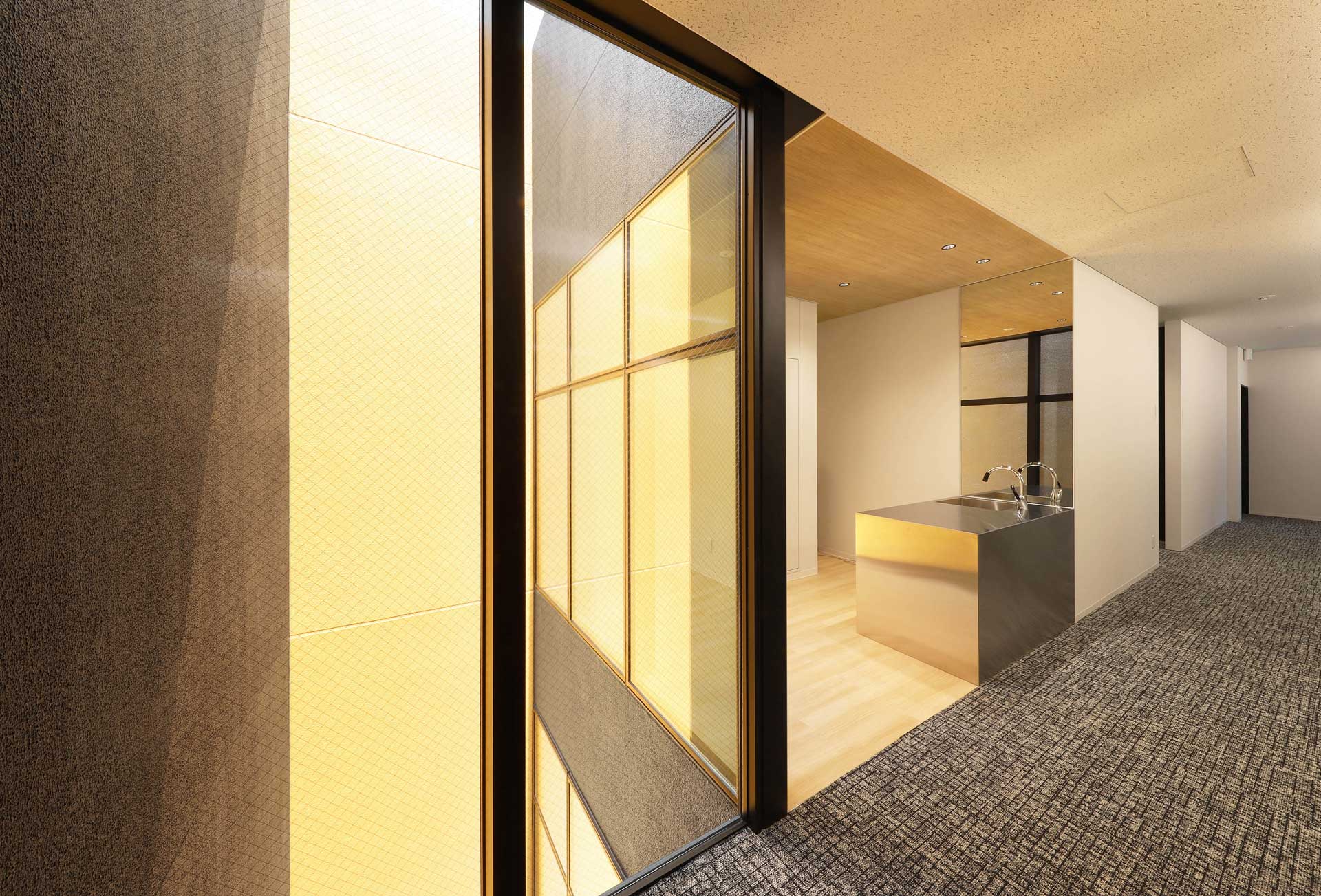
I do not regard architecture, interior, lighting, signage, and landscape as separate elements. They are continuous elements that together constitute a single spatial experience, and I believe it is crucial to conceive of them simultaneously from the earliest stage. To do so, it is first necessary to clearly establish the principle that runs through the entire project. Once that principle is defined, the expression of the facade, the handling of light, the form of signage, and the composition of the landscape can all unfold along the same direction. Conversely, the moment each element is considered in isolation, the language of the architecture as a whole begins to fragment.
Integration is not about aligning appearances, but about conveying a single philosophy consistently across the entirety of space. For this reason, I conceive not only of the architecture itself but also of furniture, products, signage, lighting, and landscape. In fact, MR STUDIO includes staff who specialize in signage design, and I myself have served as an advisor to sash and lighting manufacturers, engaging in product development and design. This accumulation of expertise is what enables each domain to be conceived in unity from the very earliest stage.
In recent years, sustainability and social responsibility have become increasingly important in architecture. How are these aspects reflected in MR STUDIO’s work, and in what direction do you see them evolving?
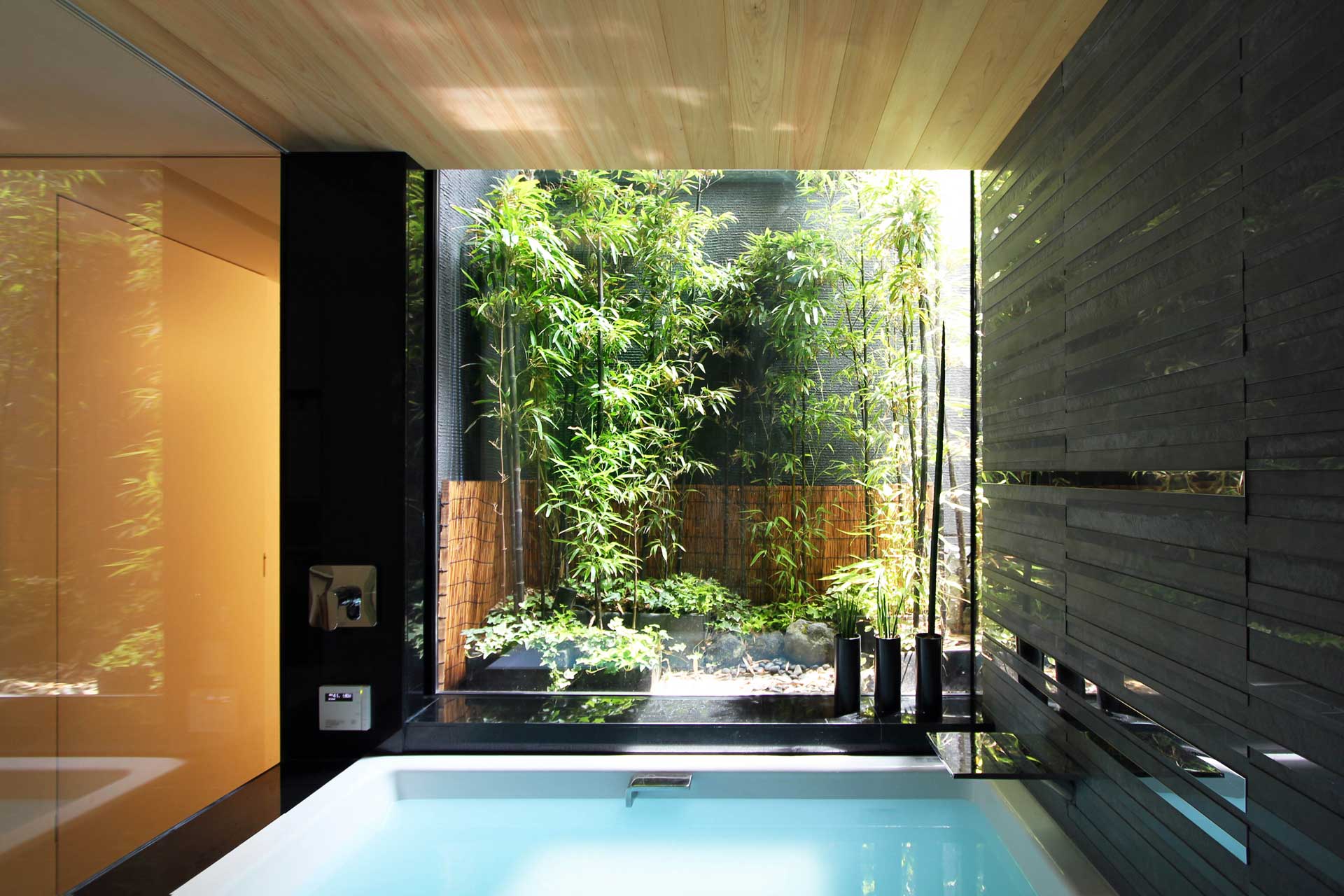
I consider sustainability not as a condition to be appended to architecture afterward, but as a premise of design itself. It is not, however, a matter of performance metrics or technical equipment alone. Being used for a long time, accepted by society, and cherished with attachment are equally important dimensions of sustainability. In practice, I place importance on the use of natural light, materials that reduce environmental load, consideration for locality, longevity, and the flexibility of future change. I am also mindful of reflecting the philosophy of making and circulation directly into the architecture, so that sustainability may be presented as a value that is visibly felt. In the future, I believe that in addition to pursuing environmental performance, how architecture shapes its relationship with region and society will become ever more important. What will increasingly be called for is not a closed architecture, but one that conveys its posture and values outward toward society.
Within the context of Asian design, how do you view the identity and role of Japanese architecture? And where do you see MR STUDIO positioned within that context?
I believe Japanese architecture possesses qualities of delicacy, precision, and a sensitivity toward emptiness and light. These are not merely stylistic traits, but have emerged from an accumulation of careful responses to climate, material, and culture. Viewed within the context of Asia, I sense that the role of Japanese architecture lies in connecting the regional and the universal through such sensibility. At the same time, Asia today is exceptionally dynamic, filled with diverse values and the energy of growth. Within this landscape, Japanese architecture too must respond not only through its quiet delicacy, but with a clearer philosophy and will of its own. Upon that foundation, MR STUDIO seeks to be a practice with a particular strength in bringing the essence of corporations and places more clearly into visibility. Rather than leaning on trends, we seek to read the deep layers of a subject and render them into architecture as strong concepts, thereby establishing a distinctive position of our own.
Finally, could you share the direction MR STUDIO intends to pursue in the future, and the lasting value you hope to leave through architecture?
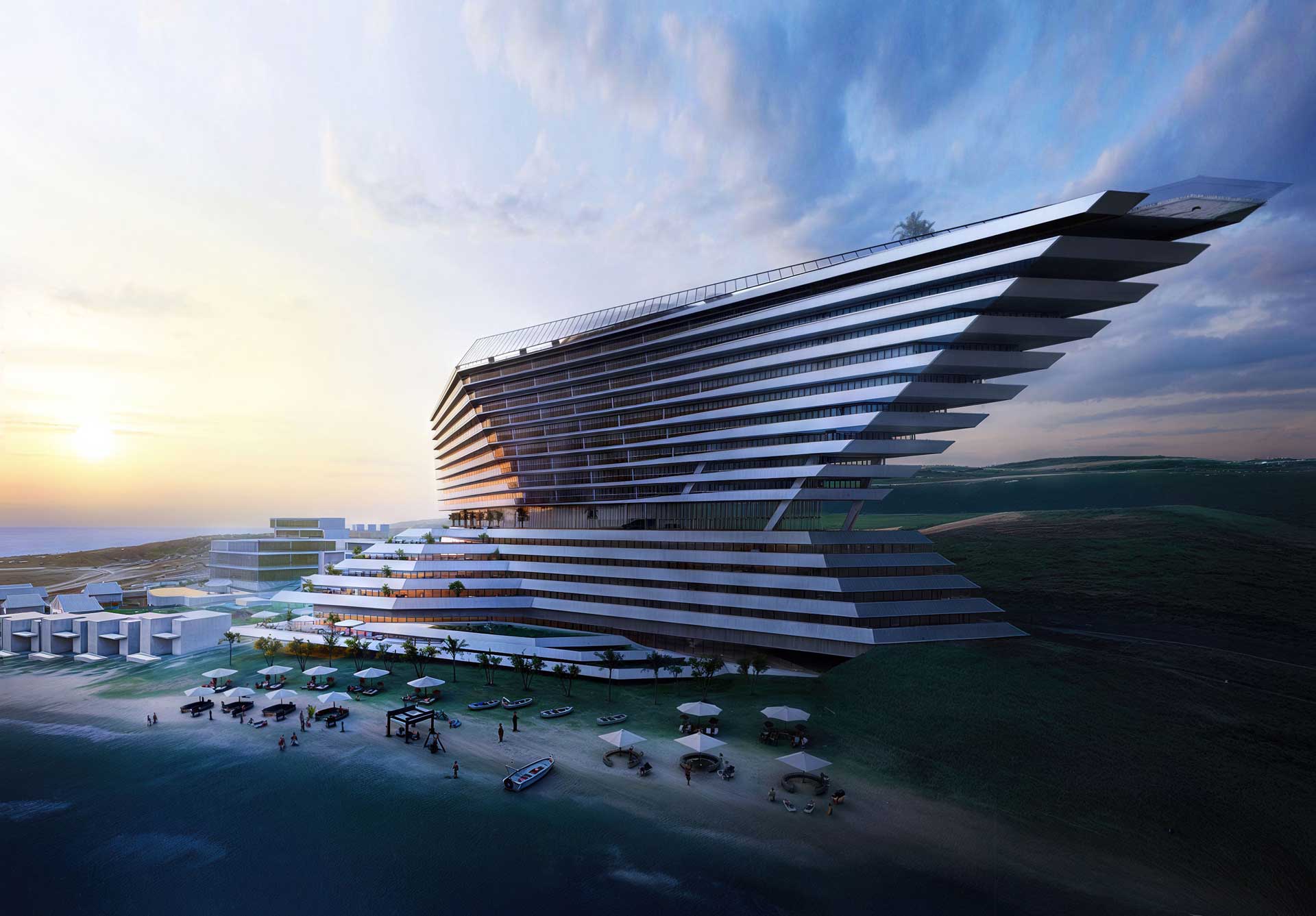
Going forward, MR STUDIO will continue to pursue not the creation of new forms as an end in itself, but architecture that holds genuine meaning for the place and subject to which it belongs. Especially in spaces that embody thought, activity, and values, I believe what architecture communicates to society will become increasingly important. At the same time, architecture must do more than express ideas. Through beautiful proportions and composition, it should remain as a symbolic presence in people’s memories. What I hope to leave over the long term is an essential strength that is not swayed by trends.
Beyond superficial novelty, I value the possibility that the thought and structure embedded within a work remain meaningful over time, and that their significance deepens the more the architecture is used. At the same time, I aspire to create architecture that forms beautiful landscapes, striking skylines, and spaces filled with tension, architecture that becomes deeply engraved in the memory of a place. Such architecture does not end at the moment of completion, but becomes the foundation for future dialogue, pride, and memory. Through architecture that carries strength in both thought and form, I intend to devote myself, project by project, to carefully embedding this kind of enduring value.

















#14057, 905 49, Beolmal-ro 102beon-gil,
Dongan-gu, Anyang-si, Gyeonggi-do, Korea
Business Registration Number: 454-86-01044
Online Sales License No.: 2021-Anyang Dongan-1081
Copyright © DESIGNSORI Co., Ltd.