
Whenever a new design enters the world, the public often responds with sharp resistance. Each time design disrupts what feels familiar, people instinctively push back, and unconventional forms that disturb established notions of balance frequently become targets of skepticism and ridicule. Apple’s AirPods, first introduced in 2016, are a perfect example. When their distinctive stem shaped form, which looked almost as if someone had simply cut the wires off a conventional pair of earphones, was first revealed, I remember the media and public mocking them as “bean sprouts sticking out of your ears” or “broken electric toothbrushes.” Initially dismissed as awkward and even ridiculous, AirPods gradually became familiar as people grew accustomed to seeing them. Over time, they transformed into an essential icon of contemporary life and established a new visual standard for what wireless earphones should look like.

The first-generation Apple AirPods, introduced in 2016
< Image source: Apple >
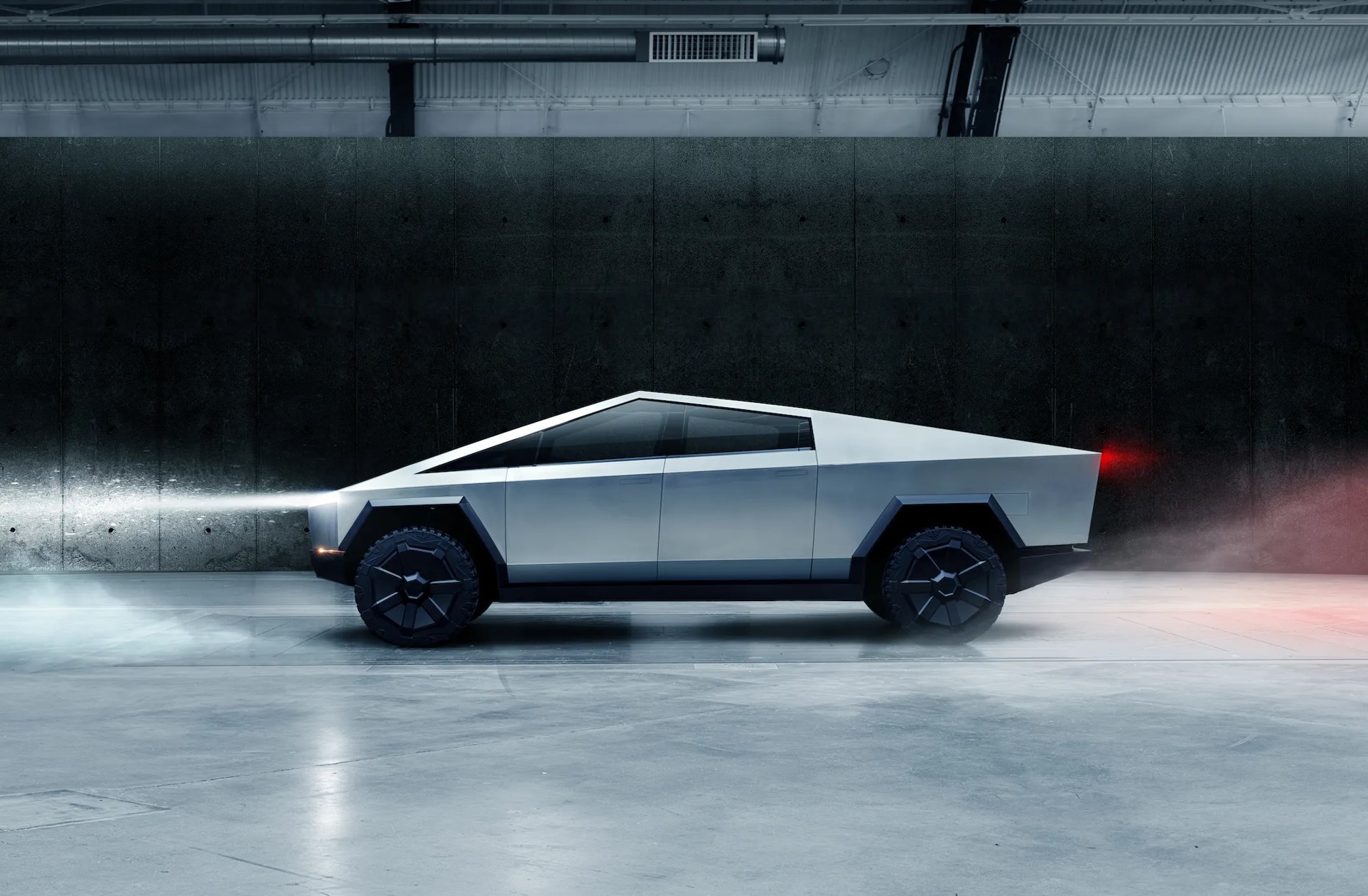
More recently, Tesla’s Cybertruck has sparked a similar controversy in the automotive industry. When the vehicle was first unveiled, the public response was closer to bewilderment than admiration. This raw mass of stainless steel completely shattered more than a century of unwritten automotive design conventions built around smooth curves, glossy finishes, and elegant proportions. Not only established designers but also many design professionals across the industry responded with concern and criticism rather than enthusiasm. The debate went beyond simple aesthetic preference, raising a more fundamental question. Can something like this truly be considered automotive design?
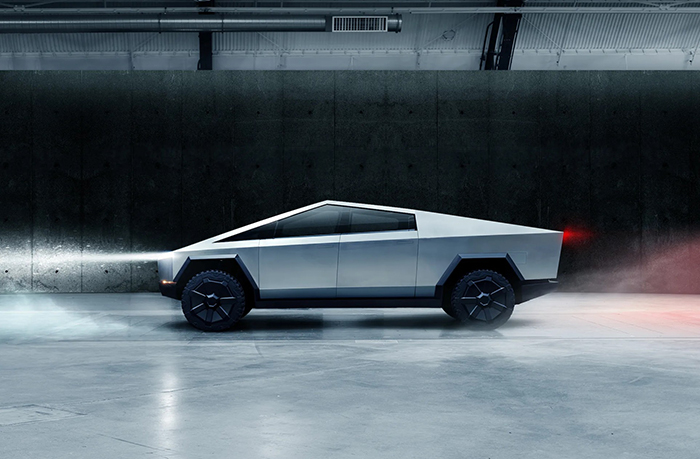
The Cybertruck design, a radical departure from Tesla’s previously elegant design language
Its blade like angular edges, formed by folding stainless steel panels, raised serious concerns about the risk of severe injury in pedestrian collisions. Visible panel gaps, inconsistent alignment, and noticeably crude finishing quality also drew criticism from industry professionals. From practical concerns over the difficulty of cleaning and maintaining an unpainted stainless steel body to broader criticism that the design compromised fundamental principles of automotive safety and usability, the response from many professionals was decidedly cold. This raises a fundamental question. When we look at a design and think, “This is bad” or “This is a failure,” is it because the form itself is objectively unattractive? Or is it simply an instinctive rejection of something unfamiliar? We need to ask whether our perception of beauty is truly based on aesthetic quality or whether it is largely the result of familiarity formed through repeated exposure.
Our sense of what is “beautiful” is neither absolute nor innate. The aesthetic standards through which the public accepts design are deeply shaped by the social and cultural context of each era. Throughout our lives, we repeatedly absorb the norms of the cultures we belong to, the images presented by mass media, and the values demanded by society, gradually forming an unspoken consensus about what constitutes good form. In this sense, the hostility directed toward unfamiliar design is not necessarily evidence of aesthetic failure. It may instead be understood as a cognitive resistance that occurs when a new form collides with the deeply embedded cultural codes of our collective consciousness.
For example, people unconsciously search for human or animal faces in the front of a car, seeing the headlights as eyes and the grille as a mouth, and instinctively respond to the sense of familiarity this creates. We have also learned to associate smoothly sculpted metallic curves with psychological comfort, refinement, and luxury. These are deeply established codes within automotive culture. The Cybertruck, however, ruthlessly cuts through these anthropomorphic visual conventions with cold, geometric lines. People were not necessarily disturbed because its proportions were simply “wrong.” Rather, they were confronted with a design language radically different from the visual context they had spent their entire lives learning, and that unfamiliarity produced a powerful sense of psychological discomfort.
This is why designers today need a deep humanistic understanding of people and society far more than technical proficiency with software tools that produce compelling visual outputs. Design is not simply the act of placing an attractive surface over an object. Only by understanding, from a sociocultural perspective, why people feel reassured by certain forms and uneasy about certain textures can designers begin to open minds that are resistant to change. No matter how many sleepless nights are spent perfecting an extraordinary form, that is merely the starting point. In professional practice, design is ultimately an endless process of persuasion.
When someone asks, “Isn’t this design too unfamiliar and unconventional?” answering, “It’s the latest trend,” is the response of an amateur. A skilled professional designer takes a psychological approach, carefully reading the anxieties and unmet needs of the person sitting across the table. They identify the underlying unease hidden beneath that sense of unfamiliarity and undertake the sophisticated humanistic task of connecting the legitimacy of their design to broader social and cultural contexts. In 2026, with the explosive development of generative AI, the ability to build such narratives and persuade others has become more critical than ever in determining a designer’s value.
Polished renderings and exceptional levels of visual refinement that once required designers to work through several sleepless nights can now appear on a screen in seconds with just a few well crafted prompts. Artificial intelligence can generate beautiful imagery effortlessly. But AI cannot truly understand why people today are drawn to materials that ease their concerns about the environment, or why they find psychological comfort in minimalist spaces rather than ostentatious forms. In a world where tens of thousands of beautiful but meaningless images are produced every day, the era in which designers could protect their livelihood through visual quality alone is gradually coming to an end.

Dongdaemun Design Plaza (DDP), one of Seoul’s landmarks – unfamiliar forms inevitably collide with the resistance embedded in the collective unconscious
Ultimately, as technology surpasses human craftsmanship and the production of form becomes increasingly automated, the designer’s human insight, the ability to choose the right form and give it a meaningful narrative, becomes even more valuable. A single line drawn on a screen is not merely a beautiful shape. It is a cultural statement that reflects the values of its time and the emotions of the public. Now that the barriers to creating designs have largely disappeared, designers can no longer remain simply skilled technicians with fast hands. They must become thinkers and storytellers who understand people, grasp context, and create narratives capable of moving the public.
The most important tool we must hold onto is not the precision of a hand that manipulates pixels, but the power of a compelling narrative that proves the value of a design. The real answer lies in understanding, from a sociocultural perspective, how our familiar standards of beauty were formed and in constructing powerful yet human narratives that explain why an object deserves to exist in the world. Great designs that introduce something genuinely new are almost always regarded as strange and unfamiliar at first. The ability to embrace that unfamiliarity, understand the context of the times and the emotions of people, and persuade the world through reason and narrative is the unique strength of human designers that technology cannot replace. It may also become the most important capability for designers seeking to thrive in the age of AI.



















#14057, 905 49, Beolmal-ro 102beon-gil,
Dongan-gu, Anyang-si, Gyeonggi-do, Korea
Business Registration Number: 454-86-01044
Online Sales License No.: 2021-Anyang Dongan-1081
Copyright © DESIGNSORI Co., Ltd.