
Co-Founder of lllayer
Today, Snow Peak has evolved beyond a camping equipment brand into a vast fandom and a symbol of lifestyle. After experiencing explosive demand during the pandemic and achieving record-high consolidated revenue of 30.7 billion yen in 2022, the company has continued to expand its global market presence even as the market normalized after reopening. Although revenue adjusted to approximately 25.7 billion yen in 2023, the proportion of overseas sales rose to 33.3%, demonstrating its sustained global brand power.
Its performance in the Korean market has been particularly remarkable. Through its licensed partner, Sensible Corporation, “Snow Peak Apparel” recorded sales of KRW 220.4 billion in 2024, with projections of approximately KRW 279.3 billion in 2025, reflecting growth of around 27%. The appointment of BTS’s V as a brand ambassador significantly elevated public awareness and has become a strong driving force for expansion into China and Southeast Asia.
Behind these achievements lies a bold strategic decision to protect the brand’s core identity. In early 2024, Snow Peak partnered with Bain Capital to carry out a management buyout and voluntarily delist from the stock market. By stepping away from short-term performance pressures, the company chose to focus on its long-term mission of maximizing experiential value. Rather than prioritizing quarterly returns, Snow Peak committed to deepening its brand philosophy, building campgrounds, operating hotels and restaurants, and delivering immersive experiences that embody its vision of restoring humanity through nature.
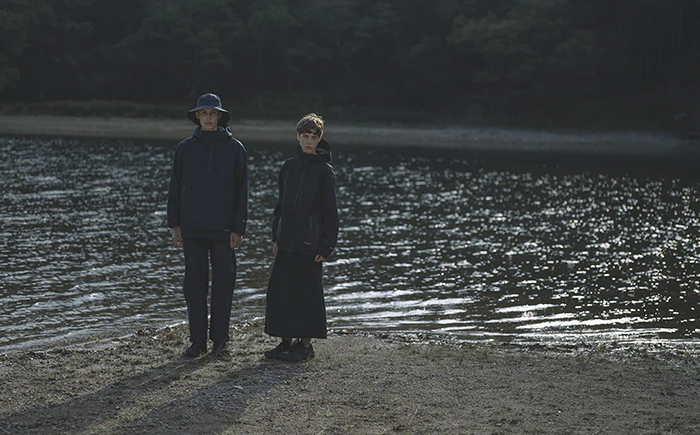
How did this brand begin?
Snow Peak’s history began in 1958 in the small town of Tsubame Sanjo, Niigata Prefecture, Japan. Founder Yukio Yamai was a passionate mountaineer who sought healing from postwar trauma in the mountains. His beloved Mount Tanigawa, though less than 2,000 meters high, was known as the Devil’s Mountain due to its treacherous rock faces and sudden climate changes, which caused numerous fatalities. Climbing this harsh terrain, Yamai grew frustrated with the poor quality of commercially available gear and resolved to create equipment he could entrust with his own life. He approached the skilled blacksmiths of Tsubame Sanjo, renowned since the Edo period for metal craftsmanship, and began producing crampons and pitons that he personally designed and tested. He believed that the clear metallic sound of a piton striking rock was a signal of safety and survival. This uncompromising conviction became the foundation of Snow Peak’s craftsmanship. In 1963, inspired by the breathtaking snow-covered summit he witnessed, he registered the name Snow Peak. By then, the brand had already become a symbol of trust beyond mere tools.
In the late 1980s, second generation leader Tohru Yamai transformed his father’s mountaineering equipment company into a cultural brand centered on “auto camping.” Inspired by the relaxed family camping culture he observed while studying in the United States, he introduced the Amenity Dome in 1990, which became a benchmark for modern camping tents and sparked Japan’s auto camping boom. However, a crisis soon followed. As the camping trend cooled in the mid-1990s, sales declined for six consecutive years, pushing the company to the brink of bankruptcy. Confronted with this reality, Tohru asked a fundamental question: “Why must we exist?” In 1998, he launched the now-legendary “Snow Peak Way.” Employees and customers gathered at campsites, spending nights together and sharing candid conversations around a bonfire (takibi). Customers openly criticized the brand, saying Snow Peak was not listening to their voices. Unable to sleep in his tent that night, Tohru made a decisive commitment to rebuild the brand around a thoroughly customer-centric, direct-to-consumer philosophy.
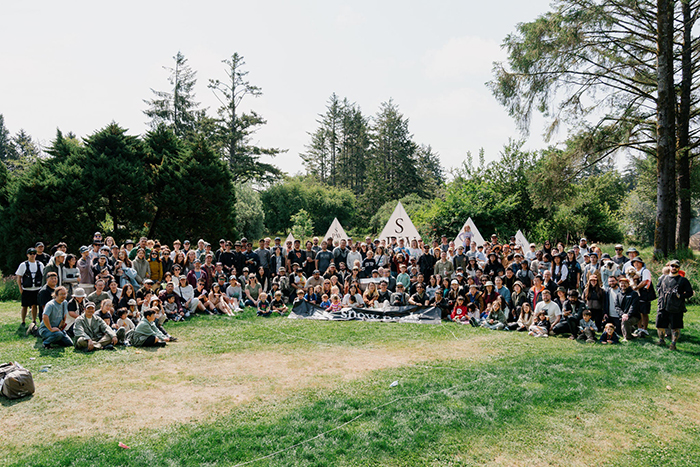
Here, Snow Peak’s core values, restoring humanity and Noasobi, or wild play, were fully articulated. The brand set out to help people recover the innate human senses dulled by the conveniences of modern life through immersive experiences in nature. To protect this philosophy, Snow Peak made decisions that prioritized value over short-term efficiency. A defining example is its lifetime warranty policy. The company does not include warranty cards with its products. Instead, it promises to repair any item bearing the Snow Peak name, regardless of when or where it was purchased. Rather than driving profit through constant replacement, Snow Peak cultivated a culture in which well worn tents marked by repairs are cherished as symbols of shared experience.
In 2014, with the arrival of third generation leader Lisa Yamai, Snow Peak introduced the concept of Home and Tent, expanding the brand’s philosophy into everyday life. To reach urban consumers who may not actively camp, the company launched a high performance apparel line designed for daily wear. This approach gained significant traction in Korea, where Sensible Corporation integrated Snow Peak’s philosophy with contemporary fashion sensibilities, contributing to the rise of the gorpcore trend. In the fourth quarter of 2024, sales in Korea increased by 16.8 percent year over year, reaching KRW 105.2 billion. Korea has since become a strategic hub within Snow Peak’s global expansion, with this success model extending into Taiwan, Hong Kong, mainland China, where a major flagship store is planned, and Southeast Asia.
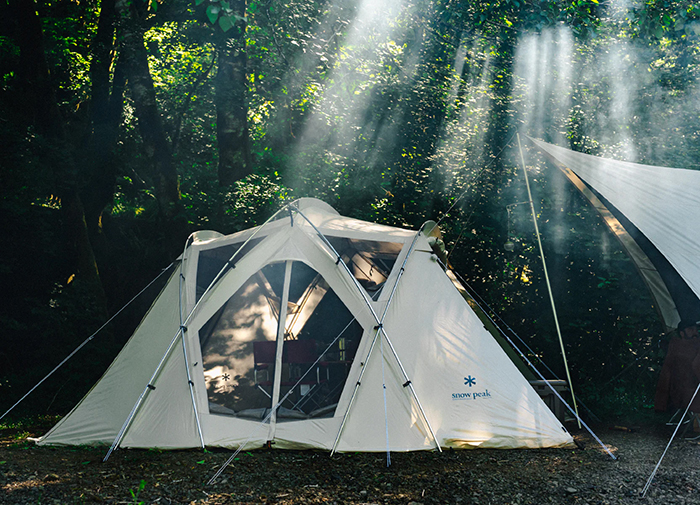
Snow Peak’s vision for the future now extends far beyond the tent, reaching toward the planet we inhabit. With the autonomy secured through its bold decision to delist, the company is evolving beyond a manufacturer of camping equipment into a platform that builds what could be called an infrastructure for humanity. The 25 acre Long Beach Campfield opened in Washington State in 2024, along with experiential lodging facilities planned around the world, is intended to become sanctuaries where modern individuals can reconnect with nature at any time.
In an era where technology can distance people from one another and algorithms increasingly confine daily life, the conversations shared around a bonfire and nights spent in nature, experiences Snow Peak continues to advocate, carry irreplaceable value. The clear metallic sound that once rang out from a small forge in Tsubame Sanjo 60 years ago now echoes across the world, quietly posing a question to each of us: Are you living as a human being should?













#14057, 905 49, Beolmal-ro 102beon-gil,
Dongan-gu, Anyang-si, Gyeonggi-do, Korea
Business Registration Number: 454-86-01044
Online Sales License No.: 2021-Anyang Dongan-1081
Copyright © DESIGNSORI Co., Ltd.