
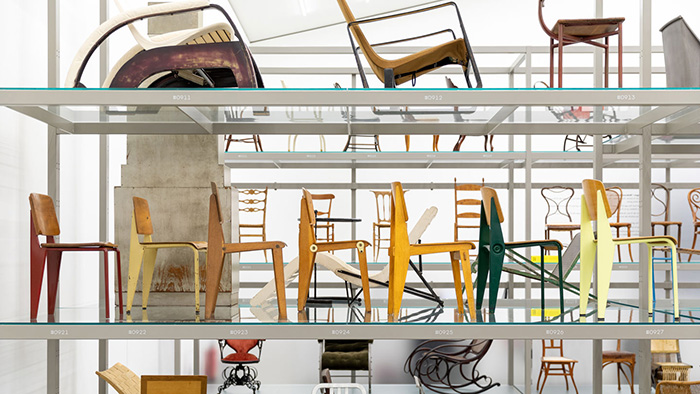
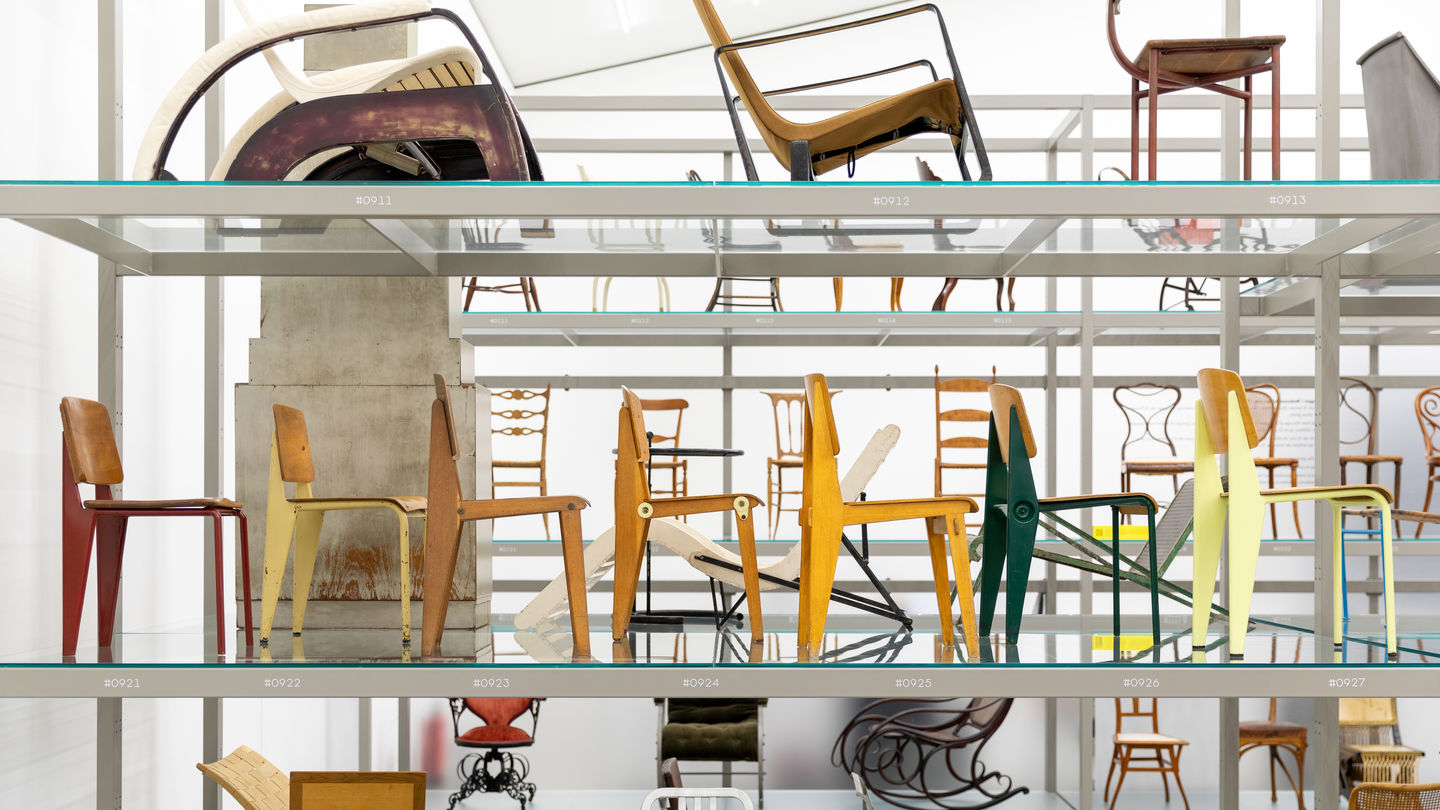
We often misunderstand designers as creators who bring something out of nothing, like a god of creation. But to be precise, that belongs more to the realm of inventors who discover entirely new principles, which is quite different from the true nature of design. Looking at the history of industrial design, no great outcome has ever suddenly emerged from a complete void. Designers are, in essence, careful observers of an already existing world. They imitate conventional forms, refine them, and remove unnecessary elements. In that sense, they are closer to orchestrators than creators. Design is not an act of revolutionary creation, but a process of persistent and incremental evolution.
< Image source: Vitra Design Museum >
It is a process of endlessly repeating imitation and refinement, pushing the usefulness of objects toward ultimate optimization. From this perspective, a designer’s pursuit of minimalism becomes a natural conclusion. Anyone can decorate, embellish, and add more elements. But to deeply understand what already exists, and to remove everything that can be taken away until reaching a state where “nothing more can be removed,” requires a completely different level of discipline. There may be many ways to define design, but for me, someone who aspires to a minimalist life, design is not the art of adding, but the process of refinement, removing everything unnecessary to leave only the essence.

Steve Jobs’ uniform became part of Apple’s brand DNA: sleek, simple, and timeless
< Image source: Arabian Business >
How to Control the Entropy of Decision-Making
The black turtleneck and jeans that Steve Jobs wore every day stand as one of the clearest symbols of the strategic value of minimalism. Despite being someone highly sensitive to visual detail, he reduced his own appearance to a single choice. This was not merely a matter of fashion, but an extreme form of efficiency aimed at preserving decision making energy, the core driving force of design. The human brain has limited cognitive resources each day. If trivial decisions such as what to wear or what shoes to choose consume that energy, then judgment inevitably weakens at the critical moments when one must grasp the essence of things. By eliminating the superficial noise surrounding himself, Jobs redirected that freed mental space toward designing what the world truly needed.
For minimalist designers, simplifying daily life is not a preference but a survival strategy to maintain professional sharpness. The more one’s environment converges toward simplicity, the more clearly the inherent proportions of objects and the subtle textures of materials begin to emerge. Those who seek to capture the true value of design must first empty their own lives. Only when psychological noise is removed can one clearly see what should be imitated and what must be developed further.
The Destination Called “Original”
When we first acquire something, we feel a strong urge to leave our mark on it. This is why early iPhone users often resorted to jailbreaking, modifying system fonts, decorating icons, and forcing in features not intended by the manufacturer. While this may appear as individuality, from a fundamental perspective it is closer to excess that distorts the original form.
What is interesting is that after countless experiments and excessive customization, most users ultimately return to the original state set by the manufacturer. This return to “stock” reveals a key lesson in industrial design. The original state is not merely the starting point, it is the optimal balance achieved through thousands of simulations and intense discussions among world class designers and engineers. Only after passing through resistance and self expression do we realize a simple truth: the simplest solution is the most powerful, and the default grounded in essence lasts longer than artificially imposed individuality. The idea that design ultimately returns to its original form proves that minimalism seeks the most honest and essential state of an object.
The Consumer as Curator
To live as a minimalist is not to reject objects, but to approach them with extreme care. The goal is not simply to reduce possessions, but to invest significant mental effort in finding the one that truly matters. While the market is filled with good products, those that perfectly align with one’s life are rare. A minimalist designer does not follow trends. Instead, they dissect the reason an object must exist. They ask whether it genuinely extends their capabilities, or whether it will retain aesthetic value even ten years from now. We call this timeless design, and only the few objects that pass this rigorous filter earn the right to occupy one’s space.
For me, choosing an object is a process of transparently projecting my philosophy. As both a designer and a consumer pursuing a minimalist life, I maintain a sharp sense of discernment with every decision. And when I finally encounter an object that passes all my criteria and brings a deep sense of excitement, I feel truly alive as a designer. A recent example is Polestar. By boldly stripping away decorative excess and unnecessary physical controls, and focusing solely on essential driving experience and refined aesthetics, it delivers both a designer’s admiration and a consumer’s excitement. This feeling is not mere desire for ownership, it is a resonance with the intrinsic energy of a well made object. While it may not be statistically proven that Polestar is the most favored car among designers, within the design community it is almost an accepted truth. As someone who personally drives a Polestar, I deeply relate to this sentiment. Their language, one that penetrates essence rather than surface level spectacle, has already formed a strong consensus among professionals in the field.
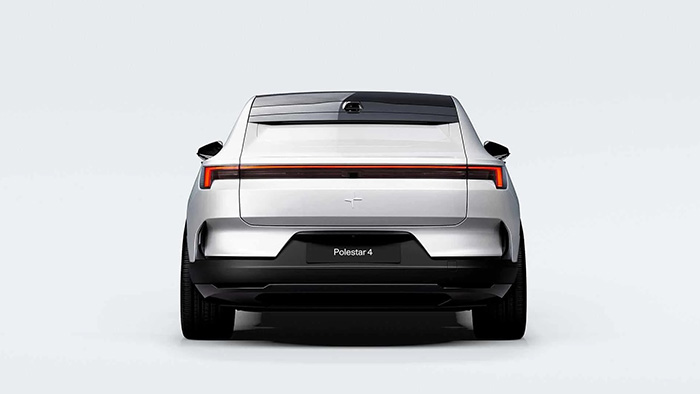
Rear view of Polestar 4 electric SUV
< Image source: Designboom >
Becoming a minimalist as an industrial designer is not merely a matter of personal taste, it is an expression of professional integrity. Designers understand better than anyone how quickly products that hide fundamental flaws behind flashy exteriors are consumed by the market and reduced to waste. That is why we are compelled to cling more fiercely to the essence. Minimalism is not simply about removing things, it is a relentless struggle to decide what must remain. Just as Jobs protected his energy, and just as we rediscover perfect beauty in the original state of the iPhone, a designer’s minimalism ultimately aims to make the world clearer.
Even today, I feel a sense of excitement when choosing a single object, and from that excitement, I begin once again to eliminate what is unnecessary. The completion of design does not lie in creating something radically new, but in reaching a state where nothing more can be removed, thereby restoring the object’s true value. At that point, we no longer encounter objects, but life itself. When we focus only on what is truly necessary, the designer’s sensibility awakens, and life becomes filled with essential beauty.















#14057, 905 49, Beolmal-ro 102beon-gil,
Dongan-gu, Anyang-si, Gyeonggi-do, Korea
Business Registration Number: 454-86-01044
Online Sales License No.: 2021-Anyang Dongan-1081
Copyright © DESIGNSORI Co., Ltd.