
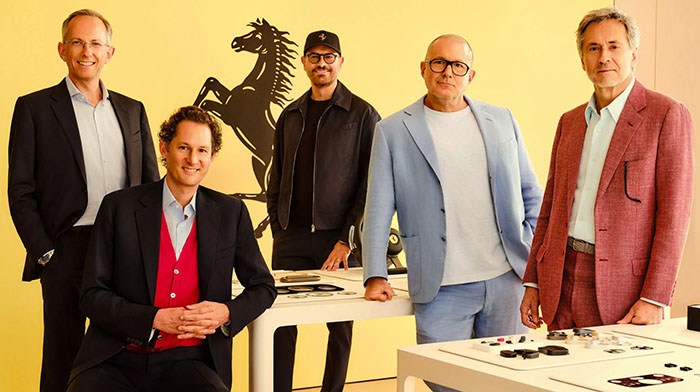
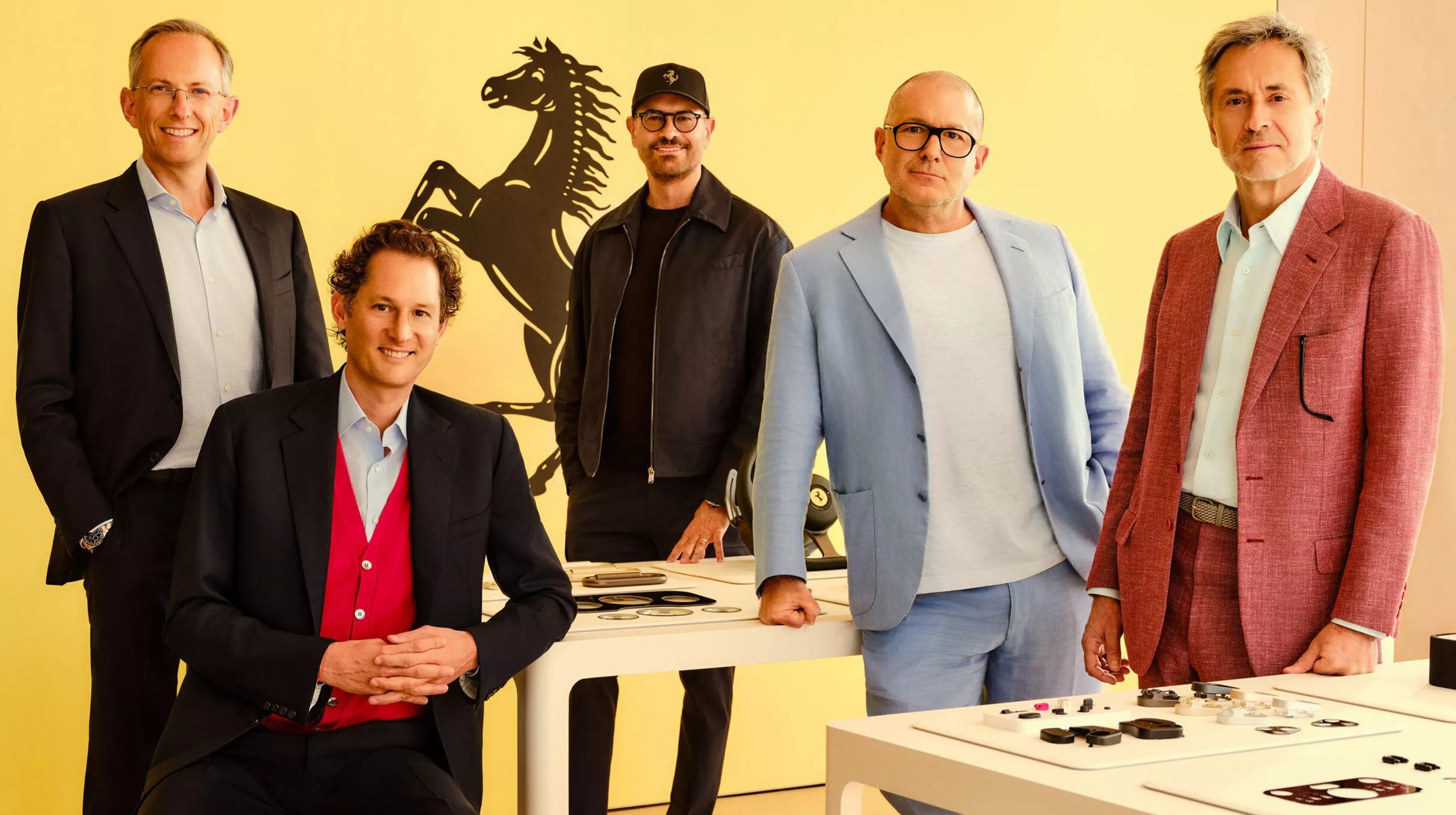
Recently, it is hard to recall another event that has ignited both the automotive and design industries as intensely as this one. The very premise is controversial enough: Ferrari, the company often described as the heart of Italian automotive culture, unveiling its first fully electric vehicle, the Luce. The involvement of LoveFrom, the creative collective led by Jony Ive and Marc Newson, the designers widely credited with shaping Apple’s golden era, only heightened expectations. Yet the reaction following the reveal has been marked less by admiration than by skepticism and criticism. Rather than inspiring widespread excitement, the project has unsettled both enthusiasts and investors. Some critics have even dismissed it as a “billion dollar Apple Car,” a remark filled with irony and disappointment.
< Image source: Courtesy of Ferrari >
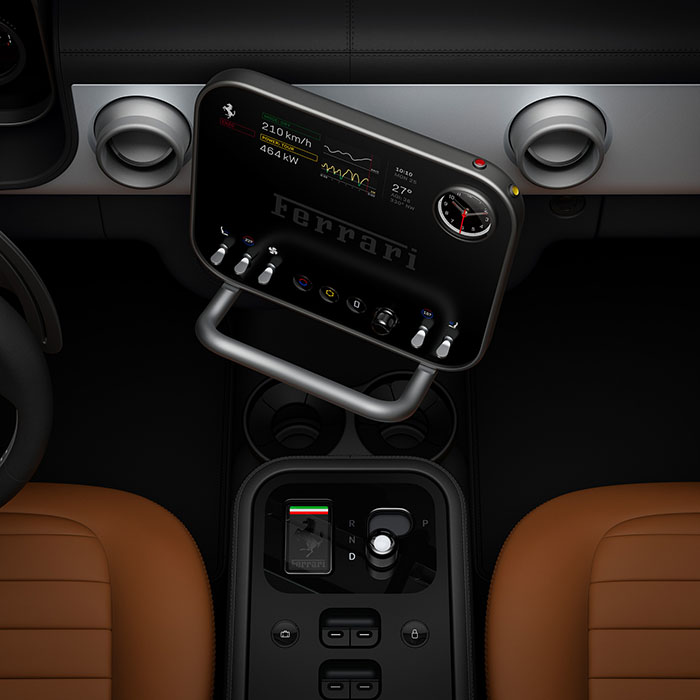
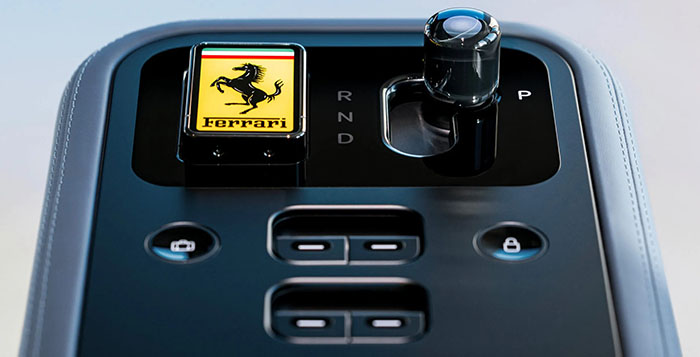
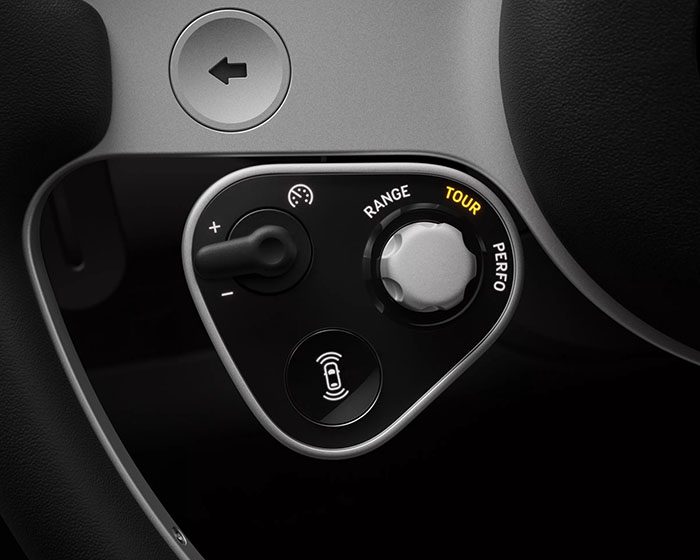
Interior details of the Ferrari Luce, reflecting Jony Ive’s radically restrained minimalist philosophy.
If one were to summarize this car from a formal design perspective in a single sentence, it might be this: “A triumph up close, a tragedy from afar.” The story changes when you step inside. The toggle switches, meticulously crafted from anodized aluminum and glass, the interface stripped of almost every unnecessary gesture, and the layered instrument architecture that deliberately rejects the industry’s obsession with oversized screens all demonstrate a level of industrial design refinement that is difficult to dismiss. Every detail feels carefully considered, as though even the sensation beneath one’s fingertips has been deliberately engineered. Viewed up close, this is unquestionably a highly accomplished achievement, a masterclass in craftsmanship, restraint, and execution.
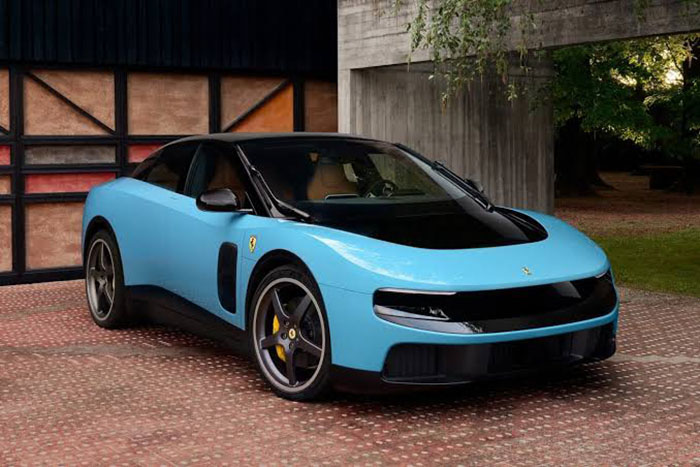
< Image source: Courtesy of Ferrari >
Exterior design of the Ferrari Luce
However, the mood changes completely the moment you step back and view the car as a whole. The elegant yet excessively smooth glasshouse placed atop four door proportions, the silhouette that prioritizes stability over tension, and the overall impression that evokes a refined technology sedan rather than Ferrari’s signature aggression all feel subtly disconnected from the essence of the brand. Instead of the coiled energy of a wild stallion gripping the road, what comes to mind is a carefully organized mode of transportation for a futuristic city. In that sense, the design paradoxically shifts closer to tragedy than triumph. This raises an important question. Can automotive design be explained using the same language as product design? Or do the two fundamentally operate according to different rules?
Dieter Rams once expressed a somewhat skeptical view of automotive design, famously remarking, “I do not design cars.” From his perspective, automobiles belonged to a realm of excess and display that extended beyond pure function. His philosophy was clear: objects should be simple, and anything that distracts from their essential purpose should be removed. But automobiles, and Ferrari in particular, cannot be understood through that philosophy alone. Ferrari is not merely a means of transportation. It is an object of desire. It exists in a world where ownership itself carries symbolic value beyond performance or engineering. For that reason, Ferrari’s design is not simply a question of efficiency or restraint. It is the sum of emotion, spectacle, ambition, and historical narrative.
This is precisely where Jony Ive’s approach creates a fundamental tension. Apple style minimalism is rooted in relentless reduction, a process of stripping away everything that feels unnecessary in pursuit of essence. Ferrari, by contrast, is a brand that has spent decades accumulating history, emotion, drama, and aggression. When two such different design languages attempt to coexist within the same sentence, conflict becomes almost inevitable.
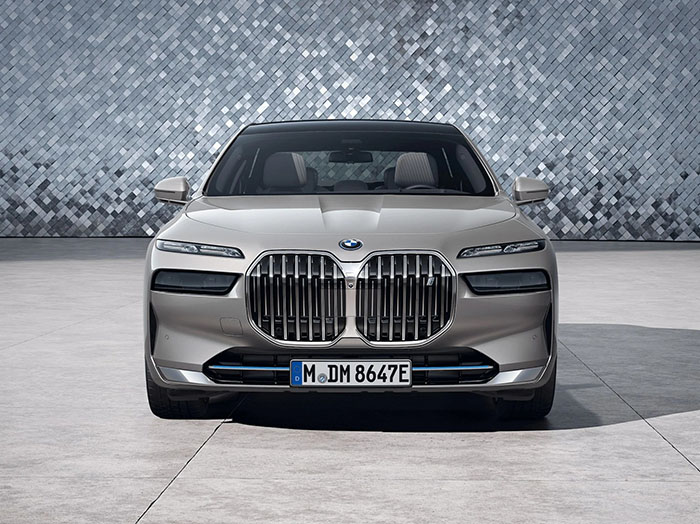
Front design of the BMW i7, reinterpreting the traditional kidney grille for a new era.
This kind of controversy is hardly new. Whenever design challenges what people have grown accustomed to, resistance inevitably follows. The debate surrounding BMW’s oversized kidney grille is a perfect example. When it first appeared, it was criticized as a symbol of excess and imbalance. Yet over time, it gradually became part of the visual landscape of the road. The case leaves us with an important question: Are our judgments of what is “beautiful” truly based on aesthetic excellence, or are they simply the result of familiarity formed through repeated exposure?
The reactions surrounding Ferrari Luce exist along the same trajectory. Unfamiliar forms are often rejected instinctively, but rejection does not necessarily indicate a fundamental failure. Design may, in fact, be an ongoing process of creating tension between familiarity and unfamiliarity. Even in an age when a single prompt can generate a fully rendered 3D image, design continues to move markets. Technology may have pushed reproducibility to unprecedented levels, yet a single line that defines a form still has the power to influence corporate value, public perception, and emotional response. There is something deeply paradoxical about this. The more automated the world becomes, the more important human choices seem to become.
And those choices ultimately reveal themselves through form. Design is no longer merely a matter of styling. It is a method of persuasion. Perhaps that is the central lesson revealed by this debate. Designers are not simply people who create forms. They are people who must explain why those forms deserve to exist. In a brand like Ferrari, where history and emotion are deeply embedded, design is not merely an act of innovation, but also an act of persuasion. Technical justification alone is not enough. Aesthetic novelty alone is not enough. What is required is the ability to weave these elements into a compelling narrative.
Ultimately, this is the challenge facing Jony Ive as well. After the monumental success story of Apple, can he develop a new language of persuasion in a completely different industry? Or has his name itself become such a powerful symbol that it now carries an almost impossible weight of expectation? The answer remains unresolved. What is certain, however, is this: design continues to shape the world, and its influence remains as powerful as ever.

















#14057, 905 49, Beolmal-ro 102beon-gil,
Dongan-gu, Anyang-si, Gyeonggi-do, Korea
Business Registration Number: 454-86-01044
Online Sales License No.: 2021-Anyang Dongan-1081
Copyright © DESIGNSORI Co., Ltd.