
Director Joohwang Kim
Co-Founder of lllayer
During a trip to Jeju Island, I happened to visit the OSULLOC Tea Museum, where I discovered the deep history behind the OSULLOC brand. At the peak of global trends spanning 2024 and 2025 was matcha, and at the center of that movement stands OSULLOC, a brand spreading Korean aesthetics to the world. Recently, OSULLOC has emerged as a key subsidiary within the Amorepacific Group, with annual sales on the verge of surpassing KRW 100 billion. In 2023, it posted KRW 93.7 billion in revenue and KRW 9.2 billion in operating profit, recording remarkable year on year growth of 11.7% and 67.3% respectively, while continuing its upward sales trajectory through the third quarter of 2024.
This achievement is not simply a matter of luck. The “Clean Girl” lifestyle trend, which has recently gained momentum in the West, favors natural and health conscious consumption. As consumers increasingly choose matcha over high caffeine coffee for its calming effect on both mind and body, global demand has surged. OSULLOC captured this shift and redefined matcha not as a traditional tea, but as dynamic food culture content. Its “Matcha Station” at Shinsegae Department Store Gangnam and the “Matcha Noodle Bar” at the Jeju Tea Museum have become global pilgrimage sites, with more than half of their visitors reportedly coming from overseas. Yet behind this dazzling success lies nearly half a century of perseverance, anchored by Jeju, the vast home ground that fully embodies the passage of that time.
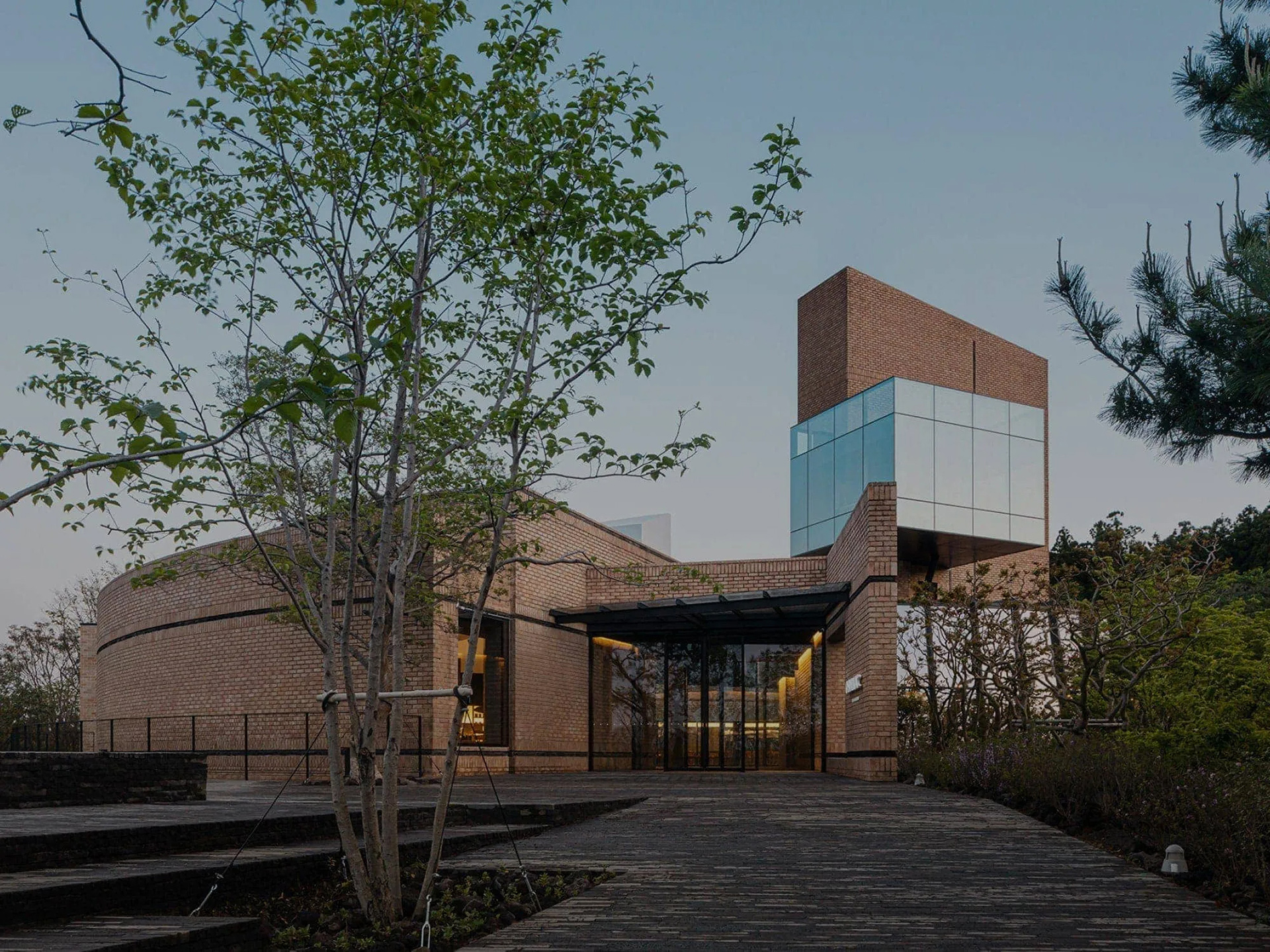
The pinnacle of the OSULLOC brand experience is undoubtedly the OSULLOC Tea Museum, located at the edge of the Seogwang tea fields in Jeju. Opened in 2001 as Korea’s first tea museum, it is more than a tourist destination; it is a kind of mecca where the philosophy and history of OSULLOC converge. Renowned for its breathtaking scenery, the site was even named one of the world’s top ten museums by the global design and architecture platform Designboom, and it welcomes more than two million visitors each year. Here, visitors can watch the roasting process of pan fired tea in real time, brew tea in traditional earthenware teapots made from Jeju soil, and experience the “tea lifestyle” OSULLOC aspires to through all five senses.
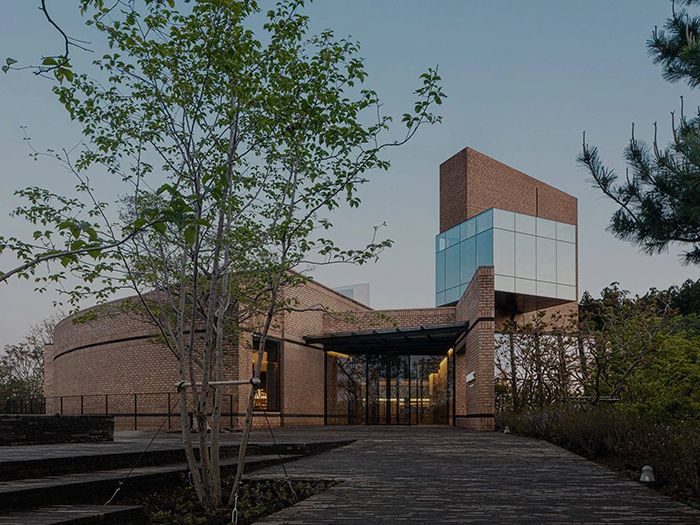
< OSULLOC Tea Museum >
So how did this brand begin?
The history of OSULLOC dates back to 1979. Its tragic yet extraordinary journey began when the late Suh Sung wh an, founder of Amorepacific, purchased a rugged stone field in Dosun dong, Seogwipo, Jeju. At the time, even local residents dismissed the land, calling it “meolwat.” It was not merely rocky but a barren wasteland layered with massive bedrock, so unforgiving that no one imagined it could be farmed. People around him mocked the idea of a businessman who had succeeded in cosmetics buying a field of stones that could never turn a profit. But Chairman Suh thought differently. He was driven by the regret that “every country has its own tea culture, but Korea does not,” and by the conviction that “there is no value in doing what anyone can do.”
The land reclamation was, quite literally, an act bordering on madness. There were no roads, no water supply, and Chairman Suh himself wore rubber boots and picked out stones by hand. He visited Jeju two or three times a month, working alongside staff in the fields and eating simple meals of bread and makgeolli. In 1980, the first product was launched under the brand name “Seollok Tea,” but the market response was cold. Instant coffee already dominated Korea, and tea was seen as old fashioned, something for an older generation. What is striking is that OSULLOC operated at a loss for more than forty years before finally turning a meaningful profit in 2020. Even while losing billions of won annually, Amorepacific never stopped investing. Tea trees take years from planting to harvest and are highly sensitive to climate, making maintenance costs enormous, but the company regarded the project not simply as a business, but as a cultural mission to restore Korea’s tea culture. In that sense, the tea seeds sown in Jeju’s stony fields 45 years ago have grown into the vast forest of today, and OSULLOC has become living proof of what it means to build a brand that triumphs over time.
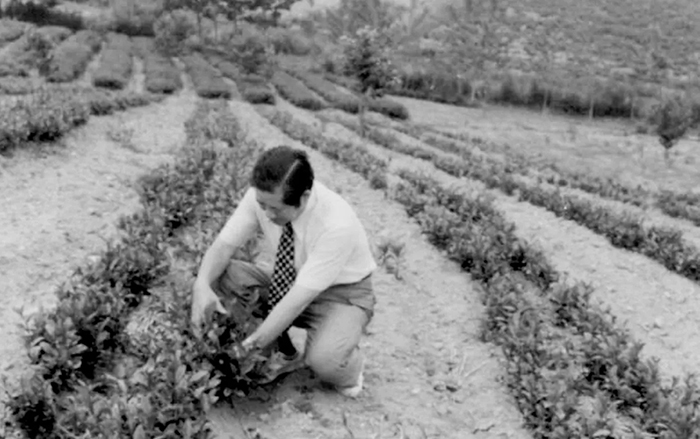
< Chairman Suh Sung-whan of OSULLOC >
OSULLOC’s core competitive strength lies in its identity as a “Tea Maker,” a rarity among global tea brands in that it oversees the entire process from cultivation and processing to sales. This stands in contrast to global leaders such as TWG and Fortnum & Mason, which operate more as “Tea Dealers,” sourcing, blending, and selling tea leaves. OSULLOC directly manages around one million pyeong of organic tea fields in Jeju, establishing a true farm to cup system. The teas produced in its three plantations, Seogwang, Dolsongi, and Hannam, each shaped by distinct climates, carry their own unique flavor profiles. In addition, its method of fermenting tea leaves with Bacillus subtilis derived from traditional Korean jang culture and aging them in Jeju cedarwood barrels has created a depth of aroma and flavor that only OSULLOC can achieve.
Strategic decisions made to preserve the brand’s dignity were also pivotal. In 2014, OSULLOC boldly halted distribution through large discount retailers, even though those channels accounted for 80 percent of its sales. Instead, it chose to focus on space. Rather than increasing the number of stores, it gave each location its own story and content, as seen in places like the Bukchon Tea House. Housed in a remodeled 1960s style residence, the Bukchon branch offers a different layer of depth on every floor, with the third floor “Bar Seollok” serving non alcoholic tea cocktails and giving customers a clear reason to stay.
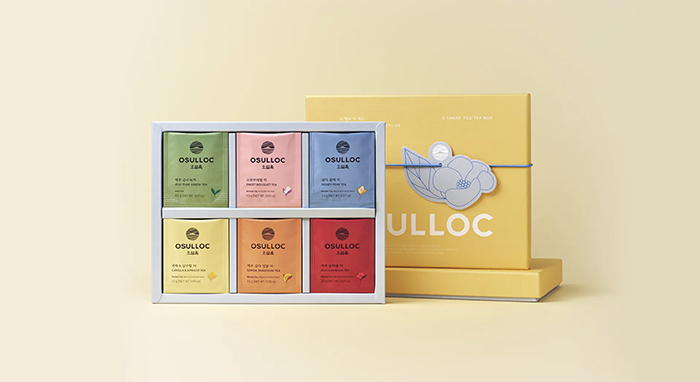
< OSULLOC Tea Bag >
This depth of capability is now shining in the global market as well. When entering Amazon, the world’s largest e commerce platform, the company analyzed American consumer reviews and pushed products such as tea spreads and strongly aromatic blended teas as hero items. The moment it discovered that Korean style expiration date labeling was confusing local customers, it developed market specific packaging, demonstrating a meticulous approach to localization. As a result, OSULLOC now ranks among the top sellers in Amazon’s tea category and is expanding the reach of K culture into the realm of food culture. More recently, it launched a collaboration edition marking Hello Kitty’s 50th anniversary, successfully drawing in mainstream fandom as well. On Naver Shopping Live, the event attracted 250,000 viewers in a single day and sold out in just three minutes, showing that OSULLOC has grown into a brand with powerful cultural influence. Its ongoing moves, including a hanbok bag promotion prepared for the Year of the Horse at the end of 2026, consistently maintain the same thread: a contemporary reinterpretation of tradition.
In the end, the lesson OSULLOC offers is clear. True premium value does not come from chasing trends, but from the power of essence, the strength to water and wait for 45 years on a barren land that no one else even bothered to look at. The sound of tea aging in the tea stone cellar at the Jeju Tea Museum and the growing number of matcha products placed in Amazon carts around the world are fruits of the same root. The dream Chairman Suh Sung wh an began 45 years ago in the mist off Jeju’s coast is now blooming as a pale green miracle in teacups across the globe.


















#14057, 905 49, Beolmal-ro 102beon-gil,
Dongan-gu, Anyang-si, Gyeonggi-do, Korea
Business Registration Number: 454-86-01044
Online Sales License No.: 2021-Anyang Dongan-1081
Copyright © DESIGNSORI Co., Ltd.