
For a long time, we believed corporate YouTube channels existed to explain the brand itself. A place to communicate what technologies a company possesses, what kind of business it operates, and how innovative it is. We assumed corporate channels should naturally talk about the company, and in reality, most brand content has been created on top of that belief. Explaining achievements, repeatedly exposing brand messages, and emphasizing corporate strengths all seemed like the most natural approach. But today’s YouTube environment is fundamentally shaking that assumption.
People no longer wait for the stories brands want to tell. More accurately, they no longer have any reason to wait. Endless new content now appears in the palms of our hands: OTT platforms, short-form videos, web entertainment shows, influencer content, and algorithm-driven recommendations. We are no longer living in an era of content scarcity, but one of overwhelming excess. In the past, simply creating and exposing a message was often enough for brands to achieve a certain level of reach. But the situation today is completely different. In an environment where every piece of content competes for people’s time, brand content can no longer be chosen simply because it comes from a brand.

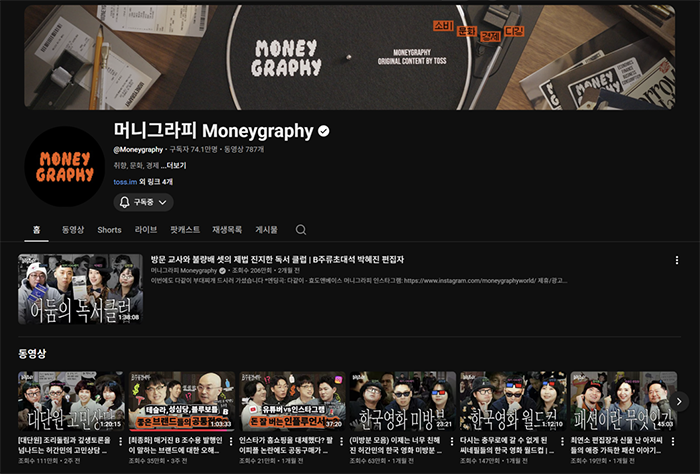
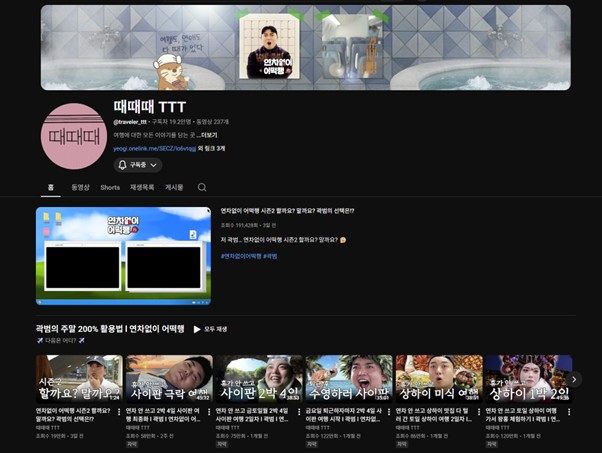
< Image source: Yeogi Eottae >
When you look closely at these examples, a common structure begins to emerge. They do not explain functions. Instead, they talk about the emotions and experiences those functions create. In the end, people do not remember services themselves; they remember the emotional value those services create within their lives. People do not simply use a financial app. They want to reduce anxiety about money. They do not use a travel platform merely to book accommodations. They seek excitement, freedom, and escape. They do not use a delivery service just for convenience. They want to experience a lifestyle they aspire to. Brand functions are ultimately consumed in the form of emotions.
This is why the key question in today’s content strategy is no longer how strongly a brand can expose itself. What matters far more is how the essence of the brand’s business can be translated into the language of people’s interests and emotions. And it is precisely at this point that the Brandless strategy emerges. Many people misunderstand the Brandless strategy as simply hiding the brand. But the real core is slightly different. The essence of the Brandless strategy is not to conceal the brand forever, but to design the timing of when the brand should be revealed at its most attractive moment. Successful debranded channels first build audiences through the strength of the content itself. They make people enjoy the content and develop affection for the channel. Only afterward do they gradually connect audiences to the brand through channel descriptions, video details, natural product exposure, and linked experiences.
This approach matters because the way trust is formed has fundamentally changed. In the past, brands could build trust simply by explaining themselves directly. Today, however, people trust the emotions they personally experience more than the explanations brands provide. Compared to brands that speak about themselves like advertisements, people feel greater affinity toward brands that make their time feel valuable. Ultimately, people do not remember brand messages. They remember the experiences they had while consuming the content.
This shift becomes even more important on YouTube because the platform functions not merely as a video service, but as a content environment people repeatedly visit and become familiar with over time. People continuously watch certain channels, subscribe to them, and gradually grow accustomed to the style and rhythm of the content itself. In this process, the brand is no longer consumed like an advertisement. Instead, it begins to feel like a preference, a habit, or even an experience. This is why stronger brands in the future may actually explain themselves less. Rather than speaking directly, they will embed their philosophy and attitude into the structure of the content itself. It is a way of making people naturally feel the brand without explicitly telling them.
Perhaps the true competitive advantage of brands today is no longer about how loudly they speak, but about how naturally they can permeate people’s lives. And this shift is not limited to B2C brands. In many ways, it is becoming even more important for B2B companies. Many B2B firms still believe, “We are not a consumer facing company.” But today, brand influence extends far beyond product sales. Government officials, investors, future talent, partners, and society at large all experience brands now. And those experiences are increasingly formed through content before they are formed through advertising. How naturally has the brand remained connected to people over time? How consistently has it existed within the rhythms of everyday attention? In times of crisis, this becomes trust capital. In recruitment, it becomes employer attractiveness. Over the long term, it evolves into social influence.
Ultimately, in the age of YouTube, brands are no longer entities that merely explain themselves. They are becoming entities that make people’s time feel valuable. And in the future, a brand’s competitiveness will likely depend less on how many advertisements it runs, and more on how effectively it creates content experiences people voluntarily return to. In some ways, this shift connects to the once discussed concept of “Brand Journalism.” Of course, today’s YouTube environment cannot be fully explained through that older framework alone. While Brand Journalism was centered around publishing stories from a brand’s perspective, today’s YouTube ecosystem has evolved into something far more content driven and experience centered.


















#14057, 905 49, Beolmal-ro 102beon-gil,
Dongan-gu, Anyang-si, Gyeonggi-do, Korea
Business Registration Number: 454-86-01044
Online Sales License No.: 2021-Anyang Dongan-1081
Copyright © DESIGNSORI Co., Ltd.